
Eyelashes grow longer through a combination of real follicular growth during the active phase of the hair cycle, reduced breakage from daily handling and product buildup, and better conditioning of the lash shaft. You can't force follicles to sprint, but you can stop sabotaging the growth that's already happening and, in some cases, use clinically proven ingredients to extend the active growth phase itself.
What Makes Your Eyelashes Grow Longer: A Practical Guide
Rachel Nguyen
23 Apr 2026
How the lash growth cycle actually works
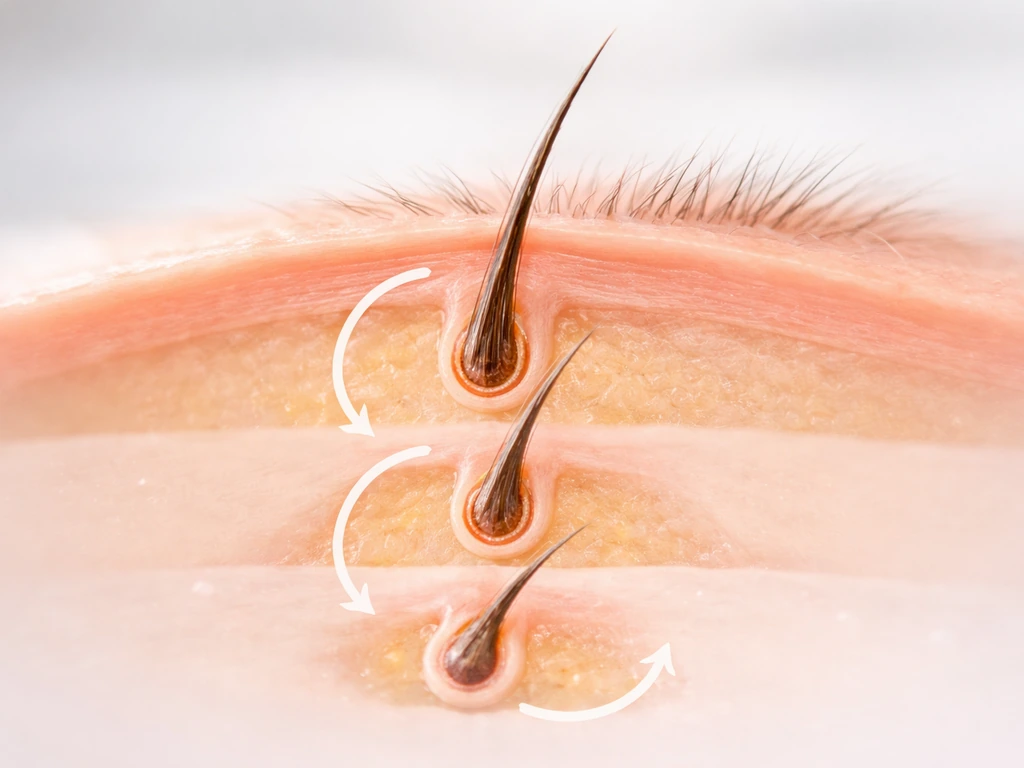
Eyelash follicles cycle through three phases: anagen (active growth), catagen (transition and regression), and telogen (resting). At any given moment, roughly half of your lashes are in anagen, meaning only about half are actually lengthening right now. The rest are either regressing or sitting in a resting state before they shed and the cycle restarts.
The full cycle from growth to shed to regrowth spans roughly 4 to 11 months depending on the individual. That wide range explains why two people can try the same serum and report very different timelines. It also explains why lashes don't keep growing indefinitely the way scalp hair does. Scalp hair can grow much longer because its growth cycle stays active for far more time than the anagen phase eyelashes have growing indefinitely. The anagen phase for eyelashes is biologically short compared to scalp hair, which is why your lashes stop at a certain length rather than growing to your chin.
The practical takeaway here: you cannot override the telogen phase with any topical product. What you can do is support lashes during anagen so they reach their full potential length, protect them from breaking before they get there, and use certain actives (more on those below) that appear to prolong the anagen phase itself.
What actually makes lashes look longer
Clinical researchers studying eyelash prominence assess four distinct traits: length, thickness, darkness, and curl. Clinical researchers studying eyelash prominence assess four distinct traits: length, thickness, darkness, and curl, which helps explain what makes eyelashes grow thicker and longer. All four affect how long your lashes appear. A lash that's thicker and darker reads as longer to the eye even if the actual millimeter measurement hasn't changed. Curl matters too because a lash that lies flat against the lid looks shorter than a lash that sweeps upward and away from the face.
This is worth understanding because when people say they want longer lashes, what they usually want is more prominent lashes. That means improving any of those four dimensions helps. Conditioning the shaft improves both thickness and the appearance of curl. Reducing breakage preserves length. Supporting follicle health contributes to all of them at once.
Why your lashes might not seem to be growing
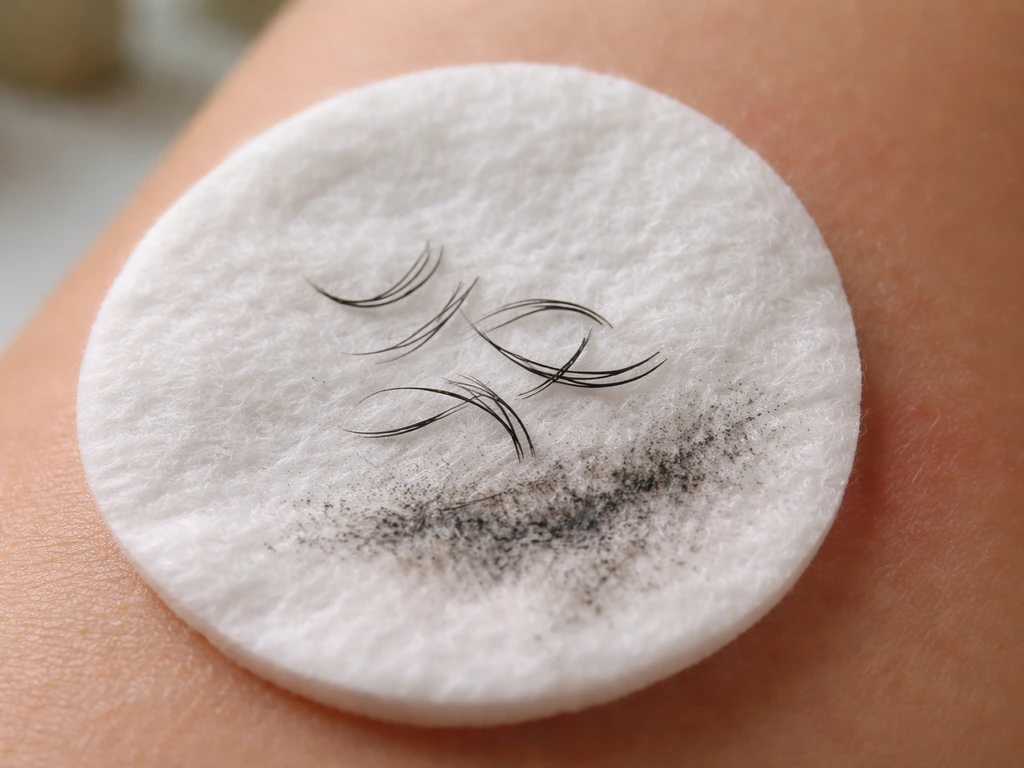
Most people who feel like their lashes aren't growing are dealing with one of a handful of common blockers. The lashes are often growing just fine, but they're breaking before they reach their full length, or inflammation at the lash line is disrupting the follicle cycle.
- Extension adhesive damage: Cyanoacrylate-based lash glues are a documented cause of allergic contact dermatitis and ocular irritation. Even a single reaction can cause follicle disruption at the lash line that takes months to recover from.
- Improper extension removal: Pulling off extensions, even carefully, creates mechanical traction on the lash shaft and follicle. Repeated cycles of this are one of the most common causes of gradual thinning.
- Rubbing and friction: Habitual eye rubbing, aggressive makeup removal, and sleeping face-down on a pillow all break lashes mid-shaft or stress the follicle opening.
- Heavy mascara and waterproof formulas: Waterproof mascara is harder to remove and requires more friction or solvent to dissolve, both of which stress the lash. Sleeping in any mascara is a reliable way to make lashes brittle and prone to snapping.
- Blepharitis: Chronic inflammation of the eyelid margin disrupts the environment around the follicle. The inflammation, crusting, and associated irritation can contribute to lash shedding and slow regrowth.
- Dryness and dehydration of the shaft: Lash shafts are protein structures. Without some lipid and moisture support, they become brittle. This is less dramatic than follicle-level issues but compounds over time.
- Lash tinting chemicals: Dyes used in lash tinting can cause contact dermatitis at the lid margin, similar to adhesives, and repeated exposure compounds cumulative irritation.
Blepharitis deserves special mention because it's underdiagnosed and often mistaken for simple dry eye or seasonal irritation. If you notice persistent flaking at the base of your lashes, redness along the lid margin, or morning crusting, blepharitis is worth addressing directly because no serum or oil will work well if chronic inflammation is actively disrupting your follicles. Poison Control notes that cyanoacrylate eyelash adhesives can be irritant to skin and eyes, especially in liquid form or fumes, which can worsen eyelid irritation redness along the lid margin.
At-home strategies that actually support longer growth
The foundation of any lash-lengthening routine is reducing damage before adding anything. That sounds obvious, but most people jump straight to a growth serum while still sleeping in mascara and rubbing their eyes during allergy season. Get the basics right first.
Gentle cleansing and lash line care
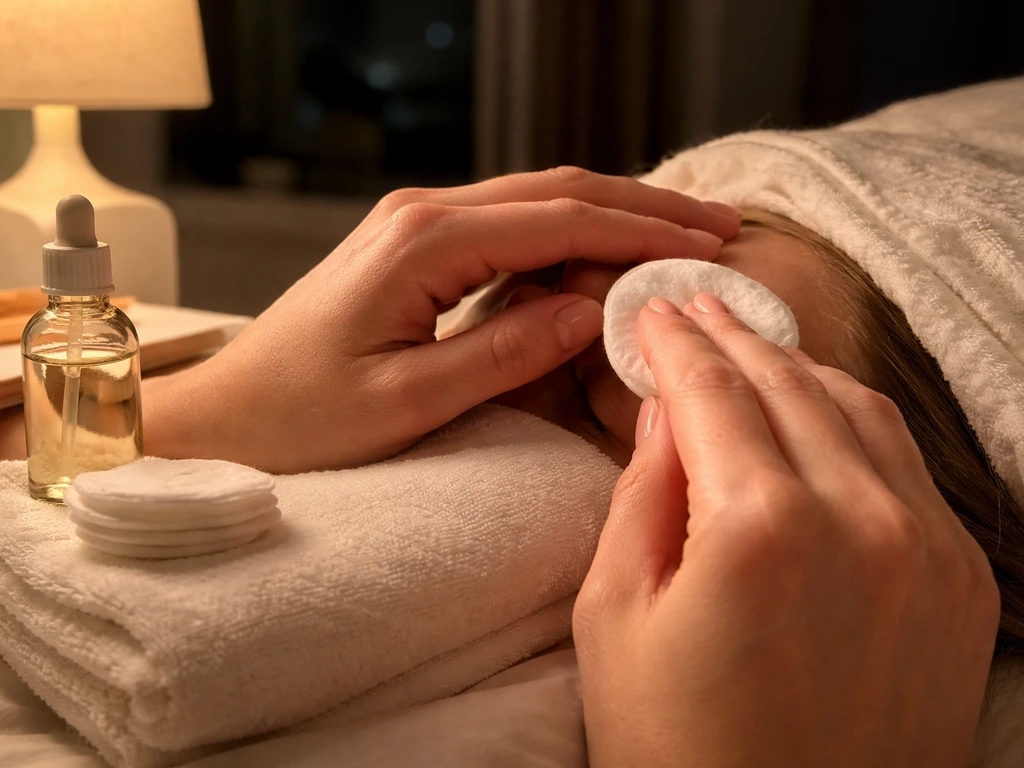
Use a gentle, oil-based or micellar cleanser to dissolve mascara before physically wiping the lash line. Press a soaked cotton pad against the lashes for about 20 seconds before gently sliding downward. Avoid the back-and-forth scrubbing motion that most people default to. For blepharitis-prone eyelids, warm compresses for 5 to 10 minutes followed by gentle lid scrubs (commercial eyelid wipes or diluted baby shampoo on a cotton swab) are supported by clinical guidance from the AAO. Mayo Clinic also recommends self-care for blepharitis, including washing the eyes and using warm compresses along with eyelid cleaning and any prescribed therapy as needed. Consistent lid hygiene reduces the chronic inflammation that disrupts follicle cycling.
Conditioning oils and moisture
Castor oil is the most widely discussed option in the lash community, and while there's no large randomized trial behind it, the rationale is sound: it's a thick, occlusive oil rich in ricinoleic acid that coats the shaft, reduces moisture loss, and may create a more favorable environment at the follicle opening. Apply a very small amount to a clean spoolie and comb through the lashes at night. The key word is small. Too much will migrate into your eyes and cause blurring or irritation by morning.
Other well-tolerated options include argan oil, sweet almond oil, and vitamin E oil. These are lighter than castor oil and less likely to cause morning eye irritation. They work primarily by conditioning the shaft rather than stimulating the follicle. Use them the same way: clean spoolie, light application at night, gentle removal in the morning as part of your normal cleansing routine.
These oils won't dramatically lengthen lashes on their own, but they meaningfully reduce breakage. If your lashes are currently snapping off at mid-shaft because they're dry and brittle, even a basic conditioning habit can visibly change your lash line within a full growth cycle.
Lash growth serums: what works, what to look for, and how to use them
There's a wide spectrum here, from a single FDA-approved prescription medication to a large category of over-the-counter serums with varying levels of evidence. It helps to understand what you're actually buying.
The prescription benchmark: bimatoprost
Bimatoprost 0.03% solution (sold as Latisse) is the only FDA-approved treatment for eyelash hypotrichosis (inadequate lashes). It's a prostaglandin analog that appears to extend the anagen phase, increasing the time lashes spend actively growing. Bimatoprost is one of the best-studied options for helping lashes grow longer by extending the active growth phase extend the anagen phase. In a multicenter randomized controlled trial, bimatoprost produced an average eyelash length increase of about 1.4 mm (roughly 25%) compared to about 0.1 mm in the vehicle group after 16 weeks. That's a real, measurable difference confirmed by digital image analysis.
Application is straightforward: once nightly, using the supplied sterile applicators, applied to the upper eyelid skin at the base of the lashes only. Blot any excess immediately. This matters because skin contact is associated with hyperpigmentation of the eyelid skin, and migration to the lower lid can cause unwanted hair growth in that area. Remove contact lenses before application and wait at least 15 minutes to reinsert them.
Reported side effects include eye itching, conjunctival redness, eyelid irritation, dry eye symptoms, and eyelid skin darkening. There's also a possibility of increased iris pigmentation with repeated prostaglandin exposure, which is worth knowing about before starting. These side effects inform why accurate application technique matters so much.
Over-the-counter serums: ingredients to look for
OTC serums can't legally contain bimatoprost, but several contain ingredients with legitimate study data. Peptides are the most studied category. Myristoyl pentapeptide-17 and myristoyl hexapeptide-16, for example, have been evaluated in open-label studies for their role in stimulating lash growth and thickness. Botanical oils like Salvia officinalis have been included in studied formulations for their proposed role in reducing androgen-mediated lash shedding. These aren't as dramatically proven as bimatoprost, but they're not meaningless either.
When evaluating an OTC serum, look for one that lists specific active peptides, has published or at least internally conducted clinical photography, and applies at the lash line rather than being a mascara-type coating. Avoid anything with irritating fragrance or alcohol high on the ingredient list since those will undermine the lash line environment you're trying to improve.
How to apply any lash serum correctly
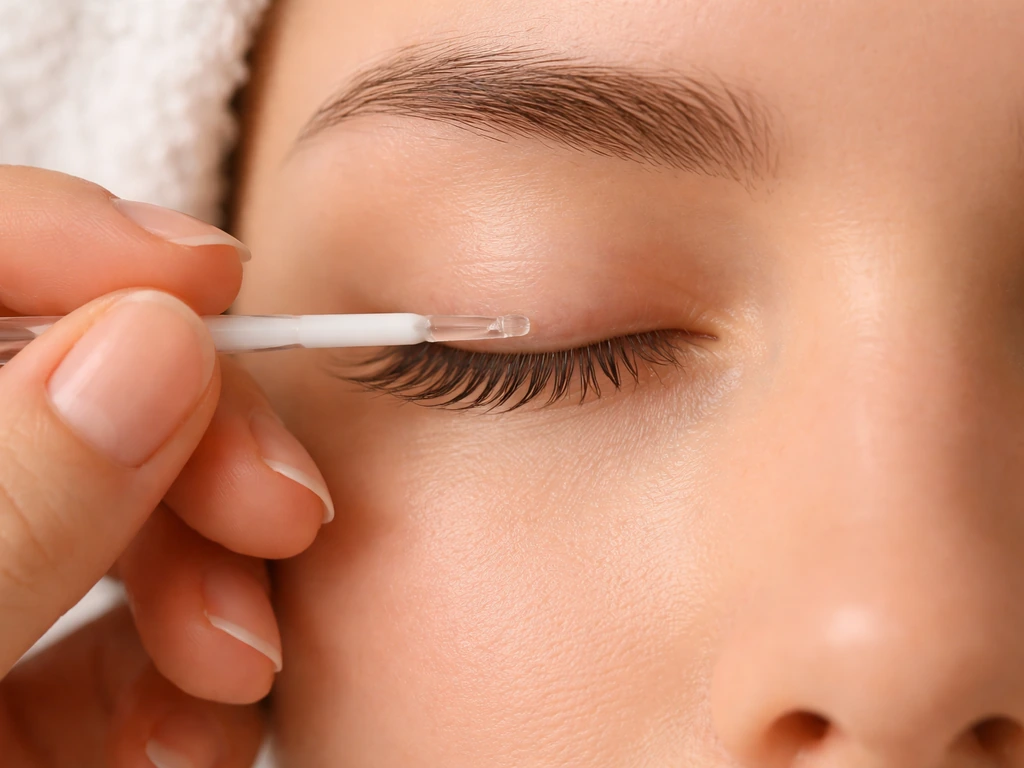
- Cleanse the eye area and remove all makeup before applying. Any barrier between the serum and the lash line reduces absorption.
- Apply at night only. Most serums work best applied to clean skin before sleep.
- Use the minimum effective amount: one thin stroke across the upper lash margin per eye. More product doesn't mean more results; it means more migration.
- Blot any excess with a clean tissue immediately after applying.
- Apply to the upper lash line only unless the product specifically instructs otherwise. Lower lid application increases the risk of adverse effects.
- Be consistent. Missing applications regularly significantly reduces efficacy since these products work cumulatively over weeks.
Realistic timelines: how long until you see longer lashes
This is where honesty matters most because unrealistic expectations cause people to abandon routines right before they would have worked.
| Scenario | Realistic Timeline | What to Expect |
|---|---|---|
| Stopping breakage habits (mascara, rubbing) | 4 to 8 weeks | Existing lashes reach fuller length; minimal new growth but less shedding visible |
| Conditioning oils nightly | 6 to 12 weeks | Reduced brittleness, slightly fuller appearance; length gains modest |
| OTC peptide/growth serum | 8 to 16 weeks | Visible improvement in thickness and length in some users; results vary considerably |
| Bimatoprost (prescription) | 12 to 16 weeks | Measurable length and thickness increase; 25% length gain demonstrated in trials |
| Recovery after extension damage | 3 to 6 months | New lash growth from undamaged follicles; severely damaged follicles may take longer |
| Alopecia areata-related lash loss | 6 to 60+ months | Highly variable; mean regrowth around 28 months in published case series; requires medical management |
If you've been consistent with a conditioning or serum routine for 16 weeks and see no change at all, that's a signal worth paying attention to. It may mean the underlying issue isn't just dryness or slow cycling but something that needs clinical evaluation.
When to stop DIY and see a clinician
Most lash concerns are cosmetic and respond to the approaches above. But some situations genuinely need a dermatologist or ophthalmologist, and delaying evaluation can make recovery significantly harder.
- Sudden or patchy lash loss: Patchy loss (especially if it's symmetric or expanding) is a red flag for alopecia areata, which requires trichoscopy and possibly systemic or targeted treatment. No topical oil addresses an autoimmune process.
- Persistent redness, itching, or crusting at the lash line: This could be blepharitis, contact dermatitis from adhesive or dye, or an infection. If lid hygiene hasn't resolved it within 2 to 3 weeks, get an accurate diagnosis before continuing any topical routine.
- Lashes growing inward toward the eye: Trichiasis (inward-directed lashes) can cause corneal abrasion and is a clinical problem requiring professional management, not cosmetic adjustment.
- No improvement after 4 months of consistent, appropriate care: Consider whether there's a systemic cause, including thyroid dysfunction, nutritional deficiency, or a medication side effect, all of which are listed causes of eyelash hypotrichosis in clinical literature.
- Irritation or adverse effects from a serum: If you notice persistent eye redness, blurred vision, or eyelid skin darkening from any serum or oil product, stop using it and see an ophthalmologist rather than pushing through.
- History of eye disease or recent eye surgery: Any lash treatment that involves the eyelid margin needs clearance from your ophthalmologist first if you have glaucoma, had LASIK or cataract surgery, or use other ophthalmic medications.
A dermatologist can evaluate for contact dermatitis, alopecia subtypes, or follicular damage. An ophthalmologist handles anything involving the ocular surface, lid margin integrity, or medication-related concerns. For complex cases involving both, either specialist can refer you to the other. The key is not assuming that no progress means you need a stronger serum. Sometimes no progress means something else is going on entirely.
Putting it all together: your practical starting point
Start with damage reduction: switch to a gentle cleanser, stop sleeping in mascara, address any active lid irritation with warm compresses and lid scrubs, and give your lash line a two-week reset. Then add a conditioning oil or OTC serum and commit to nightly application for at least 12 weeks before evaluating results. If you want the strongest evidence-backed option and have a clinical indication, talk to a dermatologist about bimatoprost. Document your baseline with a close-up photo under consistent lighting so you can actually compare change over time rather than relying on day-to-day perception. And if something isn't improving or something feels off, don't wait another four months before getting it checked.
FAQ
How long does it take to see longer eyelashes, and when should I judge results?
You generally should evaluate at about 12 to 16 weeks, not earlier, because only the anagen lashes are lengthening at any moment and the rest are in regressing or resting phases. If you take baseline photos at the same angle, same lighting, and without makeup, you can spot real change even when it feels slow.
Can a lash serum make lashes grow through the resting phase faster?
No. Since telogen is a resting phase and shedding is part of the normal cycle, topical products cannot force lashes to skip it. The best you can do is protect lashes from breakage and support follicle health so more lashes stay long enough to reach their natural maximum length.
What if my lashes seem to be growing but they never get longer?
The most common “it’s not working” issue is that the lashes break before they get longer. Look for mid-shaft snapping, a rough or frayed lash tip, and lots of short shed hairs. Switching to a gentler removal routine, reducing rubbing, and using a conditioning oil or peptide serum often helps even when follicle stimulation is minimal.
How do I know whether my problem is follicle growth versus an inflamed lash line?
If you have persistent lid margin redness, flaking at the base of lashes, or morning crusting, consider blepharitis or another lid disorder first. In that situation, growth-focused products can be ineffective, so lid hygiene and, if symptoms persist, clinician evaluation are usually the higher-impact step.
Can lash-growth products cause unwanted hair growth on the lower lid or around the eyes?
Yes, it can happen, especially with bimatoprost or other lash-growth agents that migrate off the upper lid. That is why blotting excess and avoiding lower-lid migration matters, and you should stop and get advice if you notice darkening where you applied, in new areas, or on the wrong lid.
What side effects mean I should stop and see a doctor?
For bimatoprost, stop if you develop significant eye pain, worsening redness, marked light sensitivity, or new vision changes, and contact an eye professional promptly. Mild itchiness can occur, but any concerning ocular symptoms should not be pushed through.
Are there ingredient types I should avoid in OTC lash serums?
Even if an ingredient sounds “natural,” fragrance and high-alcohol formulas can increase dryness and irritation at the lash line, which can worsen breakage and inflammation. Choose products that apply to the lash line and avoid stingy formulas if your eyes are reactive.
Does sleeping in mascara or rubbing my eyes really slow lash growth?
Sleep and handling matter more than most people expect. Keep mascara off at night, avoid rubbing, and be careful during cleansing. If you use contact lenses, remove them for bimatoprost application and wait the recommended interval before reinserting.
Do castor oil or other carrier oils actually lengthen lashes, or do they mainly prevent breakage?
The oils discussed primarily condition the lash shaft and reduce moisture loss, they do not typically extend anagen as strongly as prescription options. If you want maximal evidence for length, bimatoprost is the best-studied option when you have an appropriate indication.
If I did everything right and still see no change, what are the likely reasons?
If you see no visible change after a consistent 16-week routine, the issue might be incorrect product choice, irritation from the formula, an untreated eyelid condition, or simply that breakage is dominating over growth. A clinician can assess for dermatitis, lash/follicle disorders, or ocular surface problems rather than escalating blindly.
What’s the best way to track lash growth so I know it’s working?
Use close-up photos as your anchor. Keep lighting consistent, remove mascara, avoid curling/tinting the day of the photo, and take images from the same distance and same eye position. Tracking only day-to-day perception is unreliable because thickness and curl can make lashes look longer even when millimeters change minimally.
Next Article
Does Mustard Oil Grow Eyelashes? Safety and What Works
Find out if mustard oil grows eyelashes, risks to eyelids, and safer options with realistic timelines and when to see a
