
If you want the single best oil for eyelash growth, castor oil is the most defensible answer. It has the longest track record, the most community evidence behind it, and the right fatty acid profile to condition and protect lashes while you wait for natural growth cycles to do their thing. But here is the honest version: no oil has been proven in rigorous clinical trials to actually stimulate new lash growth the way a prescription prostaglandin serum does. What oils can do, and do genuinely well, is reduce breakage, improve lash flexibility, and create the conditions where your existing lashes look fuller and survive longer. For a lot of people, that is enough. For others, especially those recovering from damage or a medical condition, oils are a starting point rather than a complete solution. This guide covers which oils are worth your time, which ones to avoid near your eyes, and how to use them safely.
Best Oil to Grow Eyelashes: Safe Options, Routine, Timelines
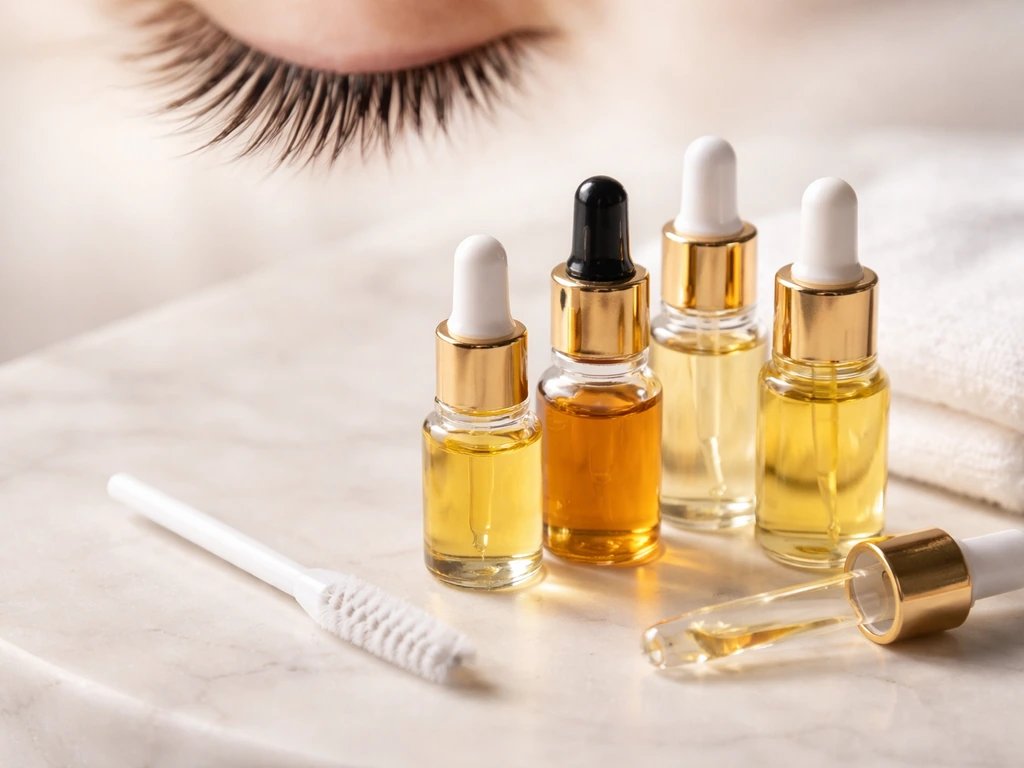
Do oils actually grow eyelashes? Be honest with yourself first
This is the part most articles skip past, and it matters. There is no high-quality human clinical trial showing that castor oil, coconut oil, argan oil, or any other common plant oil directly triggers eyelash follicles to produce longer or thicker hairs. The evidence for oils is largely anecdotal, meaning people report visible improvements, but controlled studies have not confirmed that oils extend the growth phase (anagen) or increase lash diameter the way prostaglandin-analog medications do. That said, 'not proven to grow' does not mean 'useless.' Lashes break off, dry out, and shed early for many reasons, and oils address several of those causes. If your lashes are brittle from extensions, rubbing, or heat, conditioning them with oil can make a visible difference within four to six weeks, not because new hairs grew longer, but because fewer hairs broke.
Eyelashes follow a growth cycle of roughly four to eleven months, with an active growth phase (anagen) of about 30 to 45 days, a transition phase, and a resting/shedding phase. You cannot speed up that biology with oil alone. What you can do is keep lashes healthier during the growth phase so they reach their full potential length before falling out. Think of oils as supportive care, not a growth trigger.
The best oils for eyelashes, ranked by usefulness
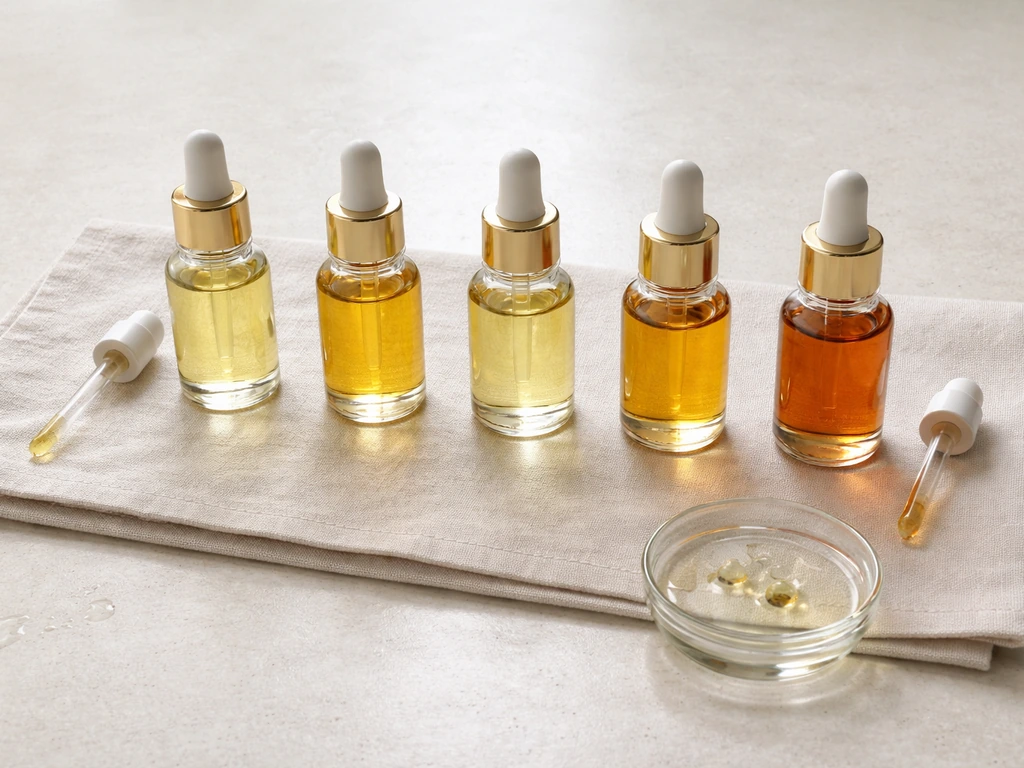
Not all oils are equal when it comes to lash application. The ones that work best share a few properties: a molecular size small enough to penetrate the hair shaft, a fatty acid profile that strengthens and moisturizes, and a low irritation risk near the delicate eye area. Here is a practical breakdown of the most commonly used options.
Castor oil: the closest thing to a consensus pick
Castor oil is the most popular lash oil for good reason. It is rich in ricinoleic acid, a fatty acid that makes up about 90% of the oil's composition and has demonstrated anti-inflammatory properties in some research. It is thicker than most other oils, which means it coats lashes well and may help reduce protein loss from the hair shaft. The thickness is also a trade-off: if you use too much, it can weigh lashes down and feel heavy. For lash purposes, use cold-pressed, hexane-free castor oil (look for those labels specifically) and apply a tiny, thin coat. Healthline's summary of the castor oil evidence is fair: the conditioning benefits are real, but robust eyelash-specific growth trials are absent. Still, if you are choosing one oil to start with, this is it.
Coconut oil: lightweight and well-studied for hair
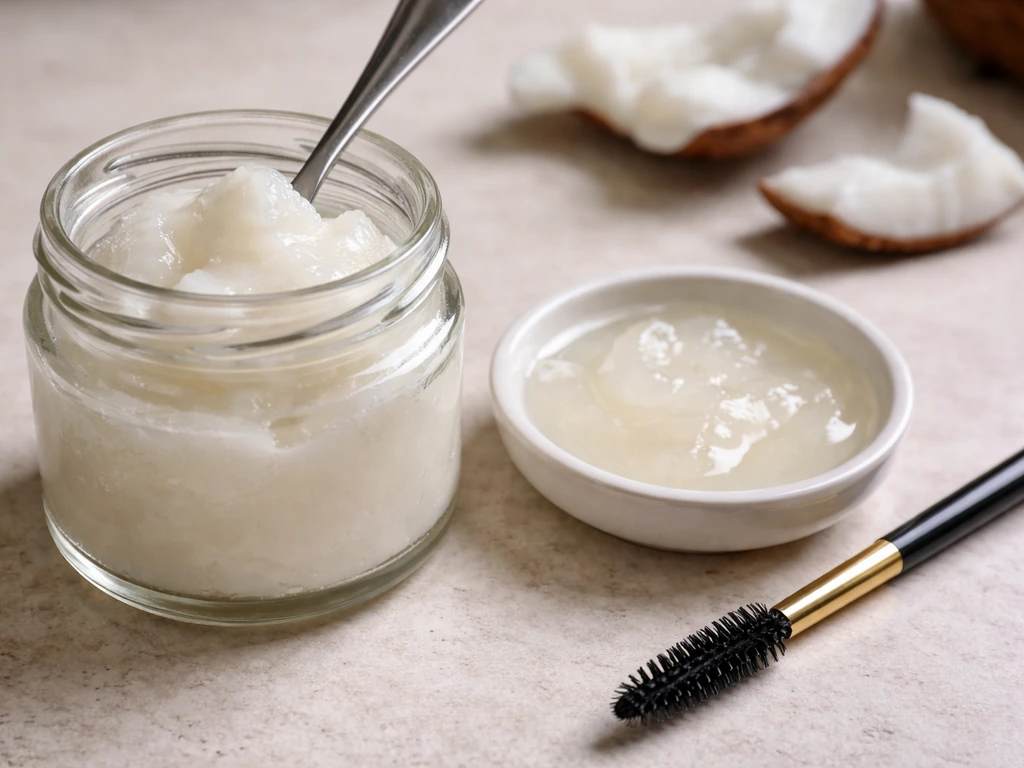
Coconut oil has the best-documented evidence for hair shaft penetration of any plant oil, thanks to its high lauric acid content and low molecular weight. Research on scalp hair confirms it reduces protein loss better than mineral oil or sunflower oil. That research is not specific to lashes, but the mechanism is sound. Coconut oil is lighter than castor oil, easier to apply precisely, and less likely to feel greasy. The downside is that some people find coconut oil comedogenic (pore-clogging) on facial skin, so if you are acne-prone around the eye area, keep application very targeted.
Argan oil: good for conditioning, gentle on skin
Argan oil is rich in oleic and linoleic acids plus vitamin E, making it an excellent conditioner for both lashes and the surrounding eyelid skin. It absorbs quickly, does not feel greasy, and is widely considered non-irritating for most skin types. It will not outperform castor oil for lash conditioning based on what we know, but it is a better choice if your eyelid skin is reactive or if you find castor oil too thick to apply cleanly. If you are specifically asking whether can argan oil grow eyelashes, the best takeaway is that it may condition and reduce breakage, but it is not proven to directly trigger new growth. Argan oil is explored in more depth as a standalone topic if you want to compare it head-to-head.
Sweet almond oil: underrated and very gentle
Sweet almond oil is high in oleic acid and vitamin E, absorbs easily, and is consistently low-irritation. It lacks the dramatic ricinoleic acid profile of castor oil, but it is an excellent option for people with sensitive eyes who cannot tolerate thicker oils. Use it as an alternative to castor oil or blend a small amount of castor oil into almond oil if you want the benefits of both with an easier application texture.
Olive oil: decent but messy
Olive oil contains squalene, oleic acid, and polyphenols that condition hair and skin. It works as a lash oil, but it is heavier and can feel uncomfortably greasy if applied close to the lash line. Healthline frames olive oil for lashes as a moisturizing option with largely anecdotal support, which is accurate. If castor or coconut oil is not available and you already have extra virgin olive oil at home, it is better than nothing, but it would not be a first choice.
Other oils worth knowing about
Amla oil (made from Indian gooseberry) is sometimes used in Ayurvedic hair care and has antioxidant properties, though specific eyelash evidence is minimal. Batana oil, pressed from American palm nuts, is gaining popularity for hair use with anecdotal support but very limited clinical data. Batana oil is often discussed as a lash oil, but the evidence for actually growing eyelashes is still very limited can batana oil grow eyelashes. Flaxseed gel (not technically an oil) is sometimes applied to lashes for conditioning. If you are wondering, can flaxseed gel grow eyelashes, the main benefit people notice is conditioning, not proven new growth. Sunflower oil is light and non-comedogenic but lacks the fatty acid concentration of castor or coconut oil for this specific use. Sunflower oil is light, so it is often used as a gentle carrier oil, but it has not been proven to directly grow eyelashes can sunflower oil grow eyelashes. Black seed oil (Nigella sativa) has some documented anti-inflammatory and antioxidant properties, though again, eyelash-specific human trials are not available. Canola oil is unlikely to offer meaningful benefits over better-documented options and is not recommended as a first choice. If you are wondering, does canola oil grow eyelashes, the evidence is limited and it is unlikely to outperform more proven lash oils.
| Oil | Key benefit | Best for | Drawback |
|---|---|---|---|
| Castor oil | High ricinoleic acid, strong coating | Most people, best all-round starting point | Thick; can weigh lashes down if over-applied |
| Coconut oil | Best documented hair shaft penetration | Breakage-prone lashes, lightweight preference | Potentially comedogenic for acne-prone skin |
| Argan oil | Fast-absorbing, vitamin E, gentle on skin | Sensitive eyelid skin, reactive types | Less conditioning punch than castor oil |
| Sweet almond oil | Very gentle, high oleic acid | Sensitive or irritation-prone eyes | Lighter effect than castor oil |
| Olive oil | Widely available, decent conditioner | Emergency use when nothing else is on hand | Heavy, greasy application |
| Amla / Batana / Black seed | Antioxidant properties, cultural use | Curiosity/supplement to primary oil | Minimal eyelash-specific evidence |
Essential oils vs carrier oils: what to use and what to stay away from
This distinction is important and frequently confused. Carrier oils (castor, coconut, argan, almond, olive) are the fatty plant oils described above. They are generally safe to apply near the lash line in small amounts because they are gentle, non-volatile, and do not vaporize into the eye. Essential oils are a completely different category: they are concentrated volatile plant extracts (lavender, rosemary, peppermint, tea tree) with potent biological activity. They are not interchangeable with carrier oils and should never be applied undiluted near your eyes.
Tea tree oil is the most commonly discussed essential oil in the eyelash context, and the situation is complicated. Research confirms that tea tree oil can kill ocular Demodex mites (parasites that can contribute to lash loss), and some clinical protocols use diluted tea tree oil formulations for this purpose under ophthalmological guidance. Randomized controlled trials assessing tea tree oil for Demodex blepharitis have used diluted protocols, such as a 10% tea tree oil dilution in mineral oil for eyelid scrubs some clinical protocols use diluted tea tree oil formulations for this purpose. However, Medical News Today clearly states that undiluted tea tree oil can damage eyes, and if it contacts the eye directly, the recommendation is to flush with clean running water for 15 minutes. The gap between 'kills Demodex in a clinical setting' and 'safe to put near your lash line at home' is significant. Unless a doctor has specifically guided you to use a properly diluted tea tree preparation for Demodex, avoid it near your lash line.
Rosemary oil has attracted interest for scalp hair growth based on a small trial comparing it to minoxidil, but that research is for scalp hair and has not been replicated for eyelashes. Peppermint oil and lavender oil are far too irritating to use near eyes. If you want to experiment with any essential oil, it must be diluted to 1% or less in a carrier oil, patch-tested on your inner arm first, and kept well away from the actual eye. For most people, the risk-to-reward ratio does not favor essential oils for lashes when good carrier oils already exist.
- Carrier oils: safe near lash line in small, controlled amounts
- Essential oils: never apply undiluted near the eye; require heavy dilution and caution even then
- Tea tree oil: has legitimate clinical uses for Demodex but carries real irritation risk outside clinical protocols
- Rosemary, peppermint, lavender: too irritating for use near the lash line for most people
- Mineral oil: a petrolatum derivative used in some eye ointments; generally safe in pharmaceutical-grade forms but not a growth tool
How to apply oil to lashes safely for the best results
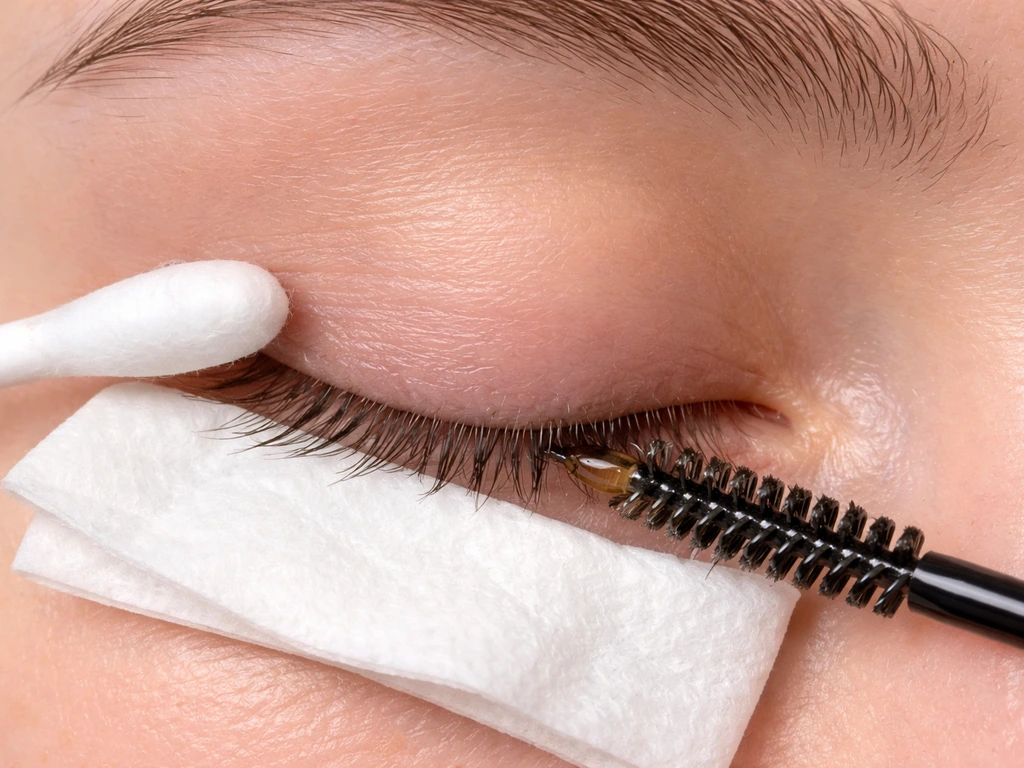
Application method matters as much as which oil you pick. The goal is a thin, precise coat along the lash line without flooding the eye itself. Here is the routine that works best based on practical use and community feedback.
- Remove all makeup and cleanse your face completely before applying. Any residue under an oil layer traps bacteria near the eye.
- Decant a small amount of your chosen oil (about the size of a sesame seed) onto a clean, disposable mascara wand or a thin eyeliner brush. Cotton swabs work but tend to deposit too much product.
- With eyes looking down into a mirror, brush the oil along the base of your upper lash line, moving from the inner corner outward. The motion should be gentle, coating the lashes from root to mid-length.
- Do not apply to the lower lash line first. If oil migrates into the eye overnight from the upper lashes, that is manageable. Applying directly to the lower lid increases direct eye contact.
- Use just enough to coat the lashes thinly. Excess oil will run into the eye while you sleep.
- Apply once nightly only. More frequent application does not speed results and increases the chance of product migrating into the eye.
- Leave it on overnight and rinse gently in the morning with your regular cleanser.
- Commit to at least eight weeks before evaluating. One full eyelash growth cycle is about four to six weeks, so you need more than one cycle to see the conditioning effect accumulate.
Realistic timeline: most people using castor or coconut oil consistently notice lashes that appear fuller and slightly longer between six and twelve weeks. This is primarily because fewer lashes are breaking off mid-shaft, not because follicles are producing more growth than they would otherwise. If you see no change after twelve weeks of consistent nightly application, oil is unlikely to be the main solution for your situation.
Mistakes that slow your results or cause irritation
Most people who try lash oils and give up do so because of avoidable application errors. The most common mistake is applying too much product. A thick coat of castor oil on the lash line will almost certainly migrate into the eye while you sleep, causing blurry morning vision and low-grade irritation that compounds over time. Less is genuinely more here.
- Using too much oil: causes eye irritation, blurry vision on waking, and may actually weigh lashes down and increase shedding
- Applying to the lower lash line before the upper: increases direct eye contact with the oil
- Using a dirty applicator: reusing brushes or wands without cleaning them transfers bacteria right to the eye margin
- Skipping patch testing: even gentle oils can cause contact dermatitis in some people; test on your inner wrist for 24 hours before using near your eye
- Using undiluted essential oils: the most serious mistake; can cause chemical injury to the ocular surface
- Expecting results in one to two weeks: one lash cycle alone takes four to six weeks; impatience causes people to abandon an approach before it has had time to work
- Using rancid or low-quality oil: oils oxidize over time and irritate skin; use cold-pressed, fresh product and check for any off smell before applying
- Applying over eye makeup: traps bacteria and prevents the oil from reaching the lash shaft
Stop using any oil immediately if you experience persistent redness, swelling of the eyelid, stinging that lasts more than a few minutes, or any change in vision. These are signs of either an allergic reaction or direct eye irritation, and continuing through those symptoms will not help your lashes and could harm your eyes. Wash the area with clean water and, if symptoms persist beyond a day, see a doctor.
When oils are not enough: stronger options and recovery context
If your lash loss is significant, such as from chemotherapy, alopecia, thyroid conditions, or prolonged extension damage, oils alone are not going to cut it. This is where understanding what is actually evidence-backed becomes important for making real decisions.
Bimatoprost 0.03% solution (sold as LATISSE) is the only FDA-approved treatment specifically indicated for eyelash hypotrichosis (inadequate lashes). It works by extending the anagen (growth) phase of the eyelash cycle, which is something no plant oil has been shown to do. Applied once nightly to the upper eyelid margin using a sterile disposable applicator, it produces measurable increases in lash length, thickness, and darkness in clinical trials. The catch is that results are not permanent: lashes return to their pre-treatment baseline after you stop using it. Known side effects include conjunctival redness, eyelid skin darkening (periocular hyperpigmentation, which can appear between three and six months of use and may take three to twelve months to resolve after stopping), and in rarer cases, periorbital fat atrophy or unwanted hair growth in areas the product contacts. It requires a prescription, and it is not risk-free, but it is the most evidence-backed option available.
Over-the-counter lash serums that contain prostaglandin-like ingredients (sometimes listed as isopropyl cloprostenate or similar) occupy a middle ground. They are not FDA-approved for growth but do contain actives with similar mechanisms to bimatoprost. The evidence base for these is weaker than for prescription bimatoprost, and the ocular surface literature notes that prostaglandin-containing serums carry risks similar in type (if not always in degree) to the prescription version. If you go this route, do your research on the specific ingredient list and treat your eyes with the same caution you would use with LATISSE.
Biotin is frequently marketed for lash and hair growth, and the reality is nuanced. Biotin supplementation does support hair growth in people who are genuinely biotin-deficient, which is actually uncommon in people eating a normal diet. If you are not deficient, supplementing is unlikely to produce dramatic lash improvements. That said, if you are recovering from a period of severe caloric restriction, illness, or a diet very low in eggs and organ meats, your biotin levels may be worth checking with a doctor before spending money on supplements.
For people growing lashes back after extension damage, rubbing, or a period of illness, the most important factor is simply time and minimizing further damage. Eyelash follicles are resilient; as long as the follicle itself has not been permanently scarred (which requires prolonged, severe trauma), lashes will grow back. The timeline for full recovery after extension-related damage is typically three to six months. Oils can support that process by protecting the new growth during the fragile early phase, but they cannot accelerate the follicle's biological clock.
If you have tried consistent oil application for three months and are still seeing sparse, thin lashes, it is worth booking a dermatology or ophthalmology appointment to rule out underlying causes like thyroid dysfunction, nutritional deficiency, or Demodex infestation, all of which have specific treatments that oils cannot address. Oils are a genuinely useful tool, but they work best as part of a broader strategy where you understand what is actually driving the problem.
FAQ
Can I use one of these oils on both my lashes and my eyelid skin?
Yes, but keep the application different. Use a tiny amount directly along the lash line, and avoid the inner wet border of the eye (where irritation is more likely). If you want to condition eyelid skin too, argan or almond are usually easiest to apply precisely, and do a 24 to 48 hour test on the eyelid area first since eyelid skin is more sensitive than hair.
How often should I apply lash oil, and what if I miss a night?
For most people, once nightly is enough. Consistency matters more than frequency, so missing a night is unlikely to matter if you avoid doubling up. If you tend to get morning blur or watery eyes, reduce to every other night and use less product.
Should I use the oil before or after washing my face?
After cleansing is usually best. Apply to lashes on clean, dry skin so the oil does not trap makeup, sunscreen residue, or debris close to the lash line. If you wear waterproof mascara, remove it gently first, then wait until the eye area is fully dry before applying.
What’s the safest way to apply to prevent oil from getting into my eye?
Use a precision applicator or a clean spoolie, then wipe off excess so the lashes get a thin, barely visible coat. Tilt your face slightly downward during application and stop if you feel any migration into the eye. If your castor oil is thick, warm it only by rubbing between fingers (not by microwaving), then still use less than you think.
Are there oils or ingredients that are specifically risky for lash application near the eye?
Avoid essential oils (like tea tree, lavender, rosemary, peppermint) unless a clinician has you using a specifically diluted product for a diagnosed issue, because “dilute” is not the same as safe for ocular exposure. Also be cautious with fragranced blends, “natural” lash tonics, and products that contain alcohols or strong preservatives, since they can sting even if the base carrier oil is gentle.
How long should I give an oil before deciding it is not working?
Set expectations around breakage reduction, not new follicle growth. If you are seeing changes at all, many people notice some improvement between 6 and 12 weeks. If you have had a consistent thin nightly routine for 12 weeks with no improvement and no fewer lash fragments, it is time to reassess the cause and consider a clinician evaluation.
If I get stinging that goes away quickly, do I need to stop?
Stop at least temporarily. Transient stinging can be from product migration into the eye or contact with irritated eyelid skin. Wash with clean water, wait until fully calm, then restart with a smaller amount and a more targeted application. If stinging returns or lasts more than a few minutes, discontinue and get medical advice.
Can oil use make lash loss worse if I have blepharitis or Demodex?
It can if the underlying issue is not addressed. Oils may increase eyelid residue for some people, and Demodex-related irritation may need targeted treatment rather than just conditioning. If you have itching, crusting at the lash line, or recurrent redness, ask an ophthalmologist about Demodex or blepharitis instead of only switching oils.
Is it safe to wear mascara or eyelash extensions while using oil?
For mascara, use it after oil has fully absorbed (often well after application, or you can do oil at night and mascara in the morning). For extensions, avoid oil unless your extension technician says it is compatible, since oils can loosen adhesives and may worsen retention issues. If you are recovering from extension damage, pause extensions until lashes are stable for several weeks.
Does using oil affect how long results last after I stop?
Conditioning effects like reduced breakage can fade once you stop, especially if your routine that was protecting lashes also stops. Unlike prescription prostaglandin-analog treatments, oils do not extend the growth phase, so any benefit is usually tied to ongoing lash care and lash fragility over time.
When should I stop self-treating with oil and see a doctor?
Get an evaluation promptly if you have persistent unilateral lash loss, lash loss with visible eyelid skin changes, new or worsening eye redness, light sensitivity, pain, or changes in vision. Also consider a visit if you are dealing with chemotherapy history, thyroid symptoms, alopecia, or significant ongoing sparse lashes despite 3 months of careful application.
Does Mustard Oil Grow Eyelashes? Safety and What Works
Find out if mustard oil grows eyelashes, risks to eyelids, and safer options with realistic timelines and when to see a
