
Rosemary oil can support a healthier environment for eyelash follicles, and there's real evidence it promotes hair growth on the scalp, but there's no clinical study proving it grows eyelashes specifically. People often ask does rice water grow eyelashes, but evidence for lash-specific benefits is still limited. That distinction matters.
Does Rosemary Oil Grow Eyelashes? Safe At-Home Guide

Rachel Nguyen
28 Apr 2026
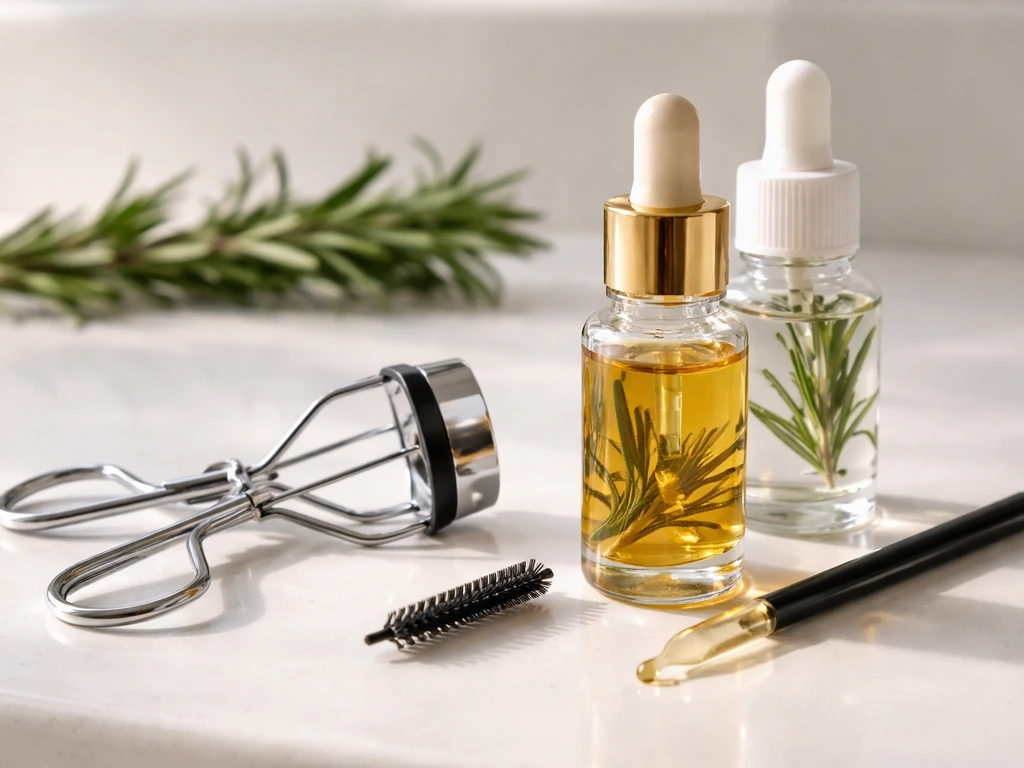
What you can reasonably expect is that consistent, safe application may reduce follicle-level inflammation and oxidative stress around the lash line, which could support your existing lashes staying in the growth phase longer. That's not nothing, but it's also not a guaranteed length boost, and it's definitely not in the same league as prescription options like bimatoprost. If you're starting today, go in with clear eyes about what this can and can't do.
What the evidence actually says

The strongest clinical data for rosemary and hair growth comes from scalp studies. A PubMed-indexed review of rosemary (Rosmarinus officinalis) as a hair-growth promoter found improvements in hair density and thickness in clinical trials, and [a randomized, placebo-controlled trial of a rosemary-based oil blend over 90 days](https://pmc. ncbi. nlm.
nih. gov/articles/PMC12256010/) showed measurable scalp hair regrowth benefits. That's genuinely promising, but it's scalp hair. Eyelash follicles are biologically different from scalp follicles: they sit in the thin skin of the eyelid margin, have a much shorter growth cycle (around 4 to 11 months for a full cycle versus years for scalp hair), and don't have the same follicle structure.
Nobody has run a controlled trial applying rosemary oil to the lash line and measuring eyelash length, thickness, or volume over time.
To understand why rosemary might still help, it's worth knowing what it brings chemically. Rosemary essential oil has documented antioxidant and antibacterial activity. At the follicle level, oxidative stress and low-grade inflammation can push hairs prematurely into the resting (telogen) phase, cutting the growth (anagen) phase short. If rosemary's antioxidant compounds reduce that stress around the lash line, it could theoretically help lashes stay in anagen longer, resulting in slightly longer, fuller-looking lashes over time.
That mechanism is plausible. It's just not proven for eyelashes the way it is for scalp hair, and it's nowhere near the mechanism behind something like bimatoprost, which has been shown to actively extend anagen duration, increase hair bulb thickness, and boost melanogenesis in lash follicles specifically, with [78% of users showing measurable improvement in global lash assessment at 16 weeks in a large randomized controlled trial](https://www. ovid. com/journals/jaade/abstract/10.
1016/j. jaad. 2011. 06.
005~eyelash-growth-in-subjects-treated-with-bimatoprost-a).
How to apply rosemary oil (or rosemary water) to your lash line safely
If you're going to try this, how you apply it matters as much as what you're applying. Rosemary essential oil is classified as a serious eye and skin irritant, and that's not a technicality: European Medicines Agency guidance on rosemary essential oil specifically includes eye-avoidance warnings, and the PubChem hazard profile lists eye irritation as a known risk. The lash line is millimeters from your eye. That means you cannot apply undiluted rosemary essential oil directly to your lash line, full stop.
Using rosemary essential oil (diluted)

- Dilute to 1-2% in a carrier oil: that's roughly 1 drop of rosemary essential oil per teaspoon (5ml) of carrier oil. Castor oil or jojoba oil are good choices because they're stable and commonly used around the eye area.
- Patch test first: apply a small amount to the inside of your wrist or elbow and wait 24 to 48 hours. Essential oil allergic contact dermatitis is a delayed hypersensitivity reaction, meaning you won't always see a reaction immediately. Eyelid skin is especially sensitive, so don't skip this step.
- Use a clean mascara wand or a fine eyeliner brush to apply the diluted oil along the upper lash line only. Do not apply to the lower lash line or inner lid margin.
- Apply every other night before bed on dry, clean skin. Nightly is fine if you tolerate it, but starting every other night gives you time to catch any early irritation.
- Use a minimal amount: a thin swipe is enough. More product means more risk of migration into the eye overnight.
- If you notice any redness, itching, swelling, or eye irritation, stop immediately and rinse the area with clean water.
Using rosemary water
Rosemary water (a dilute herbal infusion or hydrosol) is a milder option that some people prefer precisely because it avoids the concentrated irritant compounds in the essential oil. You can apply it with a clean cotton swab along the lash line. The trade-off is that the active compound concentration is much lower, so any effect you'd get is likely more subtle. That said, if you have sensitive skin or have had reactions to essential oils before, rosemary water is the safer starting point. Store it in a clean, sealed container in the fridge and discard after a week to avoid bacterial contamination.
What to realistically expect, and when
Here's the honest timeline: eyelashes grow at roughly 0. 12 to 0. 14mm per day, and a full eyelash growth cycle from anagen through catagen and telogen takes anywhere from 4 to 11 months. You won't see new length in two weeks.
If rosemary is working for you at all, you'll likely first notice that your existing lashes look a bit fuller or less prone to falling out, usually around the 6 to 10 week mark. Measurable length changes, if any, take closer to 3 months of consistent use. If you want to know how long rosemary oil takes, the timeline above suggests you should expect fuller-looking lashes around the 6 to 10 week mark and measurable length changes closer to about 3 months of consistent use <a data-article-id="5439BDB1-ECA0-46F3-91E7-D1DD722485EF">how long does rosemary oil take to grow eyelashes.
Compare that to clinical eyelash serums studied over 90 days that showed improvements in length, thickness, volume, and luster through digital photography measurements: those results came from products specifically designed and tested for eyelash biology.
Some people will see no change at all. The most common reasons: their lash loss or thinning isn't related to follicle-level inflammation (in which case rosemary's proposed mechanism doesn't apply), they're not applying consistently, or their lashes are already in telogen and there's simply nothing to extend in that cycle. If you've been at it for 12 weeks with zero visible difference, rosemary isn't your answer, and that's worth knowing rather than spending another three months waiting.
Risks, side effects, and when not to use it
Natural doesn't mean safe near your eyes. The FDA's eye cosmetic safety guidance is explicit: don't use products near the eye unless they're specifically formulated and intended for that use. Rosemary essential oil is not formulated for eye-area use. The risks you need to know about:
- Eye irritation and chemical injury: undiluted or poorly diluted rosemary essential oil can cause serious eye irritation. Even well-diluted oil can migrate into the eye during sleep.
- Allergic contact dermatitis: eyelid skin is among the most reactive skin on your body. An essential oil allergy presents as delayed redness, swelling, and itching, sometimes hours after application, and can become a persistent sensitivity that affects your ability to wear eye makeup at all.
- Cross-sensitization: some people who develop a rosemary oil sensitivity go on to react to other essential oils as well.
- Contamination risk: DIY oil blends and herbal infusions stored improperly can grow bacteria, which is a serious risk near mucous membranes.
- Don't use this if: you have active eye infection, inflamed eyelid skin (blepharitis, eczema, or contact dermatitis flare), a known sensitivity to essential oils or rosemary specifically, or if you wear contact lenses and can't remove them before application.
What works better, and what to consider alongside rosemary
Rosemary fits into the lower end of a spectrum of lash growth options. Here's how it stacks up against other approaches you might be weighing.
| Option | Evidence level | Mechanism | Timeline | Key risk |
|---|---|---|---|---|
| Rosemary oil (diluted) | Indirect (scalp studies only) | Antioxidant/anti-inflammatory support for follicles | 3+ months if effective | Eye irritation, allergic contact dermatitis |
| Castor oil | Anecdotal, no RCTs for lashes | Occlusive, may reduce breakage | 2-3 months | Eye irritation if undiluted; low risk overall |
| Lash growth serums (peptide/growth factor) | Moderate (open-label clinical studies) | Stimulate follicle activity, extend anagen | 90 days | Irritation; check ingredients carefully |
| Bimatoprost (Latisse, prescription) | Strong (multiple RCTs) | Extends anagen, increases bulb thickness, boosts melanin | 12-16 weeks | Eye redness, pigment changes, lid fat changes with long-term use |
| Biotin (oral) | Weak for non-deficient people | Supports keratin production if deficient | 3-6 months | Minimal, but rarely the limiting factor |
If you want to try a natural approach, combining diluted rosemary oil in a castor oil carrier is a reasonable starting point because castor oil is a stable, well-tolerated base that may reduce lash brittleness on its own. That combination gives you more than rosemary alone without adding extra risk.
If you've tried natural options consistently for 3 months and your lashes haven't changed, it's worth looking into a growth-factor eyelash serum or, if you're dealing with significant thinning or loss, talking to a dermatologist about prescription options.
It's also worth thinking about other natural remedies that get recommended for lash growth, like rice water or rose water: some of these have even less evidence than rosemary and work through different (and often weaker) proposed mechanisms, so the comparison is worth making before you invest time in any single approach. If you’re curious whether does rice water grow eyelashes, the evidence is still very limited compared with options designed and tested for eyelash follicles.
If you’re curious whether does cucumber grow eyelashes, the evidence is still very limited compared with options designed and tested for eyelash follicles.
The bottom line: rosemary oil is a low-cost, low-commitment option worth a 12-week honest trial if you're curious and can apply it safely. Go in diluted, apply with a clean brush, patch test first, and watch for any irritation. If it works, you'll notice it. If it doesn't, the evidence-based alternatives above are waiting.
FAQ
Can I put rosemary essential oil directly on my eyelids or lashes?
If you mean using undiluted rosemary essential oil along the lash line, the answer is no. The essential oil is a known eye irritant, and being millimeters from the eye makes accidental spread more likely. If you want to try rosemary anyway, use a diluted formulation or rosemary water, and apply it only as far onto the lash line area as your eyelid skin tolerates without migrating into the eye.
How should I patch test rosemary oil before trying it for eyelashes?
Do a patch test on a small area of skin near the inner forearm or behind the ear for 24 to 48 hours before using it around your eyes. If you get redness, itching, burning, or swelling, do not proceed. For lash-line use, if you feel stinging or watery eyes during application, rinse promptly with cool water and stop.
What’s the best way to apply rosemary for any chance it could help lashes?
Consistency matters more than the exact product. Choose a schedule you can maintain (for example, daily or 5 to 6 days per week), apply with a clean brush, and avoid skipping so your follicles get steady exposure. Also avoid layering it with other irritating lash products at the same time, since irritation can look like “no results” or cause additional shedding.
How can I track whether rosemary oil is actually helping my eyelashes?
The best way to tell is to compare standardized photos. Take images from the same distance and lighting once every 2 to 4 weeks, and include both eyes so you can spot asymmetry. If you do not see any improvement in fullness and lash fall within about 10 to 12 weeks, it is reasonable to conclude it is not working for your lash biology.
What if my eyelashes are thinning due to stress, medication, or extensions?
If your lashes started thinning after an event (new medication, pregnancy, stopping hormones, recent illness, traction styles, or eyelash extensions), rosemary may not address the root cause. Lash loss can be driven by hormonal shifts, autoimmune conditions, or chronic eyelid inflammation. In those cases, you may need medical evaluation rather than continuing a likely ineffective home treatment.
What side effects should I watch for when using rosemary for lash growth?
Yes, possible irritation is a realistic risk. Signs include redness along the lash line, itchy eyelids, burning, gritty eyes, excessive tearing, or eyelid swelling. If any of these happen, stop immediately and do not restart. If symptoms persist beyond 24 to 48 hours, consider getting eye-area medical advice.
Does mixing rosemary oil with castor oil make it safer or more effective?
A plain castor oil base can help with conditioning and may reduce the look of brittleness, but it does not have the same evidence as lash serums formulated for eyelash follicles. If you combine oils, watch for clumping, migration into the eye, and irritation, because more product volume increases the chance of getting it into the eye.
Is rosemary safe to use if I wear contact lenses?
If you wear contact lenses, be extra cautious because eye irritation can be harder to manage. Avoid applying right before inserting lenses, and consider using rosemary water or choosing a lash serum specifically made for eye-area use instead. If you have any redness or discomfort, remove lenses and stop the rosemary.
What if I have sensitive skin or blepharitis?
If you have eczema, blepharitis, dry eye, or a history of eye-area allergies, rosemary products are more likely to cause problems. In these situations, start with the gentlest option (often rosemary water rather than essential oil), and consider speaking with a dermatologist or ophthalmologist about eyelid inflammation and safe lash-care alternatives.
When should I switch from rosemary to a prescription eyelash serum?
Rosemary is not a substitute for prescription lash-growth options when you have significant thinning or need a higher likelihood of measurable length and volume. If you have been consistent with a safe home approach for about 12 weeks and see no change, it may be time to discuss evidence-based prescription options with a clinician.
Next Article
Does Mustard Oil Grow Eyelashes? Safety and What Works
Find out if mustard oil grows eyelashes, risks to eyelids, and safer options with realistic timelines and when to see a
