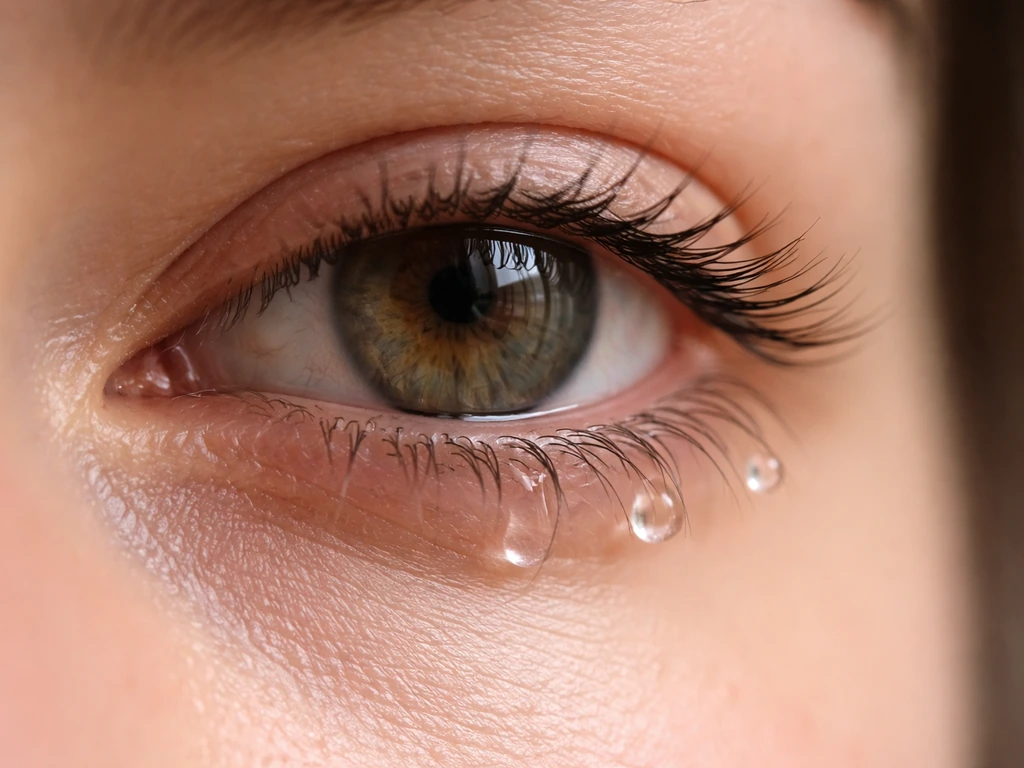
Why so many people believe crying helps lash growth
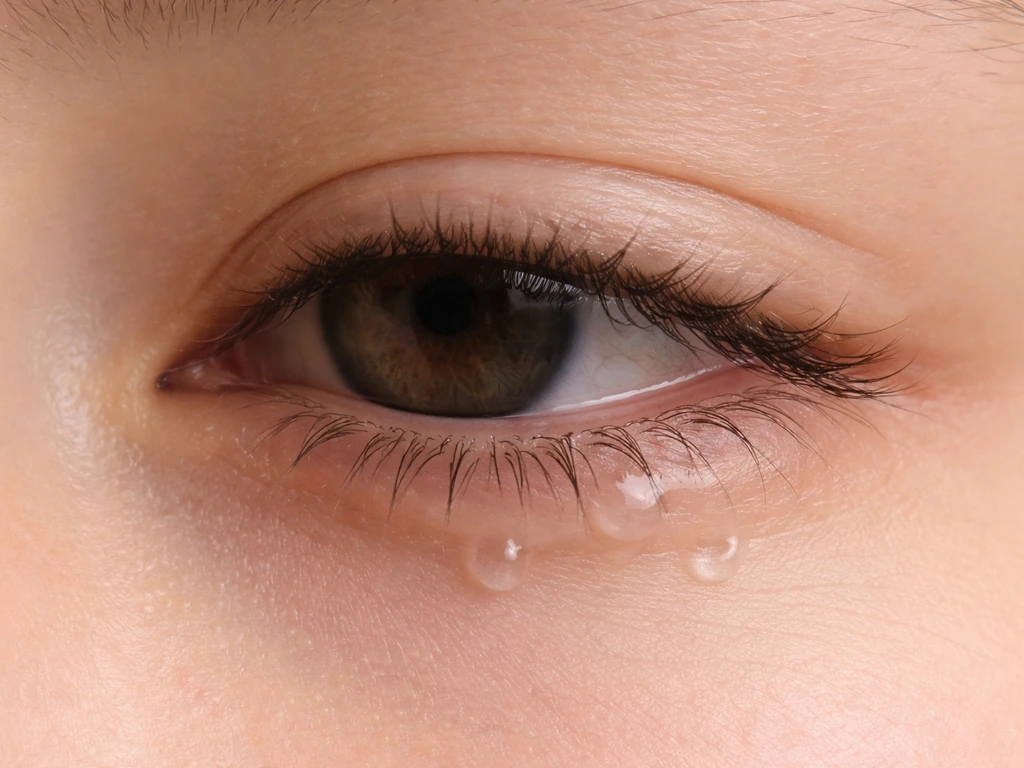
The myth has a few origins, and it makes sense that people believe it. When you cry, tears wet your lashes and cause individual hairs to stick together into small clumps. Those clumps visually mimic the look of mascara, making lashes appear fuller, darker, and more defined. If you look in the mirror immediately after crying, your lashes genuinely do look better for a moment. People notice this, remember it, and connect the dots incorrectly: crying equals better lashes.
There is also a secondary effect. Crying often makes the eyelids slightly puffy from fluid retention and increased blood flow to the periorbital area. That subtle swelling can push lashes outward and make them appear to fan out more dramatically. Again, this is pure optics. The follicle has not done anything new. No new hair has grown. No existing hair has gotten longer. It is the same lash in a temporarily different position, surrounded by a temporarily swollen lid.
A third piece of the puzzle is timing. Some people notice their lashes seem different after a big cry because they are paying close attention to their face in those moments. This kind of heightened self-observation can make normal, ongoing lash growth feel like it was triggered by the crying episode, when in reality the growth was happening on its own biological schedule the entire time.
How eyelash growth actually works
Eyelash growth is governed entirely by the hair follicle cycle, which operates independently of anything happening on the surface of your eye. Each lash follicle cycles through three phases: anagen (active growth), catagen (transition), and telogen (resting/shedding). A pilot study using histological analysis of human eyelash follicles found that at any given time, roughly 44% of follicles are in anagen, 35% are in telogen, and 11% are in catagen, with the remaining 10% in early anagen. What this means practically is that the density and length of your lashes at any moment is a snapshot of where your follicles happen to be in their individual cycles.
The anagen phase for eyelashes lasts only about 30 to 45 days, which is dramatically shorter than scalp hair. That short active growth window is why eyelashes max out at a relatively short length and why recovery after damage takes time but not years. The telogen phase, where the hair sits dormant before shedding, can last several months. This cycling is driven by molecular signals inside the follicle itself, including the activity of proliferative cells in the hair matrix.
Surface wetting, lubrication, or any amount of tears has no pathway to influence that internal signaling. Contact solution does not provide a pathway to stimulate eyelash follicles or extend the eyelash growth cycle. Sunlight does not provide a known pathway to directly lengthen or thicken eyelashes, so it does not make your eyelashes grow.
What crying and tears actually do to your lashes
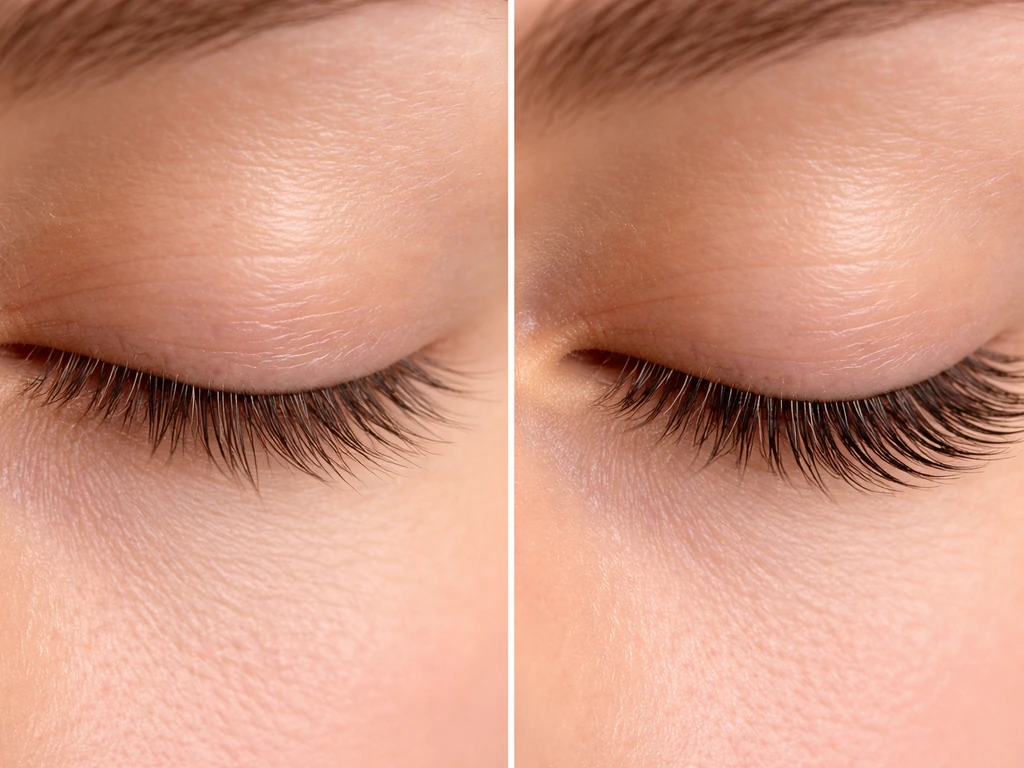
In terms of follicle biology, tears do nothing to stimulate growth. But in practical terms, crying can actually create conditions that work against healthy lashes, especially if it happens frequently or is paired with rubbing.
The rubbing problem
Most people rub their eyes when they cry. That mechanical friction is the most direct threat to your lashes during a crying episode. Repeated rubbing can physically dislodge lashes that are in the telogen phase and are already close to shedding, accelerating fallout. Over time, chronic eye rubbing is also associated with serious ocular issues including keratoconus, a progressive thinning of the cornea documented in both case reports and larger reviews in the ophthalmology literature. While keratoconus is a corneal condition rather than a lash condition, the broader point is that rubbing is genuinely harmful and should be minimized, not treated as a harmless habit.
Crying with mascara or lash extensions
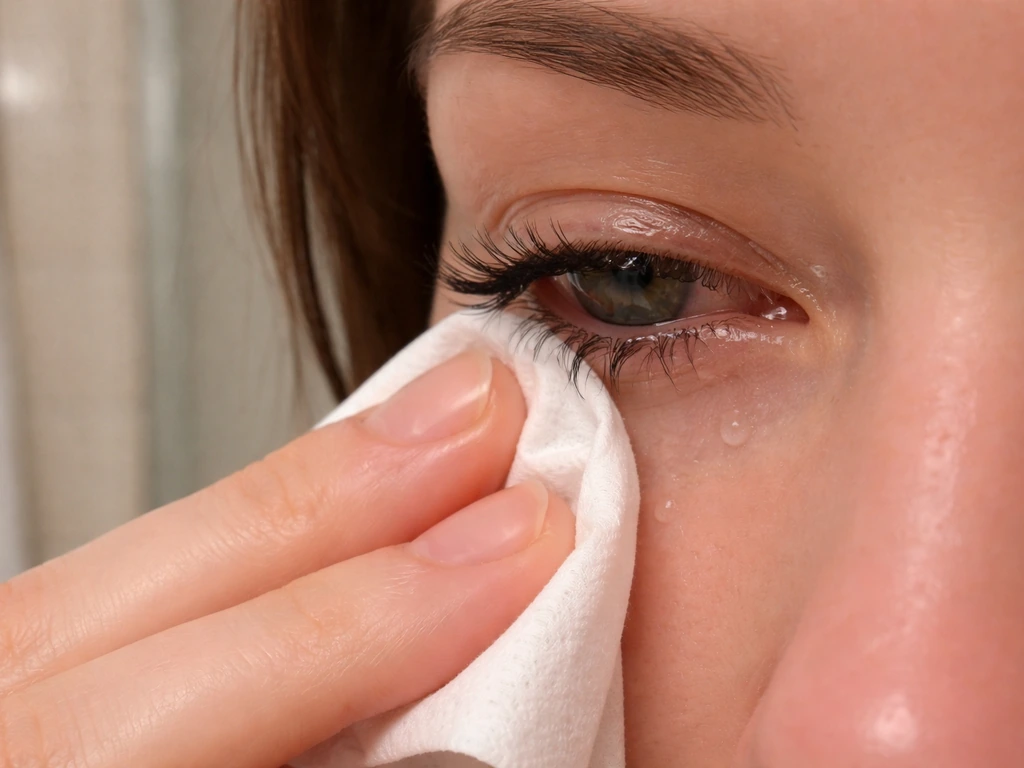
If you cry while wearing mascara, the combination of tears and rubbing to clean up smudges can be rough on the lash line. Waterproof mascara in particular requires more aggressive removal, and that friction near the lash root is exactly what you want to avoid. If you have lash extensions, crying adds another layer of risk. Extensions already place mechanical stress on natural lashes, and the American Academy of Ophthalmology's EyeWiki notes that extensions are associated with traction alopecia, a form of hair loss caused by repeated pulling force on the follicle. Rubbing wet, extended lashes dramatically increases that traction risk.
Tear film changes and irritation
Emotional tears have a different composition from basal tears (the ones your eye produces constantly for lubrication). They can temporarily disrupt the tear film stability on the ocular surface. If you already deal with dry eyes or blepharitis, frequent crying can aggravate eyelid margin inflammation, which over time can affect the environment around the lash follicle. This is not a dramatic effect for most people, but it is one more reason why crying is not a lash growth tool, and in some situations it is a net negative for lash health.
Does crying more, or crying longer, change anything?
No. The duration or frequency of crying does not incrementally improve lash growth because the mechanism simply does not exist. More tears do not mean more follicle stimulation. If anything, crying more frequently means more opportunities for rubbing, more repeated disruption to the eyelid margin, and more chances for mascara-removal friction to accumulate. The idea that crying longer or harder produces a compounding growth effect is the same as saying wetting your scalp longer makes your hair grow faster. The water is not the variable that matters.
What actually works for growing longer, thicker lashes
The good news is that there are real, evidence-backed options for improving lash length and density. They require patience, because they work through the follicle cycle rather than around it, but they produce genuine results rather than temporary illusions.
Prescription bimatoprost (Latisse): the strongest evidence
Bimatoprost 0. 03% solution, sold as Latisse, is the only FDA-approved treatment specifically indicated to grow eyelashes by increasing their length, thickness, and darkness. It works by extending the anagen phase of the follicle cycle, meaning more follicles stay in active growth for longer. Clinical evidence from randomized controlled trials and long-term safety studies shows that most patients see appreciable improvement by around week 8, with continued gains through week 16.
These outcomes are measured with digital imaging tools that quantify actual changes in lash length and fullness, not just subjective impressions. The catch is that the results are not permanent. The FDA label is explicit that eyelash growth returns to pre-treatment levels after you stop using it.
It requires ongoing use to maintain results, and it has real potential side effects including periorbital fat atrophy and eyelid skin darkening, so this is a conversation to have with a dermatologist or ophthalmologist, not a DIY experiment.
OTC lash serums and peptides: promising but uneven
There is a wide market of over-the-counter lash serums, many containing peptides, growth-factor mimics, or prostaglandin analogs in sub-prescription concentrations. A review of eyelash-enhancing products found that the evidence base for most OTC serums is limited, and many are designed with the intention of influencing the hair cycle without having the clinical trial data to fully back those claims. That does not mean they are useless, but it does mean you should set realistic expectations. Some peptide-based serums have shown modest improvements in lash density with consistent use over 8 to 12 weeks. If you try one, commit to at least two full growth cycles before evaluating results.
Castor oil: eyelid health benefits, not proven lash growth
Castor oil is one of the most popular natural lash remedies, and it does have some legitimate research behind it, though not for the reason most people think. A randomized clinical trial found that topical castor oil applied to eyelids improved blepharitis signs including eyelash matting and crusting over four weeks. Treating blepharitis matters because chronic eyelid inflammation can impair the follicle environment and contribute to lash thinning.
So castor oil may support lash health indirectly by keeping the eyelid margin cleaner and less inflamed. There is no clinical trial showing it directly stimulates follicle growth or measurably increases lash length. Apply a tiny amount to the lash line with a clean spoolie at night if you want to try it, but go in with honest expectations.
Biotin: helpful only if you are deficient
Biotin supplements are heavily marketed for hair, skin, and nail growth, including lashes. The clinical reality, according to StatPearls (NCBI Bookshelf), is that [there are no trials supporting biotin supplementation for improving hair quality or quantity in people who are not biotin deficient](https://www. ncbi. nlm.
nih. gov/books/NBK547751/). If you have a true biotin deficiency (which is rare and would typically come with other symptoms), correcting it can restore normal hair growth. For everyone else, taking biotin supplements is unlikely to move the needle on lash growth.
StatPearls (NCBI Bookshelf) reports that, to date, there have been no trials supporting claims that biotin supplementation improves hair quality or quantity in people without biotin deficiency [unlikely to move the needle on lash growth](https://www. ncbi. nlm. nih.
gov/sites/books/n/statpearls/article-18328/). Save your money unless a blood test tells you otherwise.
How the options compare

| Option | Evidence level | Expected timeline | Key limitation |
|---|
| Bimatoprost (Latisse, Rx) | Strongest: FDA-approved RCT data | Noticeable by week 8, peak at week 16 | Requires prescription; side effects possible; results reverse on discontinuation |
| OTC peptide lash serums | Limited: few robust clinical trials | 8 to 12 weeks with consistent use | Ingredient quality varies widely; results modest |
| Castor oil | Indirect: supports eyelid health (blepharitis trial) | 4 weeks for eyelid margin improvement | No direct lash growth evidence; messy to apply |
| Biotin supplements | Very weak: no trial support outside deficiency | N/A for non-deficient users | Unlikely to help; no evidence for lash-specific growth |
If your lashes are significantly thin or sparse, the prescription route is the most evidence-backed path. If you want to try something lower-commitment first, a reputable peptide serum used consistently for two to three months is a reasonable starting point. Castor oil is a low-risk addition for eyelid health. Biotin alone is not worth prioritizing.
A practical recovery plan you can start today
Whether your lashes are damaged from extensions, over-rubbing, harsh mascara removal, or just years of neglect, here is a simple, actionable plan grounded in what the evidence actually supports.
- Stop rubbing. This is the single most impactful immediate change you can make. Rubbing accelerates shedding and, with enough frequency, can damage the follicle environment. If your eyes itch or water, use a clean damp cloth to gently press, not rub.
- Switch to a gentle, oil-based eye makeup remover. Micellar water or a dedicated eye makeup remover dissolves mascara with minimal mechanical friction. Avoid tugging or pulling at the lash line.
- Give extensions a rest. If you have been wearing extensions continuously and your natural lashes are sparse, a break of at least 8 to 12 weeks gives your follicles a chance to complete a growth cycle without the added traction load.
- Apply a peptide-based lash serum nightly to the upper lash line. Look for ingredients like myristoyl pentapeptide-17 or similar peptides that have published data behind them. Use it consistently for at least 8 weeks before evaluating.
- Consider adding castor oil at the lash root two to three nights a week if you deal with eyelid irritation, crusting, or blepharitis symptoms. A clean spoolie is the easiest applicator.
- Book an appointment with a dermatologist or ophthalmologist if lash loss is significant. They can evaluate whether bimatoprost is appropriate for your situation and rule out underlying causes of thinning like thyroid dysfunction or nutritional gaps.
- Be patient with realistic timelines. Because the eyelash anagen phase is only 30 to 45 days, even the best treatments take multiple cycles to show full results. Expect 8 to 16 weeks for meaningful visible change with any evidence-based approach.
What to avoid while your lashes recover
- Waterproof mascara used daily: requires aggressive removal that stresses the lash line
- Lash curlers on fragile or sparse lashes: mechanical clamping can snap hairs that are already in a weakened state
- Eyelash extensions until your natural lashes have recovered enough density to safely support them
- Harsh cleansers around the eye area that strip the eyelid margin and disrupt the follicle environment
- Any serum containing high concentrations of synthetic prostaglandins without medical supervision, due to potential for periorbital side effects
The bottom line on crying and lash growth
Crying does not grow your eyelashes. That optical illusion can make lashes look better temporarily, but it does not change how your eyelashes grow moisture and swelling creating an optical illusion. The temporary improvement you see after crying is moisture and swelling creating an optical illusion, not biological growth. Real eyelash growth is driven entirely by the follicle cycle, which operates on its own schedule and responds to specific molecular signals, none of which are delivered by tears. In fact, the rubbing that typically comes with crying is one of the more common ways people inadvertently damage their lashes over time.
If you want lashes that are genuinely longer and thicker, the path is straightforward even if it requires patience: protect the follicle environment by eliminating mechanical stress, use evidence-backed topical options consistently over at least two growth cycles, and consider a prescription option if natural approaches are not enough.
Other environmental factors, like what you eat and how well hydrated you are, also play a supporting role in overall lash health, much like how water, green tea, and certain nutrients contribute to the general conditions in which follicles thrive. Green tea may help overall eyelid and follicle health as part of a balanced diet, but it is not a proven way to make eyelashes grow water, green tea, and certain nutrients.
If you are looking for the specific foods linked to healthier lashes, focus on nutrition that supports follicle function and reduces inflammation, such as adequate protein, iron, omega-3 fats, and vitamin-rich antioxidants foods that support lash health. But no single external exposure, including tears, substitutes for working with your follicle cycle rather than waiting for something on the surface to magically trigger growth.
Hyaluronic acid is often marketed for lash hydration, but it has not been shown to directly make eyelashes grow longer.