
Aloe vera can support healthier-looking lashes, but it won't make them grow longer the way a prescription lash serum does. What it actually does is condition the lash hair itself, soothe irritated eyelid skin, and reduce the kind of breakage and fallout that makes lashes look sparse in the first place. If your lashes are short because they keep snapping off or because an irritated lash line is disrupting the growth cycle, aloe can genuinely help. If you're hoping it will extend the anagen (active growth) phase the way bimatoprost does, it won't. That distinction matters before you commit to a nightly routine.
Can Aloe Vera Help Eyelashes Grow? How to Use Safely
Rachel Nguyen
29 Apr 2026
What aloe vera actually does for your lashes
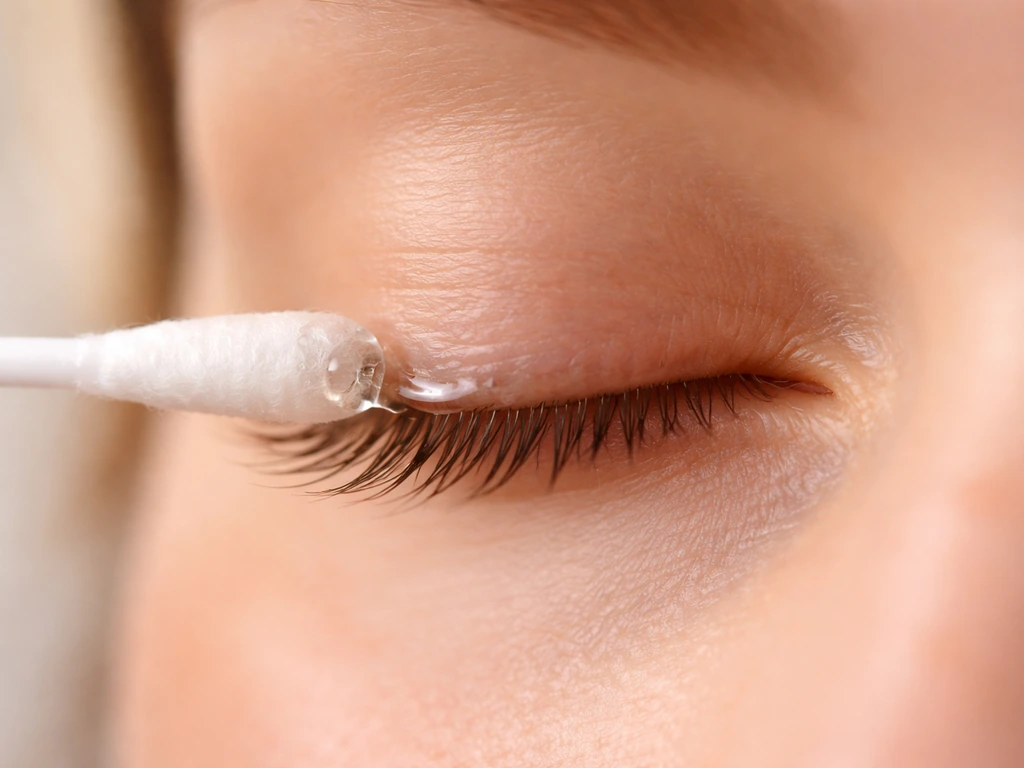
Aloe vera gel is rich in polysaccharides, vitamins C and E, and zinc, all of which support the integrity of skin and hair. On the lash line specifically, it works through a few practical mechanisms. First, it coats the lash shaft and reduces moisture loss, which means less brittleness and fewer mid-shaft breaks. Second, it has well-documented anti-inflammatory properties that can calm a chronically irritated eyelid margin. Inflammation around the follicle is one of the underappreciated reasons lashes fall out prematurely, so reducing that irritation can mean lashes reach their natural full length instead of being lost early. Third, the enzymes in aloe (particularly aliiase) have some evidence for gently exfoliating dead skin buildup around the follicle opening.
What aloe cannot do is signal your follicles to stay in the anagen phase longer. The clinical gold standard for that is bimatoprost 0.03% (the active ingredient in Latisse), which works by prolonging anagen and has measurable improvements in lash length by month one. LATISSE is an FDA-approved prescription treatment used for growing eyelashes in people with inadequate lashes (hypotrichosis) 03% (the active ingredient in Latisse). Aloe has no comparable mechanism. So the accurate summary is: aloe is a conditioning and soothing agent that can help you keep the lashes you're growing, not a growth accelerator that creates new length from scratch.
Aloe vera gel vs. pure aloe vs. aloe mixed with Vaseline
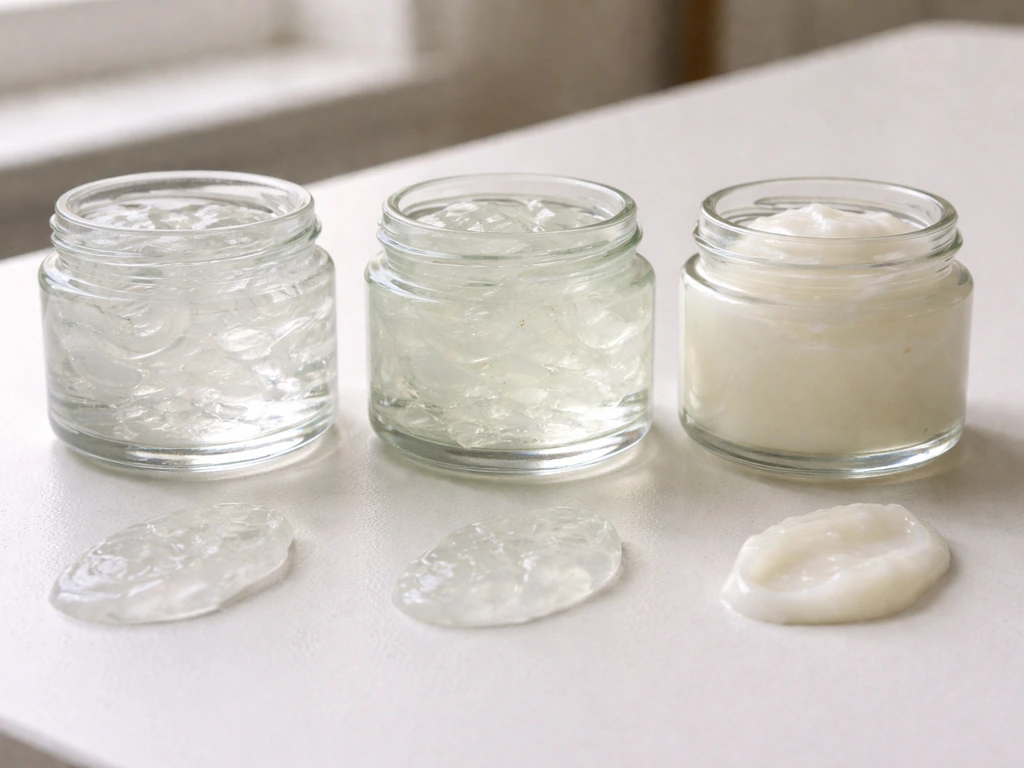
These three aren't interchangeable, and the differences actually matter near your eye area.
Pure aloe straight from the leaf
Cutting open an aloe vera leaf gives you two distinct substances: the clear inner gel and a yellowish latex layer just under the skin called aloin. The gel is what you want. The latex contains compounds that can be irritating to mucous membranes and delicate periocular skin. If you're going the fresh-leaf route, you need to let the leaf drain (cut side down for a few minutes) until no more yellowish fluid comes out, then scoop only the clear interior. It's more work, but you know exactly what you're putting near your eyes.
Commercial aloe vera gel
Store-bought aloe gels are convenient, but a 2023 contact allergen study found that many commercial aloe gels contain fragrance compounds, botanical extracts, and preservatives like methylisothiazolinone. Near the eye, those additives are often what causes stinging and redness, not the aloe itself. If you're buying a commercial product to use on your lash line, look for one that is fragrance-free, dye-free, and ideally uses minimal preservatives. Some products marketed as 99% or 100% aloe are actually much cleaner formulas.
Aloe mixed with Vaseline (petrolatum)
This combo shows up constantly in online beauty communities, and the logic is reasonable: aloe provides active plant compounds and Vaseline acts as an occlusive that seals moisture in so the aloe can work longer. Petrolatum does genuinely reduce transepidermal water loss, which can help keep lash hairs hydrated overnight. The problem is that heavy occlusion right at the lash line can trap debris and sebum around the follicle opening.
For some people this leads to styes or follicular irritation, especially if you're already prone to blepharitis. If you want to try this combo, use a very small amount, apply it only to the lash shafts (not the lash line skin itself), and be extra diligent about removing it thoroughly in the morning.
| Form | Main benefit | Main risk | Best for |
|---|---|---|---|
| Fresh leaf gel | No additives, pure aloe compounds | Labor-intensive; must avoid latex layer | Anyone with sensitive skin or additive concerns |
| Commercial aloe gel (fragrance-free) | Convenient, stable formulation | Check ingredients carefully for hidden irritants | Most people; easiest daily use |
| Aloe + Vaseline mix | Extra moisturization/occlusion overnight | Can clog follicles; increases stye risk for some | Dry, brittle lashes in people not prone to blepharitis |
If you're deciding between them, start with a clean fragrance-free commercial gel. It's the most practical option, and if you tolerate it well over a couple of weeks, you can experiment with adding a tiny amount of Vaseline if dryness is your main complaint.
How eyelash growth actually works (and what that means for your timeline)
Eyelashes go through three phases: anagen (active growth, roughly 30 to 45 days for lashes), catagen (a brief transition of about two to three weeks), and telogen (resting, around 100 days before the lash sheds and the cycle restarts). This is a much shorter cycle than scalp hair, which is why lashes don't grow as long. The key thing to understand is that at any given moment, only about 40% of your upper lashes are in the growth phase simultaneously. That means even if a product is working, you won't see dramatic change overnight because most of your lashes aren't currently growing.
With a conditioning approach like aloe, the realistic expectation is that lashes that were breaking prematurely stop breaking, and lashes in telogen complete their cycle and return. You might notice your lashes looking fuller and healthier in four to eight weeks, but you're working with natural timing. Clinical agents like bimatoprost show measurable lash prominence changes starting at one month precisely because they intervene in the biology itself. Aloe doesn't do that, so patience and consistency matter more.
How to apply aloe vera for lash growth: a practical routine
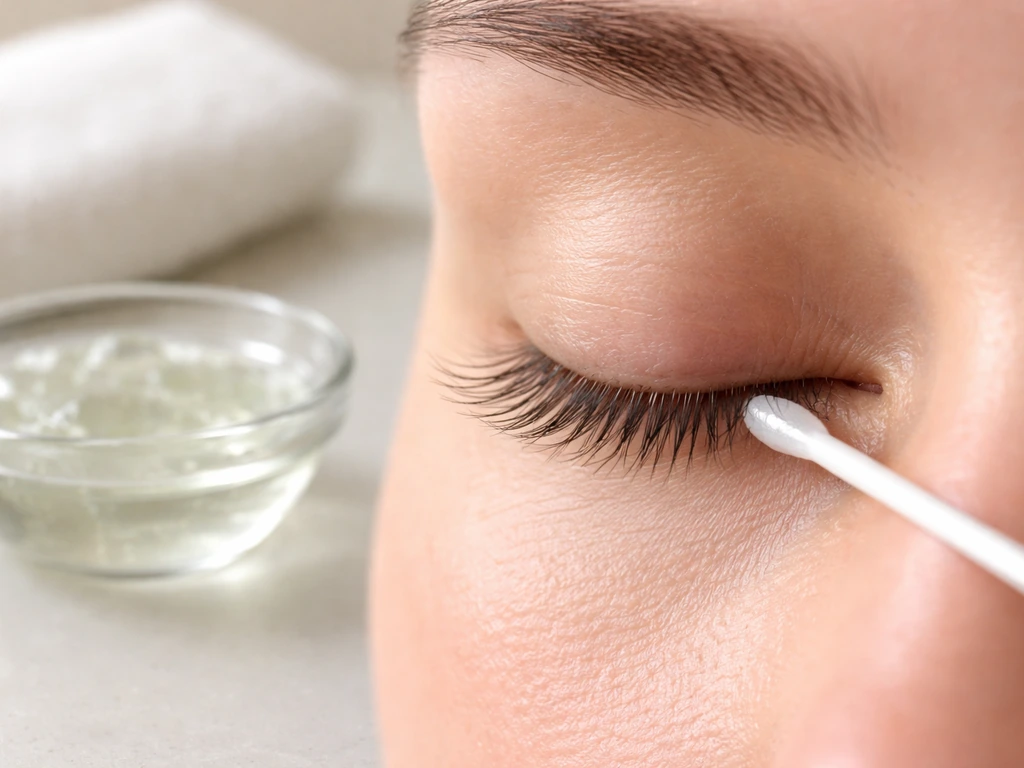
The application itself is simple, but the details around hygiene and placement make a real difference near the eye.
- Start with a clean face. Remove all makeup, including mascara and any lash primer. Residue on the lash line is the fastest way to get contamination into the mix.
- Use a clean applicator every time. A fresh disposable mascara wand (spoolie) or a clean cotton swab works well. Never double-dip into your aloe container.
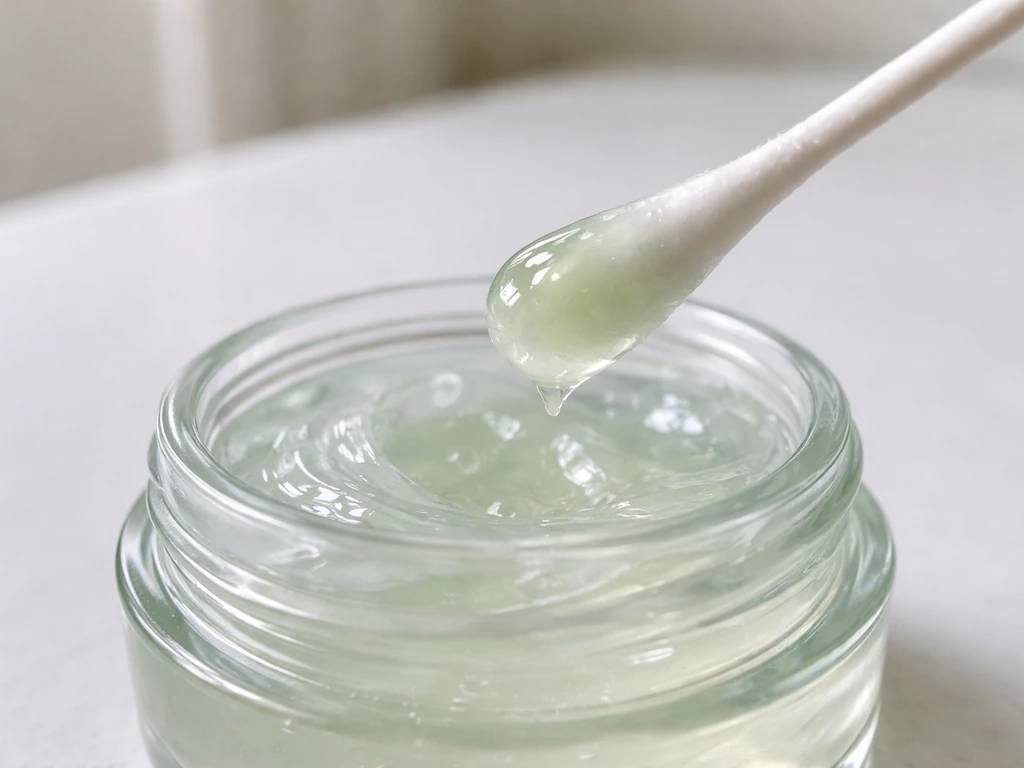
- Scoop a small amount of aloe gel onto the applicator. You need very little, maybe the size of a rice grain for both eyes.
- Brush the gel along the lash shafts from base to tip. Do not drag it across the waterline or the inner eyelid margin. The goal is to coat the lashes and the skin just above the lash line, not to get gel into the eye itself.
- Let it sit for 20 to 30 minutes, or leave it overnight if it's well-tolerated. If overnight, use just a thin layer.
- In the morning (or after your desired contact time), rinse with lukewarm water and follow your normal cleanser routine.
- Apply consistently, once daily, ideally at night. Conditioning effects build over time, not in a single session.
Store any opened aloe gel in the refrigerator if you're using it regularly. The cool temperature also makes application more comfortable and can provide a mild vasoconstriction effect that reduces puffiness around the eye.
Why your lashes might not be growing (and where aloe fits in)
Before expecting any topical remedy to work, it's worth identifying what's actually behind your lash thinning. Aloe addresses some causes but not others.
- Mechanical breakage: Rough makeup removal, sleeping face-down, and aggressive eyelash curling all snap lashes mid-shaft. Aloe helps here by strengthening the hair and reducing brittleness.
- Chronic lid irritation or blepharitis: Inflammation at the lash follicle level disrupts the growth cycle. Aloe's anti-inflammatory properties may reduce this, but it won't treat an active blepharitis infection, which needs medical management.
- Extension damage (traction alopecia): Heavy or poorly applied extensions cause traction stress on follicles. The AAO-associated literature specifically links extensions to allergic blepharitis and traction-related lash loss. Once extensions are removed, conditioning with something like aloe can support recovery, but the follicle needs time to reset.
- Allergic or contact dermatitis: Paradoxically, if your lash area is irritated from a previous product reaction, adding aloe could help calm it, but aloe itself is a documented contact allergen in some people. Patch test first.
- Medical causes: Thyroid disorders, alopecia areata, nutritional deficiencies, and certain medications all cause lash loss that no topical remedy will fix. If lash shedding is sudden, patchy, or accompanied by brow loss, see a dermatologist or ophthalmologist.
Safety, patch testing, and when to stop
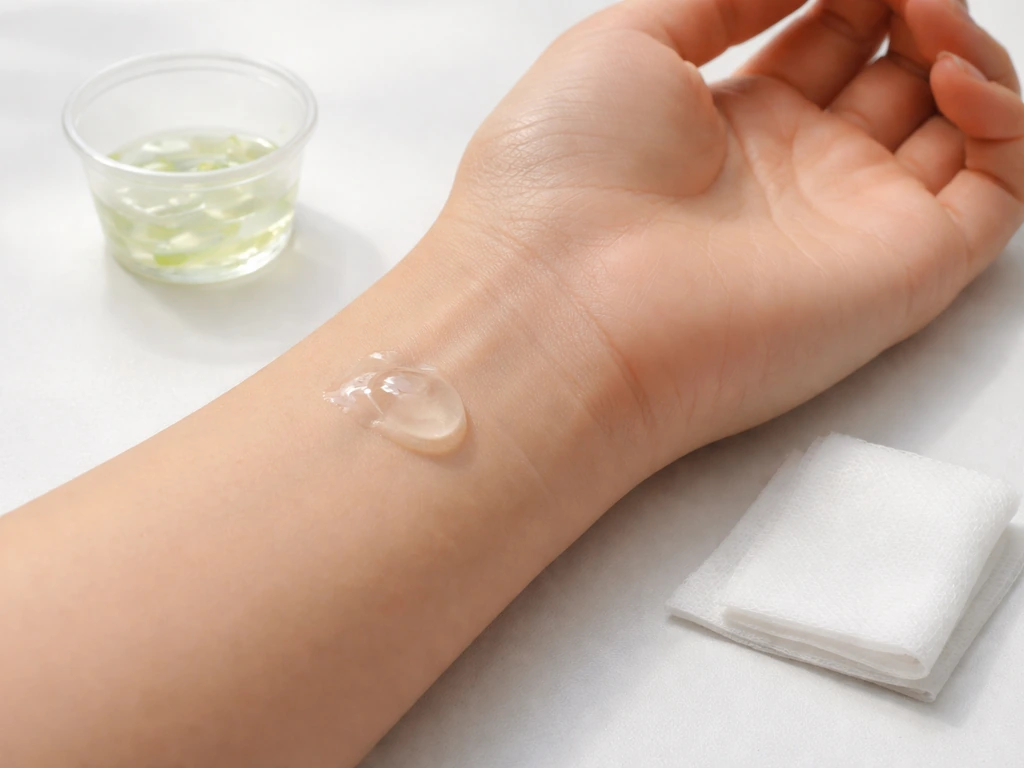
Aloe is generally well-tolerated, but 'natural' does not mean risk-free near the eyes. There are documented cases of allergic contact dermatitis specifically from aloe vera, and patch testing before your first use is genuinely worth the extra step.
To patch test: apply a small amount of aloe gel to the inside of your wrist or the inner crook of your elbow, leave it for 24 hours, and check for redness, swelling, or itching. If you see any reaction, don't use it on your lash line. If your wrist is clear, do a second test on the outer corner of the eyelid skin (not the lash line itself) and wait another 24 hours before starting your routine.
Stop using aloe on your lashes immediately if you notice: persistent stinging after application, redness or swelling on the eyelid, increased tearing, or itching that doesn't resolve within a few minutes. These can signal either an allergy to aloe itself or a reaction to an additive in a commercial gel. The FDA advises against applying any eye-area cosmetic if the skin around the eye is already inflamed, and that principle applies here too. If you're in an active flare of eyelid dermatitis or blepharitis, hold off until your eyelid skin has calmed down.
One more practical note: contamination is a real risk with any near-eye product. Use clean tools every time, don't let the applicator touch the eye, and replace your aloe gel if it changes color, smell, or texture. The FDA's eye cosmetic safety guidance points out that contamination can happen even with new products, so hygiene matters from day one.
If you're experiencing recurring redness or itching that returns each time you reuse aloe or any lash product, consider patch testing through a dermatologist. Medscape has noted that patch testing can accurately identify periocular allergens that cause these recurring reactions, which is a faster path to an answer than guessing which ingredient is the problem.
If aloe isn't enough: what actually works and what to try next
If you've used aloe consistently for six to eight weeks and aren't seeing any improvement in lash fullness or thickness, it's worth stepping up to options with stronger evidence. If you are exploring other oils too, you might also want to compare results by reading does tea tree oil help eyelashes grow for a different option beyond aloe.
- Castor oil: A popular and frequently recommended conditioning oil with a long track record in the lash community. Like aloe, it works primarily through conditioning and reducing breakage rather than extending anagen. Some people find it more effective than aloe for coating and protecting lash hairs.
- Lash serums with prostaglandin analogues: These are the options with the most clinical evidence. Bimatoprost 0.03% (Latisse) is FDA-approved and has randomized controlled trial data showing measurable lash length and thickness improvements within months. It works by prolonging the anagen phase, which is something aloe simply cannot replicate. It requires a prescription in the US.
- Over-the-counter lash serums: Many contain peptides or biotin-adjacent compounds. Evidence is weaker than for prescription prostaglandin options, but they're a reasonable middle step between conditioning oils and a prescription.
- Biotin: If your lash thinning is tied to a biotin deficiency, supplementation can help. But biotin only addresses a deficiency state; if your levels are already normal, adding more biotin will not produce extra growth.
- Other carrier oils: Almond oil and avocado oil are in the same conditioning category as castor oil, each with slightly different fatty acid profiles that some people tolerate better than others.
For post-extension recovery specifically, combining a gentle conditioning oil or aloe with a break from extensions (a minimum of four to six weeks is commonly recommended) gives your follicles the best chance to reset without ongoing traction stress. Adding a peptide-based lash serum during this window can support faster-looking recovery, even if it's not technically accelerating biology.
The bottom line is that aloe is a low-risk, low-cost starting point that genuinely earns its place in a lash care routine when the problem is conditioning, irritation, or breakage. It just needs to be used with realistic expectations: consistent nightly application, clean tools, a patch test first, and patience measured in weeks rather than days.
blank" rel="noopener noreferrer">Latisse is labeled for nightly application along the skin of the upper eyelid margin at the base of the eyelashes using the disposable sterile applicator consistent nightly application. Can almond oil help eyelashes grow? The answer depends on whether you are trying to improve conditioning and breakage versus stimulating true growth.
Lavender oil is often discussed for lashes, but it is not as well proven as prescription-style growth agents does lavender oil make your eyelashes grow. If you need more than that, the clinical options exist and they work.
FAQ
How long does it take to see results if can aloe vera help eyelashes grow by reducing breakage and irritation?
If aloe is helping, most people notice changes in 4 to 8 weeks, because you are largely waiting for lashes that were prematurely breaking to finish their natural cycle. If you see no improvement by 6 to 8 weeks, it is a sign to reassess the cause of thinning rather than just increasing how often you apply it.
Can I use aloe on lash extensions or lash lift results?
Aloe may help with conditioning for your natural lashes, but it should not be applied to extension adhesive areas or wet-feel product types that can lift bonds. If you do try it, apply only to the lash shaft and keep it away from the lash line skin, then monitor for increased shedding in the following days.
What is the safest way to apply aloe so it does not irritate my eyes?
Use a very small amount and place it on the lash shafts, not directly on the eyelid skin or the lash line. Avoid spreading it toward the inner eye corner, and use clean tools so you are not introducing bacteria or residue close to the eye.
Is fresh aloe from a leaf better than store-bought for eyelashes?
Fresh leaf gel can be cleaner because you can avoid the yellow latex layer (aloin), but it is harder to ensure consistency and hygiene. If you are using store-bought, choose fragrance-free and dye-free and be cautious with “natural” products that still contain botanical extracts or sensitizing preservatives.
Should I refrigerate aloe vera gel for lash use, and does it matter?
Refrigeration is optional but can improve comfort and may reduce puffiness during application. The bigger priority is using an unopened-by-contamination container and discarding the product if its color, smell, or texture changes.
Can aloe vera cause styes or worsen blepharitis?
It can, especially if you add a heavy occlusive like petroleum jelly right on the lash line. That situation can trap debris and sebum around the follicle opening. If you are prone to blepharitis or styes, skip lash-line occlusion and focus on a thin aloe-only lash-shaft routine, then reassess.
If I patch test aloe, where exactly should I test to know it will be safe for my eyelids?
Start with the inside of your wrist or inner elbow crease for 24 hours. If that is clear, do a second 24-hour test on the outer corner eyelid skin (not the lash line itself). The lash line is more sensitive, so testing periocular skin is more informative than wrist testing alone.
What reactions mean I should stop right away after applying aloe near my lashes?
Stop immediately if you have persistent stinging, eyelid redness or swelling, increased tearing, or itching that does not settle within a few minutes. Those can point to aloe sensitivity or an additive reaction in commercial gels, and it is better to pause than to “push through.”
Can aloe vera help if my lashes are thinning because of makeup or rubbing?
Yes, it can help more when the problem is lash breakage from friction, dryness, or irritation. But if rubbing is the main driver, aloe alone will not fully solve it, so combine use with a gentler makeup removal routine and avoid mechanical tugging during washing.
If I want true eyelash growth length, what should I consider instead of aloe?
Aloe will not prolong the growth phase the way prescription growth agents do. If you want measurable length change, discuss evidence-based options with a clinician, especially if your thinning is significant or you are seeking results faster than the natural cycle timeline.
Next Article
Does Mustard Oil Grow Eyelashes? Safety and What Works
Find out if mustard oil grows eyelashes, risks to eyelids, and safer options with realistic timelines and when to see a
