You can encourage your lashes to look more upward starting today through a combination of styling techniques, better daily habits, and targeted growth support, but here is the honest biology: the follicle angle that is anchored in your eyelid dermis largely determines the direction your lashes naturally grow. You can't biologically "reprogram" a follicle's orientation at home. What you can do is remove the triggers causing downward drift (inflammation, damage, friction, chemical stress), support stronger regrowth, and use safe styling methods to train the appearance upward while your lashes recover. Whether this gives you a full fix or just an improvement depends on whether the cause is reversible, and this article helps you figure out which camp you're in.
How to Make Eyelashes Grow Upwards: Safe Steps That Work

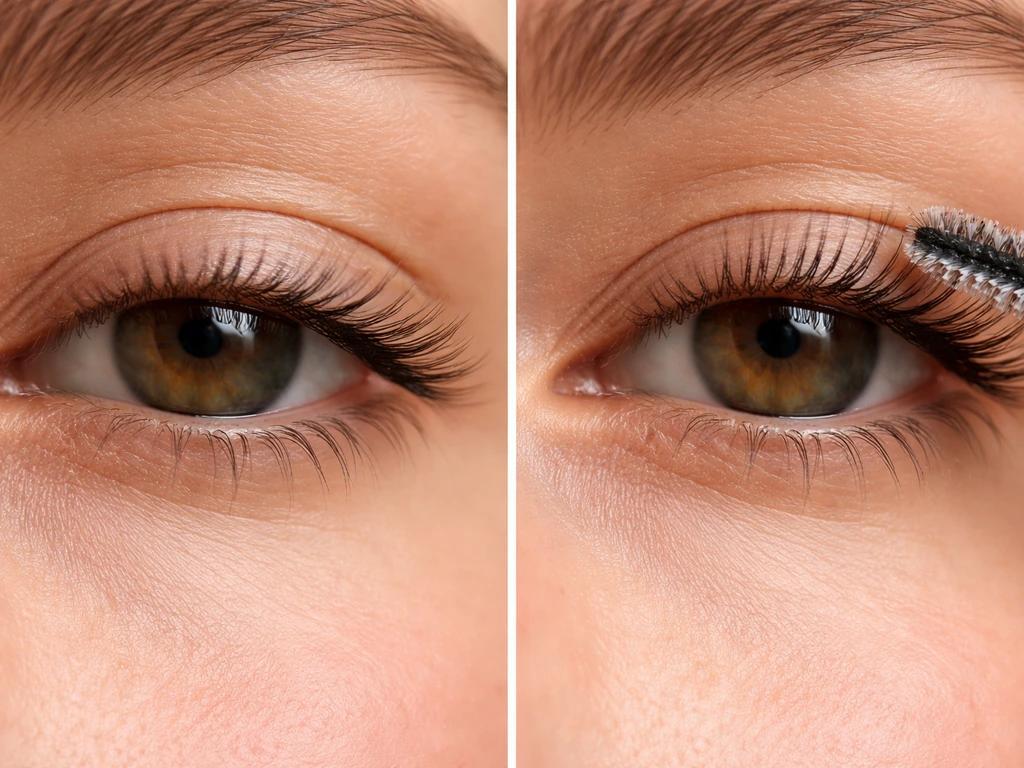
Why lashes point downward instead of upward (and what you can actually change)
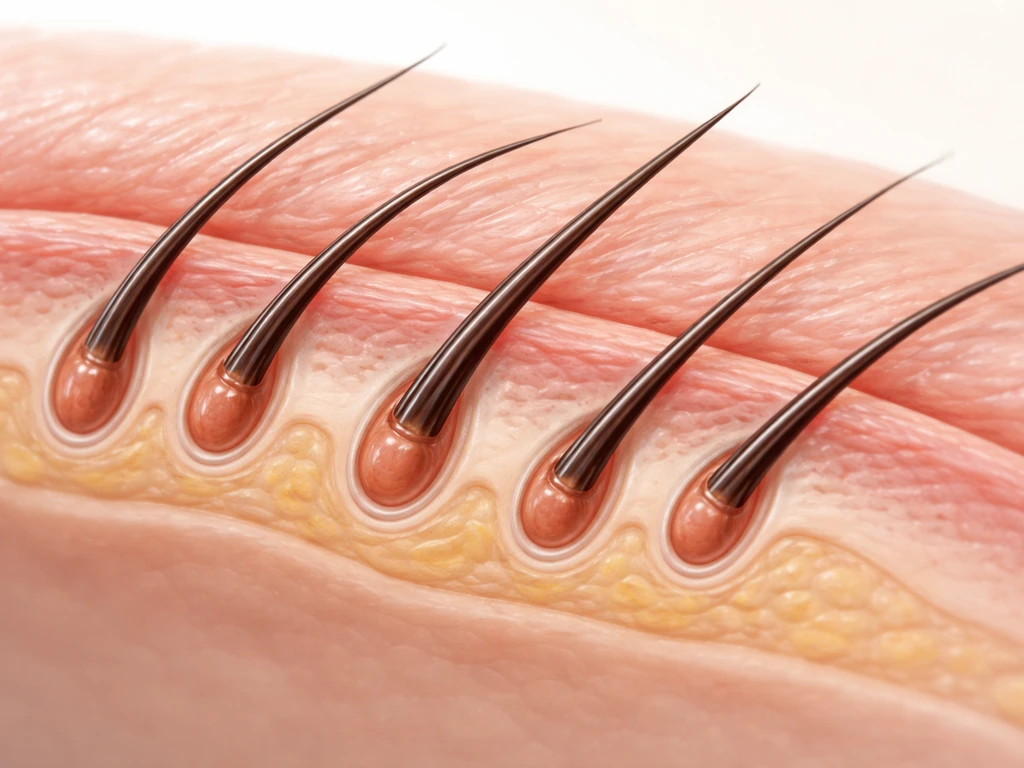
Each eyelash grows from a follicle embedded in the eyelid dermis, and the angle of that follicle determines the direction the lash points. When follicle orientation is anatomically normal and undamaged, lashes naturally curve slightly upward and outward. When they droop, splay downward, or grow in irregular directions, there is usually a reason: repeated mechanical stress, inflammation around the follicle, chemical damage, or in some cases a structural eyelid issue like epiblepharon or scarring from conditions like blepharitis or Stevens-Johnson syndrome. If your lashes seem to grow toward your nose, start by ruling out common drivers like inflammation, irritation, or eyelid structure issues and then use the at-home steps in this guide to retrain their look upward grow in irregular directions.
The important distinction to understand early is this: if the misdirection is caused by something you can stop or treat (active inflammation, extension damage, rubbing, irritation), there is a real chance lashes regrow in a healthier angle once the trigger is gone. If the misdirection is caused by permanent scarring of the follicle or a structural eyelid abnormality, no amount of home care will reorient the follicle. That type of correction requires a clinician. Most people reading this article are dealing with the first scenario, not the second, so there is genuinely a lot you can do.
It is also worth separating two goals that often get conflated: making lashes grow upward (a biological direction change over a full growth cycle) versus making lashes look upward right now (a styling outcome). Both are achievable, but through different methods, and realistic results depend heavily on which goal you prioritize.
Common causes worth identifying first
Before you start any routine, it helps to identify the likely cause, because the fix differs depending on what is actually driving the problem.
- Blepharitis: Chronic inflammation of the eyelid margins is one of the most common culprits. It causes lashes to fall out, grow irregularly, and sometimes misdirect. The inflammation disrupts the tissue around lash roots, and if it is ongoing, it keeps undoing any improvement. This is very treatable at home with consistent lid hygiene.
- Eyelash extensions and adhesive: Extension glues are associated with contact dermatitis, allergic blepharitis, and toxic conjunctivitis. Repeated extension applications pull on the natural lash, and the chronic mechanical stress and inflammation around the follicle can alter how regrown lashes emerge. This is a traction-type injury, and early withdrawal from extensions often allows meaningful recovery.
- Rubbing and friction: Habitual eye rubbing, sleeping face-down on a pillow, and aggressively removing eye makeup all create repeated mechanical stress at the lash line. This kind of traction can shift follicle alignment over time, particularly when it is an everyday pattern.
- Chemical exposure: Waterproof mascaras, harsh makeup removers, and some eyeliner formulations dry out and weaken the lash shaft, leading to brittleness, clumping, and downward deflection. They can also irritate the follicle environment.
- Scarring and structural causes: If you have had eyelid surgery, a burn, a trauma, or a condition like epiblepharon, the misdirection may be structural. These cases do not self-correct and need professional evaluation.
- Trichiasis: This is a medical condition where lashes grow inward toward the eye rather than outward and upward. It causes persistent foreign body sensation, redness, and tearing. It is not a cosmetic issue you should try to style around.
Daily habits to start today
These changes are free, low-risk, and directly target the most common reversible causes of downward lash direction. Start all of them at once.
Clean your lash line gently every day
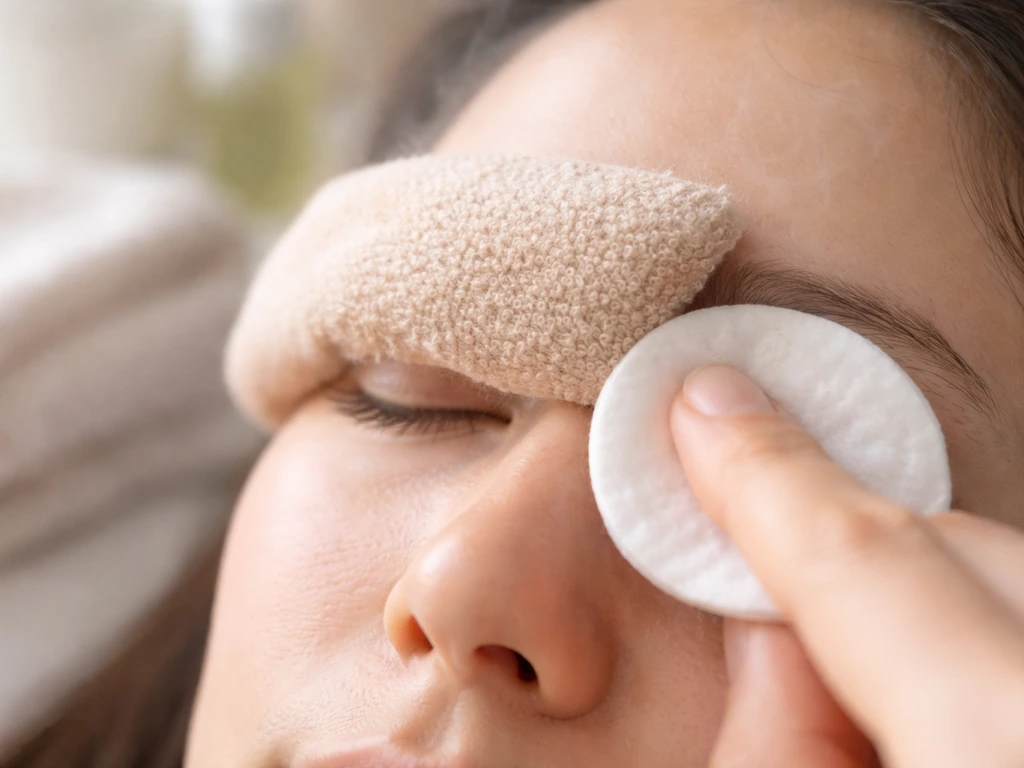
Warm compress plus gentle lid hygiene is the gold standard for managing blepharitis and reducing the inflammation that drives abnormal lash growth. Apply a warm, moist cloth to your closed eyes for about 10 minutes, then clean the lid margins using diluted baby shampoo on a soft washcloth or a purpose-made OTC lid scrub. Use gentle horizontal strokes along the lash line to remove debris and crusts. Do this once daily, consistently. If you are dealing with active blepharitis, skip eye makeup entirely during the healing phase. This is not optional advice; Kaiser Permanente's blepharitis care instructions explicitly include avoiding eye makeup while eyelids are inflamed.
Stop rubbing your eyes
This sounds simple but it is genuinely one of the most impactful changes you can make. Rubbing creates a cycle: it irritates the lash line, which makes it itch, which makes you rub more. NHS blepharitis guidance specifically calls out eye rubbing as a behavior that perpetuates the problem. If itchiness is driving the rubbing, treating the underlying inflammation (blepharitis, allergies) is the real solution.
Change how you remove eye makeup
Press a soaked cotton pad gently against the lash line and hold for 10 seconds before wiping, rather than dragging the pad across the lashes in repeated strokes. Use a non-waterproof mascara if possible, since waterproof formulas require more force to remove and cause more friction. Micellar water is gentler than oil-based removers for the lash line specifically (though both can work safely when applied with care). The goal is zero pulling, zero tugging.
Modify your sleep position

If you sleep face-down or pressed against a pillow, your lashes spend hours being mechanically flattened in a downward direction every night. Sleeping on your back or using a silk pillowcase that reduces friction can make a real difference over weeks of cumulative exposure.
At-home techniques to train lashes to look upward
These techniques change the appearance of lash direction without changing follicle biology. They are effective and safe when done correctly, and they make a meaningful visual difference while you wait for healthier regrowth.
Using a lash curler safely
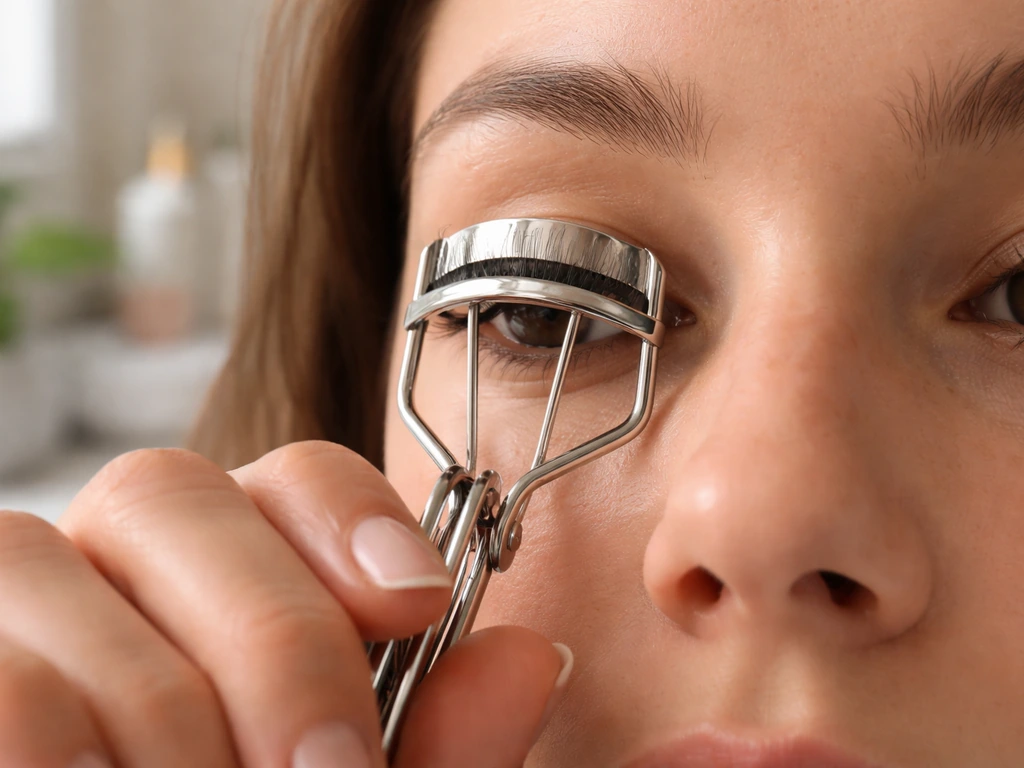
A heated or standard lash curler is the most effective tool for creating an upward curl. Always curl before applying mascara, not after. Curling after mascara increases mechanical stress and clumping, and the dried formula can cause lashes to snap. Position the curler as close to the base of the lash line as you can without pinching skin, clamp gently, hold for 10 to 15 seconds, then release slowly. Do not yank the curler open before the lashes have released; that is the main way lashes get pulled out. If you use a heated curler, test the temperature on your wrist first to avoid burns at the eyelid. Safety note: eyelash curlers can cause pinching and burning injuries at the eyelid if used carelessly, so steady, slow movements matter.
Brushing and conditioning
A clean spoolie brush used daily to brush lashes upward and outward from base to tip is worth adding to your routine. It trains the lash to sit in an upward position over time, removes small debris from the lash line, and stimulates circulation around the follicle. Do this on clean, dry lashes each morning. You can also apply a thin layer of a lash conditioning product or a nourishing oil (more on that below) and brush through with the spoolie to coat lashes before styling.
Mascara technique for upward appearance
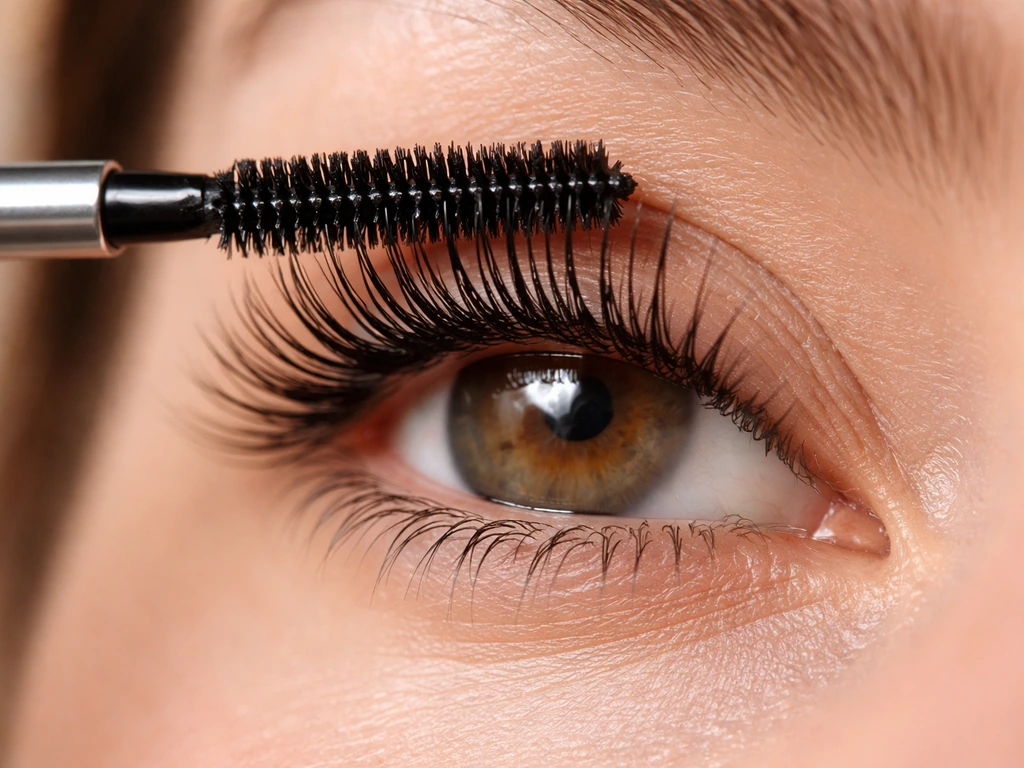
Apply mascara from the base of the lash in a wiggling motion upward, rather than dragging straight through from mid-lash to tip. A lengthening or volumizing formula with a curved wand helps hold the upward curl from the curler. Avoid multiple heavy coats, which weigh lashes downward. If lashes are currently weak or sparse from damage, a light-hold lash primer applied before mascara can help build structure without excess weight.
Growth support: what the evidence actually says
If your goal is genuinely regrowing lashes that are stronger, fuller, and pointing in a healthier direction, here is an honest look at the main options and the evidence behind each.
| Option | Evidence Level | What It Does | Realistic Use Case | Key Risks/Notes |
|---|---|---|---|---|
| Bimatoprost (Latisse) | Strong: RCT evidence showing ~2.0 mm growth vs 1.1 mm placebo | Increases lash length, thickness, and darkness by extending the anagen phase | Prescription-only; best for thinning/sparse lashes after damage or medical loss | Eye redness, possible iris pigmentation change, periorbital fat loss with long-term use, macular edema risk; requires prescriber supervision |
| Peptide/growth factor serums | Moderate: open-label and small studies exist, but larger RCTs are limited | May support lash thickness and density; mechanism varies by formulation | OTC option for general conditioning and moderate improvement | Generally low risk; efficacy varies widely by product; look for formulas with published data |
| Castor oil | Weak: no published clinical evidence it stimulates lash growth | May coat lashes and improve appearance temporarily; does not stimulate follicle biology | Low-cost conditioning step; sets realistic expectations | Safe for most people but will not regrow lashes; potential for contact dermatitis in sensitive skin |
| Biotin (oral) | Weak for people without deficiency: no strong RCT data for lash growth in people with normal biotin levels | Supports keratin infrastructure broadly; deficiency correction can help | Only meaningful if you have a documented deficiency or poor diet | Generally safe; high doses can interfere with thyroid and cardiac lab tests |
The strongest clinical evidence for actual lash growth belongs to bimatoprost (Latisse). Multiple randomized controlled trials show measurable improvements in length and thickness, with maximum results typically seen around week 16 to 20 of consistent daily use. However, this is a prescription medication with real risks including potential changes to iris pigmentation, conjunctival redness, and in rare cases cystoid macular edema. It is not a product to self-prescribe or order from unverified sources. If you are interested, that conversation starts with a dermatologist or ophthalmologist.
Castor oil, despite being widely recommended across beauty communities, has no published clinical evidence demonstrating it stimulates eyelash follicle activity or growth. It may make lashes appear thicker by coating the shaft, which is not nothing cosmetically, but do not expect it to restore lashes that have been lost or redirected. If you enjoy using it as part of a conditioning routine, it is safe for most people when kept away from the eye surface itself.
Peptide serums occupy a middle ground. There are small studies suggesting some benefit, but the research base is nowhere near as robust as prostaglandin analog data. If you want an OTC option with at least some supporting rationale, a peptide-based lash serum applied to the lash line at night is a reasonable choice, just go in with measured expectations.
How long it actually takes to see results
Here is where patience becomes genuinely important. The eyelash growth cycle is slow. The anagen (active growth) phase for lashes lasts approximately 4 to 10 weeks, catagen (transition) takes about 15 days, and telogen (resting before shedding) can last anywhere from 4 to 9 months. This means that even if you eliminate the cause of damage today, you will not see the full effect in new lash direction or density until those lashes have completed a full cycle and been replaced by healthier ones growing from a recovered follicle.
For practical timeline planning: if your lashes were damaged by extensions, irritation, or mechanical stress and you stop the trigger now, early visible improvement in density and direction can appear within 6 to 8 weeks as new lashes enter anagen. Full recovery to your baseline, assuming the follicles are not permanently scarred, typically takes 3 to 6 months. If you are using bimatoprost, clinical studies show peak improvement around weeks 16 to 20. Styling changes (curler, spoolie, mascara technique) are visible immediately and can meaningfully improve appearance throughout the biological recovery period.
If you have removed all the obvious triggers, maintained daily lash hygiene, and supported growth for a full 3 to 4 months without any improvement in direction or density, the remaining misdirection is likely structural or scarring-related rather than inflammation-driven. That is the point where a clinical evaluation changes what you can do.
When to stop treating at home and see a doctor
Most of the causes behind downward or misdirected lashes are cosmetic and reversible. If you are dealing with trichotillomania, it can be especially important to address the urge and reduce eyelash pulling, because persistent mechanical trauma can slow regrowth. But some are not, and confusing them can cause real harm to your eyes. These are the signs that mean you need a clinician, not a better mascara routine.
- Eye pain or a persistent sensation that something is scratching your eye: this is a classic sign of trichiasis, where lashes are actually rubbing the cornea. Left untreated, this can progress to a corneal abrasion and potentially a corneal ulcer. This is urgent.
- Persistent redness, tearing, or photophobia (light sensitivity): these symptoms alongside misdirected lashes suggest active corneal involvement and need prompt evaluation.
- Decreased vision or sudden visual changes: see an eye care provider the same day.
- No improvement after 3 to 4 months of consistent home care: this suggests structural or scarring causes that at-home methods cannot address.
- Lashes that grow in completely different directions, including toward the eye from birth or early childhood: conditions like distichiasis or epiblepharon require clinical assessment.
- Increasing redness, burning, or swelling at the lash line after starting any new product (serum, oil, mascara): stop the product immediately and see a clinician if it does not resolve within a few days.
If you are considering bimatoprost, do not self-treat without a prescription consultation, especially if you have a history of eye inflammation, uveitis, macular edema, or glaucoma. The FDA labeling for Latisse includes macular edema as a reported risk, and using a prostaglandin analog without a clinician review of your eye history is not worth the potential downside.
A related note on direction vs appearance: some people find that lashes grow straight forward or toward the nose rather than upward and outward, which can overlap with some of the same causes (inflammation, follicle orientation, habits) discussed here. If your lash direction issue is more sideways than downward, the daily habits and growth support steps in this article still apply, but the anatomy behind it can differ slightly.
The practical bottom line is this: start the daily habits and styling techniques now, they cost nothing and create visible results quickly. Support the biology with consistent lid hygiene and realistic product choices. Give it a full growth cycle (at least 12 weeks) before drawing conclusions. And if after that time your lashes still look or feel wrong, especially if there are any symptoms involving the eye itself, a 15-minute appointment with a dermatologist or ophthalmologist will tell you more than any online guide can.
FAQ
How long does it usually take to see lashes look more upward after changing my routine?
If your lashes were pulled down by irritation or mechanical stress, you can often see early changes in 6 to 8 weeks as new lashes enter the active growth phase. The visual difference from styling habits (curler, spoolie, mascara technique) can show immediately, but true improvement in direction needs closer to a full growth cycle, about 12 weeks or more, to judge accurately.
Can I make lashes grow upward if I got them damaged from extensions or lash lift?
You cannot reliably change follicle orientation at home, but you can stop the ongoing damage and support healthier regrowth. Extensions, lash adhesives, and lift chemicals can weaken lashes and increase breakage, so focus on zero pulling and consistent lid hygiene first, then reassess after a 3 to 6 month regrowth window.
What if my lashes point downward on purpose because of my eyelid shape, like epiblepharon?
If an eyelid structural issue is causing lashes to rub toward the eye, home methods may only improve appearance briefly and will not permanently redirect the follicle. Look for symptoms like persistent irritation, redness, or lashes contacting the eye, and get an eye specialist evaluation for a corrective plan.
Is it safe to use a lash curler every day?
It can be safe if you use gentle pressure, clamp near the base without pinching skin, and avoid curling after mascara. If you notice burning, redness, or lashes shedding more than usual, reduce frequency and pause until your eyelids feel calm. A heated curler should be tested on your wrist to avoid eyelid injury.
Can mascara be replaced or skipped while my lashes are trying to recover?
Yes, and it can help. During active eyelid inflammation or blepharitis, skipping eye makeup is especially important because removal can increase tugging. If you do wear mascara, use non-waterproof formulas and apply lightly with a wiggling base-to-tip motion, avoiding multiple heavy coats.
Will castor oil or other DIY oils actually regrow lashes upward?
Castor oil has no strong clinical evidence for stimulating lash follicle growth, so it is unlikely to fix direction by itself. If you use it for cosmetic conditioning, keep it off the eyelid margin and do not let it migrate into the eye, since irritation can worsen shedding.
Are peptide lash serums worth trying if my lashes are growing in the wrong direction?
They may help with appearance or conditioning, but expectations should be modest compared with prescription options. If you try one, use it consistently and pair it with friction-free habits and lid hygiene, then reassess after at least 12 weeks.
What are the red flags that mean this is not just a styling or irritation issue?
If you have pain, light sensitivity, significant redness, vision changes, or ongoing gritty irritation, do not rely on at-home routines. Also seek care if lashes are repeatedly rubbing the eye or if there is scarring risk from severe eyelid conditions, because follicle damage may be permanent.
If I use bimatoprost, how do I reduce the risk of side effects?
Use only with prescription guidance, since your eye history matters. During application, avoid getting product on the inner eyelid or spreading to the eye surface beyond what is directed, and stop and contact your clinician if you develop unusual redness, inflammation, or vision symptoms.
I pull at my lashes when stressed. Could that be why they grow downward?
Yes. Trichotillomania and other compulsive lash pulling create repeated mechanical trauma that can reduce regrowth and keep lashes looking abnormal. Address the urge behavior and reduce contact with the lash line, since styling alone cannot compensate for ongoing pulling.
How to Get Eyelashes to Grow Straight: Fix Crooked Lashes
Fix crooked lashes: understand why they kink, then follow safe habits, nightly positioning, and serum tips to regrow str