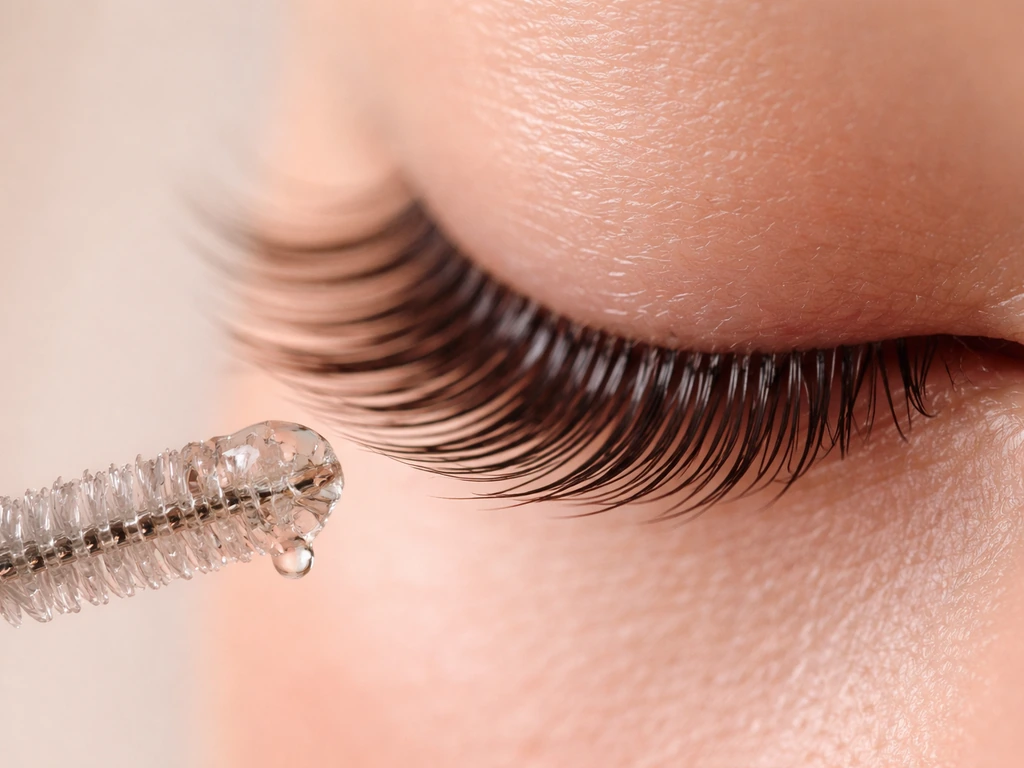
Most people start noticing subtle changes, like lashes that look a little fuller or less brittle, somewhere around weeks 4 to 6 of consistent nightly use. Actual visible length improvement takes longer, typically 8 to 12 weeks minimum, and meaningful thickness changes often require 3 full months or more. If you're expecting a dramatic difference in two weeks, you'll be disappointed. But if you stick with a proper routine and understand what castor oil can and can't do, you'll have realistic expectations and a much better chance of seeing results.
How Long Does Castor Oil Take to Grow Eyelashes? Timeline

Rachel Nguyen
26 Apr 2026
The realistic timeline: weeks, not days

Castor oil doesn't stimulate the follicle the way a prescription prostaglandin analog like bimatoprost does. There's no strong clinical evidence that it directly triggers new lash growth or extends the anagen (growth) phase. What it does do is condition the lash shaft and the skin at the lash line, which can reduce breakage, help lashes retain length they'd otherwise lose to brittleness, and possibly support a healthier follicle environment through ricinoleic acid's anti-inflammatory and antimicrobial properties. That distinction matters for setting your timeline.
With that in mind, here's the honest breakdown of what to expect at each stage:
| Timeframe | What You Might Notice | What's Actually Happening |
|---|---|---|
| Days 1–14 | Little to no visible change; lashes may look slightly shinier or more conditioned | Ricinoleic acid coating the shaft; no follicle-level change yet |
| Weeks 3–6 | Lashes may appear less sparse, slightly fuller at the base; less shedding during makeup removal | Reduced breakage from conditioning; healthier lash line environment |
| Weeks 7–12 | Noticeable improvement in fullness and possibly modest length for some users; better retention of existing lashes | Lashes completing a growth cycle without the usual mechanical damage loss |
| Months 3–4+ | Most visible results for users who respond; lashes look thicker, fuller, and potentially longer | Multiple growth cycles have turned over with less breakage and possibly improved follicle environment |
| Beyond 4 months | Results plateau or maintain; some users report diminishing returns if routine becomes inconsistent | Lashes are cycling normally; castor oil maintains but likely doesn't compound gains indefinitely |
For context, the eyelash growth cycle itself runs roughly 5 to 12 months total, with an anagen (active growth) phase of about 4 to 10 weeks and a telogen (resting) phase that can last anywhere from 3 to 9 months depending on the individual. That biology is why lash changes always take months, not days, regardless of what you're using. Castor oil works within that biological window. It doesn't override it.
Day-by-day expectations (what's actually normal)
The first two weeks are essentially a trust-the-process phase. You won't see a difference in the mirror and that's completely normal. The lash cycle is slow by design. What you're doing in those early days is building a conditioning habit and letting ricinoleic acid do its low-level work on the lash shaft and follicle-adjacent skin. Some people notice lashes feel slightly softer or that they're losing fewer lashes on their mascara wand, which is a genuine early indicator the conditioning is working.
By weeks 3 to 6, pay attention to the base of your lashes rather than tips. Fuller-looking roots, slightly denser appearance near the lash line, and reduced gaps are the first real visual cues. Length at this stage is usually marginal at best. If you had damage from extensions or harsh makeup removal, lashes that previously broke before reaching full length may now be surviving longer, which does read as length gain even if the follicle isn't doing anything new.
Weeks 7 through 12 are when the before-and-after comparison becomes meaningful. Take a close-up photo in consistent lighting at the start of your routine and compare at the 8-week and 12-week marks. Most users who see results report the difference becomes clear around this window. If you've seen nothing at 12 weeks of nightly, correct application, you're either dealing with a factor that castor oil can't address (discussed below) or there's a technique issue to troubleshoot.
What actually affects how fast (and whether) you see results
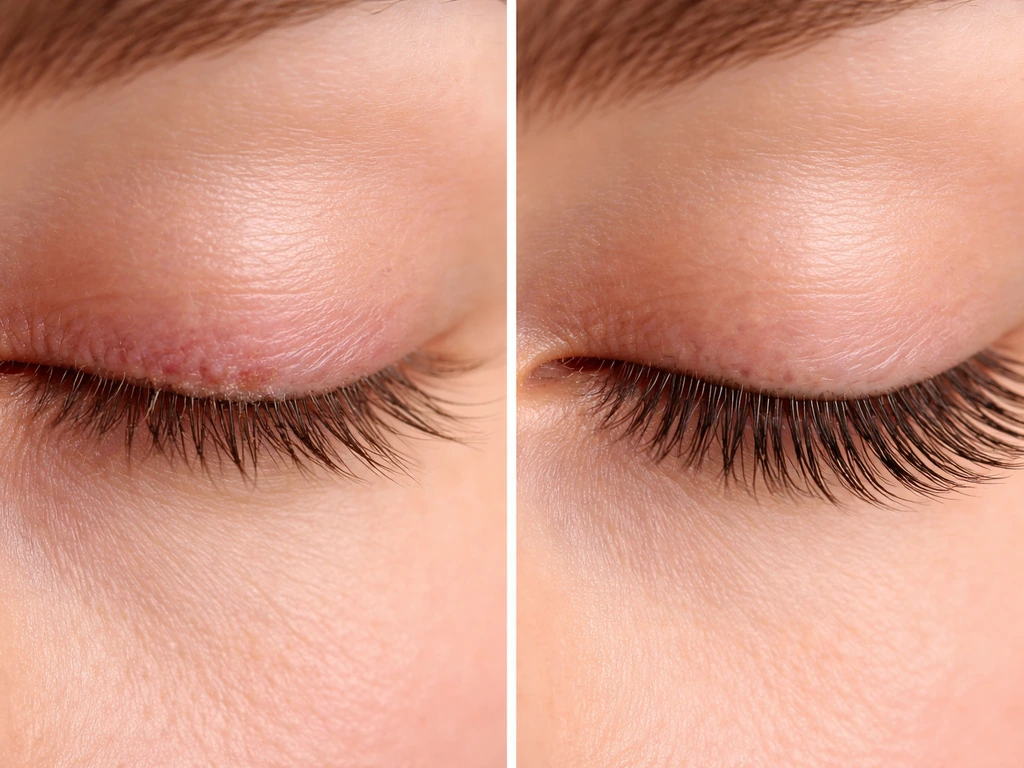
Your starting point matters enormously. Someone with naturally sparse lashes due to genetics is asking castor oil to do something it likely can't: create follicle activity where there isn't strong baseline potential. Someone recovering from lash damage caused by extensions, aggressive makeup removal, or chemotherapy-related thinning is asking castor oil to help existing follicles recover, which is a much more achievable goal. The more your thinning is mechanical or inflammation-related, the more likely castor oil can help.
- Damage level: Lashes thinned from extensions, rubbing, or chemical irritation respond better than genetically sparse lashes because the follicles are intact and just stressed
- Consistency: Missing applications multiple times per week dramatically slows results; nightly use is the standard recommendation for a reason
- Application accuracy: Oil applied to the eyelid skin instead of the lash base won't condition the follicle area as effectively
- Your lash cycle phase: If most of your lashes are in telogen (resting), you won't see growth progress for weeks regardless of what you apply; this is biology, not failure
- Underlying health factors: Low thyroid function, nutritional deficiencies (biotin, iron, vitamin D), or hormonal shifts can suppress lash growth and override any topical oil's effects
- Product quality: Cold-pressed, hexane-free castor oil is the benchmark; heavily processed formulas may lack meaningful ricinoleic acid content
Consistency is probably the most underrated factor. A nightly habit is genuinely more effective than applying every few days, not because each application has a compounding chemical effect, but because regular coating keeps the lash shaft conditioned through its full growth cycle. Think of it less like taking a supplement and more like moisturizing: skipping frequently breaks the benefit chain.
How to use castor oil on lashes correctly
The method matters as much as the product. Used incorrectly, castor oil can cause eye irritation, blurred vision from oil entering the eye, or even contribute to blocked meibomian glands, which are the lubricating glands along your eyelid. Getting the application right eliminates most of the risk.
What you need
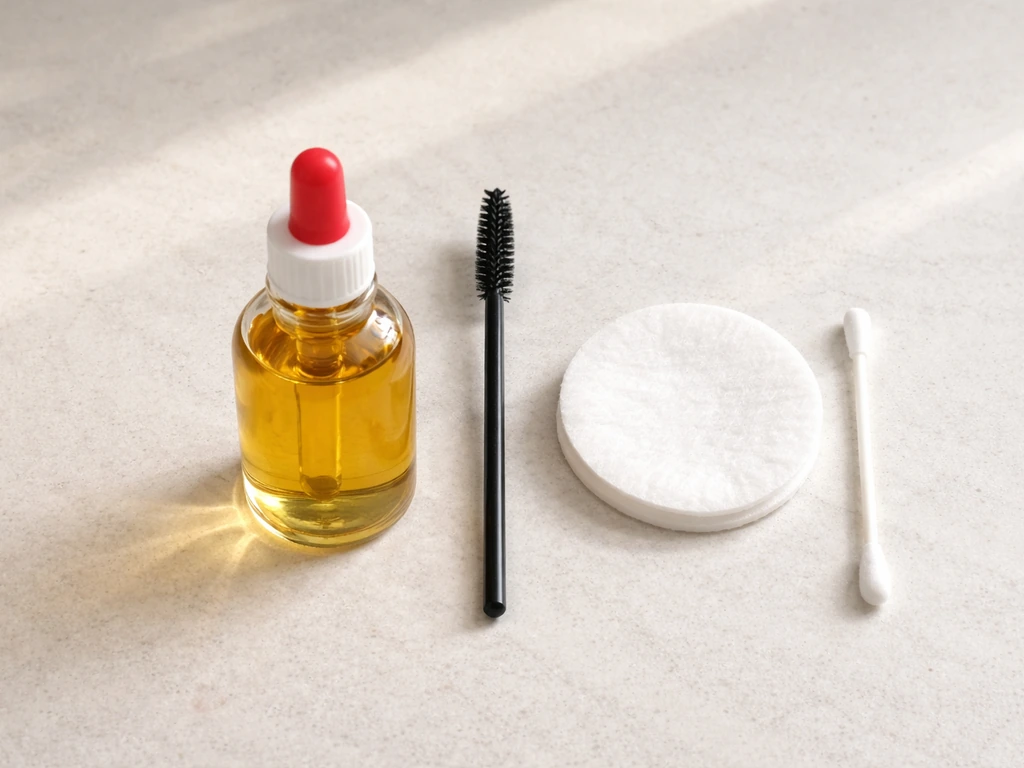
- Cold-pressed, 100% pure castor oil (hexane-free)
- A clean mascara wand or a fine eyeliner brush (dedicated, never shared with other products)
- Makeup remover to clean lashes before application each night
The application routine
- Remove all makeup and cleanse your face thoroughly before applying. Oil on top of mascara or residue doesn't reach the lash base properly.
- Dip a clean mascara wand or fine brush lightly into the castor oil. Less is more: you want a thin coat, not a saturated glob.
- Apply to the upper lash line only, sweeping along the base of the lashes from inner to outer corner. Think eyeliner application, not mascara application.
- Do not apply to the lower lash waterline or inside the eyelid margin. This is the most common mistake and the fastest route to eye irritation.
- Apply once nightly before bed. Leaving it on overnight gives the oil time to work without the risk of it migrating during the day.
- In the morning, rinse off gently with your regular cleanser.
Patch test first
Before applying anything near your eyes, do a patch test on your inner forearm or behind your ear, twice daily for 5 to 7 days. The eyelid skin is thin and highly reactive, and contact dermatitis around the eye (periorbital dermatitis) is a real risk with any topical product in that area. Signs to watch for during the patch test include redness, itching, swelling, or scaling. If any of those appear, do not use the oil near your eyes. If you have pre-existing dry eye, meibomian gland dysfunction, or known skin sensitivities, talk to an ophthalmologist or dermatologist before starting.
Stop immediately if you notice these
- Persistent eye redness or irritation after application
- Blurred vision that doesn't clear after blinking
- Swelling, itching, or scaling on the eyelid skin
- Increased eye dryness or a gritty sensation (may indicate gland blockage)
If you're not seeing progress: troubleshoot before you quit
If you've hit 12 weeks of consistent, correct nightly application and haven't seen anything change, there are a few places to look before giving up on lash growth entirely.
First, check your application technique honestly. Most people apply too much oil and to the wrong place. A heavy coat that sits on the eyelid skin instead of the lash base doesn't do much, and excess oil migrating into the eye can actually cause the kind of irritation that disrupts the lash environment rather than helping it. Review the steps above and streamline.
Second, rule out internal factors. If you're low in biotin, iron, or vitamin D, no topical oil will compensate. These deficiencies are genuinely common and meaningfully suppress hair follicle function. A simple blood panel can tell you whether a nutritional gap is working against your efforts. Biotin supplementation specifically has a body of community use and some clinical interest in the lash context, though results vary.
Third, honestly assess whether your situation calls for a more clinically active ingredient. Castor oil is a conditioning and supportive approach, not a growth stimulator. A randomized trial of periocular topical castor oil for blepharitis reported improved ocular surface and blepharitis signs over four weeks, including eyelash matting and cylindrical dandruff, supporting eyelid-area conditioning effects rather than proven lash-length growth blank" rel="noopener noreferrer">Castor oil is a conditioning and supportive approach, not a growth stimulator.. Prescription prostaglandin analogs like bimatoprost (Latisse) have actual clinical trial evidence: in a 16-week controlled study, bimatoprost increased lash length by an average of about 1.4 mm (roughly 25%) compared to 0.1 mm in the vehicle-only group. Noticeable results in clinical studies tend to appear around 8 weeks of once-daily use, with peak results around 16 weeks. That's a meaningful difference from castor oil's unproven mechanism and should inform your decision if lash recovery is a medical priority for you.
Lash serums marketed over the counter often use peptides or biotin complexes and sit somewhere between castor oil and prescription options in terms of evidence and cost. They're worth considering if you want more than conditioning but aren't ready for a prescription conversation. Comparing castor oil to these alternatives, including how coconut oil and Jamaican black castor oil fit into the picture, is worth doing if you're not locked into one approach. Jamaican black castor oil, for instance, is often cited for slightly different conditioning properties due to its ash content, though the clinical evidence gap applies to both forms.
Finally, if lash loss is significant, sudden, or has an obvious trigger like a medical condition or recent medication change, see a dermatologist rather than trying to self-treat with any topical product. Conditions like alopecia areata, blepharitis, and thyroid disorders affect lash growth in ways that require targeted treatment rather than a better oil application routine.
The bottom line on castor oil and lash timing
Give castor oil a real 12-week commitment before evaluating whether it's working for you. Apply it nightly to the lash base only, use pure cold-pressed oil, and don't skip consistently. The best results you're likely to get are fuller-looking lashes with better retention and reduced breakage, not dramatic Latisse-level length gains. Coconut oil can be a conditioning option too, but lash growth still follows a slow timeline, so expect changes rather than instant results. If you're also wondering does coconut oil grow lashes, it can still act as a conditioning option, but lash growth follows the same slow timeline. If you specifically want a DIY routine, you can also look at how to grow eyelashes with olive oil as another conditioning option can be a conditioning option. Because can castor oil grow eyelashes depends on conditioning rather than new follicle stimulation, results are usually gradual and not dramatic. If you're wondering can castor oil grow eyelashes, the key is using it consistently and correctly, not expecting instant length like you would with how to grow lashes with castor oil. If you're specifically asking can Jamaican black castor oil grow eyelashes, treat it as a conditioning option too, with a slow timeline similar to regular castor oil. For some people and some situations, that's genuinely enough. For others, especially those dealing with significant thinning or medically-driven lash loss, it's the starting point of a conversation about more clinically active options, not the whole answer.
FAQ
If I don’t see changes by 6 weeks, should I stop castor oil or keep going?
Don’t stop yet. Around weeks 3 to 6 many people only notice reduced breakage or fuller-looking roots, not obvious length. The more reliable check is weeks 8 to 12, using the same lighting and distance in a close-up photo. If there is zero improvement by 12 weeks, then focus on technique, irritation, and underlying causes rather than assuming it “won’t work.”
How long does it take for castor oil to make lashes look fuller versus to add noticeable length?
Fullness often shows up earlier because it can come from better retention (less shedding and fewer broken ends). Noticeable length is usually later, commonly closer to the 8 to 12 week window, and more meaningful thickness can take 3 months or longer since lash growth is driven by the natural cycle, not by instant stimulation.
Can I use castor oil twice daily to get faster results?
Usually not. More frequent use does not reliably speed up growth, and it increases the chance of irritation or oil migrating into the eye. A nightly routine is typically the best balance, especially if you already have dry eye or are prone to meibomian gland issues.
What’s the difference between “conditioning results” and “real growth” when using castor oil?
Conditioning results show as fewer gaps near the lash base, reduced brittleness, and lashes that stop breaking before they reach their natural max length. Real growth would mean new lashes emerging and extending through the cycle, but castor oil is not considered a direct follicle growth stimulator, so changes are more often about retention and shaft health than dramatic new length.
How much castor oil is too much, and what happens if I apply too close to my eyelid waterline?
Too much is the main cause of blurred vision, stinging, and irritation. The goal is a thin coating only at the lash base, not a puddle on the eyelid or along the waterline. If you regularly feel oil in your eye after application, you’re likely using more than needed or placing it too low.
Does castor oil work if I have lash loss from extensions or aggressive makeup removal?
It often can help, mainly by reducing breakage while your remaining lashes finish their normal cycle. In these cases, results may look like “length” because damaged lashes that used to snap early can finally grow farther, even if follicle activity is not being newly triggered.
Is there a simple way to tell whether my castor oil routine is the problem?
Yes, do a technique audit for 1 to 2 weeks. Use a photo check at the same time of day, apply a very small amount to the lash base only, and stop if you notice redness, scaling, or stinging. Also confirm you are using a pure cold-pressed oil, since impurities or fragrances can increase irritation risk.
How long should a patch test take before I start using castor oil near my eyes?
Do it twice daily for 5 to 7 days, and only start if your skin stays normal throughout that window. If you get itching, redness, swelling, or scaling at the patch site, don’t move forward near the eyes, since periorbital dermatitis can flare with even low-grade sensitivity.
Can bloodwork or nutrition issues change how long castor oil takes to show results?
Yes. If you are dealing with low iron, vitamin D, or certain nutrient deficiencies, the hair cycle may be suppressed, so castor oil conditioning alone may not be enough to produce visible change within 12 weeks. In that case, you may see little progress no matter how consistent you are, so addressing the underlying deficiency can affect the overall timeline.
What if I’m dealing with lash loss that started suddenly or after a medication change?
If loss is sudden, patchy, or tied to a recent medical condition or medication, don’t rely on castor oil as the only intervention. A dermatologist can check for causes like alopecia areata, blepharitis, thyroid-related changes, or other triggers that require targeted treatment and can’t be corrected by conditioning alone.
Is it worth switching to a prescription option if I’ve waited 12 weeks?
If you have used castor oil correctly for 12 weeks with no meaningful change, it may be reasonable to discuss a clinically active option. Prescription prostaglandin analogs are the category with the strongest evidence for length changes, with noticeable improvements often starting around 8 weeks of once-daily use, though your clinician should assess your eye health first.
Can I use coconut oil or Jamaican black castor oil instead, and does the timeline change?
You can, but expect a similar slow timeline if the primary effect is conditioning and breakage reduction. Jamaican black castor oil and regular castor oil both fit into the “supportive conditioning” category rather than proven new follicle stimulation, so don’t expect faster length gains than what you would with castor oil.
Next Article
Does Coconut Oil Grow Lashes? What to Expect and How to Use It
See if coconut oil can truly grow lashes, how to apply it safely, timelines, and when to switch or stop.