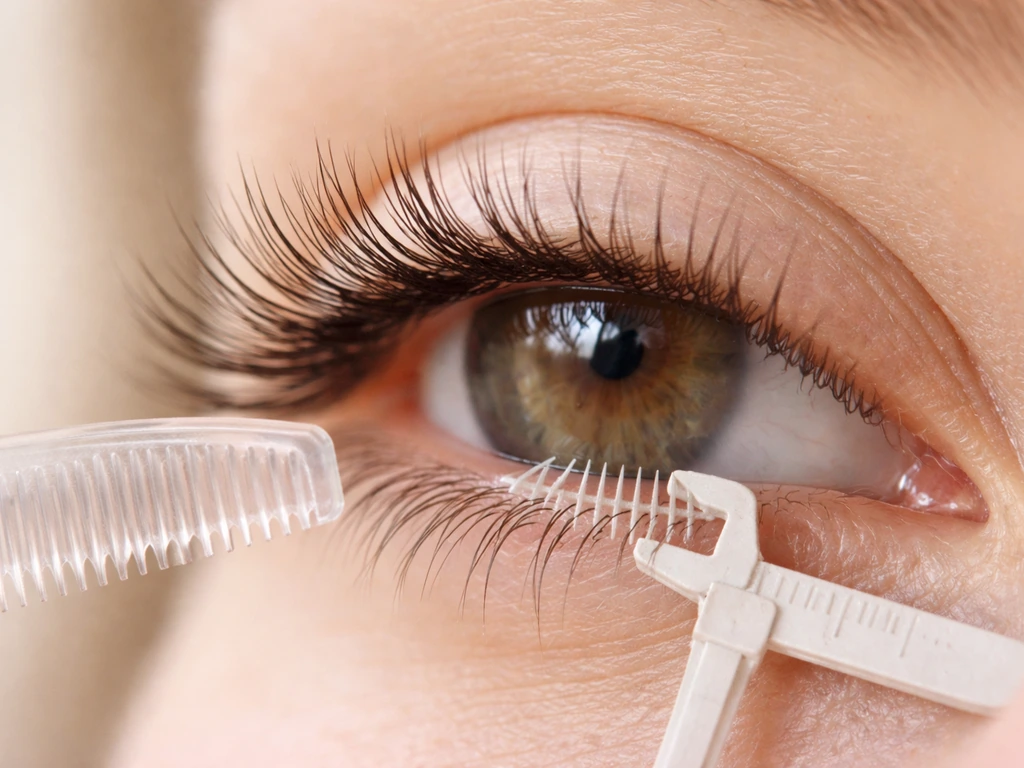
LUMIFY eye drops do not make your eyelashes grow. They contain brimonidine tartrate 0.025%, an ingredient that constricts blood vessels to reduce eye redness. It has no known effect on lash follicles. You may be thinking of Lumigan (bimatoprost 0.01%), a prescription glaucoma drop that does cause documented lash changes as a side effect. These are completely different products with completely different active ingredients, and mixing up their names is extremely common.
Does LUMIFY Eye Drops Make Your Eyelashes Grow?

Rachel Nguyen
16 May 2026
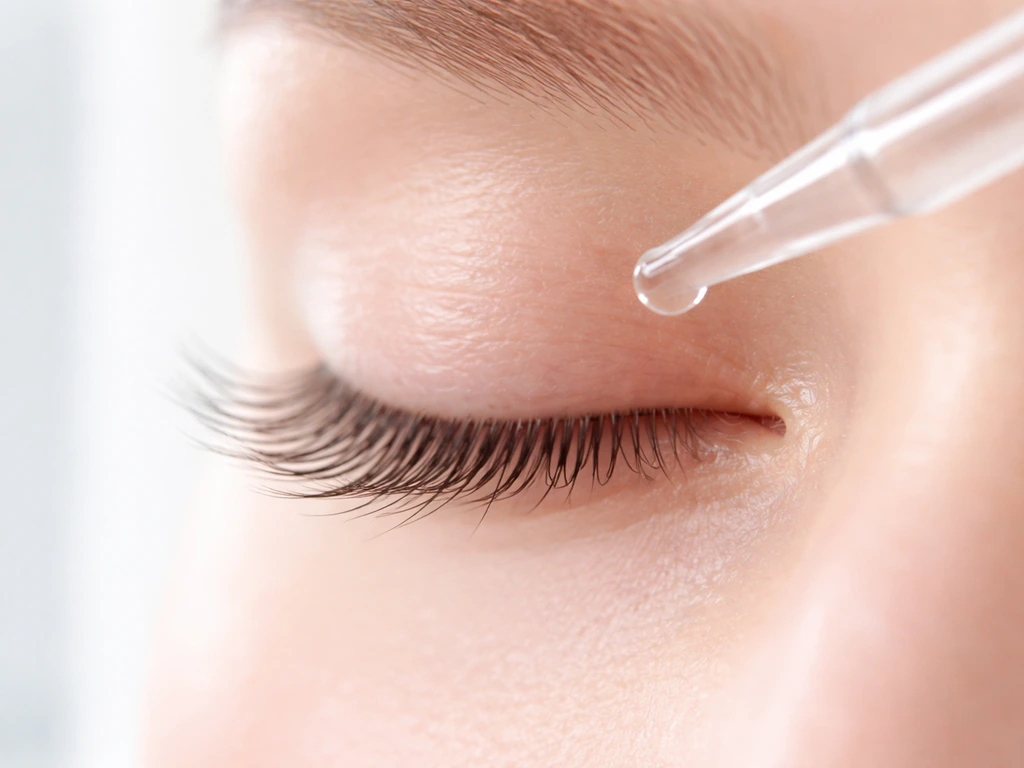
Why people confuse LUMIFY and Lumigan
The names look and sound similar, especially if you've heard about "those eye drops that make your lashes grow" and gone searching. Both are eye drops. Both are associated with Bausch + Lomb. That's largely where the similarities end. LUMIFY is an over-the-counter redness-relief drop. Lumigan is a prescription medication for glaucoma. The confusion gets compounded because a third product, Latisse, is also bimatoprost (the same active ingredient as Lumigan) and is the only FDA-approved treatment specifically for eyelash growth. So when someone says "eye drops that grow lashes," they almost always mean bimatoprost, not brimonidine.
What each drop actually does

LUMIFY (brimonidine tartrate 0.025%)
LUMIFY is a whitening drop. Its active ingredient, brimonidine tartrate at 0.025%, works by constricting the veins in the white of your eye, which makes redness disappear fast. The inactive ingredients are basic: boric acid, sodium borate, glycerin, and water. There is nothing in this formula that interacts with hair follicles or the growth cycle of your lashes. The label does not list eyelash growth as an intended effect or even as an adverse reaction. If you've been applying LUMIFY hoping your lashes will thicken, it won't happen.
Lumigan (bimatoprost 0.01%)
Lumigan is a prescription prostaglandin analog used to lower intraocular pressure in people with open-angle glaucoma or ocular hypertension. It's not prescribed for lashes. So if you're asking whether will Lumigan 0.01 grow eyelashes, its label says it may gradually change eyelashes in the treated eye. However, its label explicitly acknowledges that it "may gradually change eyelashes and vellus hair in the treated eye," describing increased length, thickness, and number of lashes as documented effects. Those lash changes are classified as adverse reactions in the glaucoma context, but the same mechanism is what made bimatoprost the basis for Latisse, the FDA-approved cosmetic lash treatment at a higher 0.03% concentration.
The ingredient that actually drives lash growth

Bimatoprost is a synthetic prostaglandin analog, meaning it mimics prostaglandins, hormone-like compounds that influence multiple biological processes including hair follicle behavior. When bimatoprost reaches the eyelid margin, it appears to extend the anagen (active growth) phase of the hair cycle and increase the number of hairs in that phase simultaneously. The result is lashes that grow longer, thicker, and darker over time. This is a real, well-documented pharmacological mechanism backed by multiple randomized controlled trials, not a cosmetic marketing claim.
Brimonidine in LUMIFY has no comparable mechanism. It targets adrenergic receptors to constrict blood vessels, which is entirely unrelated to follicle biology. Applying LUMIFY to your lash line will not trigger any growth pathway.
What bimatoprost actually does to lashes: realistic timelines and results
If you're weighing bimatoprost-based options like Latisse, here's what clinical data shows. In a phase 3 US trial with 278 participants, lashes were measurably fuller than vehicle starting at week 8, with maximum effect at week 16. If you’re specifically using Lumigan (bimatoprost), studies of bimatoprost-based lash growth typically show measurable changes starting around week 8, with the strongest results around week 16. A separate randomized double-masked trial found that 78.1% of bimatoprost-treated subjects hit at least a 1-grade improvement in global eyelash assessment at week 16, compared to 18.4% on vehicle. At that 16-week mark, mean increases compared to vehicle were roughly 25% in length, 106% in thickness and fullness, and 18% in darkness. Those are meaningful numbers, not subtle.
"Growth" with bimatoprost means four distinct things: longer individual lashes, more lashes (increased count), thicker fullness across the lash line, and darker pigmentation. You won't see all four dramatically in everyone, but clinical data shows consistent improvement across all four measures. For people dealing with chemotherapy-induced lash loss, bimatoprost restored growth and prominence faster than placebo in a randomized trial, which is important context if you're trying to recover rather than enhance.
| Product | Active Ingredient | Primary Use | Grows Lashes? | Rx or OTC? |
|---|---|---|---|---|
| LUMIFY | Brimonidine tartrate 0.025% | Eye redness relief | No | OTC |
| Lumigan 0.01% | Bimatoprost 0.01% | Glaucoma / IOP reduction | As a side effect (off-label growth) | Rx |
| Latisse 0.03% | Bimatoprost 0.03% | Eyelash hypotrichosis | Yes, FDA-approved for this | Rx |
Safety and side effects you need to know
Bimatoprost is a real drug with real risks, especially when used off-label. Lumigan is dosed for the eye, not the lash line, and applying a glaucoma drop to your skin in an unsupervised way is not the same as using Latisse, which has specific concentration, applicator, and application instructions optimized for cosmetic lash use.
The most frequently reported adverse reactions with bimatoprost at the lash-growth dose include eye pruritus (itching), conjunctival hyperemia (redness), skin hyperpigmentation around the eye, ocular irritation, dry eye symptoms, and periorbital erythema. Pigmentation changes can also affect the eyelid skin, and periocular hyperpigmentation has been documented to appear as early as 3 to 8 weeks after starting bimatoprost in some patients.
The most serious long-term concern is iris darkening. Darkening of the iris tends to begin within the first year of treatment and increases with continued use. Unlike eyelash and skin changes, which can be reversible after stopping the drug in some patients, iris pigmentation changes are likely to be permanent. This is not a cosmetic risk to take lightly if you have light-colored irises.
There's also a spread risk. Bimatoprost can stimulate hair growth wherever it contacts skin. The Latisse prescribing information specifically instructs blotting any excess solution that spreads beyond the upper eyelid margin, because unwanted facial hair growth is a documented consequence of careless application. To reduce unwanted side effects, Mayo Clinic advises applying bimatoprost as directed and wiping off any excess that contacts other skin areas wipe off any excess that contacts other skin areas. Postmarketing data also includes reports of madarosis (lash loss), trichiasis (misdirected lashes), and deepening of the eyelid sulcus with long-term use. These are rare but real.
Using Lumigan off-label as a lash serum bypasses all of the safeguards built into the Latisse approval process. If you want bimatoprost for your lashes, get a prescription for the right formulation and use it as directed with a clinician monitoring you, especially if you have a history of uveitis, macular edema, or other ocular conditions where prostaglandin analogs are contraindicated.
Safer options if you want lash growth today
If a prescription isn't accessible right now, or you want to start with lower-risk options, there are evidence-adjacent approaches worth trying. They won't match bimatoprost's clinical results, but they're not nothing either.
- Latisse (bimatoprost 0.03%): The only FDA-approved cosmetic lash growth treatment. If you want the real thing, this is the path. It requires a prescription and costs more than OTC serums, but the clinical evidence is solid. Expect to start seeing results around week 8 and full effect by week 16.
- OTC lash serums with peptides or biotin: Products like those containing myristoyl pentapeptide-17 or similar peptides are marketed to stimulate lash growth, but clinical evidence is thinner. They're lower risk and worth trying if you want a starting point without a doctor visit.
- Castor oil: A widely used home remedy. The evidence is largely anecdotal, but castor oil is rich in ricinoleic acid and acts as a conditioning agent that may reduce lash breakage and fallout. It won't stimulate new follicle activity the way bimatoprost does, but healthier, less brittle lashes can look fuller over time.
- Biotin supplements: Biotin deficiency is genuinely linked to hair loss, and supplementing can help if you're deficient. If you're not deficient, extra biotin is unlikely to produce dramatic lash improvements. Worth ruling out before assuming your lash loss is follicle-related.
If you're weighing eye-drop-based options specifically, other prostaglandin analogs like latanoprost have also been studied for lash growth. If you're specifically wondering how long it takes latanoprost to grow eyelashes, the timeline is usually similar to other prostaglandin analogs but can be less pronounced than bimatoprost. Latanoprost is a prostaglandin analog that has been studied for eyelash growth, but it is not the same as bimatoprost (the ingredient in Latisse). The mechanism is the same class of drug, and some research supports similar but somewhat milder effects compared to bimatoprost. That comparison is worth understanding if you're choosing between options with a prescribing doctor.
If your lashes are damaged, thinned, or recovering
Whether your lash thinning comes from extensions, medical treatment, or over-manipulation, the recovery approach matters more than the product you pick. Here's what actually helps during the regrowth window.
- Stop the damage source first. No serum or oil will produce visible results if you're still pulling, rubbing, or using harsh adhesives. Extensions that put mechanical stress on the follicle need to come off, and you need to let the follicle rest before expecting regrowth.
- Give it a realistic timeline. A single eyelash growth cycle takes roughly 4 to 11 months from start to finish. If you've disrupted the cycle, you're not getting lashes back in two weeks regardless of what you apply.
- Use a gentle conditioning routine. Apply castor oil or a peptide serum nightly at the lash base, not the tips. This reduces fallout from fragility, which makes the lashes you do have appear fuller while new ones come in.
- Consider bimatoprost if recovery is stalled. For chemotherapy-induced loss specifically, bimatoprost has clinical evidence behind it for restoration, not just enhancement. Talk to your oncologist or dermatologist about whether it's appropriate for your situation.
- Avoid waterproof mascara and harsh removers during recovery. These cause mechanical and chemical stress that extends the recovery timeline significantly.
The bottom line: LUMIFY is not going to touch your lash growth. If you've been using it with that hope, set it aside and look into what bimatoprost actually is and whether it's right for your situation. And if you're not ready for a prescription, a consistent conditioning routine with realistic expectations is still a legitimate starting point.
FAQ
If I put LUMIFY on my lash line, will it at least make lashes look thicker by reducing redness around the eyes?
It may temporarily make the eye area look less red, but that is not the same as true lash growth or thickening. LUMIFY’s active ingredient is designed for blood-vessel constriction in the eye, it does not act on lash follicles, so any “fuller” look would be visual masking, not more lashes or increased lash diameter.
How can I tell whether an eye drop is the kind linked to eyelash growth before I buy it?
Check the active ingredient and concentration. Products associated with lash growth use a prostaglandin analog active ingredient such as bimatoprost, while LUMIFY’s active ingredient is brimonidine tartrate 0.025%. If the label lists brimonidine (or a non-prostaglandin redness reliever), it’s very unlikely to affect lash growth.
Could LUMIFY cause lash changes indirectly, like from irritation or rubbing?
Irritation from any eye-area medication could lead to more rubbing or inflammation, which can worsen lash shedding for some people. However, that would be an adverse effect, not a growth mechanism, and it would be inconsistent and potentially harmful compared with treatments that are designed for lash enhancement.
Is it safe to alternate LUMIFY and a prescription prostaglandin analog for lashes?
Do not start combining without your prescriber’s guidance. Even if one product is “just for redness,” frequent use can increase ocular surface irritation and make it harder to identify side effects. A clinician can advise dosing timing and whether you have conditions that make prostaglandin analogs risky.
What happens if I accidentally get LUMIFY on my eyelid skin repeatedly?
Unlike bimatoprost, LUMIFY is not known to drive the same hair-growth and pigmentation pathways. Still, repeated application near the eyelid margin can cause local irritation in some people, so stop and rinse if you get stinging, swelling, or worsening redness.
If bimatoprost works, why do some people not see dramatic lash results by week 16?
Response varies. Some people primarily notice changes in darkness or perceived fullness, while others see more length and thickness. Factors include baseline lash density, adherence to application technique, and individual sensitivity. It is also possible to have inadequate contact at the lash line, or inconsistent use.
Can I use leftover glaucoma drops like Lumigan off-label as a lash serum?
You can technically do this, but it bypasses safeguards tied to cosmetic lash use, including formulation, concentration, and application instructions. The article’s key concern is unintended spread, which can cause facial hair growth and periocular skin pigmentation changes, so you should only proceed under a clinician’s direction.
If I stop bimatoprost for lashes, will my lashes stay improved?
Eyelash and eyelid skin effects from prostaglandin analogs may regress after stopping in some patients, meaning gains are not always permanent. Because the timing and degree of reversal vary, discuss a plan for discontinuation and monitoring rather than assuming benefits will last indefinitely.
What side effects mean I should stop immediately and get urgent eye care?
Seek prompt medical attention if you develop significant eye pain, marked light sensitivity, new or worsening blurred vision, or symptoms suggestive of inflammation (for example, a painful red eye). These are not typical “expected” mild changes and can signal complications that need evaluation.
Next Article
Does Latanoprost Grow Eyelashes? Results, Safety, Timing
Find out if latanoprost or bimatoprost grows eyelashes and eyebrows, typical timelines, results, and safety tips.