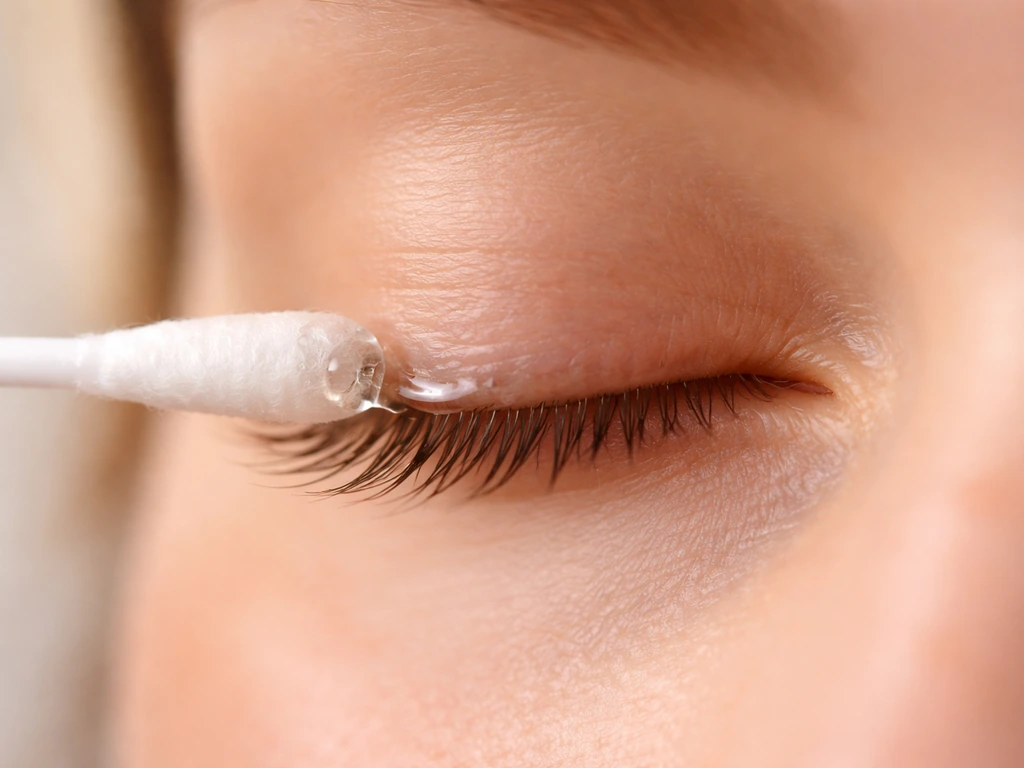
Tea tree oil does not grow eyelashes. There is no clinical evidence that it stimulates lash follicles, extends the growth phase, or adds measurable length. What it can do, under very specific conditions, is reduce eyelid inflammation caused by bacteria or Demodex mites, and when that inflammation is what's been causing lash loss or breakage, clearing it up may indirectly help lashes look fuller. That is a meaningful but narrow use case, and it comes with real safety risks you need to understand before putting anything near your eyes.
Does Tea Tree Oil Help Eyelashes Grow? Safe Guide
Rachel Nguyen
6 May 2026
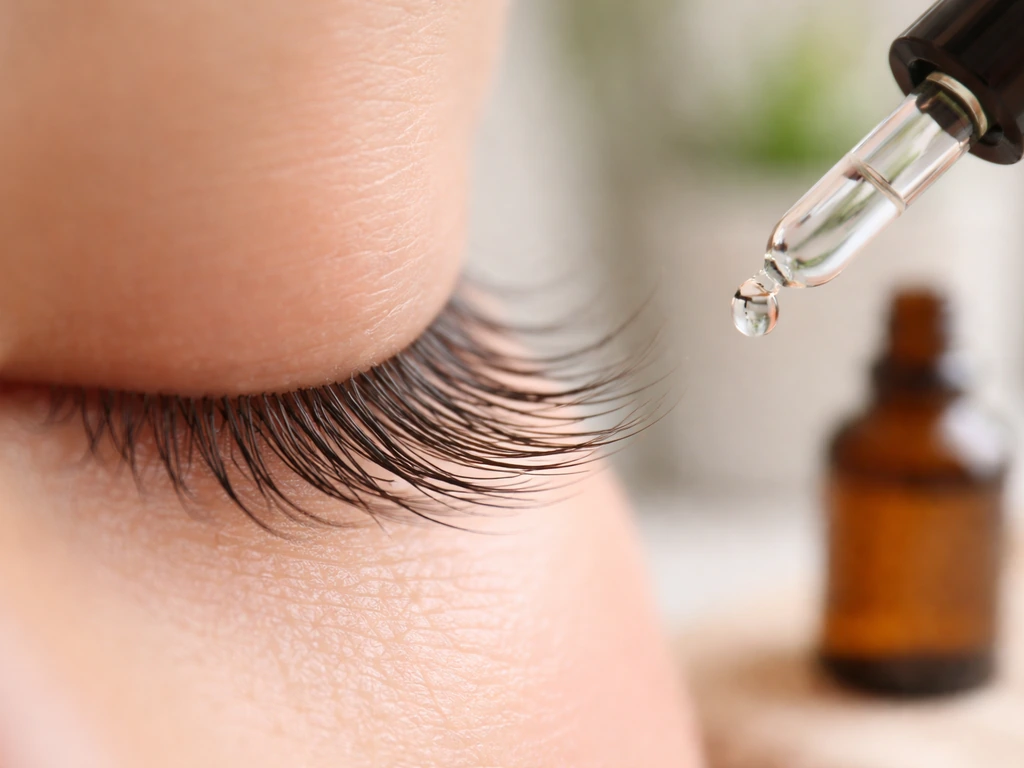
How lash growth actually works (and where oils fit in)
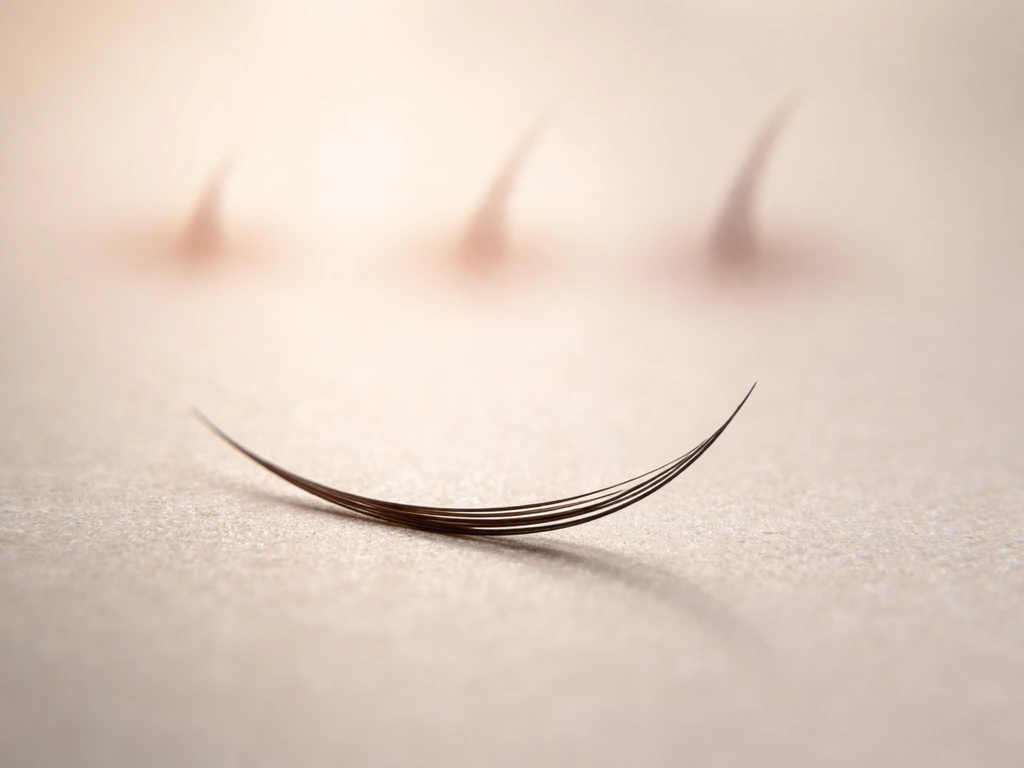
Your eyelash follicles cycle through the same basic phases as scalp hair: anagen (active growth), catagen (transition), and telogen (resting/shedding). The difference is that lashes spend much less time in anagen. At a growth rate of roughly 0.16 mm per day, a single lash takes months to reach full length, and the entire replacement cycle runs about 4 to 8 weeks from shedding to re-emergence. That biology is the hard ceiling on any growth claim. No oil overrides a follicle's growth phase schedule.
What oils can realistically do is operate on the surface side of the equation: reduce mechanical breakage, add moisture to brittle lashes, coat the hair shaft to make lashes look thicker, or, in some cases, reduce the eyelid-level irritation that causes premature shedding. That last point is where tea tree oil enters the picture, and it is a much narrower benefit than 'makes lashes grow.'
What tea tree oil may actually do for your lashes
The legitimate research on tea tree oil and eyes focuses entirely on eyelid conditions, specifically blepharitis and meibomian gland dysfunction. These are inflammatory conditions of the eyelid margin, often driven by Demodex mite overgrowth or bacterial colonization. Tea tree oil's antimicrobial and anti-inflammatory properties make it a plausible treatment in those contexts, and it has been studied for lid scrub protocols in that setting.
If chronic blepharitis is why your lashes are sparse or falling out prematurely, addressing it could let your lashes complete a normal growth cycle instead of being disrupted mid-phase. So the indirect connection is real. But the mechanism is 'reduce eyelid disease' not 'stimulate follicle growth.' That distinction matters when you're setting expectations.
For everyone else, someone whose lashes are thin from extensions, rubbing, over-curling, or just genetics, tea tree oil has no meaningful role. It is not conditioning like castor oil or almond oil, and it has no known effect on the anagen phase of lash follicles. Bimatoprost (the active ingredient in Latisse) is the only treatment with clinical trial evidence showing actual length increases, with studies measuring a mean increase of about 1.4 mm versus 0.1 mm with a vehicle control. That is the benchmark for what a real growth effect looks like, and nothing in the tea tree oil literature comes close.
Safety risks you need to take seriously
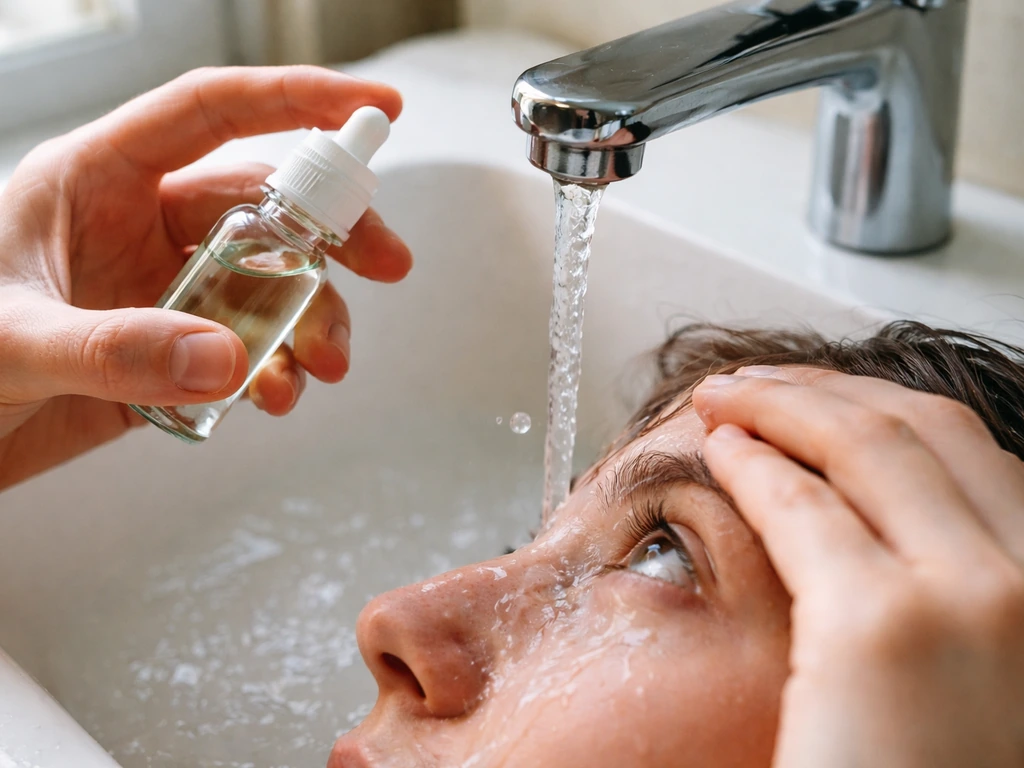
This is the section most people skip, and it is the most important one. Tea tree oil near the eyes is genuinely hazardous. Poison Control lists corneal damage as a risk from getting it in the eyes, and there are documented case reports of corneal epithelial defects from eyelid-adjacent applications. One reported case involved a 50% concentration product used off-label for blepharitis that caused corneal damage. The eye surface is not skin, and formulations safe for your arm are not safe for your eyelid margin.
On top of the corneal risk, tea tree oil is among the essential oils most associated with contact allergy, with patch test data showing positive reactions in more than 2% of evaluated patients in some studies, and roughly 1% of patients in allergy clinic testing coming back allergic. Wikipedia also notes that tea tree oil can trigger skin irritation and contact dermatitis, and it raises ocular safety concerns such as reactions after eye contact contact allergy. Skin around the eyes is thinner and more reactive than elsewhere on the face. A reaction here can cause swelling, redness, and inflammation that actively worsens lash loss rather than helping it.
A systematic review of tea tree oil products used for ocular conditions flagged ocular irritation as one of the main side effects reported across included studies, and concluded that more evidence is needed on both efficacy and safety. That is not a green light.
Signs you should stop immediately
- Any stinging, burning, or watering in the eye itself
- Redness, swelling, or rash on the eyelid skin
- Blurred vision or light sensitivity
- Itching or a rash that spreads beyond the application area
If you still want to try it: how to do it without hurting yourself
If you have confirmed or suspected Demodex blepharitis and you want to experiment with tea tree oil as a lid-health intervention (not a growth serum), here is how to do it with the least risk. Do not apply it directly to lashes as if it were a mascara or serum. The application target is the very base of the eyelid, not the lash line itself.
- Dilute to no more than 5% in a carrier oil like coconut or jojoba. That means 1 drop of tea tree oil per 19 drops of carrier. Concentrations used in blepharitis research range from 5% to 50%, but anything above 5% dramatically increases the risk of corneal and skin damage for home use.
- Patch test first. Apply the diluted mix to the inside of your wrist and wait 24 to 48 hours. If you see redness, itching, or a rash, stop. Do not proceed to the eye area.
- Apply with a clean cotton swab to the eyelid skin only, specifically the lash base and lid margin, with your eyes fully closed. Never apply to an open eye or to the inner lash line.
- Use once daily at most. Some clinical protocols use twice-weekly applications. There is no benefit to more frequent use, and the irritation risk scales upward with frequency.
- Keep it out of the eye entirely. This is not about being careful. Even a correctly diluted formulation can cause corneal damage if it gets onto the eye surface.
- Give it 4 to 6 weeks before assessing. Given that lash replacement takes 4 to 8 weeks, any visible change to lash density would not appear sooner than that.
Better options for actual lash growth and recovery
If your goal is genuinely longer, fuller lashes and not eyelid disease treatment, there are clearer, safer paths. Here is how the main options compare.
| Option | Mechanism | Evidence level | Best for | Key risk |
|---|---|---|---|---|
| Bimatoprost (Latisse) | Extends anagen phase of lash follicles | Strong: RCTs showing ~1.4 mm mean length increase | Hypotrichosis, post-damage regrowth | Requires prescription; iris pigmentation risk with long-term use |
| Castor oil | Moisturizes, reduces breakage, may coat shaft | Anecdotal/observational; no RCT data on length | Dry, brittle lashes prone to breakage | Low risk; avoid getting in eyes |
| Tea tree oil | Antimicrobial/anti-inflammatory on eyelid margin | Clinical evidence only for blepharitis/MGD, not growth | Demodex or bacterial blepharitis only | High: corneal damage, contact allergy |
| Almond oil / Avocado oil | Conditioning, fatty acid coating | Anecdotal; no controlled lash-growth trials | Lash moisture and breakage prevention | Low; check for nut allergy |
| Biotin (oral) | Supports keratin production in deficient individuals | Evidence only supports benefit in biotin deficiency | Confirmed deficiency | Minimal, but most people are not deficient |
For most people dealing with lash loss after extensions, damage, or just wanting more length, castor oil is a reasonable, low-risk daily option while your lashes grow back at their biological pace. It will not speed up the growth cycle, but it reduces the breakage that makes lashes look sparse before they reach full length. If you are losing lashes significantly or they have not recovered after 8 to 12 weeks, that is when a conversation with a dermatologist about bimatoprost is worth having. It is the only option with real clinical evidence behind it.
Other oils like aloe vera, almond oil, and lavender oil come up frequently in this space for similar reasons: conditioning benefits rather than true growth stimulation. The pattern is consistent across almost every natural remedy in this category. They support lash health and reduce damage, and that is genuinely useful, but none of them replicate what a prostaglandin analog does at the follicle level.
The bottom line
Tea tree oil is not a lash growth treatment. If you are specifically asking whether does avocado oil help eyelashes grow, the same key limitation applies: oils generally do not override lash follicle growth cycles. Lavender oil has not shown clinical evidence that it makes eyelashes grow either lavender oil makes your eyelashes grow. It has a narrow, evidence-backed role in managing eyelid inflammation from Demodex or bacterial blepharitis, and when those conditions are behind lash thinning, clearing them up can help lashes recover. But it does not stimulate follicles, extend the growth phase, or add length the way bimatoprost does. And the safety profile near the eyes is not trivial. If you do not have a confirmed eyelid condition driving your lash loss, skip the tea tree oil entirely and put your energy into lower-risk conditioning options while your lashes complete their natural 4 to 8 week replacement cycle.
FAQ
If tea tree oil “worked” for someone, does that mean it grows lashes?
No. Tea tree oil will not extend the lash anagen phase or “force” new follicles to start growing. If your lashes seem to improve after using it, it is usually because eyelid irritation or inflammation went down, or because breakage on the lash shaft was reduced.
Can tea tree oil help with lash shedding if I do not have blepharitis?
It can, but only indirectly. The most realistic scenario is Demodex-related or bacterial blepharitis where reducing inflammation allows lashes to complete a normal shedding to regrowth cycle. If your lash loss is from traction, extensions, rubbing, or genetics, tea tree oil is unlikely to change the underlying cause.
How should I use tea tree oil near the eyes if I want to try it?
Do not use tea tree oil as an eye product unless a clinician has guided you. If you still choose to trial it for eyelid hygiene, keep it away from the lash line and do not apply it like mascara. Stick to a product made for ocular lid use, use the smallest effective amount, and stop immediately if you get burning, redness, or gritty discomfort.
What are the signs that tea tree oil is irritating or causing an allergic reaction around my eyes?
Yes, allergy is a major risk. Even people without known sensitivities can react, and eyelid skin is more reactive than face skin. A patch test on the arm does not guarantee safety for the eye area, so watch for eyelid swelling or worsening redness, and discontinue right away.
Why is undiluted tea tree oil risky for eyelids?
Anything left undiluted or applied too close to the eye can raise the risk of corneal epithelial injury. The common mistake is treating it like a general “essential oil” for skin. For the eyelid area, safer choices are dedicated lid-care approaches for suspected blepharitis, not direct essential oil placement.
When should I stop experimenting and see a doctor?
If you have persistent symptoms like itching, burning, crusting at the lash base, oily lids, or lash loss that does not improve after 8 to 12 weeks, it is better to see a dermatologist or an eye care professional. Those symptoms often point to blepharitis or Demodex where targeted therapy matters more than oils.
What should I use instead of tea tree oil if my lashes are thin from damage?
Castor oil, almond oil, and similar conditioners do not have clinical evidence of stimulating lash follicle growth, but they can reduce breakage and make lashes look fuller while the normal replacement cycle runs. This makes them a better first-line option for extension or rubbing-related damage.
What is the most evidence-based option for true lash length increase?
If you want longer, fuller lashes based on actual growth evidence, bimatoprost is the benchmark discussed in clinical studies. It also comes with potential side effects, so it should be considered with professional guidance, especially if you have dry eye, eye inflammation, or sensitivities.
Can I apply tea tree oil directly to my lashes like a serum?
Using tea tree oil on the lash line, on extensions directly, or as a “growth serum” is the most common misuse. The goal, if any, would be eyelid-margin hygiene for suspected blepharitis, not treating the lash shaft like a cosmetic.
How long would it take to see any benefit from tea tree oil, if it helps at all?
Not reliably. If the underlying issue is eyelid inflammation, you may need a consistent lid-care routine and possibly specific treatment for Demodex or bacterial blepharitis. Changes from tea tree oil, if they occur, are more likely to come from reduced eyelid disease, not from new lash length building.
Next Article
Can Aloe Vera Help Eyelashes Grow? How to Use Safely
Can aloe vera help eyelashes grow? Evidence-backed verdict plus safe step-by-step use, timelines, and what to do if it f