Quick answer: do lash serums really grow lashes
Yes, lash serums can genuinely grow your eyelashes, not just make them look better. The key word is "can" because not all serums are created equal. The strongest clinical evidence sits behind one specific ingredient: bimatoprost 0.03%, the active compound in the FDA-approved prescription product LATISSE. In a randomized, double-masked, vehicle-controlled trial, 78.1% of people using bimatoprost showed at least a one-grade improvement in overall lash appearance at 16 weeks, compared to only 18.4% using a vehicle with no active ingredient. Mean lash length increased by 1.4 mm (roughly 25%) with bimatoprost versus just 0.1 mm with the placebo. That is real, measurable growth, not a coating or an optical illusion.
Over-the-counter serums are a different category. Many contain prostaglandin-like compounds (such as isopropyl cloprostenate) that work through a similar biological pathway, and some users do see noticeable improvement. But OTC products are not FDA-approved for lash growth, carry their own risk profile, and the clinical data behind individual formulas is thinner. So the honest answer is: lash serums work, the biology is real, and if you want the most evidence-backed version, you're looking at a prescription product. If you want to explore OTC options first, it helps to can grow lash serum by first understanding where lash growth claims overlap with other hair zones Eyebrow growth is a different hair-zone, but the same kinds of follicle-based ingredients are what people look for when they ask can eyelash serum grow eyebrows can grow lash serum.
How lash serum makes lashes grow (the lash growth cycle)
To understand why serums work, you need a quick picture of how eyelash hair grows. Unlike scalp hair, lash hair moves through its cycle fast. The anagen phase, which is when the follicle is actively producing new hair, lasts only about 30 to 45 days for lashes. After that comes telogen, a resting phase that can last anywhere from 4 to 9 months before the follicle starts over. This is why lashes are short compared to head hair, and why after damage (from extensions, rubbing, a medical treatment, or a skin condition) recovery can feel agonizingly slow.
Lash serums that actually grow lashes work by targeting this cycle directly. Prostaglandin and prostamide analogs like bimatoprost act on prostanoid receptors in the hair follicle. The proposed mechanism is twofold: they push resting follicles in telogen to enter the active anagen phase earlier than they would naturally, and they extend how long that anagen phase lasts. Longer anagen means more time for the hair shaft to grow before it sheds. A thicker hair bulb during that extended phase also contributes to increased lash thickness and deeper pigmentation. This is a real physiological change in follicle behavior, not a surface-level cosmetic effect.
What's in lash serum that drives growth (key ingredients and what they do)
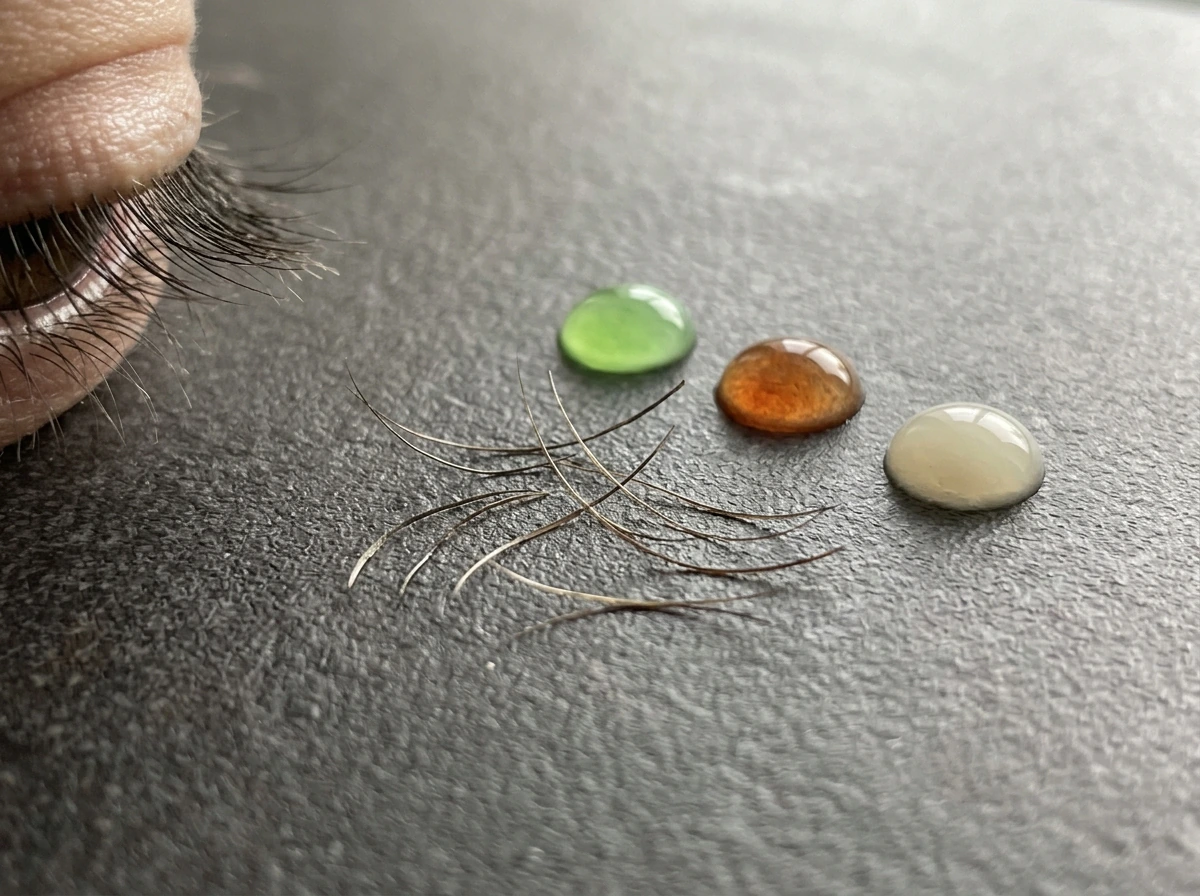
The ingredient category that does the heavy lifting is prostaglandin analogs. Here is how the main players break down:
| Ingredient | Found In | Regulatory Status | What It Does |
|---|
| Bimatoprost 0.03% | LATISSE (prescription) | FDA-approved for lash hypotrichosis | Extends anagen phase, thickens hair bulb, increases melanogenesis (length, thickness, darkness) |
| Isopropyl cloprostenate | Various OTC serums | Not FDA-approved; cosmetic category | Prostaglandin-like action on follicle receptors; promotes anagen entry and extension |
| Peptides (e.g., Myristoyl Pentapeptide-17) | Many OTC serums | Cosmetic ingredient | May support keratin production in the follicle; evidence is weaker than prostaglandins |
| Biotin (topical) | Some OTC serums | Cosmetic ingredient | Commonly included; topical absorption is limited and evidence for lash growth specifically is thin |
| Conditioning agents (panthenol, hyaluronic acid) | Most OTC serums | Cosmetic ingredient | Improve lash appearance and reduce breakage; do not stimulate follicle growth |
Bimatoprost is the only ingredient with robust, peer-reviewed, placebo-controlled clinical trial data specifically for eyelash growth. It increases length, thickness, and darkness by acting at the follicle biology level. Isopropyl cloprostenate is the prostaglandin analog most commonly used in OTC serums and has shown effects in practice, but the clinical data supporting it is thinner and the safety evaluation is still being built out. The FDA has also issued warning letters to brands making drug-like growth claims about OTC products containing this ingredient, which tells you where the regulatory lines sit.
Peptides and conditioning agents are not worthless. Keeping existing lashes healthy reduces breakage, which means more of your natural growth is retained. But if you are trying to recover from significant lash loss (after extensions, a medical condition, chemotherapy, or chronic rubbing), conditioning agents alone are not going to be enough. You need something that actually speaks to the follicle.
How to tell if a serum is legit (evidence, claims, and what to watch for)
This is where a lot of people get misled. Here is a practical filter to apply before spending money on any lash serum:
- Check the ingredient list for a prostaglandin analog. Bimatoprost (prescription only) and isopropyl cloprostenate (OTC) are the two most common. If the serum does not contain either and claims to "grow" lashes, ask what the mechanism is supposed to be.
- Distinguish growth claims from appearance claims. A serum that says it makes lashes look fuller is making a cosmetic claim. A serum that says it increases lash length and thickness is making a drug-like claim. For OTC products, aggressive growth claims with no clinical data are a red flag.
- Look for actual clinical study data, not just before/after photos. Studies should specify measurement methods (like digital image analysis of length in millimeters or percentage), duration (ideally at least 12 to 16 weeks), and a control group.
- Be skeptical of proprietary blends where you cannot verify concentrations. Effective prostaglandin analog concentrations matter, and a serum with an undisclosed "lash complex" may have only trace amounts.
- Check whether the brand has received FDA warning letters. Brands that have had regulatory action taken over their growth claims are worth researching before you commit.
If you want the highest-evidence option and you have significant lash thinning (including from conditions like hypotrichosis, post-chemotherapy effects, or heavy extension damage), talking to a dermatologist or ophthalmologist about LATISSE is worth it. It is a prescription, but it comes with clinical data behind every claim on the label.
What results and timeline to expect (length, thickness, and when you'll see change)
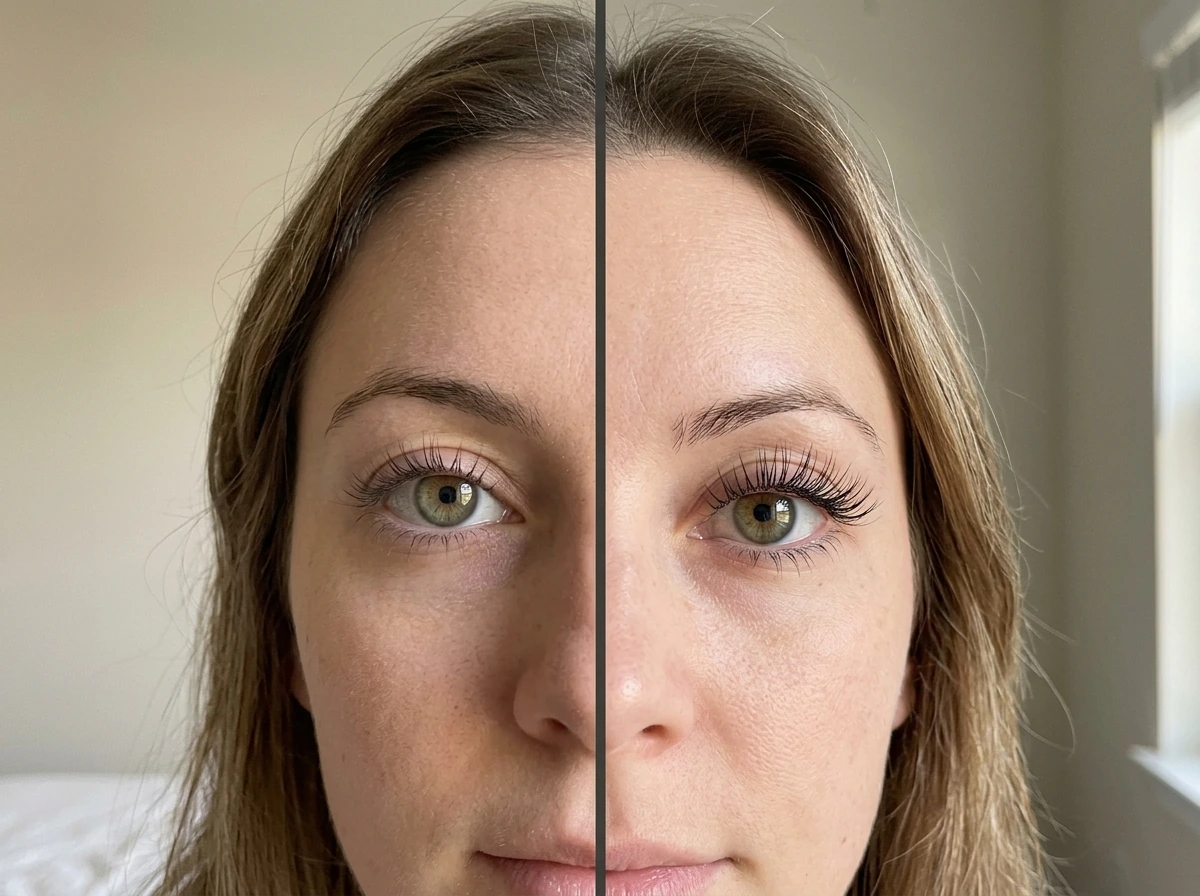
Realistic expectations make or break your experience with lash serums. Here is what the evidence actually says:
- First signs of change: Some users notice slightly longer lashes around the 4-week mark. Do not judge the serum at this point.
- Meaningful improvement: Most people using bimatoprost see significant results by 16 weeks (about 4 months). The clinical trials used 16 weeks as the primary endpoint, and that is the benchmark the data is built around.
- Measured outcomes in trials: Mean lash length increased by approximately 1.4 mm (about 25%) with bimatoprost at 16 weeks. Thickness and darkness also improved in a statistically significant way.
- What happens if you stop: This is important. If you discontinue the serum, lashes gradually return toward your baseline over several weeks to months. The effect is cycle-dependent, not permanent. The follicles go back to their natural rhythm.
- OTC serums with prostaglandin analogs: Timelines are similar in principle (because the mechanism is the same), but the magnitude of results may be smaller depending on the concentration and formulation.
The cycle-dependence of results is actually reassuring from a biology standpoint. It confirms that the serum is working with the hair follicle, not around it. But it also means you need to commit to consistent use. Sporadic application every few days will not give you the anagen-extending effect the ingredient is designed to produce.
How to use lash serum for best results and safety tips
Application basics
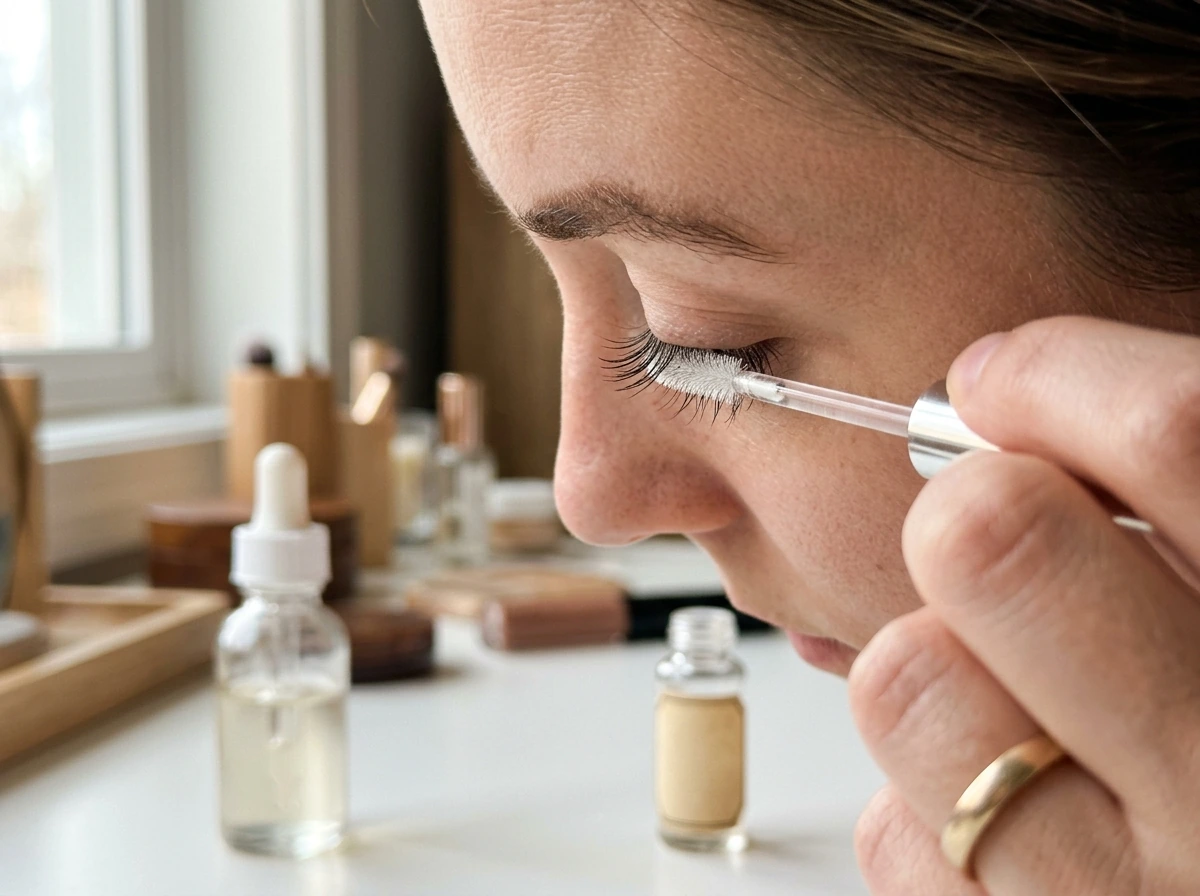
For prescription bimatoprost (LATISSE), the FDA label is specific: apply once daily in the evening, along the skin of the upper eyelid margin at the base of the lashes only. Do not apply to the lower lash line. The reason this matters is migration. If the product spreads beyond the application area, it can carry the active ingredient to places you do not want it, including the iris or surrounding skin. Use the sterile applicator that comes with the product, apply a thin, even line, and blot any excess. More product does not mean faster growth; it raises the risk of side effects.
For OTC serums, follow the brand's instructions, but the same principle applies: upper lash line at the base of lashes, once daily, consistent application over months. Remove contact lenses before applying and wait at least 15 minutes before reinserting them.
Side effects to know before you start
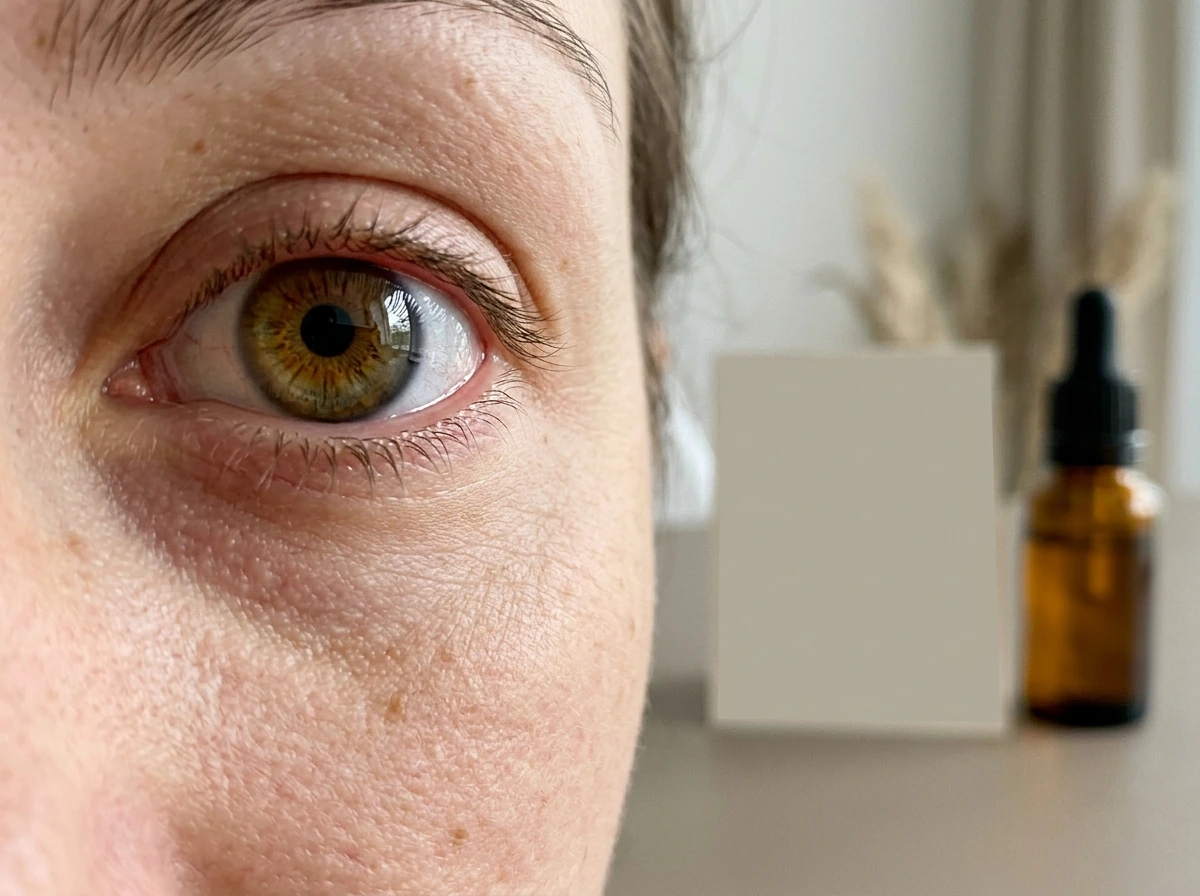
Prostaglandin-based lash serums come with a real side effect profile that is worth knowing upfront, not discovering mid-way through a 4-month commitment:
- Iris pigmentation: Bimatoprost can cause increased brown pigmentation in the iris, and the FDA label explicitly warns this may be permanent. This risk applies to prescription bimatoprost and may apply to OTC prostaglandin analogs as well.
- Eyelid skin darkening: Around 6% of bimatoprost users in one study experienced increased eyelid skin pigmentation at one year. This can reverse after stopping, but not always quickly.
- Periorbital fat changes (prostaglandin-associated periorbitopathy): Some prostaglandin analogs used around the eye have been associated with deepening of the upper eyelid sulcus and periorbital hollowing. Cases have been reported with both prescription and OTC prostaglandin-containing serums. Periorbital changes have been observed to improve after stopping the product.
- Local irritation: Dry eyelid skin, eye swelling, redness, increased tearing, and hypersensitivity reactions are listed in LATISSE's post-marketing adverse event data.
- Rarer effects: Periocular muscle-related changes have been reported in case literature linked to topical bimatoprost use.
None of this means lash serums are dangerous for everyone. Millions of people have used LATISSE with good results and manageable side effects. But using the product correctly, applying only to the upper lash line, not over-applying, and stopping use and consulting a doctor if you notice eye irritation, blurred vision, or changes in eye color, is non-negotiable.
A practical routine that works
- Remove all eye makeup and contacts before application.
- Apply a single, thin stroke along the upper eyelid margin at the base of lashes (upper lid only), using the applicator provided.
- Blot any excess product immediately to reduce migration.
- Apply every evening without skipping. Consistency is what drives the anagen-extending effect.
- Take a close-up photo of your lashes before you start and again at 4 weeks, 8 weeks, and 16 weeks. Digital tracking makes changes easier to see and keeps you motivated.
- At any point, if you notice unusual eye color changes, significant irritation, or vision changes, stop use and see an eye doctor.
If you are recovering from lash damage specifically (from years of extensions, a period of aggressive eye rubbing, or a medical treatment), lash serums are one of the more evidence-backed tools available to you, so if you’re searching for the best grow eyelashes options, start here. They work within your biology rather than against it, but they do require patience and a realistic 16-week window to judge results. For a deeper look at which specific OTC and prescription products stack up on ingredients and real-world performance, the comparison of the best eyelash serums to grow lashes is worth reading alongside this. mascara grow lashes reviews