Yes, Shih Tzu eyelashes do grow back in most cases. If the follicle is intact and the underlying cause is addressed, you can expect new lash growth to appear within four to six weeks, with full regrowth taking anywhere from six weeks to a few months depending on how much damage occurred. The catch is that 'will they grow back?' is almost never the only question worth asking here. Shih Tzus are a brachycephalic breed with eyes that genuinely need more attention than most dogs, and eyelash loss in this breed is often a symptom of something else going on with the eye or eyelid. can lashes grow back. Getting that sorted is what determines whether regrowth actually happens and sticks. Yes, Shih Tzu eyelashes do grow back in most cases. If the follicle is intact and the underlying cause is addressed, you can expect new lash growth to appear within four to six weeks, with full regrowth taking anywhere from six weeks to a few months depending on how much damage occurred. The catch is that 'will they grow back?' is almost never the only question worth asking here. Shih Tzus are a brachycephalic breed with eyes that genuinely need more attention than most dogs, and eyelash loss in this breed is often a symptom of something else going on with the eye or eyelid. Getting that sorted is what determines whether regrowth actually happens and sticks. <a data-article-id="0EE34D15-CDCA-4410-BCFE-CF224F78B5E6">can lashes grow back</a>. Yes, Shih Tzu eyelashes do grow back in most cases. If the follicle is intact and the underlying cause is addressed, you can expect new lash growth to appear within four to six weeks, with full regrowth taking anywhere from six weeks to a few months depending on how much damage occurred. The catch is that 'will they grow back?' is almost never the only question worth asking here. Shih Tzus are a brachycephalic breed with eyes that genuinely need more attention than most dogs, and eyelash loss in this breed is often a symptom of something else going on with the eye or eyelid. Getting that sorted is what determines whether regrowth actually happens and sticks. Yes, Shih Tzu eyelashes do grow back in most cases. If the follicle is intact and the underlying cause is addressed, you can expect new lash growth to appear within four to six weeks, with full regrowth taking anywhere from six weeks to a few months depending on how much damage occurred. The catch is that 'will they grow back?' is almost never the only question worth asking here. Shih Tzus are a brachycephalic breed with eyes that genuinely need more attention than most dogs, and eyelash loss in this breed is often a symptom of something else going on with the eye or eyelid. Getting that sorted is what determines whether regrowth actually happens and sticks. can lashes grow back. does burnt eyelashes grow back. will broken eyelashes grow back
Do Shih Tzu Eyelashes Grow Back? Timeline and Care

Do Shih Tzu eyelashes actually grow back?
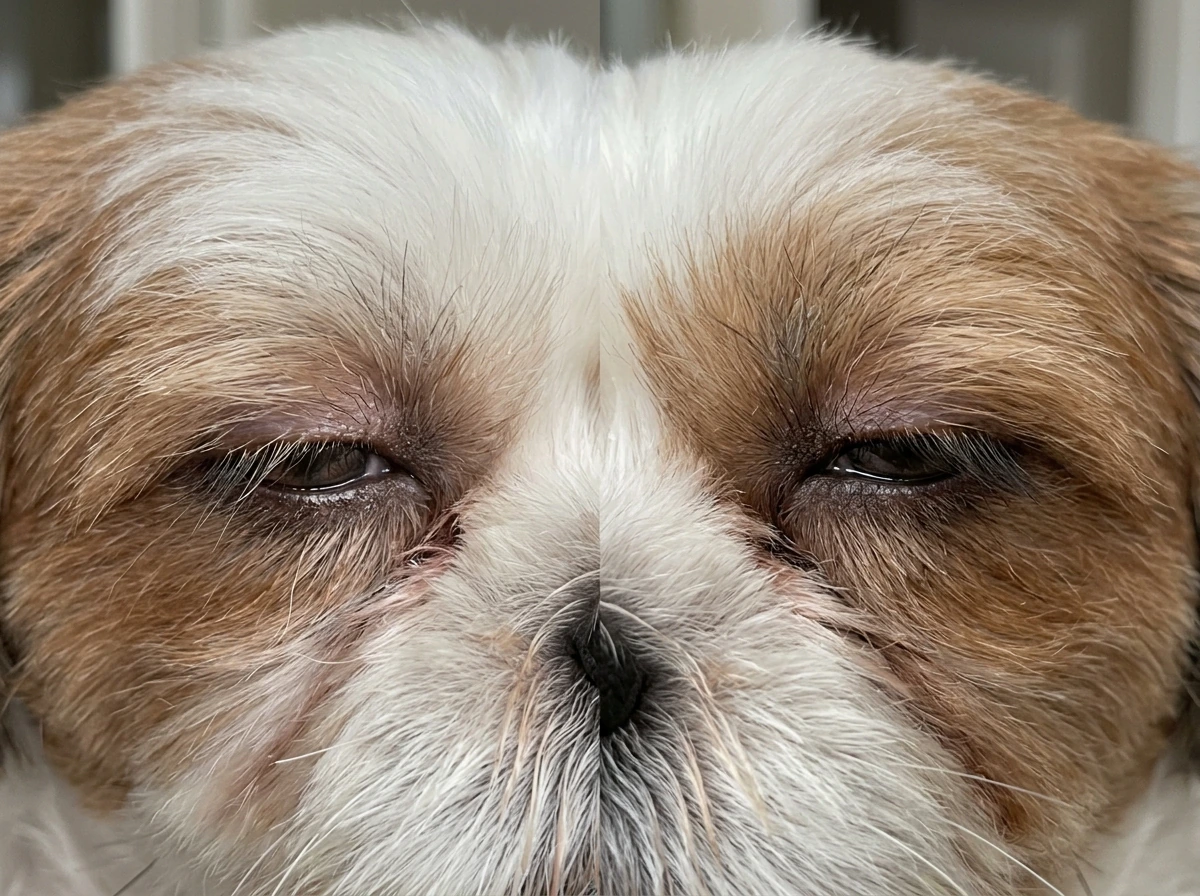
Yes, they do, as long as the follicle hasn't been permanently destroyed. Dog lashes, like all hair, cycle through three phases: anagen (active growth), catagen (transition), and telogen (rest). When a lash is lost or removed, the follicle eventually re-enters anagen and produces a new hair. In dogs where abnormal lashes were plucked by a vet, PetMD notes those hairs typically regrow within four to six weeks. That's a useful benchmark for normal follicle recovery.
The exception is permanent follicle damage. If the area around the lash root was burned, scarred, or chronically infected, the follicle may not recover. Repeated trauma, severe untreated inflammation, or aggressive DIY removal can all cross that line. But for most everyday causes (minor rubbing, a grooming snip, temporary irritation), full regrowth is the normal outcome once the trigger is removed.
Why Shih Tzus lose eyelashes in the first place
Shih Tzus are predisposed to eyelash problems more than most breeds, and there are several distinct reasons lashes fall out or look sparse. Knowing which one applies to your dog shapes everything about what you do next.
Physical trauma and grooming accidents
This is the most straightforward cause. Clipping too close near the eye, accidental snipping during a grooming session, or a dog repeatedly pawing and rubbing at their eye can all break or dislodge lashes. The follicle is usually fine, and regrowth is predictable. The same goes for self-trauma from rubbing against furniture or carpet.
Abnormal lash positions: distichiasis and trichiasis
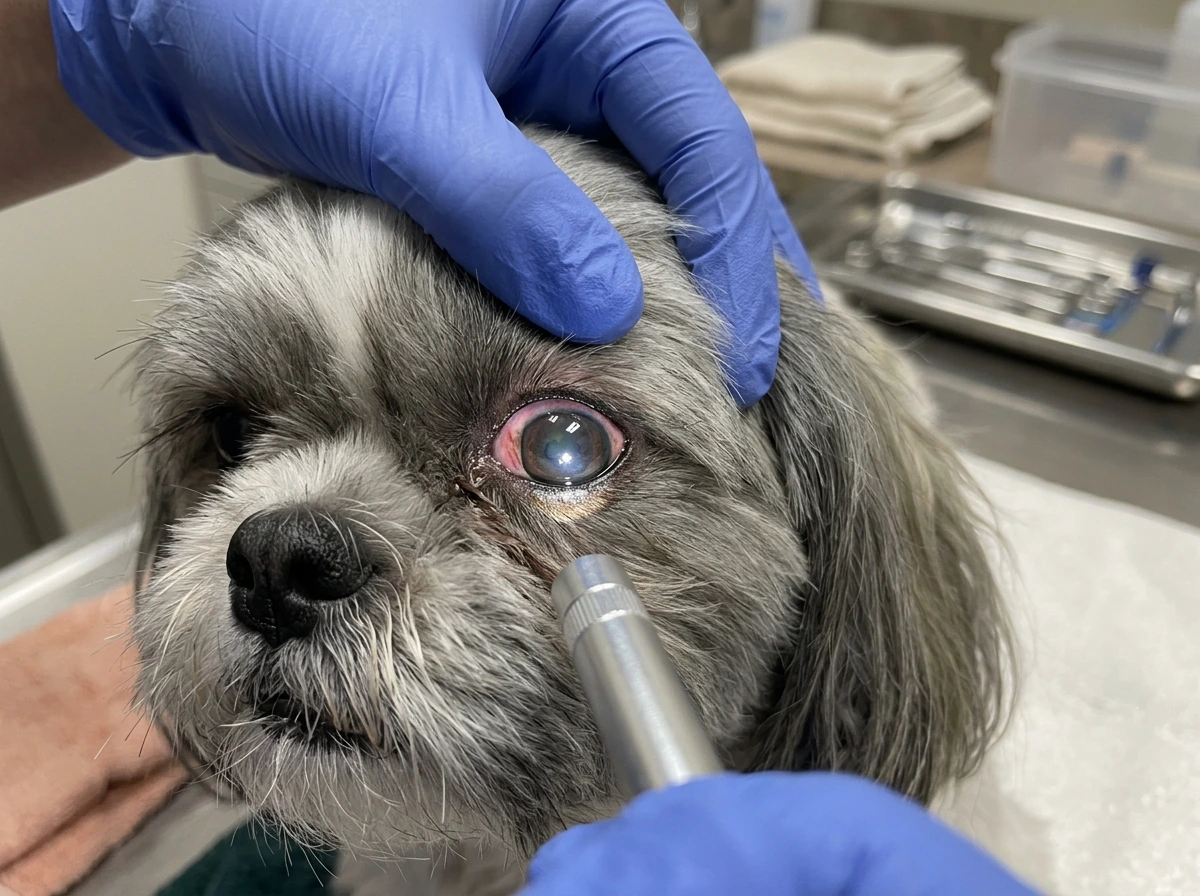
Shih Tzus are on the MSPCA-Angell's short list of breeds commonly affected by eyelash irregularities. Distichiasis means extra lashes grow from the meibomian gland openings along the eyelid margin instead of the normal lash line. Trichiasis means existing hairs, often facial coat hairs or curling lashes, are directed toward the cornea. Both conditions cause chronic irritation, and the dog's natural response (rubbing, squinting) makes lash loss worse. A vet may pluck these lashes as treatment, which is why you sometimes see your Shih Tzu with noticeably fewer lashes after an eye appointment.
Dry eye (keratoconjunctivitis sicca)
KCS is well-documented in Shih Tzus. The UFAW breed health profile specifically calls it out, and a 2025 comparative study confirmed that brachycephalic breeds show distinct tear-film characteristics linked to ocular surface disease. When tear production drops below 15 mm per minute on a Schirmer tear test, the ocular surface becomes inflamed and uncomfortable. A dog with chronically dry, irritated eyes rubs constantly, and chronic rubbing damages lash follicles over time.
Entropion and eyelid conformation issues
Entropion means the eyelid rolls inward, so the lashes and lid skin rub directly on the cornea. VCA notes this can lead to pain, corneal ulcers, and in severe cases, vision problems. The Shih Tzu's facial structure puts them at higher risk. Nasal fold trichiasis, where skin folds near the nose contact the cornea, is another conformation-related cause documented in the published literature. Both problems create a cycle: the irritation causes rubbing, rubbing damages lashes, and the lash loss area can become inflamed and slow to regrow.
Infections, allergies, and blepharitis
Bacterial infections around the eyelid (blepharitis), allergic reactions, and parasitic conditions can all cause eyelash loss by inflaming the follicles directly. You'll usually see other signs alongside the lash thinning: crusting along the lid margin, redness, swelling, or discharge. These cases need treatment before regrowth can happen, because an actively inflamed follicle doesn't produce healthy hair.
How long regrowth takes and what each stage looks like
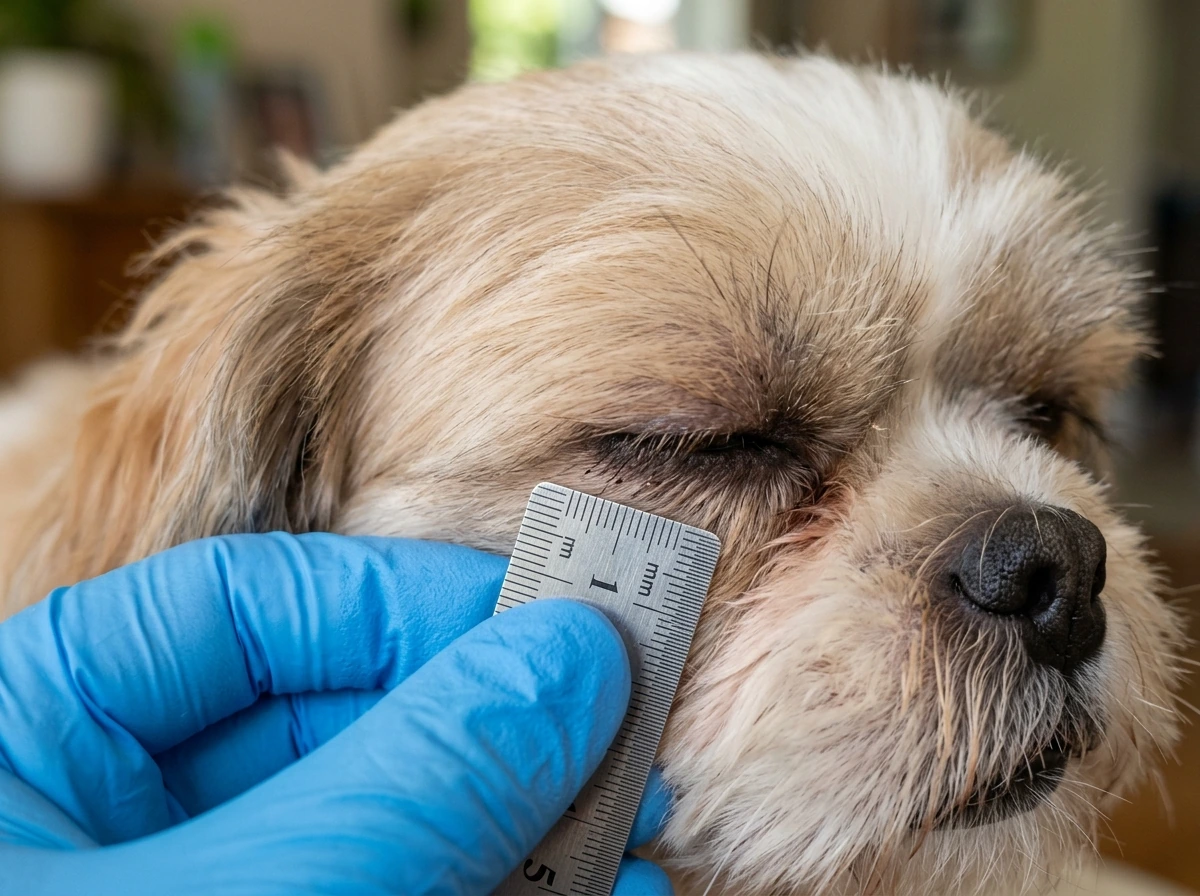
Four to six weeks is the benchmark from PetMD for lash regrowth after plucking. For a clearer answer to how long it takes for lashes to grow back, these timelines are a good starting point how long does it take for lashes to grow back. MSPCA-Angell recommends a recheck at four to eight weeks to confirm regrowth after the removal of problem lashes. For more significant loss or cases involving follicle-level irritation, expect the timeline to stretch. A general dog hair-regrowth reference from dermatology literature suggests full coat recovery from clipping can take up to 12 months in some cases, which gives you a sense of the outer limit when follicle recovery is complicated.
| Stage | Timeframe | What you'll see |
|---|---|---|
| Early anagen | Weeks 1-3 | Tiny stub or barely visible lash emerging from the follicle |
| Active growth | Weeks 3-6 | Short but visible lash, noticeably shorter than surrounding lashes |
| Near-full length | Weeks 6-10 | Lash approaching normal length, may still look finer than mature lashes |
| Full recovery | 2-4+ months | Normal length and texture; may take longer if follicle was inflamed |
One thing to watch: new lashes in a Shih Tzu may come in at a slightly different angle than before, especially if there was any scarring or if the dog has conformation-related lash issues. If a newly regrown lash starts rubbing the eye, that's something a vet should look at rather than something you try to manage yourself at home.
What you can do at home right now
Before anything else, stop whatever might be making it worse. If your Shih Tzu is rubbing their eye, figure out why. A dog that rubs constantly will re-traumatize regrowth before it can establish. An e-collar (cone) is not glamorous, but it works while you investigate the root cause.
Safe cleaning and gentle care
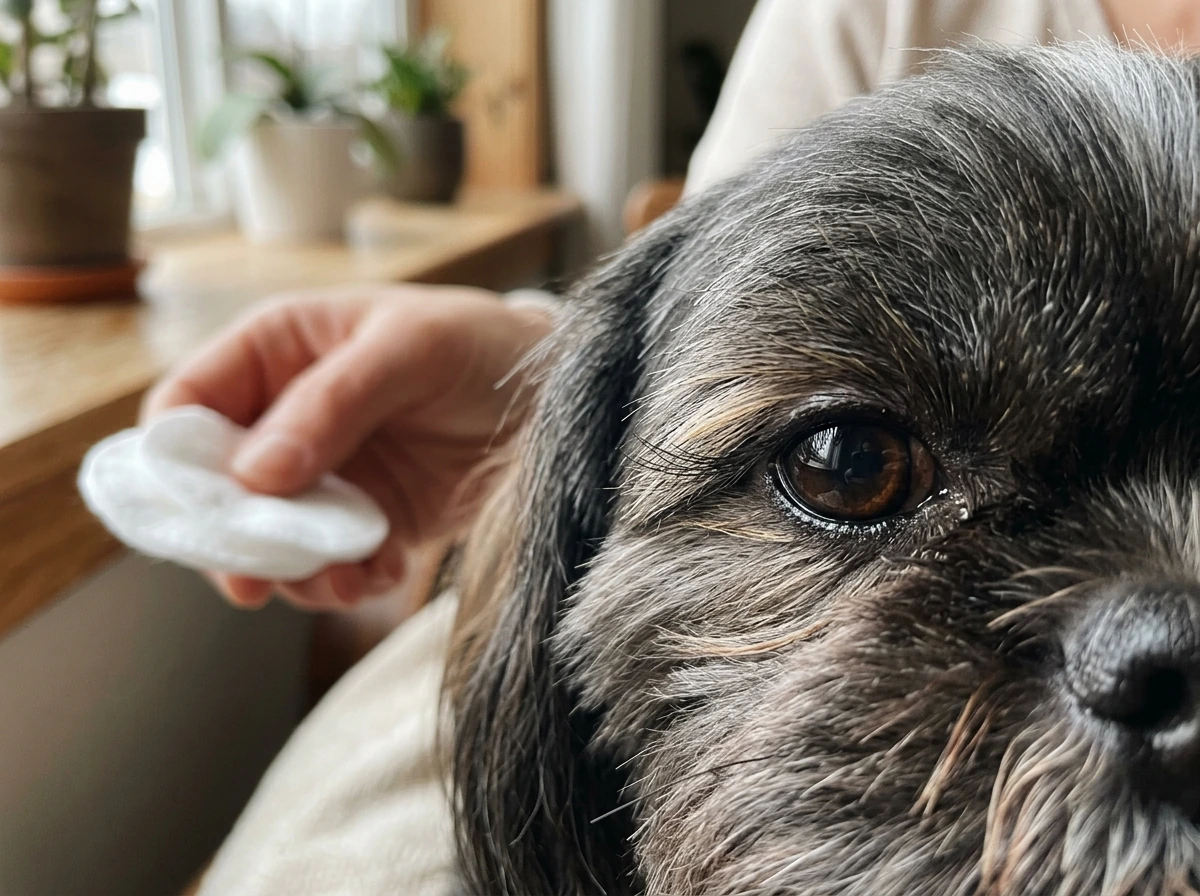
The ACVO recommends warm, wet compresses and commercially produced ophthalmic cleansing wipes for at-home eye care. For a Shih Tzu with lash loss, a twice-daily gentle wipe along the closed eyelid with a clean, damp cloth or vet-approved eye wipe removes discharge and reduces bacterial load without irritating the follicle. Don't scrub. Don't use cotton balls that can leave fibers near the eye. Apply light pressure along the lid margin and wipe outward.
What to stop immediately
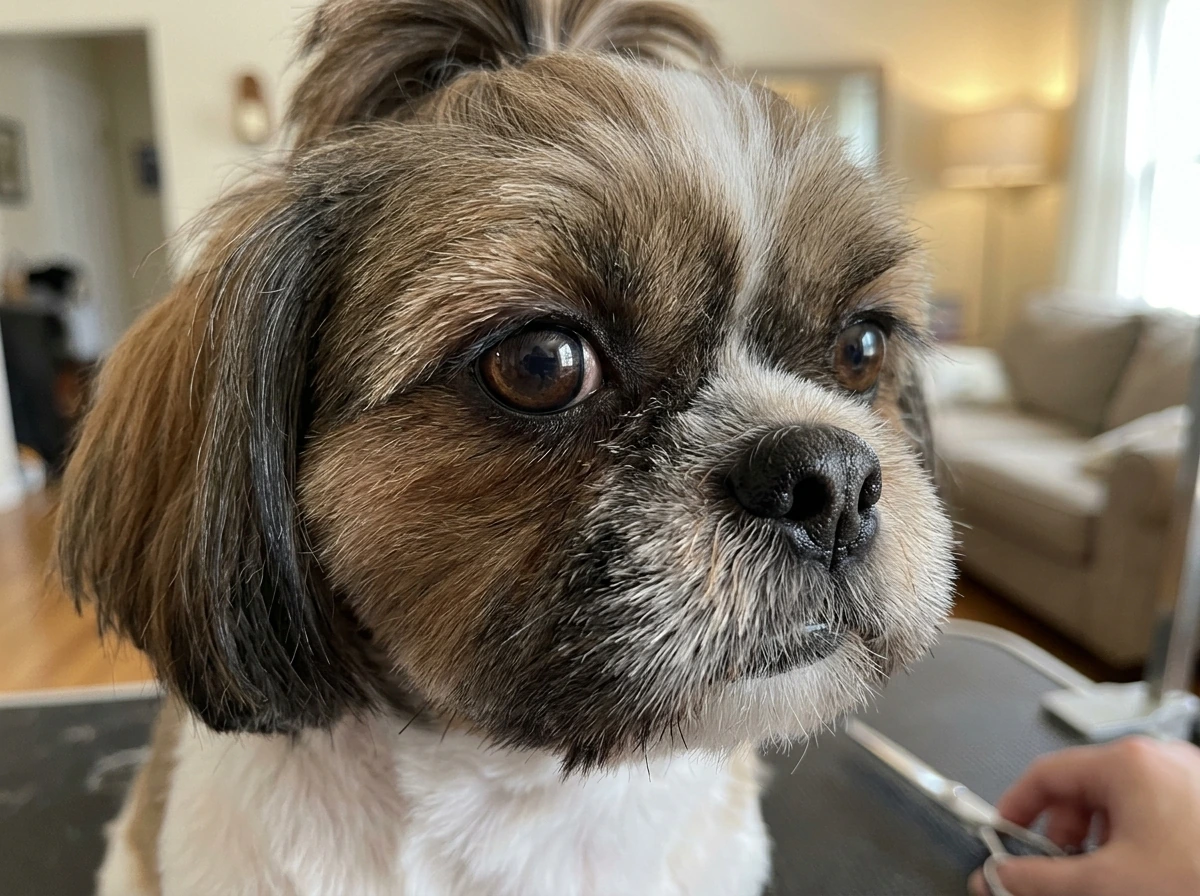
- Stop any DIY lash plucking. Pulling lashes at home without the right equipment and lighting risks follicle damage and corneal injury.
- Don't apply human eye drops, serums, or anything not explicitly labeled as safe for dogs. Many human ophthalmic products contain preservatives or ingredients not suited to the canine eye.
- Avoid castor oil near the eye. Dial A Vet specifically cautions against using castor oil in or around a dog's eye without veterinary guidance.
- Stop using any grooming products on or near the eyelid area until the lashes have recovered.
- If you've been trimming facial hair near the eye yourself, pause and let a professional groomer handle it during the recovery period.
Protecting the eye area
Keep the hair around the eye trimmed short enough that it doesn't contact the eye surface, but leave that job to an experienced groomer. If the Shih Tzu's nasal fold hair is contacting the eye (a documented problem in this breed), a soft topknot or facial trim can reduce that mechanical irritation while the lashes recover. Keep the dog away from dusty or smoky environments, and if they sleep near an air vent, redirect airflow. Dry air makes eye irritation worse, especially for a breed already prone to KCS.
Red flags that mean go to the vet now
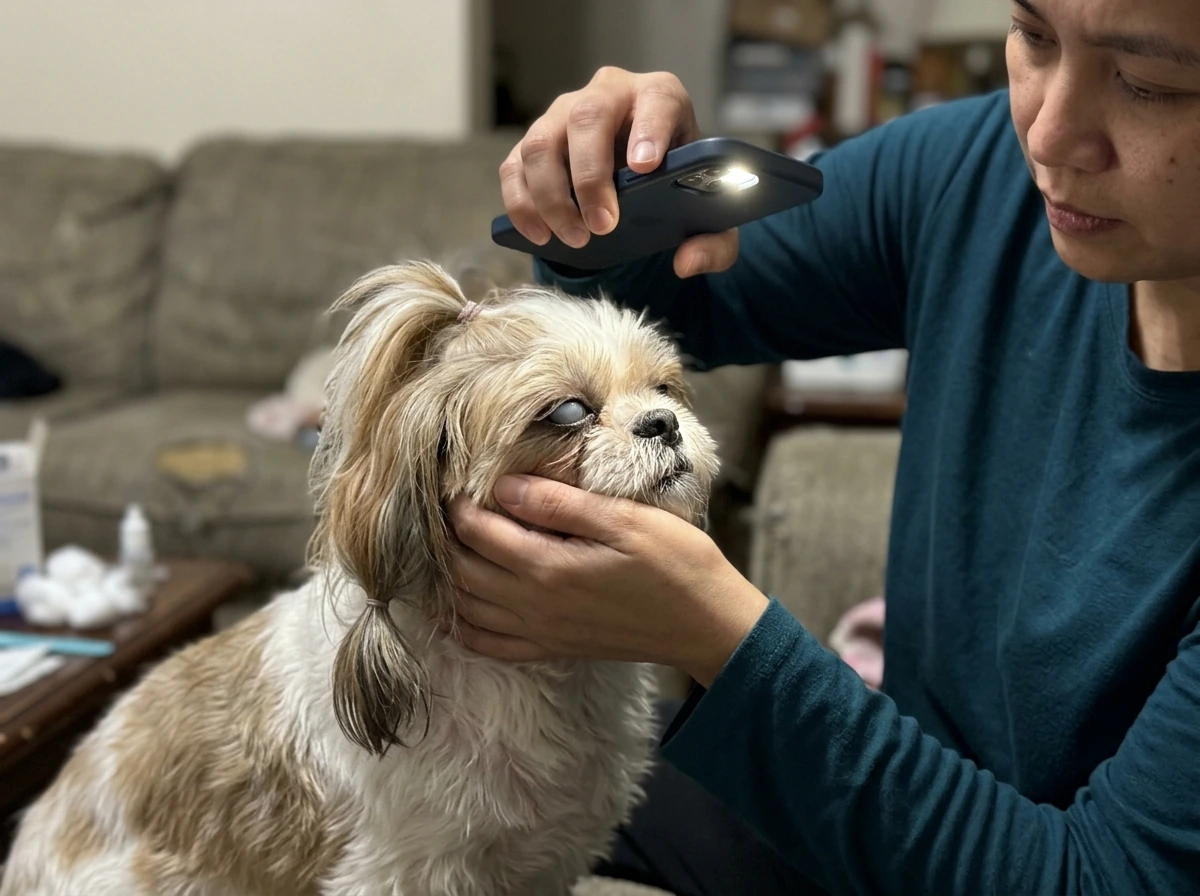
Some of what looks like a simple lash-loss problem is actually an eye emergency. If you see any of the following, skip the home care research and call your vet or an emergency animal clinic today.
- The eye is visibly cloudy, hazy, or has a blue-white film over it
- Your dog is squinting or keeping the eye partially or fully closed
- There's yellow or green discharge coming from the eye
- The eye looks sunken, swollen, or the lids appear to be rolling inward
- Your dog is pawing at or rubbing the eye intensely and won't stop
- The white of the eye (sclera) is very red
- There's any visible cut, scratch, or injury near the eye
These signs can indicate a corneal ulcer, which is a genuine emergency. The Animal Medical Center lists redness and squinting among the urgent corneal ulcer signs. A vet will typically do a Schirmer tear test (normal is above 15 mm per minute) and fluorescein stain, which highlights corneal damage that's invisible to the naked eye. This matters for lash regrowth too: if there's an active corneal ulcer, using the wrong topical product (especially any corticosteroid) can make the ulcer dramatically worse. Merck Veterinary Manual is explicit that corticosteroids are contraindicated when a corneal ulcer is present.
If the vet suspects dry eye, entropion, or distichiasis as the cause of the lash loss, they may refer to a veterinary ophthalmologist. That's a good outcome, not a scary one. These specialists have the tools to properly assess and treat the conditions most likely to interfere with normal Shih Tzu lash regrowth.
Supporting regrowth: what's actually safe vs. what to skip
Here's where a lot of Shih Tzu owners go wrong: they find a human lash growth remedy and try it on their dog. The biology isn't the same, the eye anatomy isn't the same, and the risk profile is completely different. Let me be direct about what's worth doing and what isn't.
What actually helps
The most effective thing you can do to support Shih Tzu lash regrowth is to resolve the underlying cause. A dog on appropriate KCS treatment (usually cyclosporine or tacrolimus eye drops prescribed by a vet, plus artificial tears) will have a better ocular environment for follicle recovery than a dog whose dry eye is still untreated. Similarly, if entropion is surgically corrected, the chronic corneal rubbing stops and lashes can regrow normally. These aren't glamorous answers, but they're what the evidence supports.
For the ocular surface itself, vet-prescribed lubricating eye drops or ointments help maintain a healthy tear film around the recovering follicle area. A veterinary clinical practice guideline supports starting topical lubricants when fluorescein staining is negative (no ulcer present). A balanced, high-quality diet with adequate protein and omega-3 fatty acids supports hair follicle function generally, which is a safe and reasonable background measure.
Castor oil and other DIY remedies
Castor oil is a popular recommendation in human lash-growth circles, and it may have some merit for human lashes. For dogs, the answer is no. Dial A Vet explicitly states castor oil is not recommended for use in dogs without veterinary guidance, and applying anything oil-based near a dog's eye risks introducing infection, disrupting the tear film, or causing direct irritation to an already compromised eye surface. The FDA has also issued reminders about eye drop recalls due to infection risk, which underscores why using vet-approved products rather than DIY options matters here.
The same caution applies to coconut oil, vitamin E oil, and any topical serum designed for human use. Even if the ingredient itself isn't toxic to dogs, the route of application (close to or into the eye) makes the risk profile completely different from applying it to a human's lash line. If you want to use something topically to support the area, ask your vet first and use only what they recommend.
What vets can do that you can't
If a vet has plucked distichiasis lashes (the most common clinical treatment), PDSA notes those abnormal lashes can regrow and need ongoing monitoring. For cases where plucking needs to be repeated frequently, a veterinary ophthalmologist might recommend electrolysis, cryotherapy, or surgical correction to permanently destroy the abnormal follicle. These options stop the cycle of damage-regrowth-damage that otherwise repeats indefinitely. They also protect corneal health, which is ultimately what keeps your Shih Tzu comfortable and seeing well.
Preventing it from happening again
Long-term management for a Shih Tzu's lashes is really about managing the breed's eye anatomy, because the structural realities don't change. A few consistent habits make a measurable difference.
- Schedule regular professional grooming with someone experienced in brachycephalic breeds. Keeping facial hair trimmed and away from the eye is probably the single most practical way to reduce mechanical lash irritation.
- Do a quick daily eye check. Look for discharge, redness, squinting, or early signs of lash-rubbing before they become problems. Early intervention is far easier than treating an established issue.
- Stay current on KCS monitoring if your vet has flagged it. Dry eye in Shih Tzus is a lifelong condition, not a one-time fix. Consistent treatment keeps the ocular surface healthy enough to support normal lash cycling.
- Follow your vet's recheck schedule after any lash-related treatment. MSPCA-Angell recommends rechecks at four to eight weeks after plucking to catch regrowth of problem lashes before they cause new corneal damage.
- Keep nasal fold skin clean and dry. In Shih Tzus, skin folds near the nose can be a direct source of hair-on-cornea trauma. Wiping the fold daily with a vet-approved wipe reduces this risk.
- Don't attempt lash plucking or removal at home. Even when it looks like an obvious abnormal lash, the risk of corneal contact during a home removal attempt is high. Leave this to a veterinarian with proper tools and lighting.
The broader picture is that Shih Tzu lash health is tied to overall eye health. Owners who manage the eye proactively, rather than waiting for obvious problems, tend to see far fewer cycles of lash loss and regrowth. The articles on general eyelash regrowth timelines and recovery after specific types of damage can give you useful additional context on the biology side, but for this breed, the vet relationship is the most important tool in the kit. A dog whose eyes are comfortable doesn't rub, doesn't damage follicles, and grows lashes normally. That's the outcome to aim for.
FAQ
How can I tell the difference between normal sparse regrowth and a problem that will not regrow?
If you see lashes returning but the eye stays red, watery, crusty, or your Shih Tzu keeps rubbing or squinting, regrowth is likely being interrupted by ongoing irritation (dry eye, entropion, distichiasis, infection). In that situation, expect slower or patchy regrowth and book a vet exam rather than waiting it out.
Is it safe to pluck the remaining lashes to make my Shih Tzu look even again?
No. Plucking or removing lashes yourself can re-trigger inflammation and can worsen conditions like distichiasis or trichiasis by traumatizing already irritated follicles and eyelid margins. If lash removal is needed, it is typically done under veterinary guidance to both protect the cornea and plan follow-up monitoring.
Can I use a lash growth serum or stimulant product on my Shih Tzu?
Do not use human lash growth products. Even when the ingredient sounds harmless, the eye anatomy and tear-film environment are different, and applying oils or serums near the eye increases the risk of irritation or infection. Only use vet-approved ophthalmic products and follow your veterinarian’s dosing instructions.
If my Shih Tzu’s lashes regrow, will they go back to the exact same thickness and direction?
Not always. Regrown lashes may come in at a slightly different angle, especially if there was scarring or if the eyelid conformation is still causing lashes to rub. If new lashes start contacting the cornea or the dog shows discomfort, the issue needs reevaluation rather than home management.
What should I do if my Shih Tzu is still rubbing their eye after I start compresses and wipes?
Stop assuming it is just irritation and treat rubbing as a sign the underlying cause is still present. If rubbing continues beyond a short window, or if you see squinting or discharge, schedule an exam and use an e-collar to prevent repeated trauma while you figure out the cause.
How long should I wait before I contact the vet if there are no new lashes yet?
A reasonable benchmark is around four to six weeks. If there is no visible improvement by that point, or if symptoms worsen (redness, discharge, squinting, swelling), it suggests persistent inflammation, incorrect diagnosis, or follicle-level damage that needs treatment adjustments.
Do both eyes regrow at the same rate, and is it ever uneven?
Yes, regrowth can be uneven. One eye may have a more severe underlying issue or more mechanical rubbing from lid conformation, tear film instability, or infection. Uneven timing is a clue that each eye may require its own targeted evaluation.
Are there situations where the lash loss is more about the eyelid than the lash follicles?
Yes. Problems such as entropion, distichiasis/trichiasis, nasal fold contact, and chronic blepharitis can make lashes look sparse because the eyelid margin and hair direction are constantly irritating the ocular surface. In these cases, fixing the eyelid-related cause is what allows follicles to recover.
Is diet really connected to lash regrowth, or is it just general health advice?
Diet can support the background environment for hair follicles, particularly adequate protein and omega-3 fatty acids, but it usually does not correct brachycephalic eye mechanics, dry eye severity, or lid-position disorders. Think of nutrition as supportive, not a substitute for treating KCS, infections, or conformational causes.
What home signs mean I should treat this as an emergency rather than wait for regrowth?
Seek urgent care if you notice pronounced squinting, marked redness, visible cloudiness of the cornea, thick discharge, or the eye seems acutely painful. These can indicate corneal ulceration or significant ocular surface damage, and using the wrong topical product can make ulcers worse.
Can Eyelashes Grow Back in 2 Weeks? Timeline and Fixes
See if eyelashes can regrow in 2 weeks, what changes to expect by day 14, and practical fixes for faster recovery.