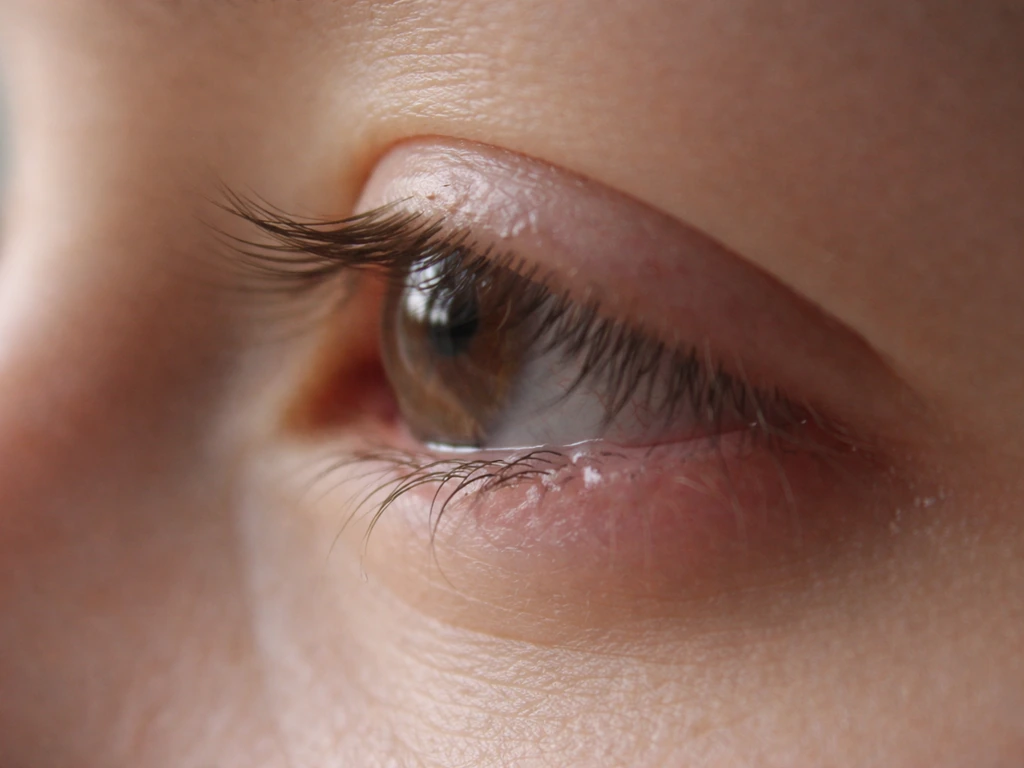
Yes, eyelashes can genuinely grow in a direction that causes them to contact and scratch your eye. This is called trichiasis, and it means one or more lash follicles are misdirected so the lashes point toward the eyeball instead of away from it. But here's the thing: most people who feel like a lash is 'growing into' their eye are actually dealing with a stray lash hair sitting on the surface, dry eye irritation, or post-extension sensitivity rather than true inward-growing lashes. Telling those apart matters a lot, because the fix is completely different for each one.
Can Eyelashes Grow Into Your Eye? Causes and What to Do Now

Rachel Nguyen
16 May 2026
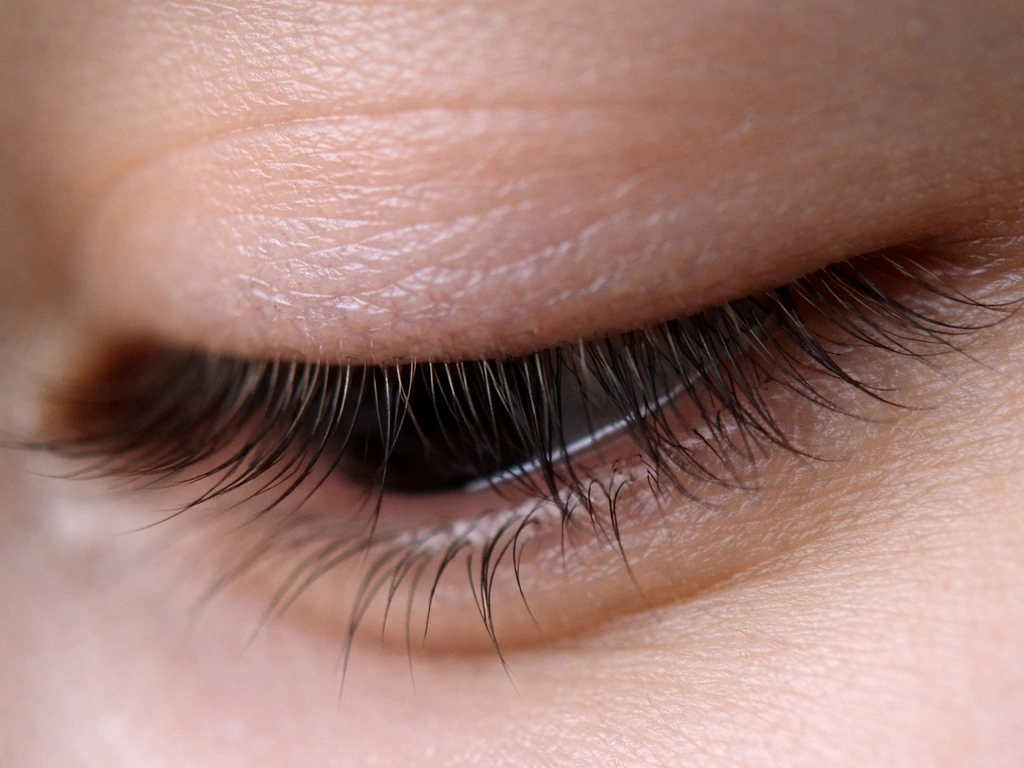
What it actually means when lashes seem to grow into your eye
Your lashes grow from follicles along the eyelid margin, and under normal circumstances they grow outward and slightly forward, away from the eye surface. When something disrupts that follicle direction, whether from inflammation, scarring, repeated trauma, or an eyelid structural problem, lashes can start growing posteriorly, toward the cornea and conjunctiva. That contact creates a constant scratching sensation every time you blink.
There are a few distinct conditions grouped under this umbrella. Trichiasis is the most common: the eyelid itself sits in the right position, but individual lash follicles are misdirected and the lashes grow toward the globe. Entropion is different: the entire eyelid margin rolls inward, which then drags normally positioned lashes with it so they rub the cornea. There is also a rarer condition called distichiasis, where a second row of lashes grows from the meibomian gland openings along the lid margin rather than from the normal lash line, and those extra lashes often point directly toward the eye surface. Each of these is a real anatomical problem, not just a feeling.
Causes of inward or irritating lash growth
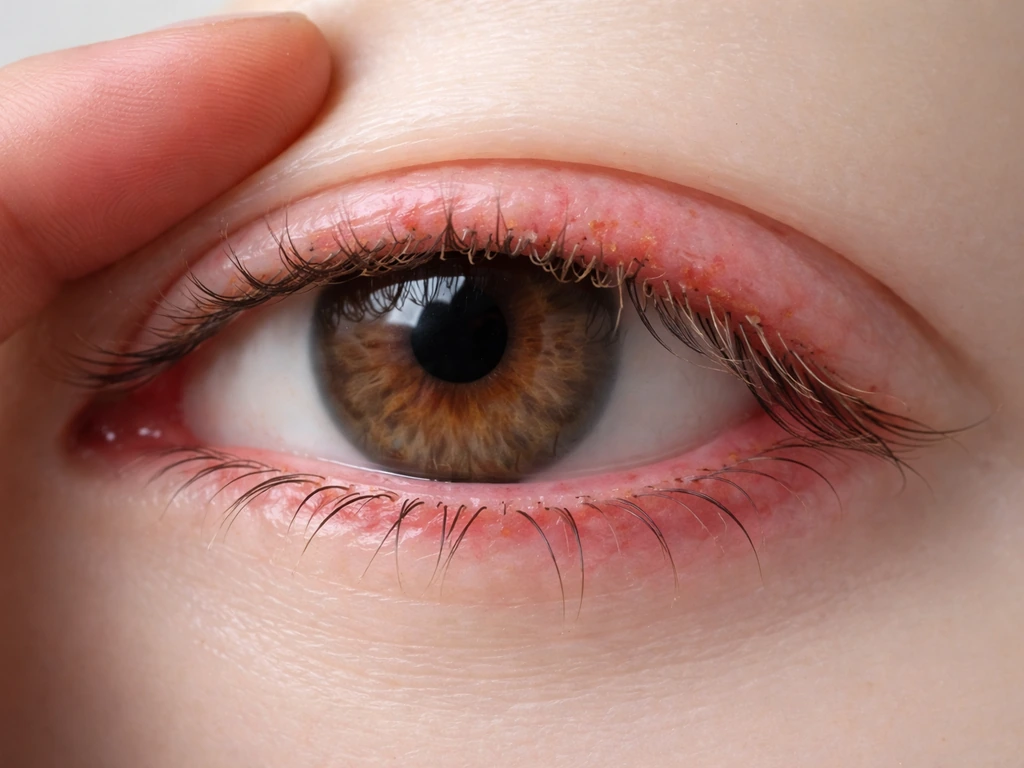
Trichiasis is described clinically as an acquired condition, meaning something changed the follicle direction over time. It doesn't just happen randomly. The most common triggers include:
- Chronic eyelid inflammation (blepharitis): long-term inflammation at the lid margin can scar the tissue around follicles and alter their angle
- Scarring from previous infections, injuries, or eye surgeries that distort the lid architecture
- Entropion, which is an inward turning of the eyelid margin itself, often related to aging, scarring, or muscle laxity
- Trauma to the lash line, including aggressive removal of eyelash extensions or repeated rubbing
- Inflammatory skin conditions like rosacea or seborrheic dermatitis affecting the eyelids
- Previous chemical or thermal burns to the periocular area
- Trachoma (a bacterial infection more common in developing regions) causing significant lid scarring
If you're experiencing irritation after removing eyelash extensions, that's a slightly different story. Extensions applied with improper adhesive or removed roughly can inflame the follicles and temporarily shift lash direction, or simply leave adhesive residue that creates a scratching sensation. Worth checking your lid margin closely in a magnifying mirror: look for redness, flaking, or crusting at the base of the lashes, which would suggest blepharitis is involved.
Is it actually trichiasis, or something else entirely?
This is the most important question to sort out before you do anything else. True trichiasis feels like a persistent, consistent scratch or pressure that is always there and worsens with blinking. A foreign body (a loose lash that has fallen onto the eye surface) feels like something is in there but tends to shift position, can sometimes be flushed out, and usually came on suddenly after you noticed a lash fall. Dry eye irritation is typically bilateral, burns rather than scratches, worsens in air-conditioned or windy environments, and improves temporarily with lubricating drops.
| Feature | Trichiasis (inward-growing lash) | Loose lash / foreign body | Dry eye irritation |
|---|---|---|---|
| Onset | Gradual, persistent | Sudden | Gradual, often chronic |
| Sensation | Consistent scratch on same spot with every blink | Shifting sensation, feels like something moving | Burning, gritty, diffuse |
| Both eyes affected? | Usually one eye or one area | Typically one eye at a time | Usually both eyes |
| Relief with lubricating drops? | Minimal to none | Sometimes temporarily | Yes, noticeably |
| Visible lash on eyeball | No (lash grows from lid, not visible on surface) | Often visible with good lighting | No visible lash |
| Worsens with blinking? | Yes, consistently | Sometimes | Variable |
If you suspect a foreign body (a loose lash sitting on the eye), you can often see it by pulling the lower lid down gently and looking in a mirror with good lighting. Lubricating eye drops and gentle blinking can move it toward the inner corner where you can wipe it away with a clean, damp cotton swab. Do not use tweezers near the open eye. If that doesn't resolve it within a few minutes, stop and get it checked, because you can scratch the cornea making repeated attempts.
What to do today: safe at-home steps

If you think you're dealing with irritation from a lash, here's what to do right now and, just as importantly, what to avoid.
- Stop rubbing your eye immediately. Rubbing can drive a lash further into the conjunctival fornix or cause a corneal abrasion if a lash is already in contact with the surface.
- Use preservative-free lubricating eye drops (artificial tears). Apply 1 to 2 drops and blink gently. This can float a loose lash out and reduces friction if a misdirected lash is scratching.
- Examine your lash line carefully in a magnifying mirror under good lighting. Look for any lashes pointing visibly inward toward the eye rather than outward. Also look for redness, crusting, or swelling at the lid margin.
- If you wear eyelash extensions, do not attempt to remove them yourself today using pulling or solvents. That can worsen any inflammation already present.
- Pause all lash serums, oils, and makeup on or near the eye until you know what's causing the irritation. Some serums (particularly prostaglandin-analog based ones) can occasionally contribute to periocular irritation.
- Clean the lid margin gently using a diluted baby shampoo or commercial lid scrub on a cotton pad, which can help if blepharitis is contributing.
- Do not try to pull or tweeze a lash you think is growing inward. Without proper magnification and training, you risk breaking it at the surface and leaving the root intact, or causing additional follicle trauma.
Red flags: when to get urgent eye care
Most cases of lash-related irritation are uncomfortable but not dangerous if addressed quickly. These symptoms, however, mean you need to see an ophthalmologist today or go to an urgent care eye clinic, not tomorrow:
- Sudden significant vision change or blurred vision that does not clear with blinking
- Severe eye pain rather than just irritation
- Significant photophobia (light sensitivity that makes you want to close the eye)
- A visible white or grey spot on the cornea (the clear part of the eye), which can indicate a corneal ulcer
- Eye discharge that is thick, yellow, or green, suggesting infection
- The eye is noticeably red and the redness is not improving after lubricating drops
- Symptoms that have persisted more than 24 to 48 hours despite the at-home steps above
- You can clearly see a lash embedded in the eye tissue rather than sitting on the surface
A corneal scratch from an inward-growing lash can escalate to a corneal abrasion or, in serious cases, an infection if left untreated. Corneal health is not worth waiting out. An ophthalmologist can stain the eye with fluorescein dye and see in seconds whether there is surface damage.
Professional options for fixing the actual problem
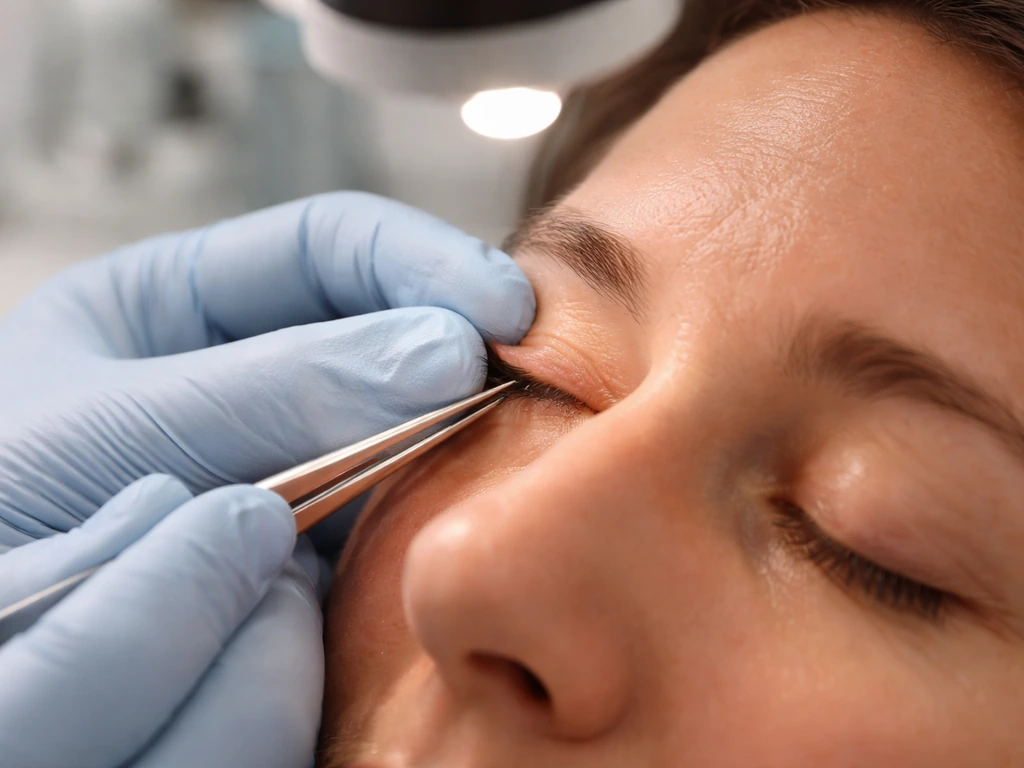
If your doctor confirms true trichiasis or entropion, the treatment depends on severity and how many lashes are involved.
Epilation (manual removal)
For a single or small number of misdirected lashes, epilation with fine forceps is the immediate in-office fix. The lash is pulled from the follicle entirely. This provides relief within hours, but it is temporary: misdirected follicles regrow the lash in the same wrong direction in approximately 4 to 8 weeks, so epilation often needs repeating unless a more permanent treatment addresses the follicle itself.
Electrolysis and radiofrequency ablation
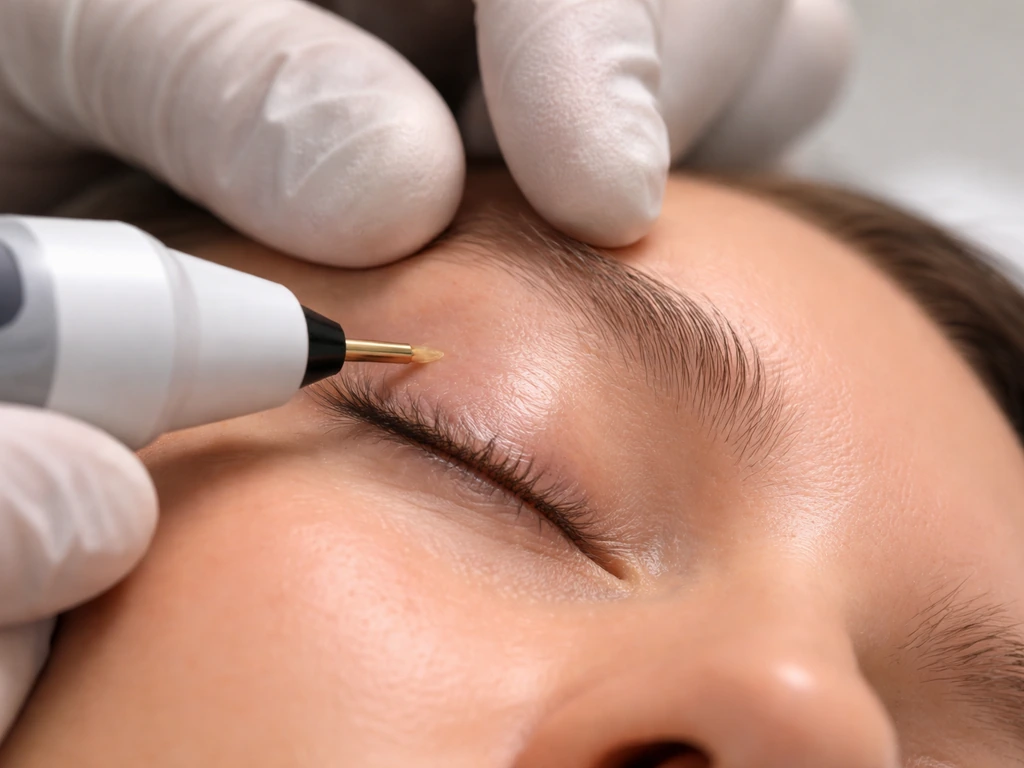
These procedures destroy the follicle using electrical current or radiofrequency energy so the lash cannot regrow. They are more definitive than epilation for isolated misdirected lashes, though they require precision to avoid damaging adjacent normal follicles. Success rates for permanent removal with these methods are good for a limited number of lashes.
Laser ablation
Argon laser or diode laser treatment can target and destroy individual follicles. This is effective for trichiasis involving a small cluster of lashes and is often preferred when the lashes are in a location that makes electrolysis difficult. Multiple sessions may be needed.
Surgical correction
When entropion is the underlying cause (the eyelid itself is turning in), surgery to reposition the eyelid margin is the definitive fix. Leaving entropion uncorrected and only doing epilation is chasing the symptom rather than the cause. Similarly, if significant scarring of the lid is present, a surgical procedure to address the lid architecture may be needed. These are typically outpatient procedures done under local anesthetic.
Managing blepharitis as a root cause
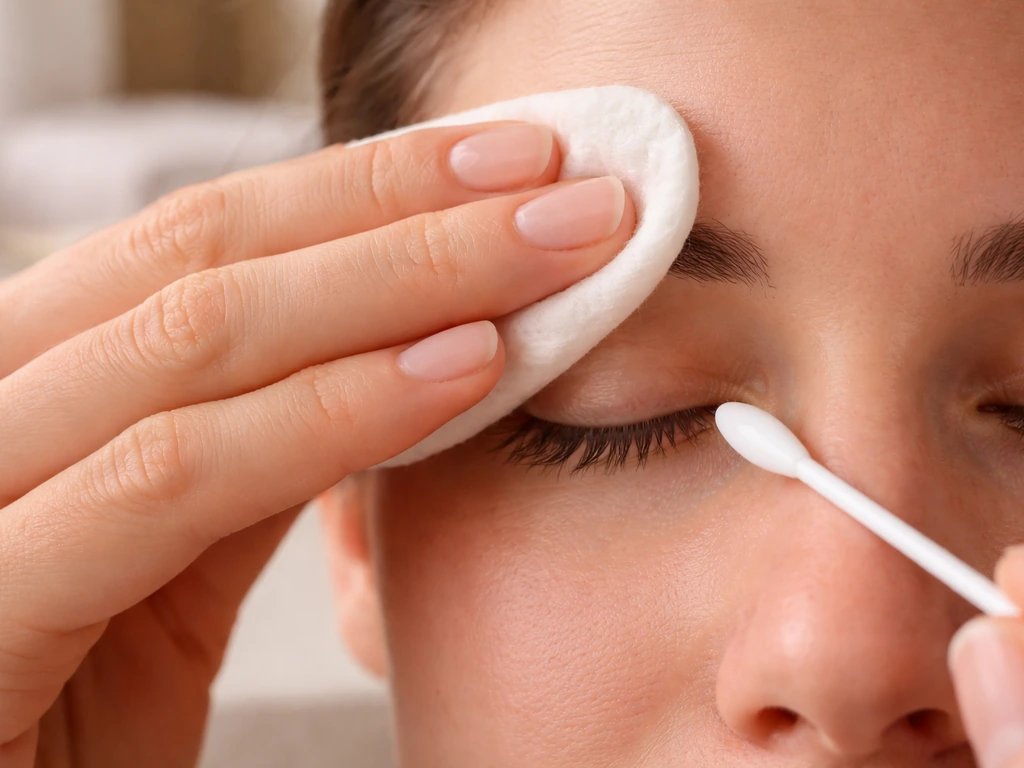
If chronic lid inflammation is the driver, controlling blepharitis is non-negotiable for preventing recurrence. This usually means twice-daily lid hygiene (warm compresses for 5 to 10 minutes, followed by lid margin scrubs), and sometimes a course of topical or oral antibiotics prescribed by your doctor. Omega-3 supplementation has reasonable evidence behind it for improving meibomian gland function, which reduces the inflammatory environment at the lash line.
Helping lashes grow back: what actually works
Once the underlying problem is being treated, or if you've experienced lash thinning from chronic inflammation, extensions, or medical treatments, supporting healthy regrowth becomes the goal. Lash follicles follow the same anagen-telogen growth cycle as scalp hair, but on a compressed timeline: the active growth phase (anagen) for lashes lasts roughly 4 to 6 weeks, which is why lashes are shorter than scalp hair. Full regrowth after significant lash loss typically takes 3 to 6 months.
Clinically studied serums
The only FDA-approved topical treatment for lash growth is bimatoprost 0.03% (sold as Latisse), which is a prostaglandin analog originally developed as a glaucoma medication. Can wild growth grow eyelashes depends on the cause of your lash symptoms, and for true lash misdirection the most reliable options are medical treatments rather than unproven at-home methods bimatoprost 0.03%. It extends the anagen phase and increases the number of hairs in active growth. In clinical trials it produced measurable increases in lash length, fullness, and darkness over 16 weeks. It does require a prescription, has a real side effect profile (potential iris pigment change, periocular darkening, and paradoxically can sometimes cause lash misdirection with long-term use at high doses), and should not be used if you are currently managing trichiasis without medical guidance.
Castor oil and carrier oils
Castor oil is the most discussed at-home option for lash conditioning. It contains ricinoleic acid, which has demonstrated some anti-inflammatory properties in research, and the thick consistency coats and protects the lash shaft. The honest assessment: castor oil likely supports lash retention by reducing breakage and keeping the lash environment less inflamed, but there are no controlled clinical trials proving it independently stimulates new growth. Applied with a clean spoolie to the lash line nightly, it is safe for most people and worth including as a supporting measure, especially if blepharitis or dryness is part of the picture. Avoid getting the oil directly in the eye.
Peptide-based over-the-counter serums
A number of OTC lash serums use peptides (like myristoyl pentapeptide-17) alongside biotin and panthenol to condition the lash and theoretically support follicle signaling. The evidence base is weaker than for bimatoprost, but some small studies show modest improvement in lash appearance over 12 to 16 weeks of consistent use. These are a reasonable middle ground if you want something accessible without a prescription, with the understanding that results are slower and more variable.
Nutrition and realistic timelines
Biotin deficiency is genuinely associated with hair loss, including lashes, but most people consuming a normal diet are not deficient. Supplementing biotin above your actual need is unlikely to accelerate growth beyond your genetic baseline. More impactful: adequate protein intake (lash hair is keratin), iron levels (low ferritin is a documented cause of hair shedding), and vitamin D status. If you are experiencing significant lash loss alongside other hair changes, bloodwork to check these is a practical first step before spending money on supplements. With consistent treatment and healthy regrowth conditions, expect noticeable improvement at the 8 to 12 week mark and close to full recovery by month 4 to 6.
One final note on the anatomy side: if you've been curious about questions adjacent to this, like why lashes sometimes grow in the corner of the eye, whether a lash can grow inside the eyelid itself, or what inward-growing lashes are clinically called, those are all related but separate topics worth understanding on their own. The short version here is that the eyelid margin is a complex structure, and small variations in where and how follicles are positioned can produce a range of different symptoms, all of which feel roughly similar from the inside but have different causes and treatments.
FAQ
How can I tell if it is a lash on the eye surface versus lashes growing inward?
Not always. A true misdirected-lash problem (trichiasis, distichiasis) usually produces the same location of irritation every time you blink and does not fully improve just by flushing or wiping. If your discomfort changes noticeably after you blink, rinse, or move a suspected lash, a foreign body is more likely than a follicle direction problem.
What should I avoid doing at home if I suspect a lash is in my eye?
Do not keep trying to remove lashes with tweezers or repeated rubbing if the scratch feeling persists. If you cannot confirm removal within a few minutes, stop self-removal and get an eye exam, because repeated attempts can turn a mild surface issue into a corneal abrasion.
If drops do not help right away, does that mean it is not trichiasis?
Warm water rinsing or lubricating drops can help if the issue is dryness or a loose hair, but they are not a substitute for an exam when symptoms are one-sided, persistent, or worsening. If you still feel a fixed scratch after a short attempt at lubrication and gentle movement, you should be evaluated promptly rather than waiting several days.
Can blepharitis or dry eye mimic the feeling of an inward-growing lash?
Yes, eyelid inflammation can be misleading. Blepharitis and dry eye can make the lid margin feel “scratched” and can also alter the lash line environment, so people may assume a lash is growing into the eye when the primary problem is irritation at the surface. A clinician can check for lid margin changes and confirm whether any lashes are actually contacting the cornea.
Why does it feel worse after eyelash extensions, and when should I be concerned?
If extensions were involved, the timeline matters. Sudden irritation immediately after placement or removal often points to residue, adhesive reaction, or disturbed follicles, and this can improve with appropriate lid care and medical guidance. If symptoms continue or you repeatedly feel a consistent point scratch, it raises suspicion for misdirected lashes or a mechanical eyelid issue that needs an eye specialist.
Can I use Latisse if I think my lashes are growing into my eye?
Bimatoprost can help with lash growth, but it is not meant to treat lash misdirection caused by trichiasis or entropion. In people who already have lashes pointing the wrong way, prostaglandin analog treatment could theoretically worsen misdirection over time, so you should not start it without an eye clinician confirming the cause and recommending it.
Is it safe to wear contact lenses if my eye feels scratched by my lashes?
Contact lens wear is a red flag if you have new scratchy eye symptoms. Remove contacts and avoid wearing them until an eye professional rules out corneal involvement, because lenses can increase friction and reduce oxygen to the cornea during inflammation or abrasion.
What symptoms mean I should get urgent care rather than trying home remedies?
If the irritation is frequent enough that you are noticing watering, light sensitivity, or persistent blurred vision, that is a stronger reason to seek same-day evaluation. These signs can indicate corneal staining or abrasion, which is not something to manage only with OTC drops.
If my lashes are thinning, what is the most useful first step before trying supplements?
If you are noticing lash loss alongside other hair changes, address the underlying health factors first. Consider basic bloodwork suggested by your clinician, especially iron stores and vitamin D, because improving nutrition and inflammation often supports regrowth once the eyelid problem is controlled.
What if more than one lash seems to be rubbing, or I notice an extra row near the lid margin?
If you can see multiple lashes pointing toward the eye or you notice extra lashes arising from the lid margin, ask specifically about distichiasis. Clinicians may need a more detailed lid exam to identify an abnormal second row, because management differs from simple surface irritation or single-lash trichiasis.
Next Article
What Is It Called When Your Eyelashes Grow Inward?
Inward-growing eyelashes are called lash misdirection, and this guide explains causes, red flags, and treatments.