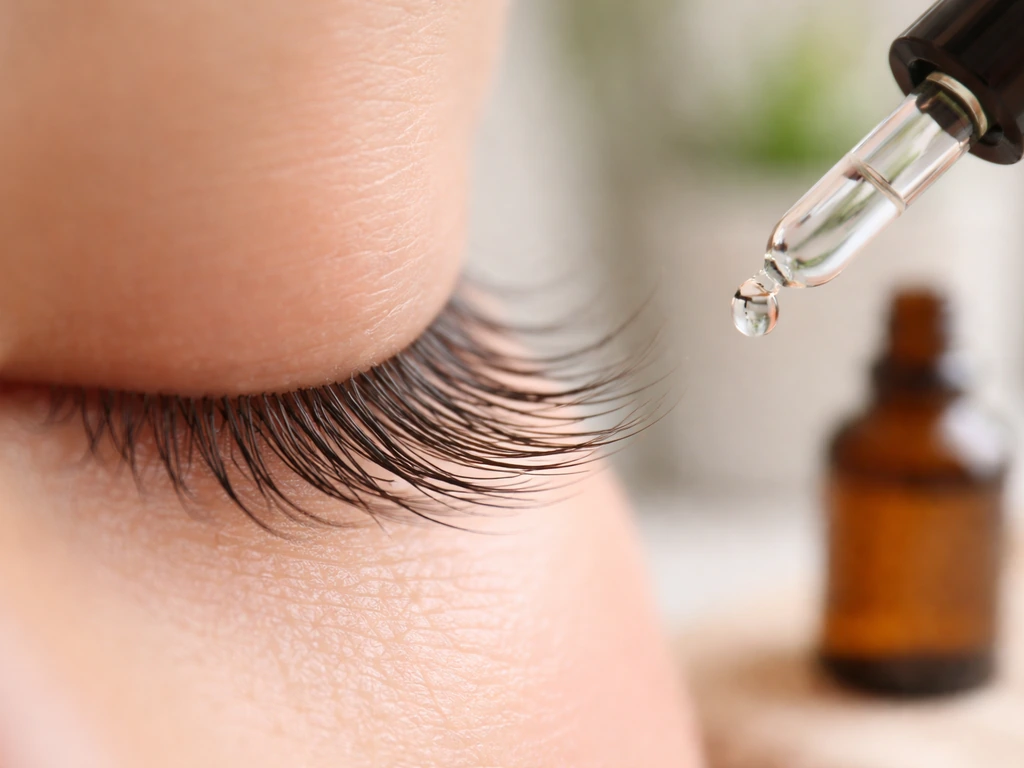
Almond oil will not make your eyelashes grow in the clinical sense. It does not stimulate follicle activity or extend the anagen (growth) phase the way a prostaglandin analog like bimatoprost does. What it can do is condition your existing lashes, reduce brittleness and breakage, and keep the lash line moisturized so that the hairs you already have are less likely to snap off before they reach their natural length. If your lashes look shorter than they used to, that distinction matters a lot.
Can Almond Oil Help Eyelashes Grow? What to Expect
Rachel Nguyen
13 May 2026
What almond oil can and can't do for lash growth
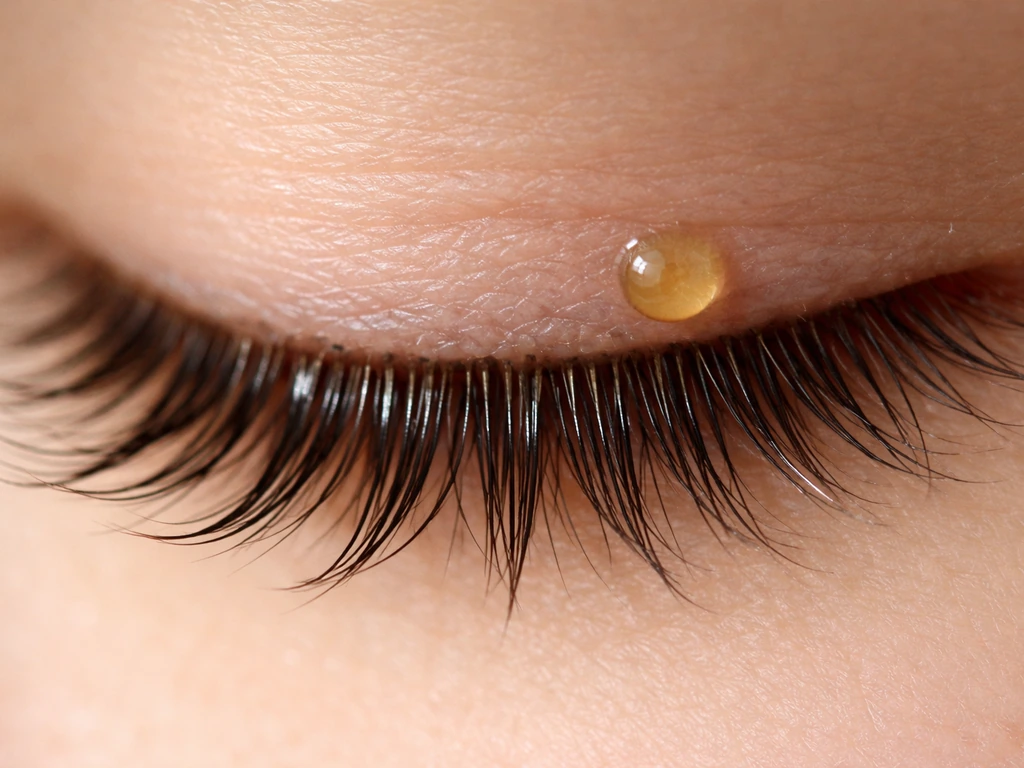
True eyelash growth means the follicle is producing a longer, thicker hair shaft because its anagen phase has been extended or stimulated. There are no randomized controlled trials testing almond oil on eyelash follicles specifically. Dermatology summaries covering similar carrier oils note that there is very little research showing that applying fatty acids directly to eyelash follicles stimulates hair growth. blank" rel="noopener noreferrer">Sweet almond oil (Prunus amygdalus dulcis oil) is a refined fixed oil rich in oleic and linoleic acids and contains vitamin E, which has antioxidant properties. Those properties support a healthy skin barrier and may protect hairs from oxidative damage, but that is conditioning, not growth stimulation.
For comparison: bimatoprost 0.03% (Latisse) is FDA-approved specifically to treat eyelash hypotrichosis and has clinical trial data showing mean lash growth of 2.0 mm versus 1.1 mm in placebo groups. That is a measurable, follicle-level change driven by prostaglandin receptor activity. Almond oil has no equivalent mechanism or trial evidence. If someone tells you almond oil "grows" lashes, they are almost certainly describing the conditioning effect, which can absolutely make lashes look better but is a different thing entirely.
- Can do: soften and moisturize lash hairs, reduce breakage from friction or extensions, help lashes reach their natural length without snapping
- Can do: soothe dry skin at the lash margin, which may reduce the urge to rub your eyes (rubbing is a real driver of lash loss)
- Cannot do: extend the follicle's anagen phase or trigger new hair production
- Cannot do: replace lashes lost due to medical conditions like alopecia, thyroid disease, or chemotherapy
- Cannot do: match the clinical outcomes of FDA-approved treatments
Conditioning vs. true growth: why the difference matters
Your eyelash anagen (active growth) phase typically lasts somewhere between 4 and 10 weeks, with some sources citing a tighter 30 to 45 day window. After that the hair rests and sheds. The total lash cycle, from new growth to shedding, can run about 30 to 60 days. Because lashes are already short and cycling quickly, any breakage partway through that cycle is very noticeable. This is where conditioning actually earns its place.
If your lashes are dry, brittle from extensions, or prone to splitting, almond oil can reduce mid-shaft breakage so more hairs complete their full growth phase. The result looks like growth because your lashes are longer than before, but what actually changed is retention, not follicle output. Thickness works the same way: fewer broken hairs equals a denser-looking lash line. If your lashes are genuinely thin because fewer follicles are active, conditioning oils alone will not fix that.
How to apply almond oil safely to your eyelashes
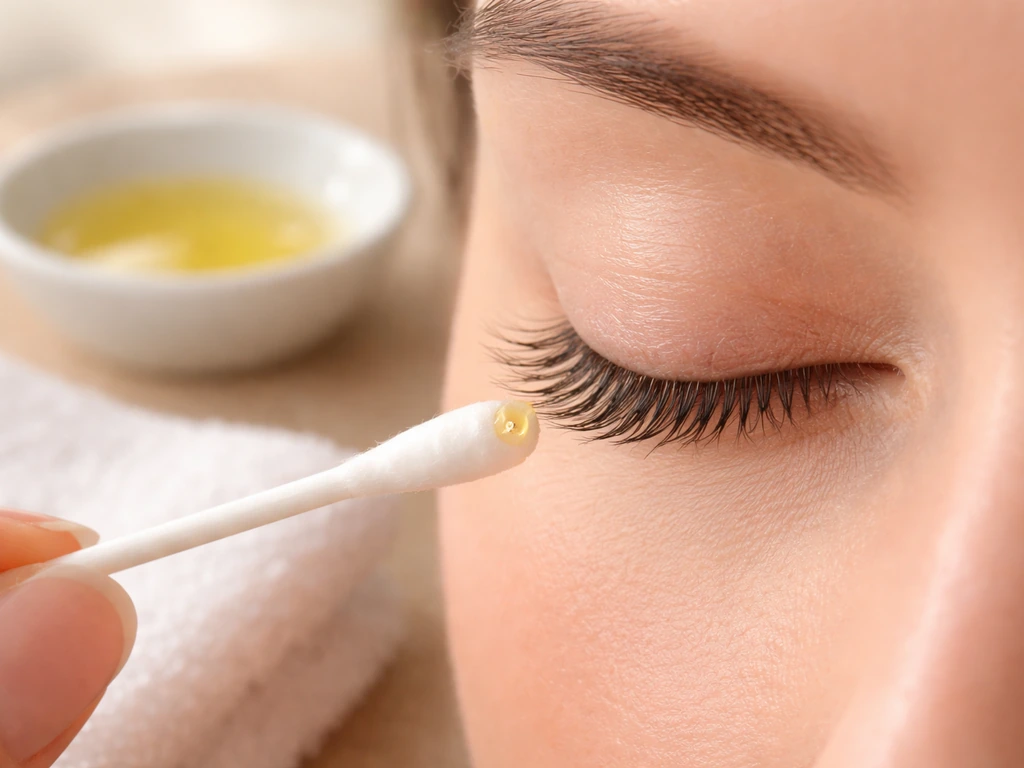
The biggest safety concern with any oil near the eyes is exactly that: getting it in your eyes. Oil in the eye is extremely irritating and should be flushed immediately with water if it happens. Apply almond oil at night before bed, when you have removed all makeup and are not about to open your eyes wide around irritants.
- Do a patch test first. Apply a small amount of sweet almond oil to the inside of your wrist or behind your ear and wait 24 hours. Almond oil can cause skin irritation or allergic reactions in sensitive individuals, and that risk is higher in the delicate periocular area.
- Start with clean, dry lashes. Remove all mascara, eyeliner, and makeup residue completely. Residue mixed with oil increases the chance of clogged follicles and irritation at the lash margin.
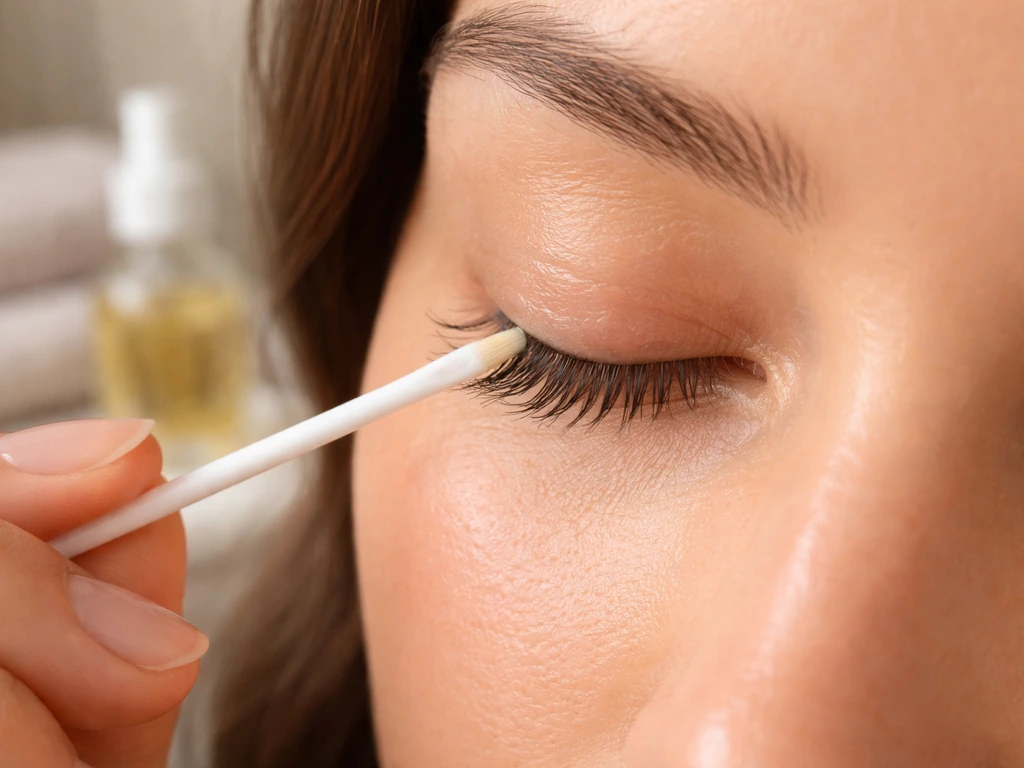
- Use a clean applicator. A clean mascara wand (disposable), a cotton swab, or a clean fingertip all work. Avoid double-dipping into your oil bottle to prevent contamination.
- Apply a tiny amount to the base of the upper lash line using light strokes. You do not need to saturate the lashes. A thin coating at the root is enough.
- Avoid the waterline and inner rim of the eyelid entirely. This is the area where oil is most likely to migrate into the eye.
- Blot any excess. If you applied too much, gently blot with a clean tissue before lying down. Excess oil on a pillow will end up in your eyes.
- Use once daily at night, up to 5 to 7 times per week. There is no clinical evidence that more frequent application produces better results, and over-application increases irritation risk.
- If you experience any redness, itching, swelling, or gritty sensation, stop immediately and wash the area with gentle cleanser and water.
Realistic timelines: when will you actually see a difference
Because almond oil works through conditioning rather than follicle stimulation, you are essentially waiting for your current lash cycle to play out with less breakage. Given an anagen phase of 4 to 10 weeks, give it a full 6 to 8 weeks of consistent nightly application before drawing any conclusions. Most people notice their lashes look less dry and slightly more defined within 2 to 3 weeks, but visible length improvements take at least one full cycle.
If you are recovering from extension damage or a period of heavy eye rubbing, that 6 to 8 week window is about right for seeing whether retained hairs are completing their growth phase more successfully. If you have not noticed any improvement after 8 to 10 weeks, the root cause is likely not dryness or breakage. At that point it makes sense to look at other options or talk to a doctor.
More effective options to use alongside or after almond oil
If conditioning is not enough, or if you want to actively support follicle activity, here is an honest comparison of what the evidence actually looks like for common approaches.
| Option | Mechanism | Evidence Level | Best For |
|---|---|---|---|
| Almond oil | Conditioning, reduces breakage | No clinical trials for lash growth | Brittle, dry, or extension-damaged lashes |
| Castor oil | Conditioning, similar fatty acid profile | No clinical trials for lash growth | Similar to almond oil; no meaningful advantage for growth |
| Peptide/glycosaminoglycan serums | May support lash structure and anchoring | Open clinical trial data available | Lashes that are shedding prematurely or look sparse |
| Bimatoprost (Latisse, prescription) | Prostaglandin analog, extends anagen phase | Multiple RCTs, FDA-approved | Clinically diagnosed hypotrichosis, significant thinning |
| Biotin (oral) | Supports keratin infrastructure | Limited for lashes specifically; better evidence in biotin-deficient individuals | Dietary deficiency suspected; not a standalone growth driver |
Castor oil is the most commonly compared alternative to almond oil, but the honest answer is they are roughly equivalent for conditioning purposes. Neither has clinical trial evidence for eyelash follicle stimulation. The main practical differences are texture (castor oil is thicker and some people find it harder to apply precisely) and fatty acid composition, but for lash conditioning the outcomes are similar.
If you are looking at other natural oils, options like avocado oil and lavender oil are also discussed in the natural lash-care space, each with slightly different nutrient profiles but similarly limited growth-specific evidence. However, lavender oil is also discussed as a natural lash-care option, but it does not have strong evidence for making eyelashes grow in the clinical sense.
Avocado oil may condition lashes and reduce breakage, but it does not have the same evidence as prescription growth treatments.
For actual follicle-level results, prescription bimatoprost is the benchmark. Because of that, you should not expect tea tree oil to help eyelashes grow in a true follicle-level way, and you may want to avoid using it near the lash line unless your clinician recommends it prescription bimatoprost. It is worth knowing that cosmetic lash serums containing prostaglandin analogs (not the same as prescription Latisse) have [raised professional concerns from organizations like RANZCO](https://ranzco.
edu/policiesandguideli/ranzco-position-statement-on-prostaglandin-analogues-in-eyelash-growth-serums/) about periocular risks including iris pigmentation changes and eyelid fat atrophy. That is not a reason to avoid all serums, but it is a reason to research the ingredient list carefully and prefer serums formulated around peptides or plant stem cells if you want to stay over the counter. Aloe vera is another ingredient with some plausible conditioning and soothing properties that has attracted interest in this space.
You may also see claims that can aloe vera help eyelashes grow, but most of what you will get from it is still more about conditioning and soothing than true follicle stimulation.
When to stop applying oil and get actual help
Stop using almond oil around your eyes immediately if you notice any of the following: persistent redness or pink discoloration of the eye or eyelid, itching that does not settle within a day or two, swelling of the eyelid, a gritty or sandy sensation in the eye, or any rash or crusting at the lash line. These can be signs of contact dermatitis, a developing allergy, or a condition like blepharitis (eyelid margin inflammation) that oil can actually worsen.
Sweet almond oil safety documents note that in sensitive individuals it can cause skin-level irritation or allergy, which is relevant near the eyelids.
Residue from natural oils at the lash margin has been associated with contributing to blepharitis flares in some patients, and if you already have blepharitis, adding oil to an inflamed lash line is counterproductive. Blepharitis management centers on eyelid hygiene, like diluted baby shampoo lid scrubs, not adding oil.
More importantly: if your lashes are thinning and you cannot attribute it to a mechanical cause (extensions, rubbing, recent illness), see a doctor before self-treating. Diffuse lash loss can be a sign of thyroid dysfunction, iron deficiency, alopecia areata, trichotillomania, or a medication side effect. None of those conditions respond to almond oil. A GP or dermatologist can run basic bloodwork and rule out systemic causes within a single appointment. Getting that answer first saves weeks of effort applying oil to a problem that needs a different solution entirely.
If you have already been diagnosed with hypotrichosis or significant lash thinning without a reversible underlying cause, that is the right time to have a conversation with a dermatologist or ophthalmologist about prescription options. Bimatoprost is well-studied and works, though it comes with its own side effect profile including conjunctival redness, eyelid skin darkening, and in rare cases iris pigmentation changes. Those are worth knowing about, not to scare you off, but because making an informed decision is better than assuming a prescription product is automatically safer than something natural.
FAQ
How long should I use almond oil before deciding it is not working?
Because almond oil is mainly a retention and conditioning approach, give it a full 6 to 8 weeks of consistent nightly use before judging results. If you do not see less dryness and fewer broken hairs by around week 8 to 10, the issue is likely not just brittleness. At that point, focus on the underlying cause or consider clinician-guided options.
Will almond oil make extensions look better faster, or does it only help over time?
It can improve how lashes look within 2 to 3 weeks by reducing dryness and mid-shaft breakage, which helps lashes stay intact until their natural shedding. It will not speed up regrowth of the extension hair itself. If your extensions are causing irritation, stopping extensions and addressing eyelid hygiene usually matters more than switching oils.
Can I use almond oil in the morning instead of at night?
Night use is safer because you are not repeatedly touching your eyes or applying products that mix with oil. Morning use increases the chance of oil migrating into the eye area, which can blur vision or irritate the eye. If you must use it in the morning, apply a very small amount with a clean applicator and avoid the inner waterline.
Is it okay to apply almond oil to the lash line itself, or should it go only on the lashes?
For best tolerance, keep it mostly on the lashes (and the outer lash line), not directly onto the inner lash margin where oil can pool. Oil near the lash line can increase the risk of residue-related flares in people prone to blepharitis. If you have sensitive eyes, consider applying only to the first third of the lash shaft and see how you react.
What type of almond oil should I use, and does refined versus unrefined change anything?
Use sweet almond oil that is specifically intended for cosmetic use, ideally refined fixed oil. Avoid adding essential oils or fragrances to almond oil. Unreliable purity or additives can increase irritation risk, even if almond oil itself is generally a mild carrier.
Can I use almond oil if I have blepharitis or frequent styes?
Usually it is not a good idea if your lash line is already inflamed. Residue from oils can contribute to blepharitis flares in some people, and adding oil to an irritated margin can worsen symptoms. If you have blepharitis, prioritize eyelid hygiene routines your clinician recommends, such as gentle lid scrubs, before trying oils.
What signs mean I should stop immediately?
Stop right away if you get persistent eye or eyelid redness, ongoing itching that does not settle in a day or two, eyelid swelling, gritty or sandy eye sensation, or crusting at the lash line. Those can point to contact dermatitis, developing allergy, or an eyelid inflammation process that oil can aggravate. If symptoms continue, get medical advice rather than repeating the application.
If my lashes look shorter, how can I tell if it is breakage versus true shedding?
Breakage often shows uneven or shorter-looking hairs, split ends, or a lash line that looks frayed. True shedding is usually more diffuse, with fewer lashes overall. If there is no obvious mechanical trigger and thinning is progressive, do not assume it is dryness and consider checking with a clinician.
Are there any groups of people who should not rely on almond oil and should see a doctor first?
Yes. If lashes are thinning without an obvious cause, especially alongside other symptoms, it is worth a medical evaluation before self-treatment. Diffuse lash loss can be linked to thyroid issues, iron deficiency, alopecia areata, eyelid conditions, or medication effects, and oil cannot correct those causes.
Can almond oil be used with prescription lash treatments like bimatoprost?
It may increase irritation risk because you are layering an oil product over an already active eyelid medication routine. If you want to combine products, ask your prescriber for guidance on placement and timing. In general, avoid mixing multiple active ingredients near the lash line unless you have a clear plan to minimize residue and side effects.
Next Article
Does Tea Tree Oil Help Eyelashes Grow? Safe Guide
Find out if tea tree oil grows lashes, what it may do for lash health, and safe at-home steps or better alternatives.