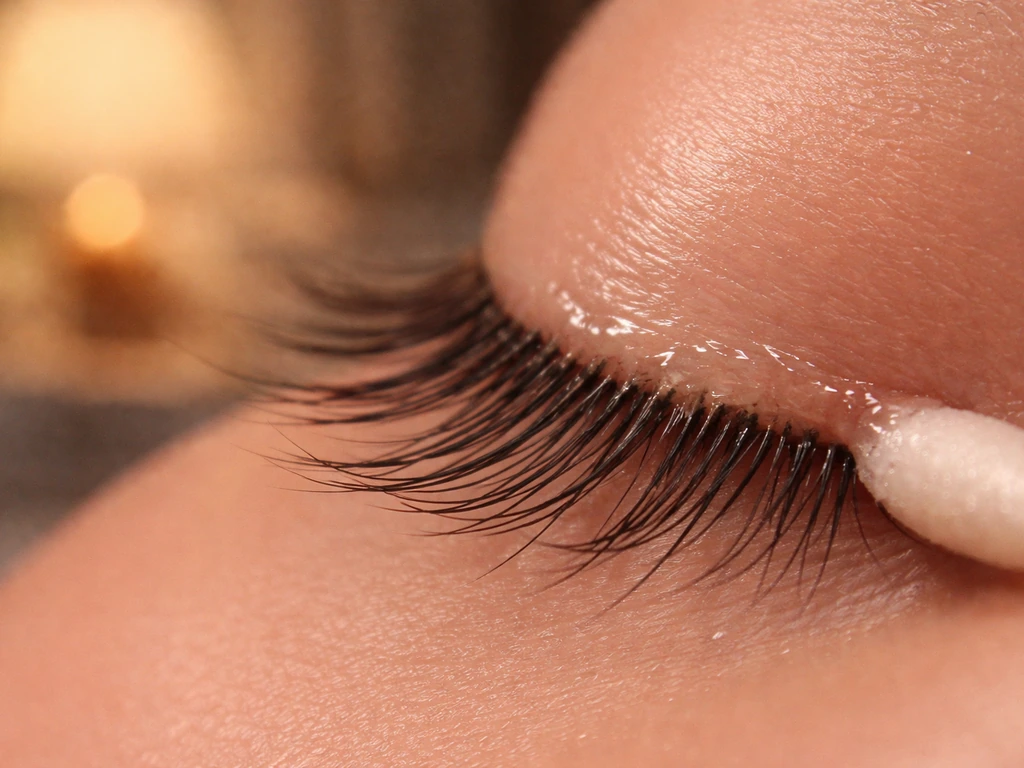
Cocoa butter Vaseline won't make your eyelashes grow. Neither ingredient has any clinical evidence showing it stimulates follicle activity or increases lash length and thickness. What both can do is condition the lash shaft, reduce dryness-related brittleness, and protect lashes from minor environmental damage. That is useful if breakage is your main problem, but it is a very different thing from actual regrowth. If you want genuinely longer, fuller lashes, you need something that acts on the follicle itself, and there are well-evidenced options for that.
Does Cocoa Butter or Vaseline Help Eyelashes Grow?
Rachel Nguyen
19 May 2026
How eyelashes actually grow (and why timing matters)
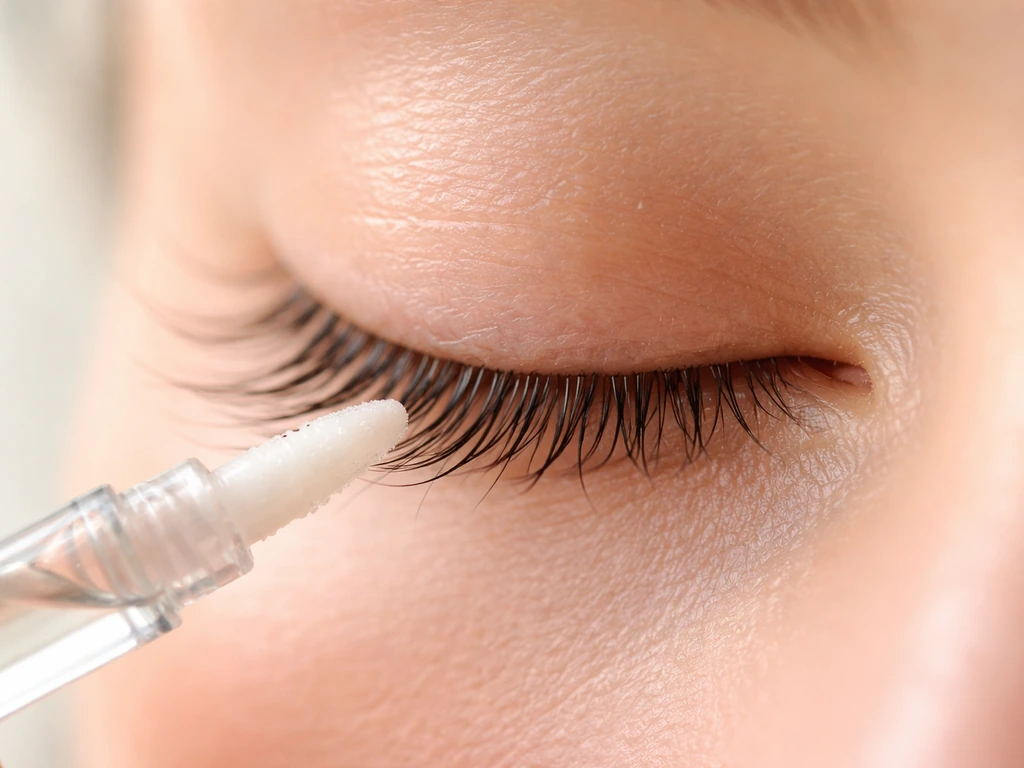
Every eyelash follicle cycles through three phases: anagen (active growth), catagen (transition), and telogen (resting and shedding). During anagen, the follicle is producing a new lash. During telogen, the old lash sits in the follicle until it falls out and the cycle restarts. The critical difference between eyelashes and scalp hair is time. Scalp hair stays in anagen for years. Eyelash anagen lasts only about 4 to 10 weeks, which is why lashes stay short and why the window for a topical to influence growth is narrow.
What this means practically: if you lose a lash today, a visible new one can appear in as little as a month, but getting back to your full baseline density typically takes 3 to 6 months because not all follicles are in anagen at the same time. Any product you apply works within this biological clock, not outside it. A conditioner cannot push a follicle from telogen into anagen ahead of schedule. Only ingredients with actual follicle-signaling activity, like prostaglandin analogs, have been shown to do that.
What cocoa butter and Vaseline can (and cannot) do for lashes
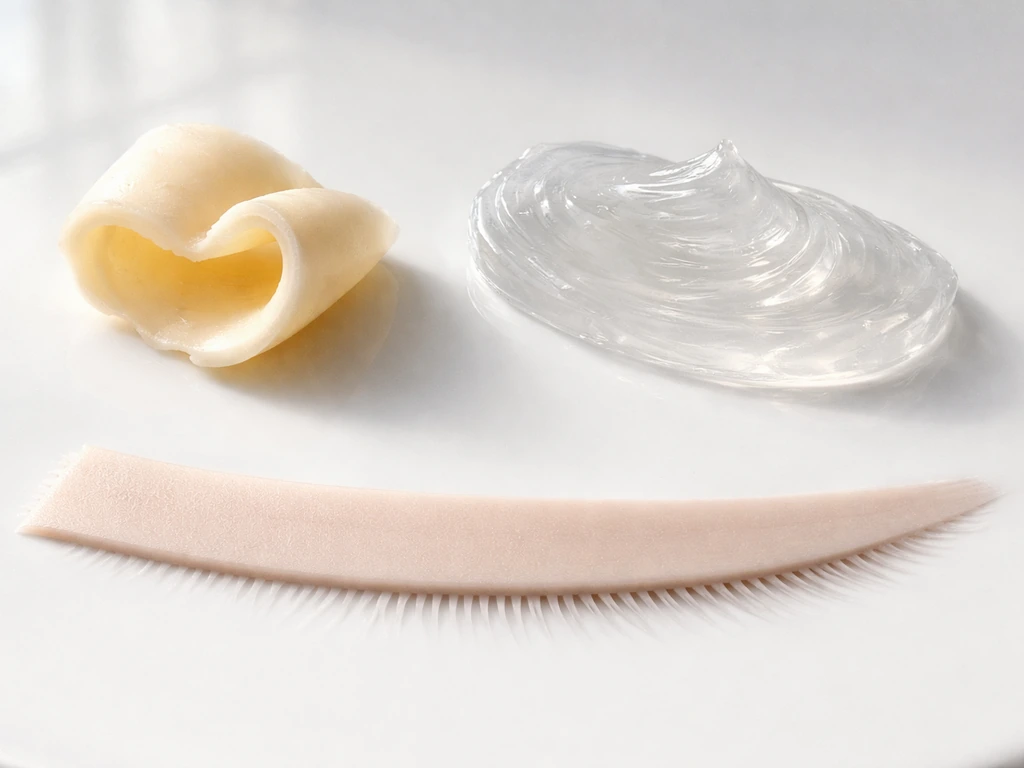
Vaseline (petrolatum) is an occlusive. It sits on the surface and forms a physical barrier that slows moisture loss from the lash shaft and the skin beneath it. Cocoa butter is an emollient, meaning it softens and smooths the surface it is applied to. Both ingredients can make lashes look shinier and feel less brittle. If your lashes are snapping off near the base from dryness, extensions friction, or aggressive eye makeup removal, regular conditioning can reduce that mechanical breakage and let your existing lashes reach their natural maximum length instead of breaking before they get there.
That benefit is real but limited. Neither petroleum jelly nor cocoa butter contains any compound shown to signal hair follicle cells, extend the anagen phase, or increase the rate of lash production. No published human trial has demonstrated that applying either ingredient to the lash line produces measurable increases in lash length or density. Interestingly, bland petrolatum-based ointments are sometimes used in blepharitis management for comfort and lid protection, not for stimulating growth. So if you have been using Vaseline on your lids already, you are not harming your lashes, but you should not expect length gains from it.
The question of whether plain Vaseline helps lashes is closely related to the broader debate around petroleum jelly and lash conditioning. And if you have come across claims about Vicks VapoRub or similar thick topicals doing the same thing, the short answer is the same: conditioning effect only, no follicle stimulation evidence.
How to use cocoa butter or Vaseline on your lashes safely
If you want to try it for the conditioning benefit, here is how to do it without irritating your eyes or contaminating the product.
- Remove all eye makeup first. Applying an occlusive over mascara or liner residue traps debris against the lash line, which can clog follicles and irritate the lid margin.
- Do a patch test before your first use. Apply a small amount of cocoa butter to the inside of your wrist and wait 24 hours. Cocoa butter can cause contact dermatitis in some people, especially those sensitive to tree nuts or fragrance. Vaseline is generally better tolerated.
- Use a clean, small applicator. A disposable mascara wand or a clean cotton swab works well. Never dip the applicator back into a shared jar after it has touched your eye area.
- Apply to the upper lash line only. Gently stroke from the base of the lashes outward along the upper lid. Do not apply directly to the inner lash line (the waterline) or to the lower lid margin where product is more likely to migrate into the eye.
- Use at night, once daily or every other day. Overnight application gives the product time to work without smearing into your eyes during the day. Frequency beyond once daily provides no additional benefit.
- Wipe away any excess in the morning with a gentle cleanser to prevent lid clogging over time.
One important safety note: Poison Control guidance specifically advises against applying petroleum jelly directly into the eye. Keeping the application at the lash base, on the skin of the lid margin rather than on the eyeball or waterline, is the key rule here. If you experience stinging, redness, or blurred vision after application, rinse with water immediately and stop using the product near your eyes.
What actually has evidence behind it for lash growth
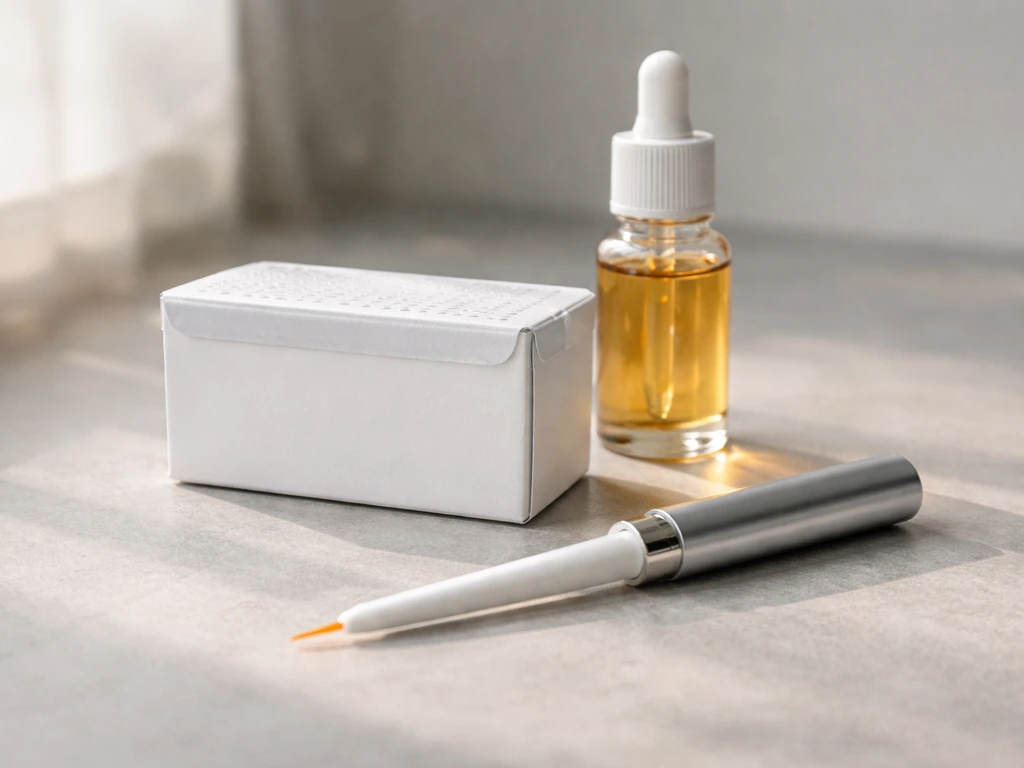
If your goal is measurably longer and fuller lashes, here is where the evidence actually sits.
Bimatoprost (prescription)
Bimatoprost 0.03%, sold as LATISSE, is the only treatment with robust randomized controlled trial data measuring actual changes in eyelash length, thickness, and fullness using digital image analysis. It is a prostaglandin analog that extends the anagen phase of the hair cycle, which is the mechanism that produces real length gains. It is applied nightly to the upper lid margin at the base of the lashes. Results typically appear at 4 to 8 weeks and peak around 16 weeks. It requires a prescription and comes with a real side-effect profile: conjunctival redness, eyelid itching, potential periocular skin darkening, and in rare cases iris pigmentation changes. These are not trivial, which is why it requires clinical oversight. But if maximum evidence is your priority, nothing over-the-counter currently matches it.
Over-the-counter lash serums with prostaglandin-like ingredients
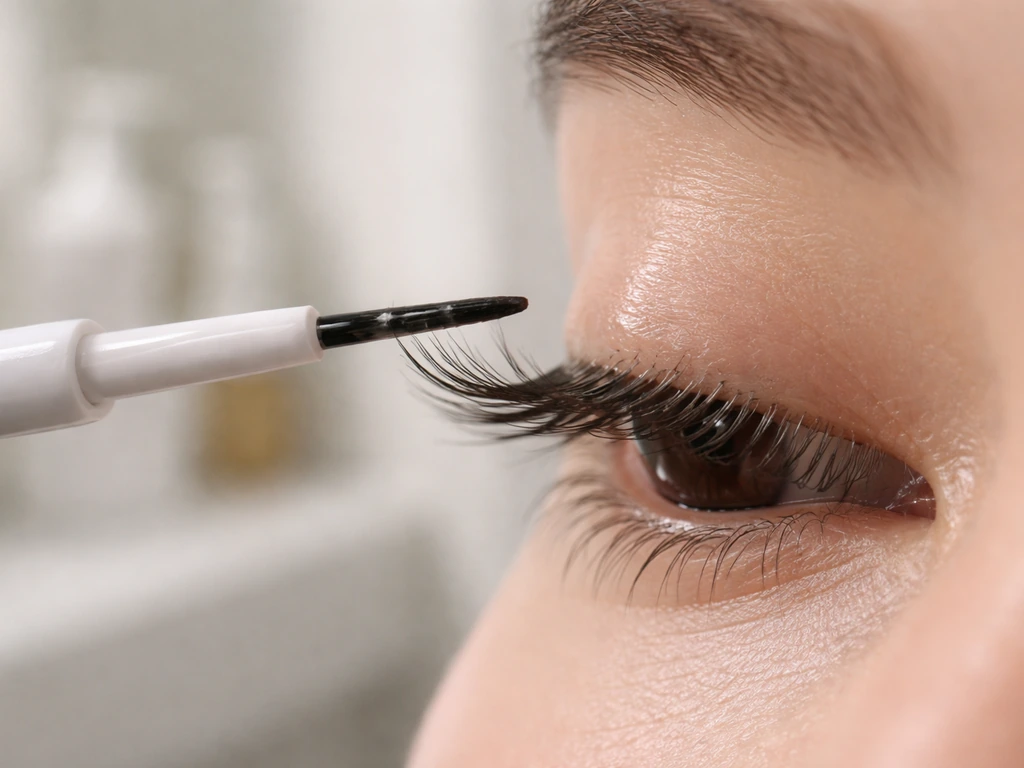
Several cosmetic serums contain prostaglandin analogs or derivatives (like isopropyl cloprostenate) and are sold without a prescription. These can produce noticeable results for some users but carry similar side-effect risks to bimatoprost, including potential eye pressure effects and pigmentation changes. Ophthalmology professional bodies have issued warnings about these ingredients in cosmetic serums precisely because they are pharmacologically active even in OTC products. If you use one, buy from a reputable brand with transparent ingredient labeling, and stop immediately if you notice eye pressure changes, increased redness, or iris color shift.
Castor oil
Castor oil is probably the most popular natural lash remedy, and the honest answer is that human clinical trial evidence for it is limited. Ricinoleic acid, its main component, has some anti-inflammatory properties in lab studies, and castor oil is thicker than most carrier oils, so it coats and conditions the lash shaft effectively. For people whose lashes are thinning due to dryness or mild inflammation, it may help more than Vaseline alone. But like cocoa butter and petroleum jelly, it does not have follicle-stimulating evidence in published trials.
Biotin and peptide-based products
Oral biotin is frequently marketed for hair growth, but the evidence only supports it in people with a diagnosed biotin deficiency, which is uncommon. If your diet is reasonable, extra biotin is unlikely to change your lash density. Peptide-based topical serums (containing ingredients like myristoyl pentapeptide) have some supporting data suggesting they can reduce shedding and support lash health, though the studies are smaller and often industry-funded. They are a reasonable middle ground if you want something more targeted than plain oil but are not ready for a prescription.
| Option | Evidence level | Realistic effect | Key risk/consideration |
|---|---|---|---|
| Cocoa butter / Vaseline | No clinical trials | Conditioning, less breakage | Avoid direct eye contact; no follicle stimulation |
| Castor oil | Anecdotal / limited data | Conditioning, mild inflammation reduction | May cause allergic reaction; no proven regrowth |
| OTC peptide serums | Small/industry studies | Reduced shedding, modest thickness | Variable quality; check ingredients |
| OTC prostaglandin serums | Moderate (extrapolated from Rx data) | Noticeable length and density gains | Real side-effect risk; ophthalmology cautions apply |
| Bimatoprost (LATISSE, Rx) | Strong RCT evidence | Measured length, thickness, fullness gains | Prescription required; pigmentation, redness risks |
| Oral biotin | Only for deficiency | Little to none unless deficient | Excess biotin can interfere with lab tests |
Why your lashes might not be growing back (and what to expect)
Before you apply anything, it helps to know why your lashes are thin or slow to return. The cause determines the fix.
- Extension damage and traction: Repeated heavy extensions or glue removal can damage follicles through traction. If the follicle itself is traumatized, no topical product can fully reverse that. Give follicles at least one full growth cycle (about 3 months) after stopping extensions before concluding you have permanent loss.
- Chronic rubbing: Rubbing your eyes daily, especially if you have allergies or dry eye, physically stresses the lash follicles and accelerates shedding. No growth product works well while you are still doing the thing that caused the problem.
- Blepharitis: This is chronic inflammation of the eyelid margin and one of the most common and underdiagnosed causes of eyelash shedding, thinning, and irregular regrowth. It can also cause lashes to grow in abnormal directions. Standard management includes warm compresses and lid hygiene twice daily. If that is not your current routine and your lashes seem thin for no obvious reason, blepharitis is worth investigating.
- Nutritional deficiencies: Iron deficiency, zinc deficiency, and low protein intake can all impair hair growth systemically, including lashes. If you are losing lashes alongside scalp hair, check in with your doctor for bloodwork before spending money on topicals.
- Thyroid conditions: Both hypothyroidism and hyperthyroidism can cause diffuse hair and lash loss. If your lash thinning is paired with fatigue, weight changes, or other systemic symptoms, a thyroid panel is worth prioritizing.
- Medications: Several drugs, including chemotherapy agents, retinoids, and some blood pressure medications, can cause eyelash loss. Bimatoprost has actually been studied specifically for chemotherapy-induced lash loss with positive results.
If you have stopped the damaging behavior and you are supporting your follicles with good nutrition and lid hygiene, expect visible improvement around the 6 to 8 week mark and near-full recovery in 3 to 6 months for most cases of non-permanent damage.
When to stop home remedies and see a clinician
Most at-home lash care is low-risk, but there are clear signals that warrant a clinical assessment rather than another product swap.
- Persistent redness, swelling, or itching on one eyelid that does not improve with standard lid hygiene after 2 to 3 weeks. Blepharitis affecting only one eye, or a lesion at the lid margin that is not resolving, needs evaluation to rule out eyelid skin cancer or immune-related causes.
- Lash loss that is rapid or widespread rather than gradual and diffuse. Sudden patchy lash loss can be a sign of alopecia areata or other immune conditions.
- Any irritation, burning, or visual changes after applying a product to the lash line. This is especially important with prostaglandin-containing serums, which can affect intraocular pressure.
- Complete failure to regrow after 4 to 6 months when there is no ongoing mechanical cause. At this point, a dermatologist or ophthalmologist can assess follicle health and discuss prescription options like bimatoprost.
- Systemic symptoms alongside lash loss (fatigue, hair loss elsewhere, changes in skin or nails). These point to a systemic cause that needs blood tests, not topicals.
The bottom line is this: if you want to try cocoa butter or Vaseline, go ahead, apply it cleanly at the lash base at night, and you may see lashes that break less and look healthier. But be realistic that you are conditioning, not growing. If you want actual length and density gains in the shortest safe timeframe, the path is: address the root cause first, support follicles with good nutrition and lid hygiene, add a peptide serum or castor oil if you want an OTC option, and talk to your doctor about bimatoprost if you want the highest-evidence approach.
FAQ
If I apply Vaseline or cocoa butter nightly, how long would it take to see lashes “grow”?
It is unlikely to. Cocoa butter and petroleum jelly mainly sit on the lash shaft and reduce dryness or friction, so you can get fewer snapping episodes and a healthier look, but you generally will not see new length or density beyond your lash cycle. If you want regrowth, look for follicle-signaling treatments rather than conditioning-only products.
Can Vaseline or cocoa butter help if my lashes are falling out?
If your current lashes are breaking and you stop the trigger (rubbing, harsh makeup removal, extension friction), you may notice less breakage within 2 to 4 weeks. True baseline density or visible fuller appearance usually tracks lash cycling, often 3 to 6 months, and conditioning products cannot accelerate the cycle beyond its normal timeline.
Is it okay to use Vaseline on my eyelids if I have dry lids, even if it is not for growth?
Yes for comfort, but the goal is different. Plain petrolatum on the lid margin can protect skin and reduce dryness, which may indirectly make lashes seem more flexible and less prone to snapping. However, it does not have evidence for stimulating follicles, so it is not a treatment for sparse lashes due to hormonal causes, scarring, or chronic inflammation.
What is the safest way to apply Vaseline or cocoa butter near the lash line?
Avoid getting it into the eye or onto the waterline. Apply only at the lash base on the skin of the lid margin, and remove excess if you notice migration. If you wear contact lenses, keep the product well away from the ocular surface and stop if you get stinging, redness, or blurred vision.
What should I do if my eyes sting or get irritated after using these products?
Frequent irritation can make shedding worse by increasing inflammation. If you feel burning, develop persistent redness, swelling, or have a gritty sensation, stop and rinse with water. If symptoms recur with small amounts, do not keep “pushing through,” and consider an eye professional assessment.
Will Vaseline or cocoa butter work well with lash extensions?
If you use extensions, be extra careful about buildup and friction. Oils and ointments can loosen adhesive and can also migrate into the lash line, where they may worsen irritation. If you choose to condition, use a tiny amount, apply gently at the base, and discontinue before your next extension maintenance if you see increased irritation or lash shedding.
How do I know whether my issue is breakage versus slow regrowth?
Sometimes, yes. If your lashes feel dry, brittle, or you notice breakage close to the base after rubbing or aggressive makeup removal, conditioning can reduce mechanical damage and let lashes reach their natural maximum length. If your problem is true sparse density from scarring, blepharitis, or medication effects, conditioning alone will usually not be enough.
Should I keep using Vaseline/cocoa butter if I start a prescription option like bimatoprost?
If you switch from a conditioning oil or petrolatum to a prostaglandin analog, you do not need to keep the occlusive ointment on the lash base, especially right before applying the active. Too much layering can increase migration and irritation. A simple approach is one product per night, and follow the active product’s directions first.
Are there common mistakes that prevent these products from helping (or that cause problems)?
Generally, avoid “multi-ingredient” DIY mixtures and thick fragranced products. Thick topicals can worsen eyelid irritation or cause contamination of the product, and some ingredients may be unsafe near the eye. Stick to single, well-tolerated products and keep them clean and capped between uses.
When should I see a doctor instead of trying another lash product?
If you still cannot achieve improvement after stopping the trigger and using a conditioning approach consistently for about 8 weeks, consider an evaluation. Also seek care sooner if you have itch, burning, eyelid margin redness, crusting, patchy loss, eyelash direction changes, or signs of infection or scarring.
Next Article
Can Petroleum Jelly Help Grow Eyelashes Longer? Safety and Tips
Find out if petroleum jelly helps lash length or just reduces breakage, plus safe how-to and risks near the lash line.