You can grow thicker, fuller lashes, but it takes the right approach and a realistic timeline. The most effective natural strategies combine consistent eyelid hygiene, follicle-supporting oils or peptide serums, and stopping the habits that damage lashes in the first place. If you want clinical-level results faster, a bimatoprost-based prescription serum (like Latisse) is the only option with solid trial data behind it. Everything else sits somewhere between genuinely helpful and overhyped, and this guide will tell you exactly where each option lands.
How to Grow Thicker Lashes Naturally: Steps, Timelines, Safety
Rachel Nguyen
25 Apr 2026
What actually controls lash thickness and length
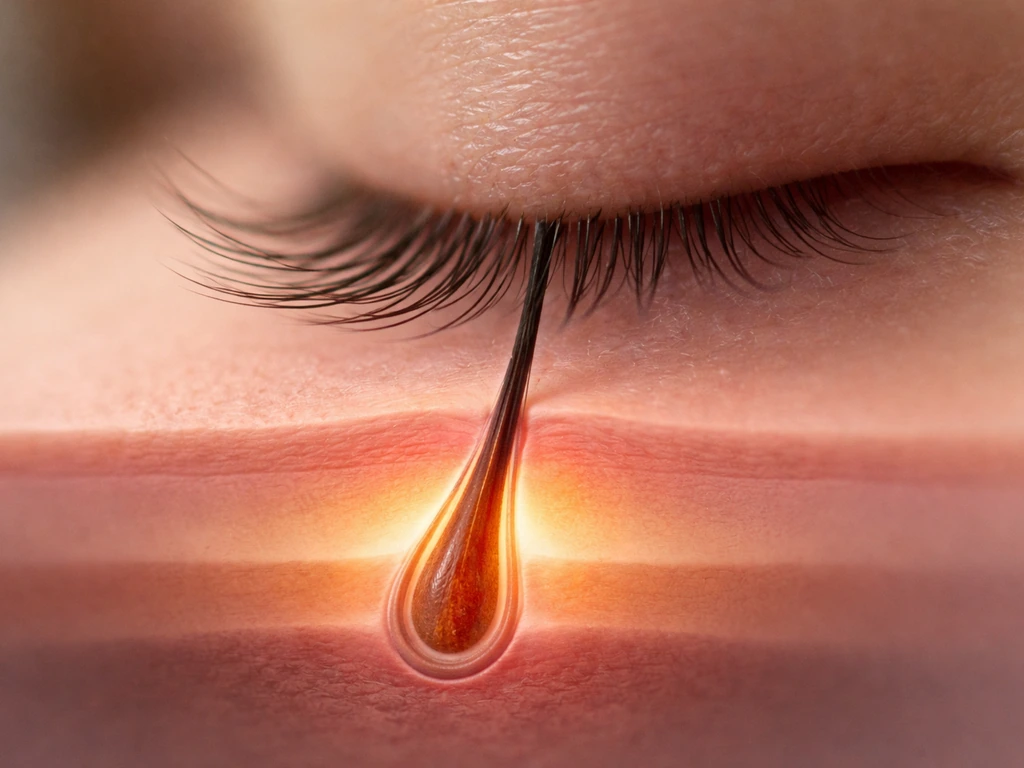
Lash thickness isn't a cosmetic illusion you can fake your way to with the right mascara. It's a product of two things: the health of your hair follicle and where your lash is in its growth cycle. Each lash goes through an anagen phase (active growth, lasting roughly 4 to 10 weeks), a catagen phase (transition, about 2 to 3 weeks), and a telogen phase (rest and shedding, which can last 3 to 4 months). After that, the follicle restarts and a new lash begins growing.
The reason your lashes don't grow as long as your scalp hair is simple: their anagen phase is much shorter. Lashes grow at roughly 0.12 to 0.16 mm per day, but they stop growing and shed after a few weeks of active growth, not years like scalp hair. What determines whether a new lash grows in thick or thin is mostly the follicle's condition, how well it's being supported nutritionally, and whether there's inflammation or damage at the lash base interfering with the cycle.
This matters practically because it means any routine you start today won't show visible results for at least several weeks, and real thickness changes take months. You're waiting for lashes to shed, follicles to produce new growth, and those new lashes to complete enough of their anagen phase to be noticeable. There's no shortcut around that biology, but you can absolutely support it.
Natural ways to grow thicker lashes starting today
The foundation of any lash-thickening routine is follicle health, and that starts at the eyelid margin. Inflammation at the lash base (from blepharitis, residual makeup, oil buildup, or extension glue residue) directly disrupts the growth cycle and can lead to sparse, weak lashes over time. A warm compress followed by gentle lid hygiene each night does more for lash health than most products on the market.
Warm compresses soften the oils in your meibomian glands and reduce eyelid-margin inflammation, which creates a healthier environment right at the follicle base. Hold a warm, damp cloth against your closed eyelids for about 10 minutes. Then use a clean cotton swab or a purpose-made eyelid cleanser to gently sweep debris from the lash line. This isn't just good for your eyes in general: clinical evidence links improved lid hygiene with better lash conditions, and blepharitis guidance consistently identifies daily lid cleaning as the most important maintenance step.
- Apply a warm compress to closed eyelids for 10 minutes each evening.
- Gently clean the lash margin with a cotton swab or dedicated eyelid wipe to remove debris and product buildup.
- Remove all eye makeup before bed, every night, without rubbing. Use a gentle micellar water or an oil-based remover applied with a soft pad.
- Avoid sleeping in mascara. It makes lashes brittle and accelerates breakage.
- Stop rubbing your eyes. Mechanical friction is one of the fastest ways to damage follicles and thin out lashes.
- Apply a lash-supporting oil or serum to the clean lash base before bed (see ingredient guidance below).
- Eat enough protein, biotin-containing foods (eggs, nuts, seeds), and iron-rich foods. Nutritional deficiencies genuinely affect hair growth, including lashes.
Consistency matters more than intensity here. Doing this routine nightly for 12 to 16 weeks gives you a real baseline to assess what's working. Skipping nights or stopping after a few weeks won't give the growth cycle enough time to show results.
Oils, serums, and ingredients: what actually works

There are a lot of products claiming to grow thicker lashes. Here's an honest breakdown based on what the evidence actually supports.
Castor oil
Castor oil is the most popular natural lash remedy and the evidence for it is modest but real. A randomized trial found that a castor oil formulation applied twice daily for 4 weeks improved blepharitis-related findings including eyelash matting and crusting. This suggests castor oil helps primarily by reducing eyelid inflammation and coating/conditioning the lash shaft, not by triggering new follicle growth. Apply a tiny amount with a clean spoolie or cotton swab to the upper lash line before bed. Use less than you think you need. One practical note: it can cause contact dermatitis in some people, so patch-test on your inner wrist before using it near your eyes.
Peptide-based lash serums
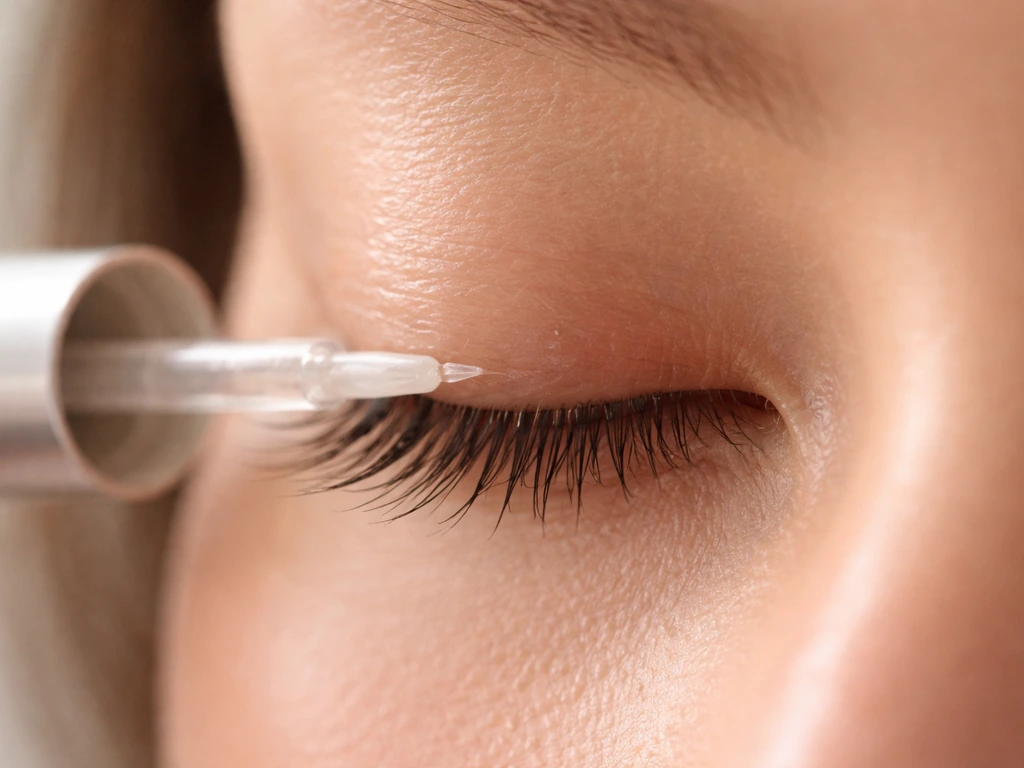
Over-the-counter serums containing peptides like myristoyl hexapeptide-16 and myristoyl pentapeptide-17 are the most credible natural-adjacent option for actual thickness improvement. These peptides are thought to stimulate keratin production in the lash shaft, which can result in fuller, more substantial-looking lashes over time. An open-label clinical study reported improvements in lash length, thickness, luster, and curl with a polygrowth factor serum containing these ingredients. The study had limitations (no blinded control group), but the mechanism is biologically plausible and the ingredient class has a reasonable safety profile. Apply nightly to the upper lash line on clean skin.
Bimatoprost (prescription Latisse)
This is the only treatment with robust randomized controlled trial data. Bimatoprost 0. 03% applied nightly to the upper eyelid margin [increases lash length, thickness, and darkness, with results measured at 16 weeks](https://pmc. ncbi.
nlm. nih. gov/articles/PMC3047948/). In the pivotal trial, 78.
1% of bimatoprost users achieved at least a 1-grade improvement in a global eyelash assessment versus 18. 4% of those using a vehicle control. It works by extending the anagen phase, meaning follicles spend more time actively growing. The catch: results go away when you stop using it.
It also requires a prescription, costs more than OTC options, and carries real side effects including iris pigmentation changes, eyelid skin darkening, and unwanted hair growth if the product spreads beyond the treatment area.
Bimatoprost prescribing materials caution about iris and periocular skin pigmentation changes and warn that these effects can occur if the product spreads beyond the treatment area [side effects including iris pigmentation changes, eyelid skin darkening, and unwanted hair growth if the product spreads beyond the treatment area](https://www. accessdata. fda. gov/drugsatfda_docs/label/2020/022369s012lbl.
pdf).
Vitamin E and other popular oils
Vitamin E oil, olive oil, and coconut oil are frequently recommended, but the evidence is thin and the allergy risk is real. Published reports document contact dermatitis from both vitamin E and olive oil, even when applied to skin elsewhere on the body. Near the eyes, that risk is amplified because eyelid skin is thinner and more reactive than most other areas. If you want to use a conditioning oil, castor oil or a formulated serum with tested ingredients is a better choice than a DIY approach with kitchen oils.
| Ingredient/Product | Evidence Level | Main Benefit | Key Risk |
|---|---|---|---|
| Castor oil | Moderate (RCT for blepharitis/lash findings) | Reduces lid inflammation, conditions shaft | Contact dermatitis possible |
| Peptide serums (myristoyl peptides) | Limited (open-label study, plausible mechanism) | Keratin stimulation, shaft thickness | Generally well-tolerated; quality varies by brand |
| Bimatoprost (Latisse) | Strong (multiple RCTs, 16-week data) | Extends anagen, increases length/thickness/darkness | Iris pigmentation, eyelid darkening, requires Rx |
| Vitamin E oil | Weak/anecdotal for lashes | Conditioning only | Documented contact dermatitis risk |
| Olive/coconut oil | No lash-specific evidence | Shaft conditioning only | Allergic reaction risk near eyes |
| Biotin supplements | Weak unless deficient | Supports keratin production systemically | Minimal risk; mainly useful if actually deficient |
Realistic timelines for thicker, longer lashes
This is where most people get frustrated, so it's worth being direct. If you start a consistent natural routine today, including nightly lid hygiene, a castor oil or peptide serum application, and eliminating lash-damaging habits, you should expect to see small but noticeable improvements in lash fullness and condition around the 8 to 12 week mark. If you're wondering how to make your lashes grow longer specifically, the same follicle-focused routine and realistic timeline apply.
If you want to grow lashes quickly, focus on supporting growth every night and expect the first visible gains around the 8 to 12 week mark nightly lid hygiene. Meaningful thickness changes, where new lashes coming in are visibly fuller, typically take 3 to 4 months. That timeline aligns with what clinical trials show even for prescription bimatoprost, where significant improvements in length and thickness were measured at months 4 and 6.
You can't meaningfully accelerate past the biology. Lashes grow at roughly 0.12 to 0.16 mm per day during anagen, and the telogen (resting) phase alone can last 3 to 4 months. What you can do is make sure every new lash growing in has the best possible conditions: a clean, non-inflamed follicle base, adequate nutrition, and a conditioning treatment to reduce breakage. That's the closest thing to "faster" that actually works. A key next step is learning how to grow bottom lashes too, since they respond to similar follicle-support habits.
If length is the main goal alongside thickness, it's worth noting that length and thickness improvements tend to track together when the approach is follicle-focused, since a healthier follicle produces a thicker shaft that's also less prone to breakage. Reducing lash loss through better habits is often what makes lashes look longer, not accelerated growth itself.
Recovering from lash damage: extensions, rubbing, and overprocessing
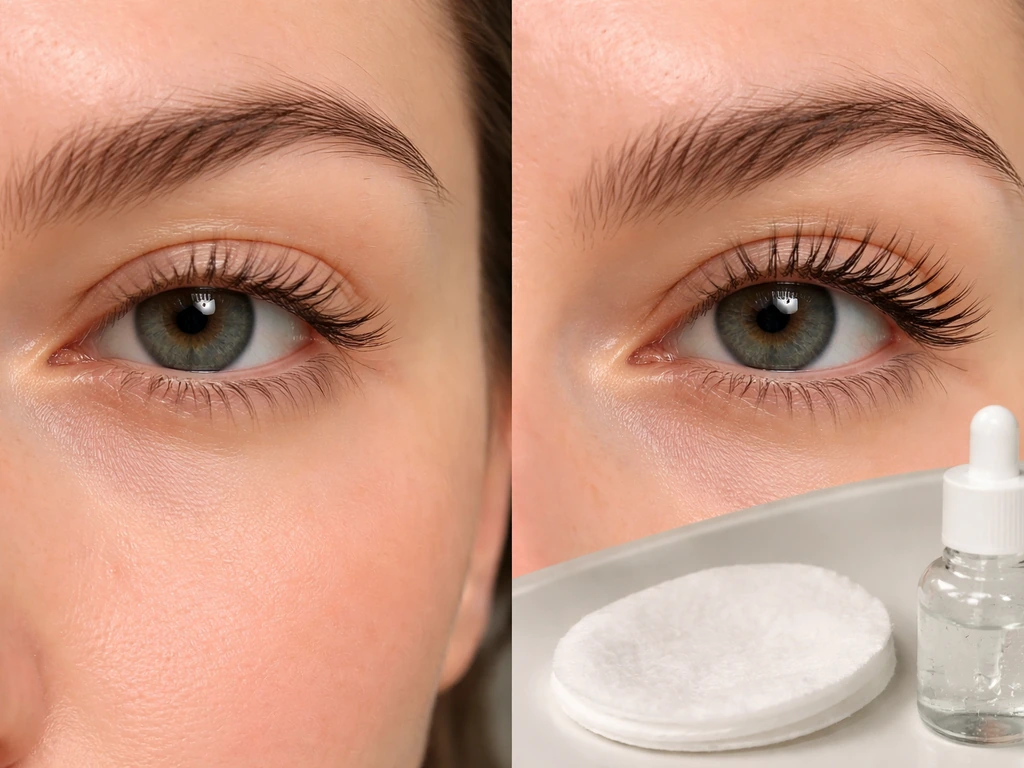
If your lashes are thinning due to past damage, the recovery timeline is longer but the approach is the same, just more deliberate. Lash extensions are one of the most common causes of traction alopecia at the lash line. The glue (typically cyanoacrylate-based) can trigger allergic blepharitis, and the weight of extensions causes mechanical stress on follicles that repeatedly disrupts the growth cycle. Studies report allergic blepharitis as the most common complication of lash extensions. If you've had extensions recently and your lashes are sparse, the first step is a full stop: no extensions, no lash curlers, minimal mascara while recovery is underway.
Chronic eye rubbing and overprocessed lashes (from repeated tinting or perming) cause similar damage by weakening the lash shaft and inflaming the follicle base. Recovery follows the same pattern as the growth cycle: you're waiting for damaged lashes to shed, for follicles to recover from inflammation, and for new anagen lashes to grow in under better conditions.
Here's a practical recovery plan you can start immediately:
- Stop the source of damage completely (extensions, rubbing, curlers, aggressive makeup removal).
- Start nightly warm compresses and lid hygiene to clear any glue residue, inflammation, or follicle blockage at the lash base.
- Apply a gentle, fragrance-free castor oil or peptide serum nightly to the upper lash line to support new growth.
- Take stock of your nutrition: low iron, low protein, and biotin deficiency all slow regrowth. Address any gaps.
- Be patient for at least 12 to 16 weeks before assessing progress. Lash recovery after traction alopecia or extension-related blepharitis takes at minimum a full growth cycle.
- If lashes haven't started filling in after 4 months of consistent recovery effort, consult a dermatologist or ophthalmologist to rule out a structural follicle issue.
One thing worth flagging: if you had a reaction to extension glue (itching, swelling, persistent redness at the lash line), there may be ongoing low-grade inflammation that's silently interfering with regrowth. Don't push through that with more product applications. Untreated blepharitis can lead to permanent lash loss (madarosis) if it's allowed to persist and damage follicles chronically.
Safety, side effects, and when to see a professional
The eye area is one of the most sensitive skin regions on your body. Eyelid skin is thinner and more reactive than almost anywhere else, which means ingredients that cause no reaction on your arm can trigger dermatitis near your eyes. A few clear safety rules apply to any at-home lash routine.
- Patch test every new oil or serum on your inner wrist for 48 hours before applying near your eyes.
- Avoid any product with fragrance, essential oils, or alcohol at the lash line. These are common irritants and the eyelid is especially vulnerable.
- If you notice itching, burning, swelling, or persistent redness after starting a new product, stop it immediately. Continuing through eyelid dermatitis can worsen the reaction and damage follicles.
- Don't apply castor oil or other oils to the eye itself, only to the lash margin on closed lids.
- With bimatoprost (Latisse), apply only to the upper lash line using the provided applicators, once per night. Applying more than once daily doesn't increase results and raises side-effect risk. Watch for eyelid darkening or any changes in your iris color, especially if you have light brown or hazel eyes.
- Never share mascara, spoolies, or applicators. The lash line is a direct route for bacterial infection.
When to stop DIY and see a doctor
Most lash-thinning is a lifestyle or maintenance issue and responds to the routine above. But some causes of sparse or thinning lashes aren't fixable with serums. See a dermatologist or ophthalmologist if you notice any of the following:
- Significant lash loss (madarosis) that doesn't improve after 3 to 4 months of a consistent recovery routine.
- Persistent redness, crusting, or scaling at the eyelid margin that doesn't resolve with lid hygiene.
- Lashes growing in the wrong direction (trichiasis) or new patches where lashes have stopped growing entirely.
- Eye pain, vision changes, or persistent watering alongside lash changes: these suggest something beyond cosmetic.
- Systemic symptoms like fatigue, hair loss elsewhere on the body, or skin changes: thinning lashes can be an early sign of thyroid disorders, alopecia areata, or nutritional deficiencies that need a blood panel to diagnose.
- Any suspected allergic reaction to an extension glue or lash adhesive, particularly if there's swelling beyond the eyelid or persistent conjunctival redness.
Lash growth is genuinely improvable with the right routine and realistic expectations. The biology sets the pace, but clean follicles, the right conditioning ingredients, and removing the sources of damage give every new lash the best possible chance to grow in fuller. If you need step-by-step help, follow our guide on how to grow back lashes safely. For most people, a consistent 12 to 16 week commitment to the natural routine above produces real, visible change. For faster or more dramatic results, bimatoprost remains the evidence-backed clinical option, with the trade-offs that come with any prescription treatment.
FAQ
How long should I try a natural routine before deciding it is not working?
Give it at least 12 to 16 weeks, since visible thickness depends on new lashes completing enough active growth and then being noticeable after shedding. If you see no improvement after that window, reassess eyelid hygiene consistency first, then check for ongoing triggers like residual makeup, extension glue history, or eye rubbing.
Can I use lash serum and castor oil together?
You can, but avoid stacking too many leave-on products at once on the lash line. A practical approach is either peptides nightly, or castor oil nightly, and then keep the other as a switch you alternate only if your skin tolerates it. Do a patch test for any new product and stop if you notice burning, itching, or persistent redness.
What is the safest way to apply oil or serum near my eyes?
Apply only to the upper lash line where lashes grow, use a tiny amount, and avoid letting it run onto the lower waterline or into the eye. If it migrates, it increases irritation risk and can cause unwanted effects like dermatitis, so wipe away any excess before it can drip.
Should I stop using makeup and mascara while my lashes recover?
You do not necessarily need to quit mascara, but you should minimize friction and keep removal gentle. Use a clean makeup remover and avoid rubbing, especially during the first 8 to 12 weeks when new growth is still fragile. If you wear extensions or waterproof makeup daily, be extra strict with eyelid hygiene to reduce buildup.
Do eyelash curlers interfere with regrowth?
They can, especially if you curl repeatedly on damaged lashes or start before the lash base is calm. If you are recovering from thinning, pause curlers until inflammation is under control and lashes are not breaking easily, then limit pressure and avoid tugging on the lash line.
How do I know if my lash thinning is from inflammation like blepharitis rather than just normal growth cycle?
Look for eyelid margin symptoms such as crusting at the lash line, sticky matting, persistent redness, or frequent itching. If those are present, your warm compress plus daily lid hygiene is the priority, and you should consider an eye professional if symptoms keep recurring.
Is it normal for my lashes to shed more at first?
Mild shedding can happen because lashes cycle into the resting phase, but the key difference is whether irritation is driving the process. If shedding comes with burning, swelling, or increasing lash line redness, stop new products and focus on gentle hygiene, and consider evaluation for blepharitis or contact dermatitis.
Can I speed up thickness by using stronger or more frequent application?
Usually no. More frequency or higher amounts increase the chance of irritation and eyelid dermatitis, which can worsen the growth cycle. Stick to the recommended dosing schedule for your chosen product and prioritize consistent nightly lid hygiene.
What if I tried castor oil and my eyes got irritated?
Stop immediately, wash the area, and do not keep reapplying to “tough it out.” Contact dermatitis near the eyes is more likely if you are sensitive, so switch to a formulated peptide serum instead, and consider an ophthalmologist if redness or swelling persists beyond a few days.
Does improving lash thickness mean my lashes will also grow longer?
Often they improve together because healthier follicles tend to produce stronger shafts that break less, but length is also limited by how long lashes stay in active growth. If your goal is length specifically, the same routine still applies, but be realistic that the visible change still follows months of cycling.
Can bottom-lash routines help top-lash thickness too?
They can complement recovery because the eyelid margin health is connected, but the products still need to be applied carefully since bottom lashes are also close to the eye surface. Keep application light and avoid getting product into the eye, and focus first on upper lid hygiene if that is where thinning is most noticeable.
When should I consider prescription bimatoprost instead of natural options?
Consider it if you want more predictable, trial-backed improvement and you understand the trade-offs, including the need for ongoing use to maintain results. If you have a history of eye sensitivity, plan for a clinician discussion first because side effects include eyelid skin darkening and potential unwanted hair growth if product spreads.
What signs mean I should see a dermatologist or ophthalmologist right away?
Seek care promptly if you develop persistent swelling, significant pain, worsening redness that does not improve with stopping products, new discharge, or noticeable lash loss after an extension reaction. Chronic untreated inflammation can lead to permanent lash loss, so delaying evaluation is a risk.
Next Article
How to Make Your Lashes Grow Longer: A Step-By-Step Guide
Step-by-step, science-based tips to lengthen lashes safely, care routines, product options, and realistic regrowth timel