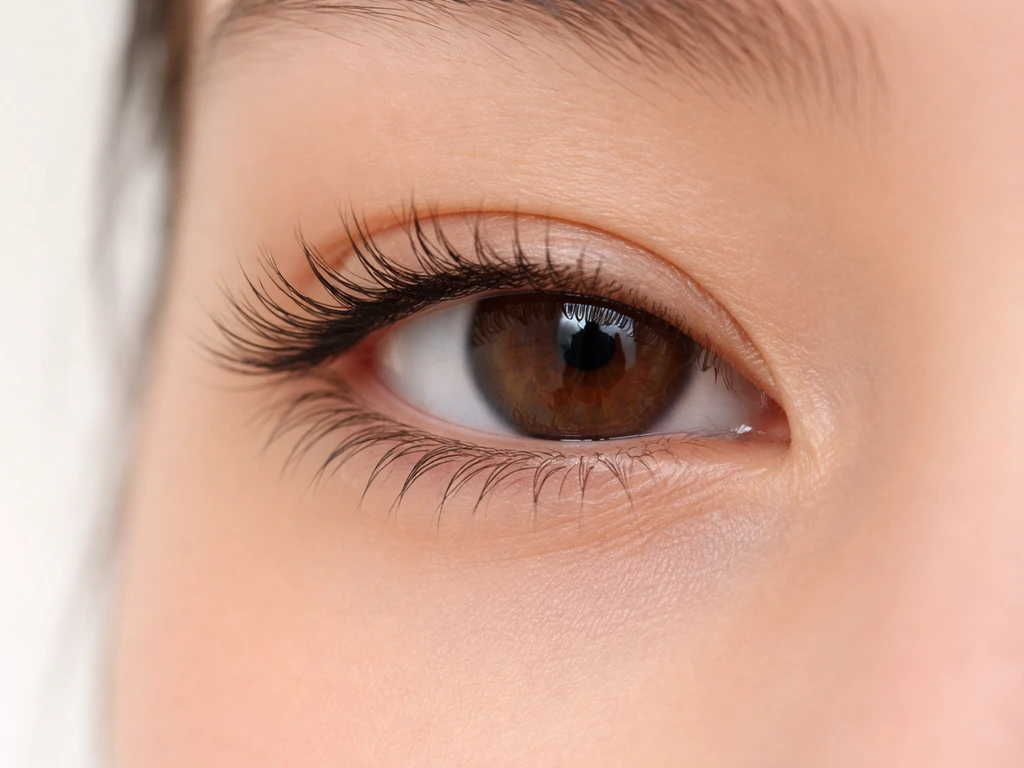
If your eyelashes look like they're sprouting from higher up on the lid rather than right at the lash line edge, it's usually one of three things: normal regrowth that hasn't fully settled into position yet, disruption from extensions or adhesive trauma that temporarily shifted the follicle's angle, or low-grade inflammation (like blepharitis) that's altering the lid margin enough to redirect new lash growth. Most of the time it's not serious, but it does need the right response depending on what's actually causing it.
Why Do My Eyelashes Grow Above the Lash Line? Causes

Rachel Nguyen
19 Jun 2026
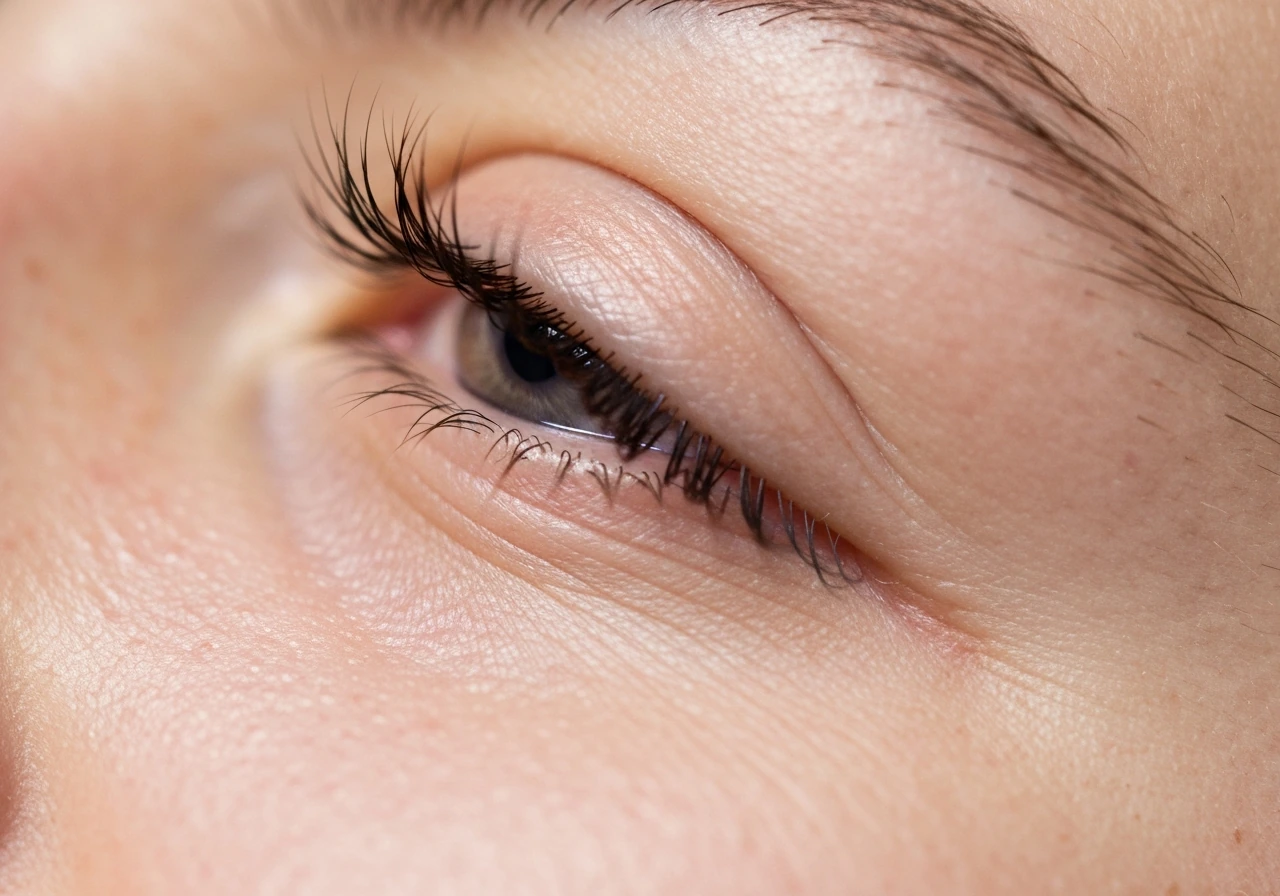
What 'lashes growing above the lash line' usually means
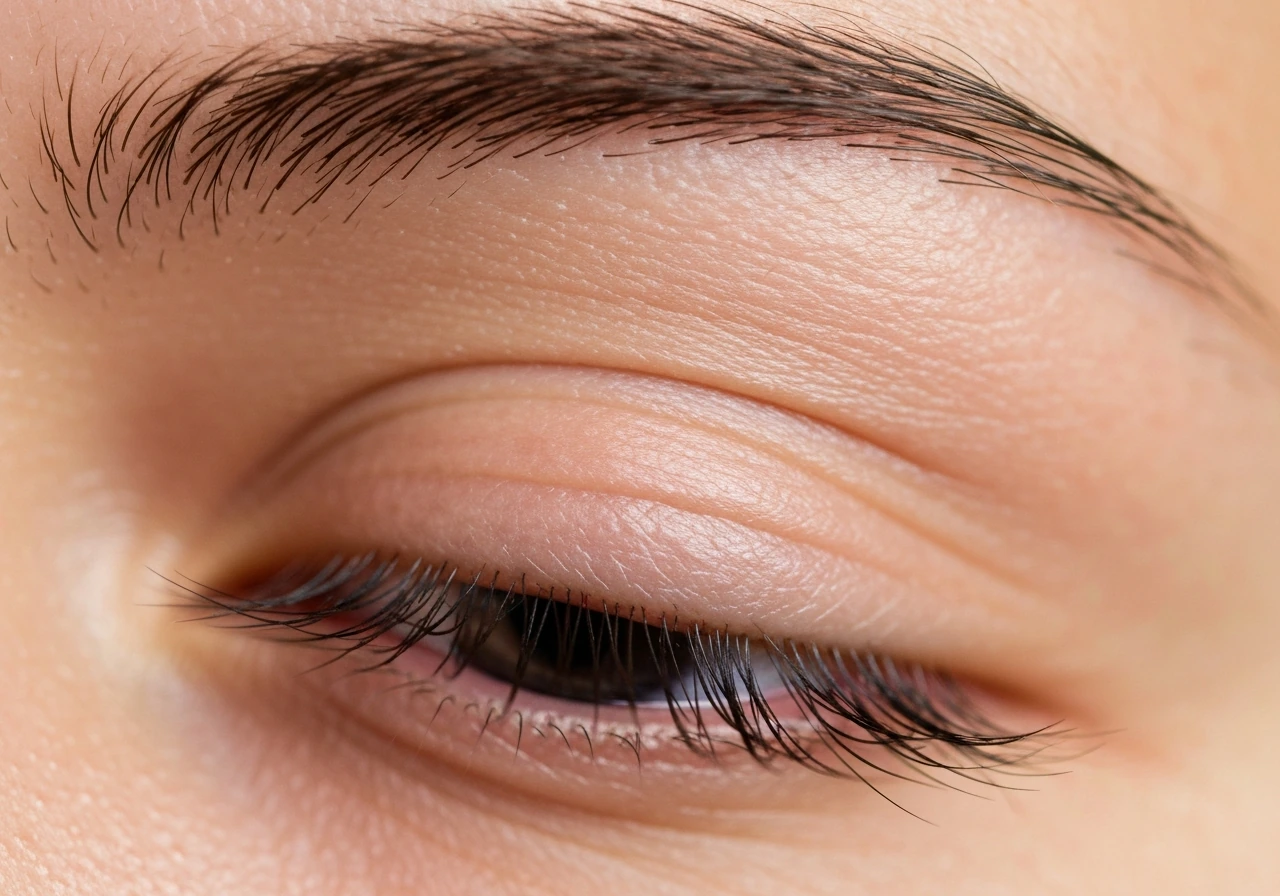
The upper eyelid normally carries between 90 and 160 lashes arranged in multiple staggered rows, all anchored in follicles positioned right at the anterior lid margin. Just behind that lash line, running parallel to it, are the meibomian glands (the oil glands that keep the eye surface lubricated). Because the lash follicles and the meibomian gland orifices are so close together structurally, any disruption to that narrow strip of eyelid tissue can make lashes appear to grow at an unexpected angle or position.
When people describe lashes that seem to grow 'above' the lash line, they're usually noticing one of these things: regrowth lashes that come in at a steeper or more upright angle before they soften with length; lashes that seem to emerge from a point slightly higher on the lid skin rather than the edge; or lashes that catch on the upper lid skin instead of curving cleanly outward. Each of these has a different cause and a different fix.
The most common reasons this happens
Lash alignment issues: trichiasis and distichiasis
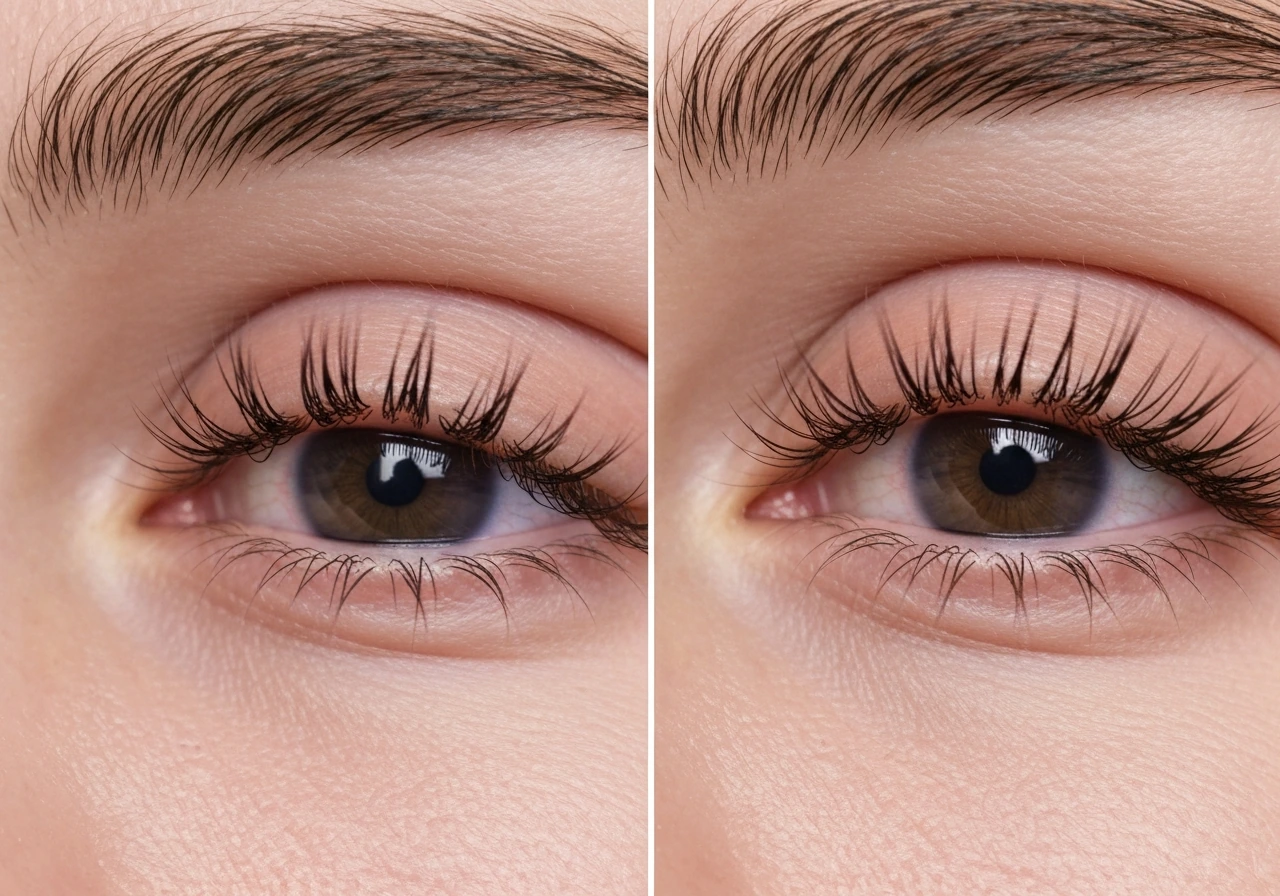
Trichiasis is the clinical term for lashes that grow in the wrong direction, often angled toward the eye or the lid rather than outward. When your lashes start pointing toward the nose instead of outward, that wrong-direction growth can be linked to traction, inflammation, or eyelid margin issues lashes that grow in the wrong direction. It's typically tied to chronic lid inflammation, injury, or scarring. Distichiasis is a different (and less common) condition where an extra row of lashes grows out of the meibomian gland orifices rather than the normal follicle positions, making it look like lashes are emerging from further back or higher on the lid margin. Acquired distichiasis, the kind that develops in adulthood rather than being present at birth, is specifically associated with chronic blepharitis, chemical injury, and other forms of eyelid trauma. If you've had repeated extension services or used harsh adhesive removers, acquired distichiasis is worth knowing about.
Regrowth after damage or loss
When lashes shed or are pulled out (either naturally or through extension removal), regrowth lashes start short and stiff. In the early anagen phase they often point in a slightly different direction than your mature lashes because they haven't grown long enough for gravity and the natural curl pattern to fully take over. This is one of the most common reasons people see what looks like 'misaligned' or oddly-positioned lashes, and it almost always self-corrects within a few weeks as the lash grows out. It looks alarming but it's normal.
Extensions, adhesives, and traction trauma
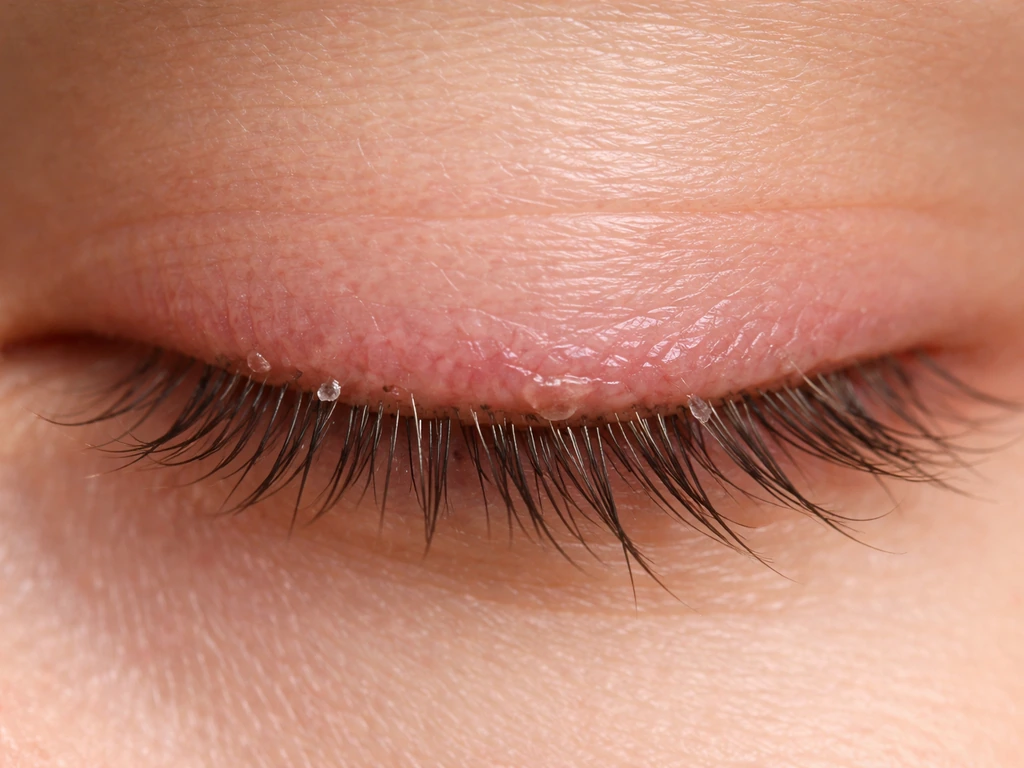
Eyelash extensions are associated with a real set of complications including allergic blepharitis, traction alopecia, and follicle damage. The adhesives used in extension application can contain formaldehyde-releasing compounds, which carry their own irritation risks. When extensions are removed roughly, or when they've been worn through repeated cycles, the mechanical traction on follicles can alter the angle at which new lashes grow in. The follicle isn't destroyed, but the surrounding tissue has been stressed enough to temporarily redirect growth. This is different from permanent damage, but it can take a full growth cycle or two to normalize.
Inflammation and blepharitis
Blepharitis, which is inflammation of the eyelid margin characterized by redness, thickening, and flaky or crusty buildup right at the lash line, is probably the most underdiagnosed cause of lash positioning issues. When the lid margin is chronically inflamed and swollen, the tissue around follicles changes enough to push lashes out at abnormal angles. Meibomian gland dysfunction (MGD) compounds this: blocked or dysfunctional oil glands contribute to ongoing lid margin irritation, which perpetuates the cycle.
Eyelid skin changes
Contact or irritant dermatitis from eye makeup, extension adhesives, or skincare products that migrate onto the eyelid can cause lid skin to swell and change texture. Epiblepharon, a condition where a fold of skin and muscle pushes the lash line upward and inward, is more common in children but can be relevant in adults with significant lid skin laxity or changes. Any swelling or skin fold along the upper lid can physically reposition where lashes appear to emerge from.
How fast do lashes actually regrow
A human eyelash lifespan averages about 3 to 6 months across its full growth cycle. After a lash is mechanically removed (like through epilation or extension shedding), regrowth typically takes around 4 to 6 weeks before a visible lash appears at the surface. If the follicle itself was damaged rather than just the hair strand, that timeline stretches out further and the new lash may come in thinner or at a different angle initially. For clinical reference, even prescription bimatoprost (Latisse) shows measurable lash improvement at 8 weeks, with continued gains through 16 weeks. That's the realistic window to expect visible normalization of regrowth direction too.
The practical takeaway: if you've recently had extensions removed or noticed increased shedding, give it a minimum of 6 to 8 weeks before concluding that something is structurally wrong. Early regrowth almost always looks awkward.
What you can check yourself today
Before doing anything else, do a close visual inspection with good lighting and a magnifying mirror. Here's what to look for:
- Crusty or flaky buildup at the base of the lashes, especially in the morning: this points to blepharitis and means your first step is lid hygiene, not lash products.
- Redness or swelling along the lid margin itself (not just the white of the eye): another blepharitis/MGD signal.
- Lashes that are short and stubby and pointing in various directions: likely normal early regrowth, especially if you've recently had extensions or noticed shedding.
- Lashes that seem to be emerging from a second, more posterior row at the very edge of the lid: this could be distichiasis and warrants a professional look.
- Skin fold or excess skin over the upper lash line: this is a structural eyelid issue, not a lash growth issue, and needs an eye doctor evaluation.
- One eye affected vs. both: asymmetric problems are a stronger reason to see a doctor sooner.
If you see crusting or scaling, resist the urge to scratch or rub. Mechanical friction worsens follicle stress and can worsen both the inflammation and the directional problem. If trichotillomania is part of what is pulling your lashes out, addressing the habit with evidence-based behavioral strategies can be an important step toward faster, more consistent regrowth. Do not apply mascara, lash serums, or any additional products to an actively inflamed lid margin until you've addressed the inflammation first. The FDA specifically advises against using eye cosmetics on inflamed eyelid skin.
How to fix lash direction and support healthier regrowth
Lid hygiene first (especially if blepharitis is involved)
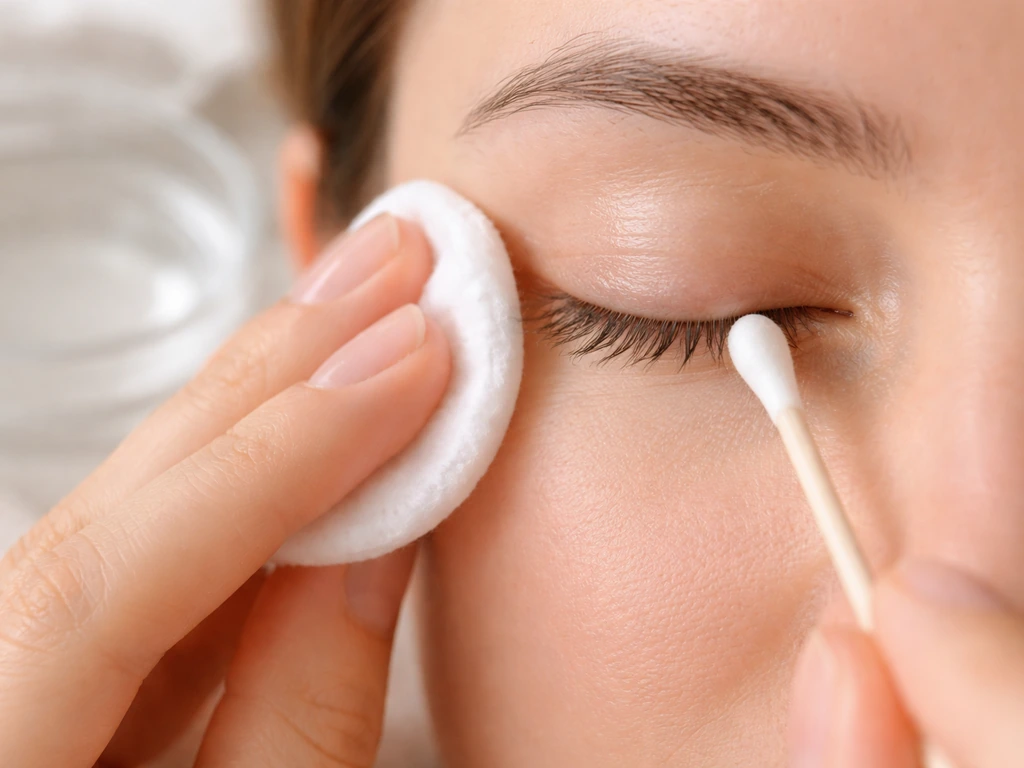
If your lash line shows any signs of inflammation, the single most effective first step is consistent lid hygiene. This is the cornerstone of blepharitis management according to clinical guidelines, and it genuinely works when done correctly. Warm compresses applied for about 5 to 10 minutes loosen crusts, debris, and blocked meibomian gland secretions. Follow immediately with gentle eyelid scrubs using a diluted baby shampoo or a dedicated lid scrub pad, wiping along the base of the lashes. Doing this once or twice daily for two to four weeks can meaningfully reduce lid margin inflammation and restore a more normal environment for lash follicles.
Conditioning oils: what the evidence actually says
Castor oil is the most popular natural option and it does a reasonable job of conditioning and coating lash hairs, which makes them look thicker and healthier. However, the honest answer is that there's no strong clinical evidence that castor oil reliably stimulates new lash growth or corrects follicle direction. It's a low-risk thing to try on established lashes, but don't expect it to fix a structural regrowth issue. Other nourishing oils like argan, vitamin E, and coconut oil work similarly as conditioners. They reduce brittleness and breakage, which helps lashes look fuller as they grow, but they're not regrowing agents. Apply with a clean spoolie to the lash line, not directly into the eye, and only on a non-inflamed lid.
Lash serums with actual evidence behind them
If you want to actively support regrowth and lash density after damage, over-the-counter serums containing peptides and growth factor ingredients are a reasonable step, though the evidence base varies by formula. Prescription bimatoprost 0.03% (Latisse) is the only FDA-approved treatment with solid randomized trial data showing measurable improvements in lash length, thickness, and fullness, with statistically significant results at 8, 12, and 16 weeks. It does come with potential side effects including periocular skin darkening and iris pigmentation changes in susceptible individuals, so it's worth discussing with a dermatologist or eye doctor before starting. Biotin supplements are widely marketed for lash growth, but the evidence supports them mainly in people with a diagnosed biotin deficiency, which is actually uncommon. For most people, biotin supplementation alone won't produce noticeable lash changes.
| Option | Evidence Level | Best Use Case | Realistic Timeline |
|---|---|---|---|
| Lid hygiene (warm compress + scrub) | Strong (clinical guidelines) | Blepharitis, post-extension inflammation | 2 to 4 weeks for inflammation reduction |
| Conditioning oils (castor, argan, vitamin E) | Low (cosmetic benefit only) | Strengthening existing lashes, reducing breakage | Ongoing; no growth timeline |
| OTC peptide lash serums | Moderate (varies by formula) | General regrowth support after damage | 8 to 12 weeks for visible change |
| Prescription bimatoprost (Latisse) | Strong (randomized trials) | Significant hypotrichosis or follicle damage | 8 to 16 weeks for measurable results |
| Biotin supplements | Weak (unless deficient) | Deficiency-related hair loss only | Unpredictable for most people |
When to stop troubleshooting at home and see a doctor
Most lash direction and regrowth issues resolve on their own or with the hygiene and conditioning steps above. But there are specific situations where a professional evaluation is not optional. See an eye doctor or dermatologist promptly if:
- Lashes are visibly scratching or rubbing against your eye surface, causing pain, tearing, or a foreign-body sensation. This is trichiasis and can cause corneal scarring if left unmanaged.
- You have persistent redness, scaling, or thickening of the eyelid margin that hasn't improved after two to four weeks of consistent lid hygiene.
- Only one eye is affected and it's getting worse rather than better.
- You notice what looks like a second row of lashes emerging from a different position on the lid, especially if it appeared after inflammation or chemical exposure.
- You have symptoms beyond the eyelid: chronic dry eye, light sensitivity, burning, or a feeling of gritty eyes that doesn't clear up.
- You develop a painful lump or nodule along the lash line that doesn't resolve in a week or two (this could be a stye, chalazion, or something that needs treatment).
It's also worth knowing that in rare cases, persistent unilateral blepharitis (one eye only, not improving) can signal conditions beyond routine inflammation, including eyelid skin malignancy. Persistent unilateral blepharitis that does not improve may require additional testing to rule out other causes, such as eyelid skin cancer or immune disorders, which clinicians use after eyelid examination Persistent unilateral blepharitis (one eye only, not improving). And severe progressive cases involving both eyes with conjunctival involvement can indicate autoimmune conditions like ocular cicatricial pemphigoid, which causes scarring and requires systemic treatment, not lid hygiene. These are uncommon but real reasons not to ignore symptoms that aren't responding to at-home care.
How to protect your lash line going forward
If you've been through an episode of extension damage, blepharitis, or abnormal regrowth, the goal from here is creating a stable, low-irritation environment for your follicles. The lash line is a narrow, structurally complex strip of tissue that doesn't recover well from repeated mechanical stress or chronic inflammation. These habits make a real difference:
- Make lid hygiene a nightly routine even when things look fine. A 30-second gentle wipe along the lash base prevents the crusting and gland plugging that starts the blepharitis cycle before you notice symptoms.
- If you use extensions, space out your application cycles to give follicles recovery time between sets, and only go to technicians who use formaldehyde-free adhesives. Patch test for adhesive allergies before full application.
- Remove eye makeup completely every night. Mascara and liner left at the lash line overnight contribute directly to gland blockage and low-grade inflammation.
- Avoid rubbing your eyes. Mechanical friction is one of the fastest ways to disrupt follicle angles and introduce bacteria to an already-sensitive area.
- If you're using any lash serum or oil, apply it only with a clean spoolie or applicator to avoid contaminating the formula and introducing bacteria to the lid margin.
- Give lash regrowth time. Most cases of abnormal-looking lash direction after damage normalize within one to two full growth cycles (roughly 3 to 6 months) as long as inflammation is controlled.
Lash direction problems related to how lashes grow straight or the angle at which they emerge are closely tied to overall follicle health. The same hygiene and conditioning approach that helps correct above-the-lash-line growth also supports getting lashes to grow in a more consistent, outward direction over time. If you've noticed lashes growing toward the nose or changing angle in other ways, those patterns often share the same upstream causes: inflammation, trauma, or disrupted follicle positioning during regrowth.
The bottom line is this: start with a close look at your lid margin today, begin warm compresses and lid scrubs if there's any sign of inflammation, hold off on cosmetic products until the irritation clears, and give it a genuine 6 to 8 weeks before drawing conclusions about whether your lashes are recovering normally. If your goal is how to make eyelashes grow upwards, the best first step is to address the underlying cause, such as inflammation, lash alignment issues, or extension-related follicle disruption. Most of the time they are. When they're not, an eye doctor can give you specific options that go well beyond what any oil or serum can do.
FAQ
How long should I wait before I assume something is wrong?
If only a few lashes look “above” the lash line and there is no redness, crusting, or irritation, it’s often early regrowth coming in at a different angle. If the problem persists beyond about 8 weeks, spreads across the lid, or you notice lashes pointing toward the eye (possible trichiasis), get an eye exam instead of trying to fix it at home.
If I recently removed lash extensions, will the lash position fix itself or can it become permanent?
Yes. Extensions or removal can temporarily redirect growth, but if the lid skin remains irritated or inflamed, the same process can keep recurring. A practical rule is to pause extensions, switch to lid hygiene, and reassess after 6 to 8 weeks, not after just a few days.
Can I use lash serum or mascara to help lashes grow back normally when this is happening?
Correcting “above-the-lash-line” growth usually means removing triggers first, not adding products. Avoid mascara and lash serums when the lid margin is inflamed, and skip aggressive rubbing during flare-ups, because friction can worsen follicle angle changes even when the cause is inflammation rather than scarring.
What exact lid-hygiene routine should I follow if I suspect blepharitis or meibomian gland dysfunction?
Warm compresses plus lid scrubs are usually the safest and most effective at-home approach for eyelid margin irritation. A key detail is to do the scrubbing along the base of the lashes after the compress loosens debris, once or twice daily for 2 to 4 weeks, then reduce frequency to maintenance.
Will castor oil correct lashes that grow above my lash line?
Castor oil can make lashes look darker and fuller by conditioning existing hairs, but it generally cannot change follicle direction or fix an underlying lid margin problem. If your lashes are emerging higher due to inflamed tissue or disrupted follicles, expect, at most, cosmetic improvement until the lid environment calms.
How can I tell whether this is normal regrowth or inflammation?
If you have crusting, thickening, or flaking at the lash line, that pattern points more toward blepharitis or contact irritation than toward a simple “regrowth phase.” In those cases, treating the lid margin inflammation is the priority, and cosmetic products should be delayed until symptoms improve.
Is it safe to tweeze or pluck the lashes that look like they’re growing above the lash line?
Do not pluck misdirected lashes as a routine fix, especially if you have ongoing irritation, because pulling can increase shedding and can aggravate the cycle if the lid margin is inflamed. If a lash is clearly rubbing the eye or pointing inward, an eye professional can safely evaluate whether it needs removal and why it is growing that way.
When should I worry about more serious causes rather than temporary regrowth?
Ocular scarring conditions are uncommon, but persistent symptoms are the warning sign. Seek prompt care if the issue is worsening over time, affects both eyes with other surface symptoms, you develop significant conjunctival involvement, or you see progressive lid margin changes that do not improve with hygiene.
What’s the difference between awkward regrowth and distichiasis?
If lashes are coming in from a spot slightly higher on the lid, that can happen with distichiasis-like patterns or eyelid margin positional changes. The difference is that distichiasis usually presents as an extra set or a clearly abnormal second row pattern rather than a few awkward regrowth lashes that gradually settle outward over weeks.
Can skincare or eye makeup cause lashes to grow higher than the lash line?
Yes, some people notice worsening flare-ups after certain products because eyelid skin can react even when the main irritation source is unclear. Stop new eye or face products on that area, and switch to a bland routine until the lid margin looks calm, since migration of irritants can keep the tissue swollen and redirect lash emergence.
Next Article
Why Do My Eyelashes Grow Toward My Nose? Causes and Fixes
Learn why lashes turn toward your nose and what to do now, from irritation fixes to recovery timelines and red flags.