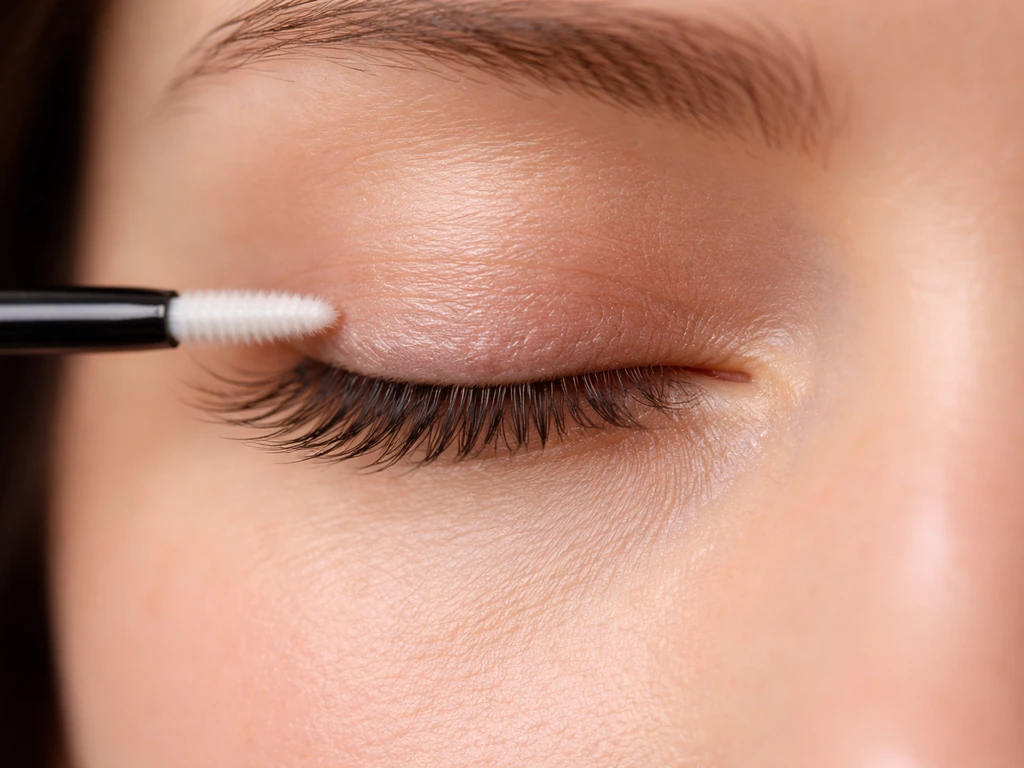
Mustard oil will not reliably grow your eyelashes, and putting it near your eyes carries real risks that most DIY guides gloss over. There is no clinical evidence that mustard oil stimulates eyelash follicles, and the compound that gives it that warming, irritating sensation, allyl isothiocyanate, is classified as a skin and eye irritant capable of causing burns and blisters at meaningful concentrations. If you are trying to thicken or regrow lashes, there are much safer options worth your time.
Does Mustard Oil Grow Eyelashes? Safety and What Works
Rachel Nguyen
20 Jun 2026

How eyelash growth actually works

Before evaluating any ingredient, it helps to understand what you are actually trying to influence. Eyelash follicles cycle through three phases: anagen (active growth), catagen (regression, where the lash converts to a club hair), and telogen (resting before shedding). The anagen phase for eyelashes lasts roughly 1 to 2 months, which is short compared to scalp hair. The full cycle from new lash to shed can take anywhere from 4 to 11 months total. Eyelashes grow at about 0.16 mm per day, which is slow enough that changes are hard to notice week to week.
When people talk about 'growing' their lashes, they usually mean one of three things: length (how long each lash grows during anagen), thickness (the diameter of individual lash hairs), or density (how many lashes you have per row). These are separate issues. An oil that conditions the lash shaft might reduce breakage and help lashes appear longer, but that is not the same as extending the anagen phase or recruiting new follicles. Cuticle oil, like other oils, is more likely to help by conditioning lashes rather than by truly growing new ones from the follicle an oil that conditions the lash shaft. True follicle-level stimulation requires either a prostaglandin analog (like bimatoprost) or, at minimum, an ingredient that has some evidence of affecting the follicle itself.
Does mustard oil actually stimulate eyelash growth?
The honest answer is: probably not in any meaningful follicle-level way. There are no published clinical trials testing mustard oil on eyelash growth, and no peer-reviewed evidence suggesting it extends the anagen phase or increases lash density. What mustard oil does contain are compounds like allyl isothiocyanate and erucic acid. Allyl isothiocyanate is the same lachrymatory compound responsible for the burn in wasabi and mustard; it irritates mucous membranes and skin on contact. Most of the internet claims about mustard oil for hair growth come from traditional use on scalp hair, not from eyelash-specific research.
There is a theory floating around that mild scalp irritation increases blood flow and stimulates follicles. Even if there is a sliver of logic there for scalp hair, applying that thinking to your eyelid margin is a completely different proposition. The skin on your eyelids is among the thinnest on your body, your follicles sit millimeters from your eye surface, and your tear film is not designed to handle oil-based irritants. Any apparent 'growth' effect from a mildly irritating oil is far more likely to be a result of reduced breakage from conditioning, not true follicle activation.
Safety risks you should take seriously

This is not the section to skim. Allyl isothiocyanate is documented by PubChem as toxic by skin contact and capable of causing burns and blisters. At the eyelid margin, even small amounts can migrate into the eye via capillary action along the lash line. Chemical exposure to the eye or eyelid can result in a chemical eye burn, with severity depending on the substance, concentration, and how long it stays in contact. Mustard oil sold for cooking or hair use is not formulated, tested, or regulated for eye-area application.
Beyond the burn risk, applying any oil repeatedly to the eyelid margin can contribute to or worsen blepharitis, an inflammatory condition of the eyelid margin. Blepharitis is associated with chronic irritation, crusting, pustules in eyelash follicles, and in recurrent or severe cases, eyelid scarring, lash misdirection (trichiasis), and actual lash loss. In other words, the thing you are trying to fix could get measurably worse.
If you still want to try any oil near your eyes, a patch test on your inner arm 24 to 48 hours before lash-line application is a basic minimum. But for mustard oil specifically, I would not recommend getting close to the eye area at all. Stop immediately if you notice redness, stinging, swelling, or any change in vision, and rinse thoroughly with clean water.
A few groups should avoid mustard oil around the eyes entirely: people with a history of eyelid eczema or contact dermatitis, those with dry eye syndrome or any corneal condition, anyone currently dealing with blepharitis or a stye, and people who wear contact lenses regularly.
How long regrowth takes and what realistic results look like
If your lash follicles are intact and healthy, a cut or damaged lash can regrow in roughly 6 weeks. For more significant loss, like after extensions or from a period of rubbing, you are typically looking at the full anagen cycle to play out, which means 1 to 2 months before new growth is visible and several more months before you see full density return. With an active treatment like bimatoprost (more on that below), most patients show appreciable improvement by week 8. With a conditioning oil and no follicle-level intervention, you are essentially waiting for your natural cycle while trying not to break the lashes you have.
The realistic ceiling for at-home oils is modest: less breakage, a bit more shine, and lashes that reach their natural potential length rather than snapping off early. If you are wondering whether shea butter can grow eyelashes, the main point is that at-home oils tend to help more with conditioning and breakage than true follicle-level regrowth does shea butter grow eyelashes. That can look meaningful on someone who has been rough with their lashes, but it is not the same as growing thicker or more numerous lashes from scratch.
Safer at-home options that are actually worth trying
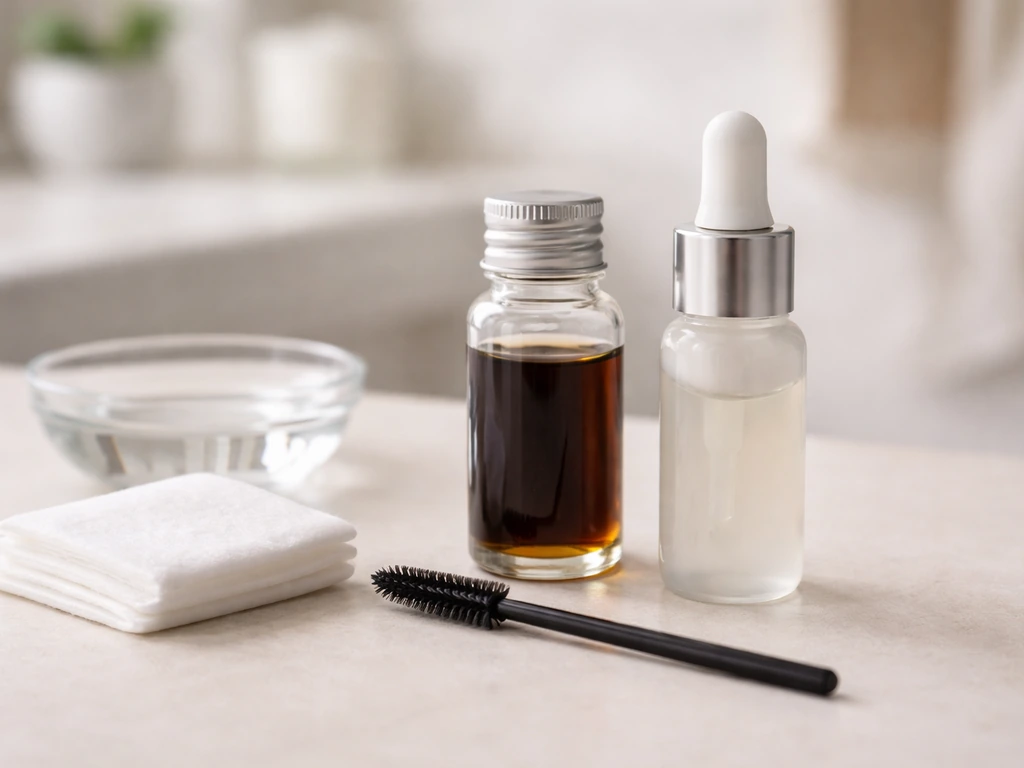
Castor oil is probably the most discussed natural alternative. It does not have strong clinical trial data behind it for eyelash growth either, but it has a much gentler safety profile than mustard oil. If you are looking at other oils for a gentler option, see whether does jojoba oil grow eyelashes is supported by evidence for eyelash growth. Its high ricinoleic acid content gives it a thick, conditioning texture that coats the lash shaft and may reduce mechanical breakage. Applied carefully to the lash line with a clean spoolie or cotton swab at night, it is a low-risk habit. The key word is carefully: too much migrates into the eye and can cause blurring or irritation.
Other oils with gentler profiles and some follicle-relevant rationale include jojoba oil (structurally similar to sebum, non-comedogenic, unlikely to clog follicles), and olive oil (rich in squalene and oleic acid, though evidence for lash growth is similarly limited). Shea butter is sometimes used for eyelid conditioning but its texture makes it harder to apply precisely. None of these are going to dramatically extend your lash anagen phase, but none of them are likely to burn your cornea either.
Over-the-counter eyelash serums are a step up in targeted action. A 2024 review in the Journal of Cosmetic Dermatology found that many serum ingredients lack solid clinical efficacy data, but there are a few worth looking for. Peptides (especially those marketed as growth factor mimics) can support the follicle environment. Hyaluronic acid helps retain moisture at the lash line. Panthenol (provitamin B5) conditions the shaft. What you want to avoid are serums with prostaglandin-analog compounds like isopropyl cloprostenate that are not FDA-approved for eye use but are included in some cosmetic serums without proper safety labeling. Stick to serums that disclose full ingredient lists and are ophthalmologist-tested.
| Option | Evidence for growth | Eye-area safety | Best for |
|---|---|---|---|
| Mustard oil | None | Poor (irritant, burn risk) | Not recommended near eyes |
| Castor oil | Anecdotal/limited | Moderate (gentle, use carefully) | Reducing breakage, general conditioning |
| Jojoba oil | Minimal | Good (non-irritating) | Follicle conditioning, scalp-like sebum mimicry |
| Olive oil | Minimal | Good (gentle) | General lash conditioning |
| OTC lash serums (peptide-based) | Mixed but improving | Good if ophthalmologist-tested | Targeted conditioning without prescription |
| Bimatoprost (Latisse, prescription) | Strong (FDA-approved) | Monitored by prescriber | Clinically confirmed lash hypotrichosis |
Troubleshooting: why your lashes may not be growing back
The cause of your lash loss matters more than which oil you choose. If you are dealing with post-extension damage, your follicles may be stressed from traction and adhesive exposure. In this case, the main thing you need is time and gentleness: no more extensions for at least 3 months, no rubbing, and a mild conditioning habit. If your lashes are patchy and you have been rubbing your eyes frequently, the mechanical stress is the problem, not a nutrient deficiency that an oil can fix.
Underlying causes change everything. Blepharitis, thyroid disorders, iron deficiency, and certain medications (chemotherapy being the most dramatic example) can all cause lash thinning or loss that no oil will reverse on its own. Demodex mite infestations, which your doctor can rule out by examining an eyelash sample, are a common and underdiagnosed culprit for chronic blepharitis and lash loss. If your lashes have been consistently thinning over months without an obvious cause like extensions or trauma, that pattern needs investigation, not another round of DIY treatments.
Signs the DIY route is not enough
- Lash loss that is patchy, asymmetric, or has been ongoing for more than 3 months without a clear mechanical cause
- Accompanying eyelid redness, flaking, crusting, or itching that suggests blepharitis or eczema
- Lash thinning after starting a new medication (including thyroid medications, chemotherapy, or retinoids)
- New-onset lash loss without extensions, rubbing, or trauma history
- Any history of alopecia areata affecting scalp or brow hair
When to see a dermatologist or ophthalmologist
If your lash loss fits any of the patterns above, or if you have been trying at-home approaches for 3 months without any visible progress, it is time to get professional eyes on it. A dermatologist can evaluate whether your lash thinning has a systemic or inflammatory cause, perform patch testing if contact dermatitis is suspected, and prescribe bimatoprost (Latisse) if you are a candidate. Bimatoprost is the only FDA-approved treatment for eyelash hypotrichosis, and it works by extending the anagen phase, producing measurable improvements in length, thickness, and darkness. Most patients see appreciable changes by week 8, though effects are not permanent once you stop.
An ophthalmologist is the right call if you have any eye symptoms alongside lash loss: dryness, irritation, chronic redness, or a history of glaucoma (relevant because bimatoprost has ocular effects). Blepharitis specifically is better managed by an ophthalmologist who can check for underlying infections or demodex involvement and recommend appropriate lid hygiene protocols.
When you go, come prepared. Ask specifically about the cause (is this follicular, inflammatory, or systemic?), whether bimatoprost is appropriate for your situation, and what a realistic timeline looks like given your particular case. If blepharitis is involved, ask whether a lid hygiene routine or an antiparasitic treatment should come before any growth-focused therapy. Getting the order of operations right matters more than which serum you pick.
FAQ
What should I do if mustard oil accidentally gets into my eye?
If you use mustard oil and it gets into your eye, rinse immediately with lukewarm, clean water or saline for at least 10 to 15 minutes. Remove contacts right away, and do not try to “neutralize” it with other ingredients. If you have ongoing pain, light sensitivity, redness that worsens, or any vision changes, you should get urgent ophthalmic care.
If I feel stinging or redness after applying it, can I try again later?
If you notice mild irritation, stop using it and let the area fully calm down before considering any other product. For most people, you should not “test again” with the same oil on the lash line after a reaction, because eyelid skin can become more reactive over time (sensitization).
How will I know if mustard oil is worsening blepharitis or my eyelid health?
Blepharitis risk is highest with repeated application at the lash margin, especially if the oil migrates into the lid margin or mixes with existing crusting. Signs that oil is worsening things include more morning crust, increased redness at the lid edge, new bumps along lashes, and increased lash shedding.
Can I use mustard oil near my eyelashes if I wear contact lenses?
If you wear contact lenses, it is safer to avoid oil application near the lash line because even small amounts can transfer to the lens and worsen discomfort or irritation. If you decide to use any product, wait until you are not wearing contacts for the entire period the product could migrate (typically nighttime-only, then discard any lens discomfort and avoid reuse if contaminated).
How can I tell the difference between lash conditioning and true lash regrowth?
For “growth” claims, take a close look at whether a product targets the follicle cycle (anagen) rather than just conditioning. Look for evidence of measurable lengthening tied to a follicle mechanism, not just softer, less breakable lashes that can look longer temporarily.
Is bimatoprost always the best next step if I want real lash regrowth?
Bimatoprost can cause irritation for some people, and it is not appropriate for everyone. It can also have ocular side effects, so your clinician should review your eye history, especially glaucoma or chronic dry eye, before starting.
What should I do if my lash loss started after eyelash extensions?
If your lashes are thinning after extensions, friction, or pulling, you usually need time for the follicle cycle to complete and for damaged lashes to shed and regrow. A common practical move is to pause extensions for about 3 months, stop rubbing, and focus on shaft conditioning, because oil alone cannot undo traction damage faster.
When should unexplained lash thinning be evaluated instead of treated at home?
If you cannot clearly identify a trigger (extensions, rubbing, irritation), lash loss that persists for months often warrants evaluation for inflammatory or systemic causes such as blepharitis, Demodex-associated irritation, thyroid issues, or nutrient problems like iron deficiency.
Is a patch test on my arm enough to confirm mustard oil is safe for my eyelids?
A patch test on the inner arm helps with general sensitivity, but it does not guarantee safety on the eyelid, because eyelid skin is thinner and more reactive. If you ever had dermatitis or stinging with eye-area products, you should skip eyelid application even if an arm test was negative.
What red flags should I watch for when choosing an eyelash serum?
Many cosmetic “growth” serums market peptides or vitamins, but formulas vary widely in whether they are actually tested for the eye area. If a serum does not clearly list ingredients and provides no information about ophthalmologist testing or safe handling, it is a higher-risk choice for eyelid use.
Next Article
Can Cuticle Oil Grow Your Eyelashes? Evidence-Based Answer
Cuticle oil does not have evidence to grow lashes; learn safe use risks and better options like proven serums.