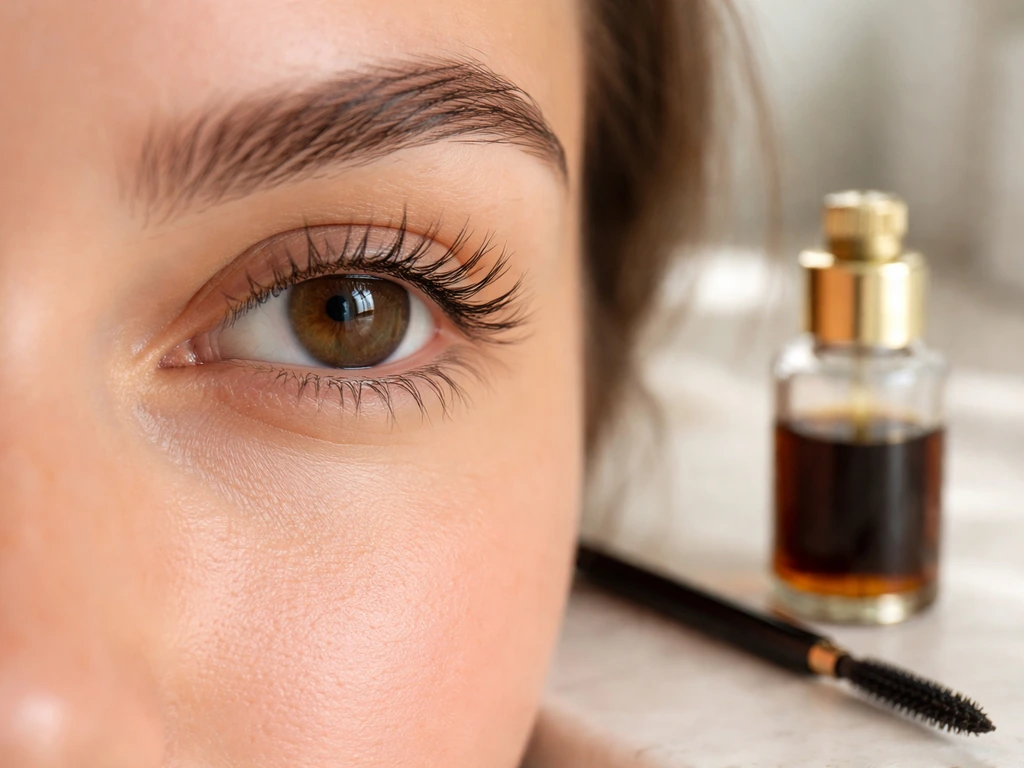
Coconut oil won't grow new eyelashes in the way a prescription serum does, but with consistent nightly use you can realistically expect to see conditioning improvements (softer, less brittle lashes that shed less) within 2 to 4 weeks, and modest visible improvements in fullness or apparent length within 8 to 12 weeks. True follicle-level growth stimulation is not what coconut oil delivers. What it does do is reduce protein loss in the lash fiber, keep the lash line moisturized, and limit mechanical breakage, all of which can make your lashes look noticeably better over time without any clinical intervention.
How Long Does Coconut Oil Take to Grow Eyelashes? Timelines
Rachel Nguyen
6 May 2026
Why your lashes can't change overnight: the growth cycle
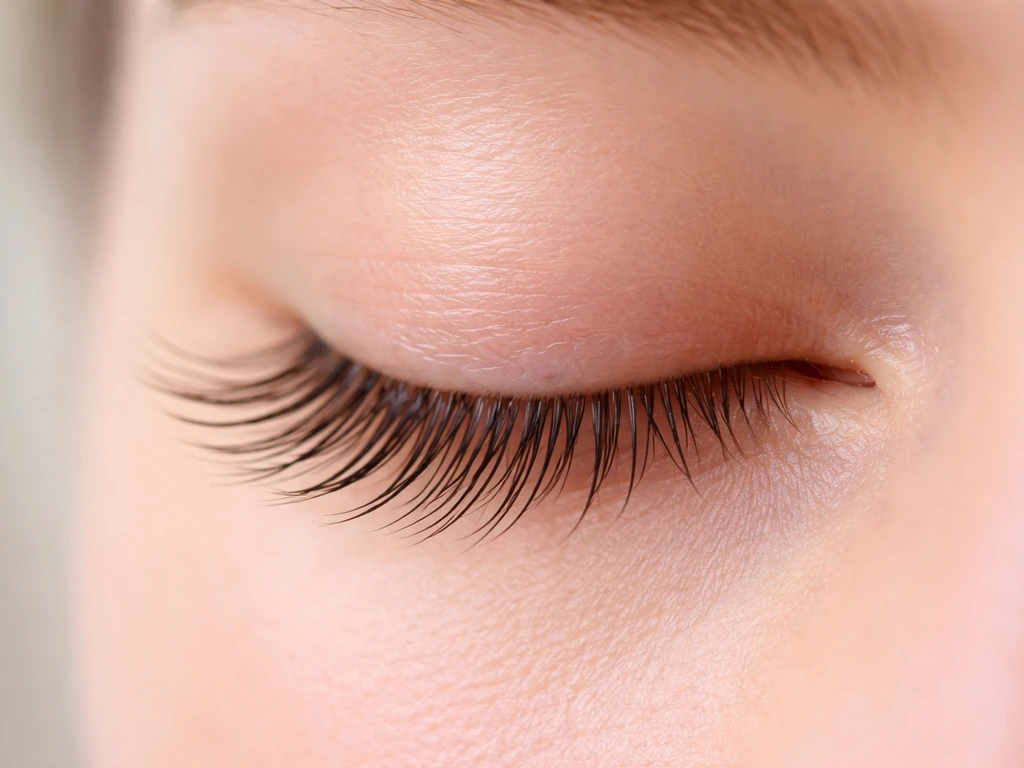
Eyelashes follow a three-phase cycle, and understanding it saves you a lot of frustration. The anagen phase is active growth, lasting roughly 4 to 10 weeks for lashes (far shorter than the years-long anagen phase of scalp hair). After that comes catagen, a transition and reset phase that lasts about 15 days. Then telogen, the resting phase, where the follicle sits dormant before the next lash pushes through. Eyelashes have a notably high proportion of follicles sitting in telogen at any given time compared to scalp hair, which is part of why lash growth feels so slow. You're not working with a continuous growing strand like head hair. You're working with short, independent cycles on dozens of tiny follicles, each on its own schedule.
This biology is the reason any lash treatment, whether it's coconut oil, castor oil, or even prescription bimatoprost, takes weeks to show visible results. You're waiting for follicles already mid-cycle to complete, reset, and grow in stronger or longer. There's no shortcut around that timeline, and any product claiming week-one results is playing on the conditioning improvement (which is real and fast) rather than actual growth (which is not).
Realistic timeline: what to expect week by week
Here's how the timeline actually plays out with coconut oil applied nightly. The first couple of weeks, lashes feel smoother and more flexible because the lauric acid in coconut oil penetrates the hair shaft and reduces protein loss, the same mechanism documented in hair research. You're not seeing growth, but you may notice less fallout on your lash brush or cotton pad.
| Timeframe | What you'll likely notice | What's actually happening |
|---|---|---|
| Week 1–2 | Lashes feel softer, less brittle | Coconut oil penetrates the lash shaft, reducing protein loss |
| Week 3–4 | Slightly less shedding, lashes look a bit fuller | Reduced breakage keeps existing lashes intact longer |
| Week 6–8 | Marginal improvement in apparent length or density | Lashes that completed their cycle and grew in with better baseline health |
| Week 8–12 | Noticeable difference in fullness if you've been consistent | Multiple follicle cycles have now benefited from reduced breakage and conditioning |
| Beyond 12 weeks | Stable improvement if application is maintained | Ongoing protection from mechanical damage and dryness |
To put this in perspective: prescription bimatoprost (Latisse) shows minimal measurable growth at around 4 weeks and pronounced growth at 8 weeks, with significant clinical endpoints assessed at 12 and 16 weeks. Coconut oil operates on a longer, softer curve, with no follicle-stimulating mechanism behind it. Setting your expectations at the 8 to 12 week mark for any meaningful visual change is honest and realistic.
Conditioning versus actual growth: an important distinction
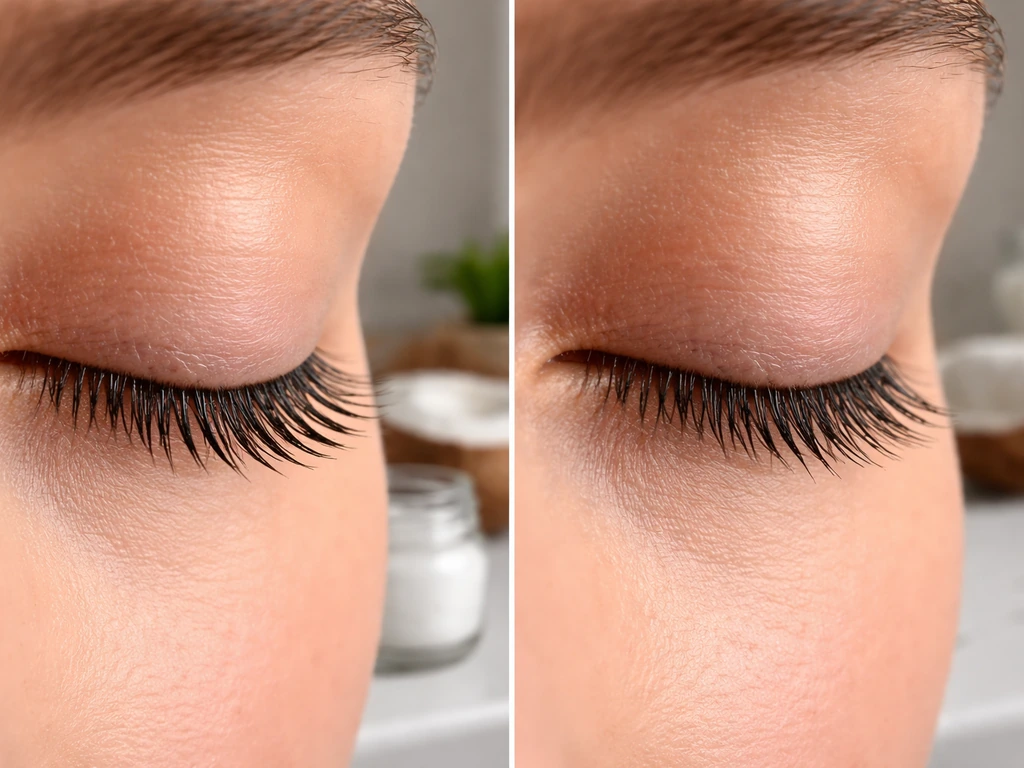
This is the part most articles gloss over, so let's be direct: coconut oil does not have clinical evidence for stimulating eyelash follicles to produce longer or more lashes. The research on it is general hair-fiber protein-loss data, not eyelash-follicle stimulation studies. What it does have evidence for is conditioning, protecting the existing lash fiber from damage, keeping lashes more supple so they don't snap off mid-cycle, and moisturizing the lash line. The practical outcome of good conditioning is that more of your natural lash length survives to be visible, which looks like growth even when it technically isn't.
True growth stimulation, meaning follicles producing longer or more numerous lash hairs, is the domain of prostaglandin analogs like bimatoprost and latanoprost, which work on receptor-level signaling in the follicle. Peptide-based OTC serums sit somewhere in between. If your goal is maximum length increase and you want a measured result rather than a general improvement, coconut oil alone is unlikely to get you there. It's a supportive tool, not a growth driver.
How to apply coconut oil to your lashes without irritating your eyes
Application method matters a lot here, both for results and for eye safety. The eyelid margin is one of the most sensitive areas on your face, and getting oily product into your actual eye can disrupt your tear film, aggravate existing conditions like blepharitis, or cause irritation. Here's how to do it right. If you're specifically looking for how to grow eyelashes with olive oil, focus on safe, consistent application and realistic conditioning-based expectations Here's how to do it right..
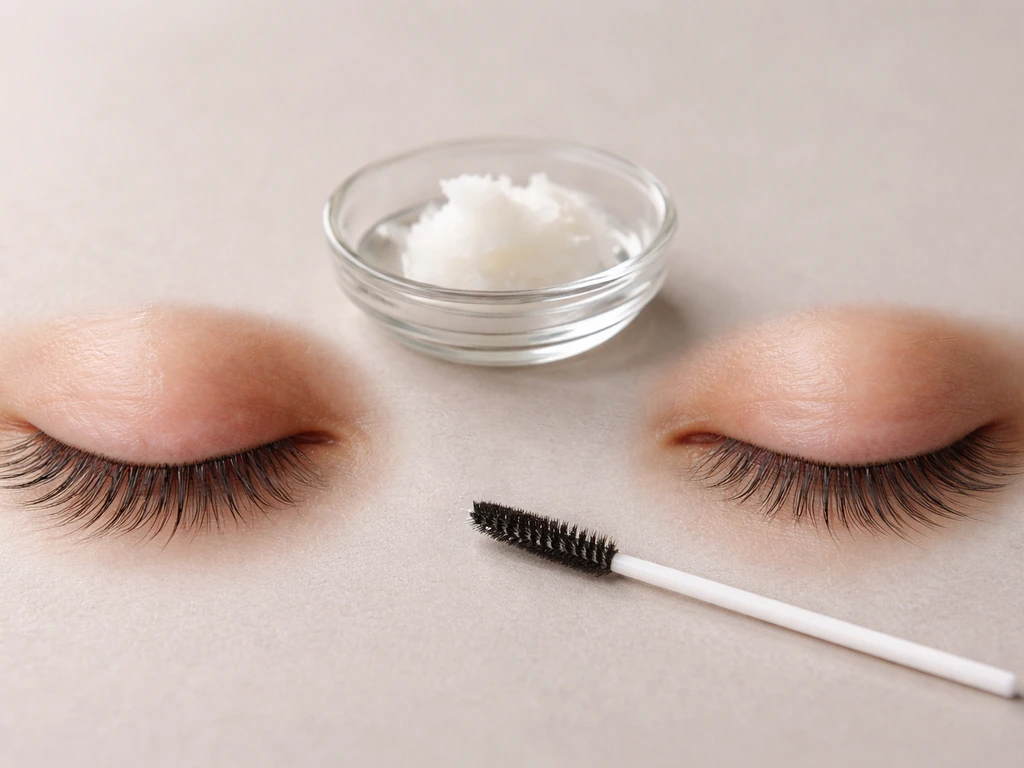
- Use a clean, disposable mascara wand or a dedicated small brush, not your fingers, to control exactly where the oil goes.
- Take a tiny amount of coconut oil, literally a grain-of-rice size, and warm it between your fingers until liquid.
- Apply at night after removing all eye makeup. Clean lashes absorb better and you won't be blinking it away.
- Stroke the wand along the base of the upper lash line first, then coat the lashes from root to tip with a light pass.
- Do not apply to the lower waterline or inside the lash margin. This is where irritation and tear film disruption happen.
- Use once daily. More is not better with oils near the eyes and can lead to buildup and clogged follicles.
- Patch test on your inner arm first if you have sensitive skin or any history of eyelid reactions.
If you have blepharitis or any active eyelid inflammation, hold off on applying coconut oil or any oil to the lash line until the condition is under control. The National Eye Institute notes that oil and debris can accumulate at the eyelid margin and worsen that kind of irritation. Coconut oil applied over an inflamed lash base is likely to aggravate rather than help.
What speeds up or slows down your results
Your baseline lash health is the biggest variable. If your lashes are damaged from extensions, frequent rubbing, or a condition like blepharitis, you're starting further behind but also have more room for improvement from conditioning alone. Removing extensions and giving lashes a proper recovery period (typically 6 to 8 weeks for a full cycle) before expecting to see coconut oil results is a realistic plan. If your lash loss has a medical cause, such as alopecia, thyroid issues, or chemotherapy, coconut oil will not address the underlying problem and results will be minimal or absent.
- Age: follicle activity naturally decreases with age, slowing any response to conditioning
- Genetics: your natural lash density and growth rate set the ceiling for what oil-based conditioning can achieve
- Consistency: missing applications frequently resets any accumulated benefit; nightly use matters
- Prior damage: extension glue, mechanical rubbing, and inflammation slow follicle recovery and extend the timeline
- Lash rubbing habits: ongoing rubbing undoes conditioning benefits faster than they accumulate
- Skin sensitivity: frequent irritation from the oil itself will cause more harm than good
How to actually track progress (and troubleshoot if nothing changes)

The best way to track lash progress is a close-up photo taken in the same lighting conditions once every two weeks. Lash length changes are subtle, and without a reference point you'll second-guess yourself constantly. Take the photo before applying any mascara or product, with your face clean, in natural daylight. Keep them in a dated folder on your phone.
At the 8-week mark, compare your current photo to your week-zero shot. If you see more lashes surviving to full length, a denser-looking lash line, or reduced gaps, coconut oil is working as a conditioning agent for you. If you see no difference at 12 weeks of nightly application, it's worth evaluating a few things: Are you being truly consistent? Is there an underlying cause of lash thinning that isn't addressed by conditioning? Are you experiencing any irritation that might be causing more shedding? Also check whether you may be shedding and regrowing on a normal cycle, because 3 to 5 weeks of apparent no-change is completely normal if follicles are in the telogen phase.
Stop using coconut oil immediately if you notice redness, swelling, itching at the lash line, or any change in eye comfort. Eyelid contact dermatitis is a real risk with any topical product applied this close to the eye, and continuing through irritation will set you back further than stopping would.
Coconut oil versus other options worth knowing about
Coconut oil sits in the same general category as castor oil when it comes to lash use: both are conditioning oils with no strong clinical evidence for true follicle-level growth stimulation. Castor oil has a thicker consistency and a higher ricinoleic acid content, which some users find makes it better for coating and staying on the lash, though neither has more clinical backing than the other for actual eyelash growth. Castor oil works a bit differently than coconut oil, and if you're using it you can follow a similar routine to help lashes look fuller and better protected between cycles how to grow lashes with castor oil. Castor oil is sometimes marketed for lash growth, but if you are asking whether can Jamaican black castor oil grow eyelashes, the key question is still whether it has follicle-stimulating evidence versus just conditioning benefits. If you are wondering how long castor oil takes to grow eyelashes, the answer depends on the lash growth cycle and how much conditioning versus true follicle stimulation you are getting Castor oil has a thicker consistency. If you want to compare the two more directly, the timelines and expectations are similar.
If you've done 12 weeks of consistent coconut oil use and aren't satisfied, the next step up in evidence-based options is an OTC peptide-based lash serum, which can show measurable improvement in 8 to 12 weeks of daily use according to expert guidance. Beyond that, prescription bimatoprost has the strongest clinical evidence for actual length and density gains, with significant results documented at 12 to 16 weeks and early differences appearing around week 4. In a randomized vehicle-controlled study of bimatoprost 0.03% (Latisse), a higher percentage of subjects showed at least a 1-grade improvement in global eyelash assessment score at Week 16 versus vehicle. It's a different mechanism entirely, working on the follicle rather than the lash fiber.
When it's time to see a professional
If your lashes are thinning progressively, falling out in patches, or not regrowing after 3 to 4 months, that's a signal to see a dermatologist or ophthalmologist rather than trying more oils. Conditions like alopecia areata, thyroid dysfunction, nutritional deficiencies, or chronic blepharitis require medical evaluation that no topical oil can substitute for. Johns Hopkins Medicine notes that blepharitis can affect both the eyelids and the meibomian glands and can worsen eye surface problems like dry eye, as well as contribute to styes chronic blepharitis. Similarly, if you have persistent eyelid redness, flaking at the lash base, or chronic eye irritation, get that assessed before adding any product to the area. Coconut oil applied over an inflamed or infected lash follicle can make things worse, not better.
If you're recovering from chemotherapy-related lash loss or a similar medical cause, the timeline is longer and more variable, and professional guidance on when to introduce supportive care products is more valuable than starting a home remedy independently. For everyone else, 8 to 12 weeks of nightly coconut oil application is a low-risk, zero-cost first step with a realistic shot at conditioning-level improvement. Just go in with clear eyes about what it can and can't do.
FAQ
Can coconut oil make my eyelashes grow faster than 8 to 12 weeks if I apply it twice a day?
Twice-daily use usually does not shorten the growth timeline, because visible “growth” from coconut oil is mostly conditioning (less breakage and fallout), not new follicle production. More frequent application mainly increases the chance of irritation or oil buildup, especially at the lash line, so sticking to nightly use is typically the safer choice.
What kind of coconut oil should I use on my eyelids, and does it matter (refined vs unrefined)?
Choose a type that is least likely to irritate your eyes, and avoid fragranced blends or products with added essential oils. If you do not tolerate oils well, consider using only a very small amount and applying strictly to the lash line and lashes, not the waterline, since product getting into the eye is a common reason people quit.
How do I apply coconut oil if I wear mascara or have sensitive eyes?
Apply after cleansing and removing all makeup, so the oil is not trapping pigment or debris against the eyelid margin. If you must use mascara, do the oil first at night and keep the morning routine clean and light, and stop immediately if your eyes feel gritty, stingy, or watery.
Is it normal to see no change after 3 to 5 weeks of coconut oil use?
Yes. Lash follicles cycle, and some lashes are in a resting phase where they will not noticeably lengthen even if the fiber is being conditioned. If you are consistent but see no difference by 8 weeks, that is when you should reassess application, irritation, and whether an underlying shedding cause is present.
How can I tell whether I am experiencing true shedding versus normal cycling?
Normal cycling shedding tends to be gradual and intermittent across lashes. Red flags are heavy shedding in patches, steadily worsening thinning, or lack of regrowth after several months. If you notice patchy loss or progressive reduction, consider medical evaluation rather than continuing only with oils.
Should I use coconut oil if I have extensions or if I recently removed them?
If you still have extensions, oil may loosen adhesive and can increase contamination around the lash line. After removal, give your lashes time to recover, then start conditioning once the eyelid area is calm and irritation-free, since inflamed lash bases can worsen shedding.
Can coconut oil cause swelling or blepharitis to get worse?
Yes, it can. Oils and debris can accumulate at the eyelid margin, which may worsen irritation for people prone to blepharitis. If you get persistent redness, flaking, swelling, or burning, discontinue and get checked rather than trying to “push through” a short adjustment period.
What does “conditioning results” look like, and how is it different from growth?
Conditioning typically shows as fewer lashes breaking, less fallout on removal, and lashes that look fuller at the ends. True growth would show new length or a clearly denser lash line that persists and increases over multiple cycles, while conditioning may mainly preserve the length you already have.
If I stopped coconut oil, will my lashes stay improved or go back to baseline immediately?
Conditioning benefits can fade after you stop, because the lash fiber eventually returns to its prior level of moisture and protection. If you saw improvement, consider tapering to a maintenance schedule rather than abruptly stopping, but discontinue if you were irritated during use.
What should I do if I develop irritation at the lash line while using coconut oil?
Stop immediately and do not reapply until symptoms fully resolve. If symptoms are significant or linger beyond a short period, or if you develop ongoing redness, itchiness, or eye discomfort, contact an ophthalmologist, since repeated exposure can worsen contact dermatitis.
Is coconut oil a good alternative to prescription lash-growth options?
If your goal is maximum length and density changes, coconut oil is usually not a strong substitute because it does not have follicle-level growth evidence. It can be a supportive conditioning step, but for substantial regrowth, options with receptor-level follicle effects and clinician guidance typically perform better.
Next Article
Can Jamaican Black Castor Oil Grow Eyelashes and Brows?
Yes or no: Jamaican black castor oil can condition lashes and brows, but true growth is limited. Safe routine included.