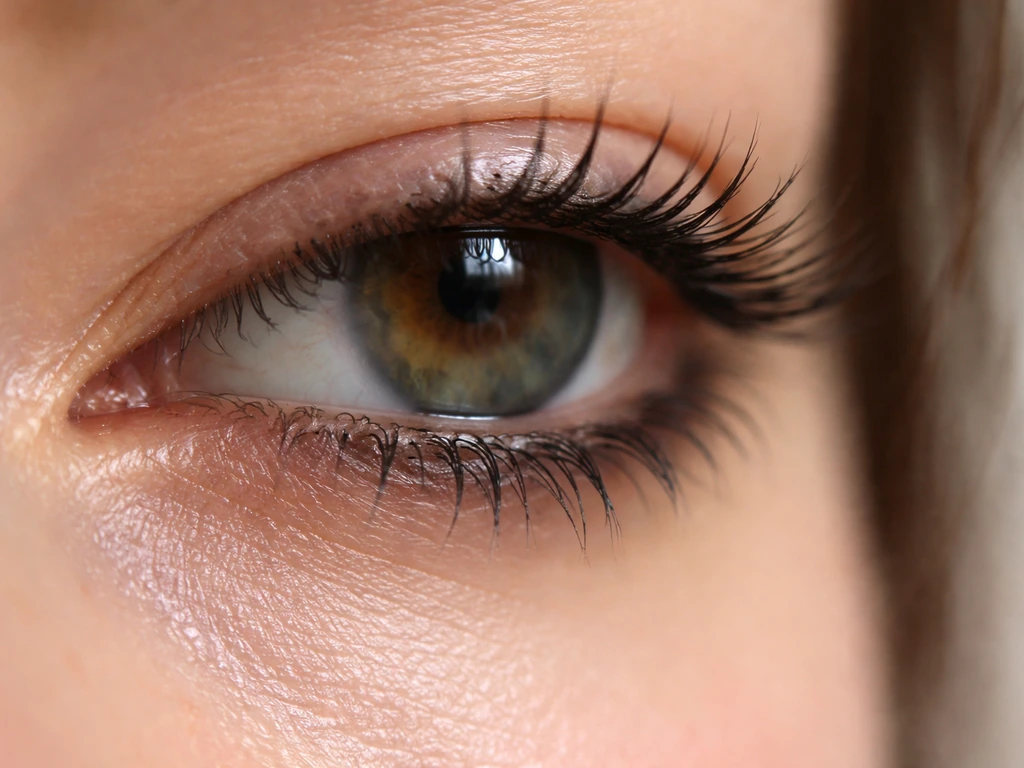
Kajal does not make eyelashes grow. Applying it to your lash line won't activate dormant follicles, extend your lash cycle, or add new lashes. Any improvement you notice is almost certainly cosmetic: darker pigment makes lashes look thicker and more defined, which reads as fuller even when nothing biological has changed. If your lashes are genuinely thinning, breaking, or growing slowly, kajal isn't the solution and, in some formulations, it can actually make things worse.
Does Kajal Make Eyelashes Grow? What to Know Now

What "kajal" actually means when we're talking about lashes

Kajal (sometimes spelled kajol) is the Hindi word for kohl, the traditional black eye cosmetic used across South Asia, the Middle East, and parts of Africa for centuries. Britannica describes kohl as a cosmetic used to line the eyelids, and the FDA groups kajal, kohl, surma, tiro, and similar products together as the same category of eye-area cosmetics. Practically speaking, if you're reaching for a dark liner or a creamy eye pencil labeled "kajal" at a beauty counter, you're using a product descended from that tradition even if the formula is now a modern cosmetic blend.
Traditional kajal was made from soot, burnt lamp black, or minerals like antimony sulfide. Commercial kajal sold today typically uses approved cosmetic pigments and waxes under regulatory oversight, which makes it meaningfully different from the handmade versions. The FDA specifically flags traditional kohl and kajal products for potentially high lead content, which is a serious concern especially for products applied near the eye or on the waterline. That safety gap matters a lot when evaluating whether kajal belongs anywhere near a lash-growth routine.
Could kajal plausibly affect lash growth at all?
It's worth taking the question seriously rather than just dismissing it. The lash follicle sits at the base of the eyelid margin, roughly 1 to 2 mm below the skin surface. For a topical product to influence lash growth, it would need to reach that follicle and interact with the biological machinery that governs the hair cycle. Kajal doesn't contain ingredients known to do that. It has pigments, waxes, oils, and binders, none of which have demonstrated the ability to extend the anagen (active growth) phase the way prostaglandin-based treatments do.
There's one indirect way kajal could theoretically help: if it contains a conditioning oil base, that oil might coat the lash shaft and reduce breakage, meaning fewer lashes snap off before they've finished growing. A similar protective idea is sometimes suggested with lip balm applied near the lash line, but it still does not grow lashes. But that's a mechanical, protective effect, not growth stimulation. The lash count and growth rate stay the same. You're just losing fewer hairs to mechanical damage. A similar argument comes up with products like lip balm or Aquaphor applied near the lash line for the same reason, but again, none of those products actually grow lashes.
Why topical kajal won't stimulate follicles: the biology
Eyelash growth is governed by a cycle: anagen (active growth), catagen (transition), and telogen (resting/shedding). For eyebrows and lashes, anagen runs roughly 2 to 3 months, catagen about 2 to 3 weeks, and telogen another 2 to 3 months. The only treatments with solid clinical evidence for extending anagen in lashes are prostaglandin analogues, specifically bimatoprost (the active ingredient in Latisse). Randomized clinical trials show statistically significant increases in lash length, thickness, and darkness with bimatoprost 0.03% applied nightly. Kajal shares zero mechanisms with bimatoprost.
Some people notice that after regularly applying kajal along the waterline or lash roots, their lashes look darker and more prominent over time and attribute that to growth. What's more likely happening is that the pigment is temporarily coating fine, light lashes that were already there but hard to see. When you stop using it, the lashes appear to "disappear" again, which reinforces the belief it was doing something biological. It wasn't.
There's also a less obvious risk: chronic inflammation from irritants or allergens in kajal formulas can actually suppress lash growth. StatPearls lists allergic contact dermatitis from cosmetics and topical ophthalmic products as a contributor to madarosis (eyelash loss), precisely because inflammation and rubbing from irritation can disturb the follicle environment. So in some situations, regularly applying kajal near the lash root could slow growth rather than help it.
When kajal (or other habits) might be delaying your lash growth
If your lashes seem thin, short, or patchy right now, it's worth thinking through what might have disrupted the cycle in the first place. Kajal isn't usually the primary culprit, but eyelid-area products and routines frequently are.
- Rubbing the eyes to remove liner or mascara: mechanical traction pulls lashes out before they've completed their cycle
- Extensions and lash glue: Cleveland Clinic notes traction alopecia is a real outcome when extensions are heavy or applied repeatedly, with the weight and removal process pulling on natural lashes
- Over-plucking or tweezing stray lashes: repeated removal can eventually damage follicles
- Waterline kajal specifically: applying product directly to the waterline can clog meibomian glands, contribute to blepharitis, and increase infection risk
- Allergic contact dermatitis: certain pigments, preservatives, or waxes in kajal can trigger a reaction; the resulting rubbing and inflammation compounds lash loss
- Blepharitis: Johns Hopkins Medicine notes this eyelid inflammation can cause lash loss and clogged glands, and doctors may take an eyelash sample to rule out bacterial infection or demodex mites as the driver
- Past illness, stress, or medication changes: systemic causes of lash loss are often overlooked but are a common trigger
Non-scarring madarosis, meaning lash loss that hasn't permanently damaged the follicle, is usually reversible once the underlying cause is addressed. Cleveland Clinic explicitly states that lash hair can regrow once the root problem is treated. The key word is non-scarring. If the follicle itself has been destroyed, regrowth isn't possible, which is why catching and stopping the cause early matters.
What actually works for growing thicker, longer lashes
Here's where to put your energy instead. The options range from well-evidenced clinical treatments to gentler at-home approaches with more modest effects.
Bimatoprost (Latisse): the only FDA-approved lash growth treatment
Latisse (bimatoprost 0.03%) is the only treatment FDA-approved specifically for eyelash hypotrichosis, meaning inadequate lashes. It's applied once nightly to the upper eyelid margin at the base of the lashes using a single-use sterile applicator. The manufacturer recommends 16 weeks of consistent use before evaluating results. Clinical pooled data show it increases lash length, thickness, and darkness, though adverse effects including conjunctival redness (6.3% of users), eyelid itching (3.4%), and eyelid darkening (3.4%) are documented. It requires a prescription and isn't cheap, but the evidence for it is far stronger than anything else on this list.
Peptide and conditioning lash serums

Over-the-counter lash serums containing peptides, glycosaminoglycans, or amino acids sit in the middle ground. A published open clinical trial examining a peptide and glycosaminoglycan-based serum found measurable improvements in lash number, width, length, and volume. The evidence quality is weaker than randomized controlled trials for bimatoprost, but these serums are available without a prescription. If you're not a candidate for Latisse or want to try something first, a well-formulated serum applied to the clean upper lash line nightly is a reasonable step. Give it at least 12 weeks before judging results, given where the lash cycle sits.
Castor oil and other conditioning oils
Castor oil is probably the most popular home remedy for lash growth, but MedicalNewsToday is direct: there's currently no scientific evidence that castor oil grows eyelashes. What oils like castor, argan, or vitamin E oil can do is coat the lash shaft, reduce brittleness, and potentially reduce breakage from mechanical friction. That's not nothing, especially if your lashes are damaged from extensions or harsh makeup removal. Just go in with realistic expectations: you're conditioning, not stimulating growth. Other similar products like paw paw cream or Aquaphor work on a similar protective principle. Paw paw cream is often used for lash conditioning, but it does not have evidence showing it can make eyelashes grow longer. If you’re wondering whether Aquaphor makes your eyelashes grow, the answer is that it works mainly by protecting and conditioning, not by stimulating growth.
Gentle handling and routine changes
This sounds boring but it genuinely matters. Switching to an oil-based makeup remover and pressing rather than rubbing reduces mechanical loss significantly. Removing mascara by soaking a cotton pad against closed lashes for 20 seconds before wiping downward cuts the friction that snaps lashes mid-shaft. Taking breaks from extensions, avoiding waterline liner placement (which risks gland clogging), and sleeping without pressing your face into a pillow all contribute to a lower lash-loss baseline. None of these grow new lashes, but they stop you from losing the ones you have before they've completed their growth cycle.
| Option | Evidence level | Realistic effect | Timeline |
|---|---|---|---|
| Bimatoprost (Latisse) | Strong (FDA-approved RCT data) | Longer, thicker, darker lashes | 16 weeks |
| Peptide/conditioning lash serums | Moderate (open trials) | Modest length and fullness gains | 12+ weeks |
| Castor oil / conditioning oils | No clinical evidence for growth | Reduced breakage, softer lashes | Ongoing maintenance |
| Kajal / kohl | No evidence | Cosmetic darkening only | None (appearance only) |
| Gentle removal habits | Mechanism-based logic | Less shedding from friction | Immediate reduction in damage |
Using lash growth products safely
Regardless of which option you try, the eye area demands extra care. The skin there is thin, the eye itself is vulnerable, and inflammation in that zone can set your progress back.
- Patch test any new serum or oil on the inner arm for 24 to 48 hours before applying near the eye
- Apply growth products only to the upper eyelid margin at the base of the lashes, not directly into the eye or on the lower lid (the FDA label for Latisse specifically prohibits lower-lid application)
- Use clean applicators every time; single-use sterile applicators for prescription products, a clean disposable brush or cotton swab for serums and oils
- Never apply more than the recommended amount; for bimatoprost, using it more than once daily does not increase growth but does increase side effects
- Stop immediately and rinse with water if you experience burning, stinging, excessive tearing, or swelling, then give it 48 hours before reassessing
- Keep products out of the eye itself; if a product enters the eye, rinse thoroughly and contact your eye care provider if irritation persists
- Don't apply kajal or any liner to the waterline if you're also using a growth serum, as this can contaminate the applicator and introduce bacteria
Timelines are important to set correctly. Because the lash cycle runs 4 to 6 months in total, visible improvements from any treatment take weeks to months, not days. If you stop a serum or oil after three weeks because you don't see results, you've quit before the biology has had any real opportunity to respond. Commit to at least 12 weeks, document with close-up photos in the same lighting once a week, and compare those rather than relying on daily impressions.
Signs it's time to see a dermatologist or ophthalmologist

Some lash loss situations need professional evaluation, not a new serum. The distinction matters because scarring madarosis, where the follicle itself is destroyed, is irreversible. EyeWiki (an American Academy of Ophthalmology resource) is explicit on this: scarring madarosis results in permanent follicle loss and cannot be reversed by topical treatments. Early intervention is the only way to prevent that outcome.
- Patchy or asymmetric lash loss that appeared without an obvious cause like extensions or illness
- Lash loss accompanied by eyelid redness, scaling, crusting, or ongoing irritation that doesn't resolve after stopping products
- Burning, persistent itching, or swelling along the eyelid margin, especially if it progresses
- Any situation where the lash loss is spreading rather than stabilizing
- Sudden significant shedding after starting a new medication (many systemic drugs can trigger telogen effluvium in lashes)
- Scarring, thickened, or altered skin texture at the eyelid margin
- Lash loss alongside other hair loss on the scalp or brows, which may point to a systemic or autoimmune cause
A dermatologist can examine the lash follicles under dermoscopy, test for contact allergy, and rule out conditions like blepharitis, demodex infestation, or autoimmune processes. An ophthalmologist is the right call if there's any visual disturbance, corneal involvement, or signs of a more serious eyelid condition. The Merck Manual notes that progressive scarring eyelid conditions, though rare, can lead to significant eye damage if left untreated, so erring toward professional evaluation when symptoms are persistent is always the right move.
If kajal was your starting point for trying to grow lashes, it's fine to keep using it as a cosmetic if you enjoy the look. Does massaging your lips make them grow? The same basic idea applies: any visible change is usually cosmetic, not new hair growth grow lashes. Just don't count on it to change your lash biology. If you are wondering whether chapstick can help your eyelashes grow, the answer is similar: it may condition lashes, but it does not stimulate new growth. The real work happens at the follicle level, and that requires either removing whatever is disrupting growth or using an ingredient with actual evidence behind it. Start with the gentle routine changes, investigate whether kohl-related irritation is part of the problem, and move to a well-formulated serum or a dermatology appointment depending on how significant the issue is.
FAQ
If kajal makes my lashes look fuller after a few weeks, does that mean they are actually growing?
Kajal can still make your lashes look fuller because it darkens and temporarily coats fine or light lashes, especially along the waterline. If the effect truly comes from growth, you would expect lashes to look longer even after you stop using it for several weeks, which typically does not happen with kajal.
Is it safer to apply kajal on the lash roots or waterline if I’m trying to help my lashes?
Waterline or lash-root application increases the chance of irritation and inflammation, which can worsen lash shedding in sensitive people. If you want to use kajal purely for appearance, keep it off the lash roots as much as possible and stop if you get burning, redness, itching, or gritty eyes.
Can lash regrowth happen if my lashes have thinned, and when would kajal slow it down?
Yes. If your lashes are thinning due to non-scarring causes (for example, irritation, blepharitis, or a contact allergy), they often regrow once the trigger is removed. If there is scarring madarosis (permanent follicle loss), no topical cosmetic will reverse it, so persistent patchy loss needs medical evaluation.
How can I tell whether my lash thinning is just cosmetic or something that needs a doctor?
Look for signs that suggest non-cosmetic problems: patchy gaps, rapid shedding, itching or burning, eyelid scaling, crusting, or redness, and lashes that suddenly change direction or texture. If these are present for more than a few weeks, it is a reason to see a dermatologist or ophthalmologist rather than switching serums repeatedly.
What should I do if kajal irritates my eyes or makes my eyelids itchy?
If a product causes irritation, you should stop immediately and switch to a gentle, fragrance-free routine. Continuing to apply kajal through symptoms can prolong inflammation and mechanical rubbing, both of which can contribute to madarosis.
Can I use kajal together with a lash serum or Latisse to speed results?
Avoid using multiple lash products in the same area until you know what caused results or irritation. Combining kajal with a lash serum or Latisse can increase the risk of eye-area inflammation, and it makes it harder to tell whether any change is cosmetic coating or an actual growth response.
How long should I wait before judging whether something is working for lash length or thickness?
With Latisse, many people notice visible changes after several weeks, but clinically meaningful improvement is usually judged after about 16 weeks of consistent use. For serums or conditioning oils, give at least 12 weeks because the lash cycle operates over months.
Why do my lashes look worse after I stop using kajal or a serum?
If you are using an eyelash growth treatment that is evidence-based, you may notice reduced results after stopping because the growth-supporting effect is not permanent. For non-stimulating cosmetics like kajal, the appearance benefit usually fades when you stop coating the lashes, which can look similar to “loss” of results.
Could lash extensions or mascara removal be the real reason my lashes are thin, even if kajal seems to help?
If you wear extensions, use gentle removal and avoid pulling at the lash line. Poor removers and repeated friction can increase breakage, which can mimic “slow growth.” Real growth stimulation is limited, so focusing on damage reduction can improve overall fullness even without new follicles.
When is it important to get checked instead of trying another lash product?
If you have one isolated clump of missing lashes, darkening of eyelids, persistent redness, or any visual discomfort, get evaluated. Those patterns can reflect blepharitis, dermatitis, demodex, or other causes that require targeted treatment, especially because scarring eyelid conditions are not reversible.
Are there types of kajal or kohl that are more risky for the lash area?
Yes. Avoid products that are clearly intended for waterline use if you are prone to allergies, and be cautious with traditional-style kohl formulations. Regulatory oversight differs by country and product type, and eye-area products with heavy irritation risk can be a problem even if they look “natural.”
Citations
Britannica notes that “kohl” is a traditional black eye cosmetic used for lining the eyelids, and that it’s known in South Asia by names including “kajal” (Hindi).
Kohl | Cosmetic, Eye Makeup, History, & Facts | Britannica - https://www.britannica.com/topic/kohl
The FDA explains that “kohl, kajal, al-kahal, surma, tiro, tozali, or kwalli” refer to traditional eye-area cosmetics, and warns many of these products may contain high levels of lead and other materials.
Kohl, Kajal, Al-Kahal, Surma, Tiro, Tozali, or Kwalli: By Any Name, Beware of Lead Poisoning | FDA - https://www.fda.gov/cosmetics/cosmetic-products/kohl-kajal-al-kahal-surma-tiro-tozali-or-kwalli-any-name-beware-lead-poisoning
Britannica-style history aside, the FDA warning specifically treats “kohl/kajal” as an eye cosmetic category and emphasizes the lead risk; this supports that “kajal” in many regions commonly describes a liner applied to the eye area (traditionally along the lid/waterline).
Kohl and Kajal: Antimony-Based Eye Cosmetics in the Ancient World (background context, but not a clinical ingredient spec) - https://www.fda.gov/cosmetics/cosmetic-products/kohl-kajal-al-kahal-surma-tiro-tozali-or-kwalli-any-name-beware-lead-poisoning
A source describing ingredient variability states that traditional “kajal/kohl/surma” can be made from soot/minerals, while commercially manufactured kajal typically uses approved pigments and lists ingredients under cosmetic regulation (note: this is not an FDA/derm authority).
What Is Kajal Made Of and Is It Safe for Your Eyes? (context on commercial vs traditional differences) - https://scienceinsights.org/what-is-kajal-made-of-and-is-it-safe-for-your-eyes/
A randomized clinical study reported a statistically significant increase in eyelash length with bimatoprost gel-suspension compared with placebo (mean increase vs placebo reported in the study).
Eyelash growth from application of bimatoprost in gel suspension to the base of the eyelashes - PubMed / PMC - https://pmc.ncbi.nlm.nih.gov/articles/PMC2864326/
A review/clinical discussion notes the FDA approval of Latisse (bimatoprost 0.03%) for increasing eyelash length, thickness, and darkness in patients with eyelash hypotrichosis, and describes once-nightly application along the upper eyelid margin at the base of lashes.
Bimatoprost in the treatment of eyelash hypotrichosis - PMC - https://pmc.ncbi.nlm.nih.gov/articles/PMC2861943/
In pooled randomized trials of bimatoprost 0.03%, adverse events included conjunctival hyperemia (6.3%), eyelid pruritus (3.4%), blepharal pigmentation (3.4%), eyelid erythema (3.2%), and punctate keratitis (3.2%), with many eye-related AEs occurring more during the first four months.
Bimatoprost 0.03% for the Treatment of Eyelash Hypotrichosis: A Pooled Safety Analysis of Six Randomized, Double-masked Clinical Trials - PMC - https://pmc.ncbi.nlm.nih.gov/articles/PMC4509582/
An open clinical trial exists evaluating a peptide and glycosaminoglycan-based eyelash enhancer serum using measures such as lash number, width, length, volume, arc, and angle (note: open design, not necessarily the strongest evidence).
Eyelash serums: A randomized/open clinical trial example (peptide-and-glycosaminoglycan enhancer) - PubMed - https://pubmed.ncbi.nlm.nih.gov/38572527/
A published review discusses acquired causes of eyelash loss and highlights the limited literature/guidance compared with scalp hair loss, emphasizing the need to identify and treat underlying etiologies.
Acquired causes of eyebrow and eyelash loss: A review and approach to diagnosis and treatment - PubMed - https://pubmed.ncbi.nlm.nih.gov/36320026/
A clinical review reports hair-cycle timings for eyebrows (anagen ~2–3 months; catagen ~2–3 weeks; telogen ~2–3 months), which is useful context when translating timelines to visible changes after interventions.
Eyelashes and brows alopecia review (growth cycle timing for eyebrow/anagen/catagen/telogen) - Springer Nature / American Journal of Clinical Dermatology - https://link.springer.com/article/10.1007/s40257-022-00729-5
StatPearls lists allergic contact dermatitis from cosmetics/ophthalmic medications, superficial inflammation leading to irritation and rubbing, and trauma/inflammation distortion of tissue around the lash root as contributors to eyelash loss/madarosis (non-exhaustive).
StatPearls - Diseases of the Eyelashes (NCBI Bookshelf) - https://www.ncbi.nlm.nih.gov/books/NBK537100/
Cleveland Clinic notes that weight/traction from false lashes can pull on natural lashes and cause traction alopecia (hair loss due to pressure/pulling).
Why Are My Eyelashes Falling Out? (includes traction alopecia from false lashes) - Cleveland Clinic Health Essentials - https://health.clevelandclinic.org/why-are-my-eyelashes-falling-out/
Cleveland Clinic defines madarosis as eyelash loss and states that non-scarring madarosis is usually temporary and eyelash hair can regrow once the underlying cause is treated.
Madarosis (Eyebrow & Eyelash Hair Loss): Causes & Treatment - Cleveland Clinic - https://my.clevelandclinic.org/health/symptoms/24820-madarosis
Johns Hopkins Medicine states that blepharitis can cause lash loss, clogged glands, infections, and complications; it also notes doctors may swab the eyelid or take an eyelash sample to rule out infection/infestations such as bacteria or demodex mites.
Blepharitis - Johns Hopkins Medicine - https://www.hopkinsmedicine.org/health/conditions-and-diseases/blepharitis
EyeWiki (American Academy of Ophthalmology-related) defines PAP as the constellation of eyelid and orbital changes associated with topical prostaglandin analogue eye drops, and discusses proposed mechanisms (including adipocyte-related effects/inflammation).
Prostaglandin Associated Periorbitopathy (PAP) - EyeWiki (AAO resource) - https://eyewiki.aao.org/Prostaglandin_Associated_Periorbitopathy
LATISSE’s manufacturer materials state it is applied once nightly and used for 16 weeks; they emphasize placing it carefully on the skin of the upper eyelid margin at the base of eyelashes using the provided applicators.
LATISSE® (bimatoprost) About page (duration + application location) - https://www.latisse.com/about-latisse
LATISSE professional dosing materials state to apply only to the skin of the upper eyelid margin at the base of the eyelashes, and list postmarketing adverse reactions including dry skin of the eyelid/periocular area, eyelid swelling/edema, hordeolum, hypersensitivity, madarosis and trichorrhexis (temporary lash loss/breakage), periorbital/lid changes linked to deepening of the eyelid sulcus and eyelid ptosis, rash, skin discoloration, trichiasis, and blurred vision.
Dosing and Application | LATISSE® Professional (contamination control + scope of application) - https://professional.latisse.com/About-Latisse/Dosing-and-Application
DailyMed label instructions include applying a single nightly drop to the skin of the upper eyelid margin at the base of eyelashes, ensuring the applicator tip doesn’t contact unintended surfaces, and using only the supplied sterile applicators (single-use) to avoid contamination and ocular infection risk.
DailyMed - LATISSE- bimatoprost solution/drops (patient safety instructions) - https://dailymed.nlm.nih.gov/dailymed/lookup.cfm?setid=34f83d9d-2c64-463e-8a90-9a460fedfead
The FDA label states not to apply LATISSE in the eye or to the lower lid, and specifies that using it more than once per day doesn’t increase growth beyond once-daily use.
This label may not be the latest approved by FDA | LATISSE® label (FDA Access Data) - https://www.accessdata.fda.gov/drugsatfda_docs/label/2021/022369s014lbl.pdf
The article describes application of one drop of bimatoprost 0.03% placed on a single-use applicator and applied to the upper eyelid margin along the roots of eyelashes once nightly.
Bimatoprost in the treatment of eyelash hypotrichosis - PMC (application method) - https://pmc.ncbi.nlm.nih.gov/articles/PMC2861943/
MedicalNewsToday states that, to date, there is no scientific evidence that castor oil helps eyelashes grow.
CASTOR OIL for eyelash growth evidence: castor oil lacks clinical evidence for lash growth - MedicalNewsToday - https://www.medicalnewstoday.com/articles/325541
EyeWiki distinguishes scarring vs non-scarring madarosis and describes scarring madarosis as irreversible loss due to destructive processes of the hair follicle.
Madarosis - EyeWiki (AAO resource page) - https://eyewiki.aao.org/Madarosis
Cleveland Clinic includes guidance that when eyelash loss (madarosis/milphosis) is occurring, patients should call a doctor, and it notes non-scarring causes are often reversible after treating the underlying cause.
Madarosis (Eyebrow & Eyelash Hair Loss): Causes & Treatment - Cleveland Clinic (call doctor guidance) - https://my.clevelandclinic.org/health/symptoms/24820-madarosis
Merck Manual notes early ocular cicatricial pemphigoid symptoms can include hyperemia/irritation, and that progression leads to eyelid/corneal damage and sometimes blindness—supporting why scarring-pattern eyelid symptoms warrant urgent ophthalmology evaluation.
Ocular Mucous Membrane Pemphigoid / ocular cicatricial pemphigoid (Merck Manual Professional Edition) - https://www.merckmanuals.com/professional/eye-disorders/conjunctival-and-scleral-disorders/ocular-mucous-membrane-pemphigoid
Does Massaging Your Lips Make Them Grow? What to Expect
Evidence on whether lip massage can grow lips. Learn temporary plumpness vs permanent change, safe steps, and when to se