Most mascaras marketed as 'lash growth' products do not actually increase the biological rate at which your lashes grow. What they can do is condition the lash fiber, reduce breakage and shedding, and make lashes look longer and fuller while you wear them. A small number of products contain prostaglandin-analog ingredients that have real clinical evidence behind them for stimulating follicle activity, but those come with a specific set of risks worth understanding before you buy. Everything else in the 'grow your lashes' mascara space is mostly cosmetic enhancement dressed up in growth language.
Mascarа Grow Lashes Reviews: What Works for Real Growth
Rachel Nguyen
8 Jun 2026
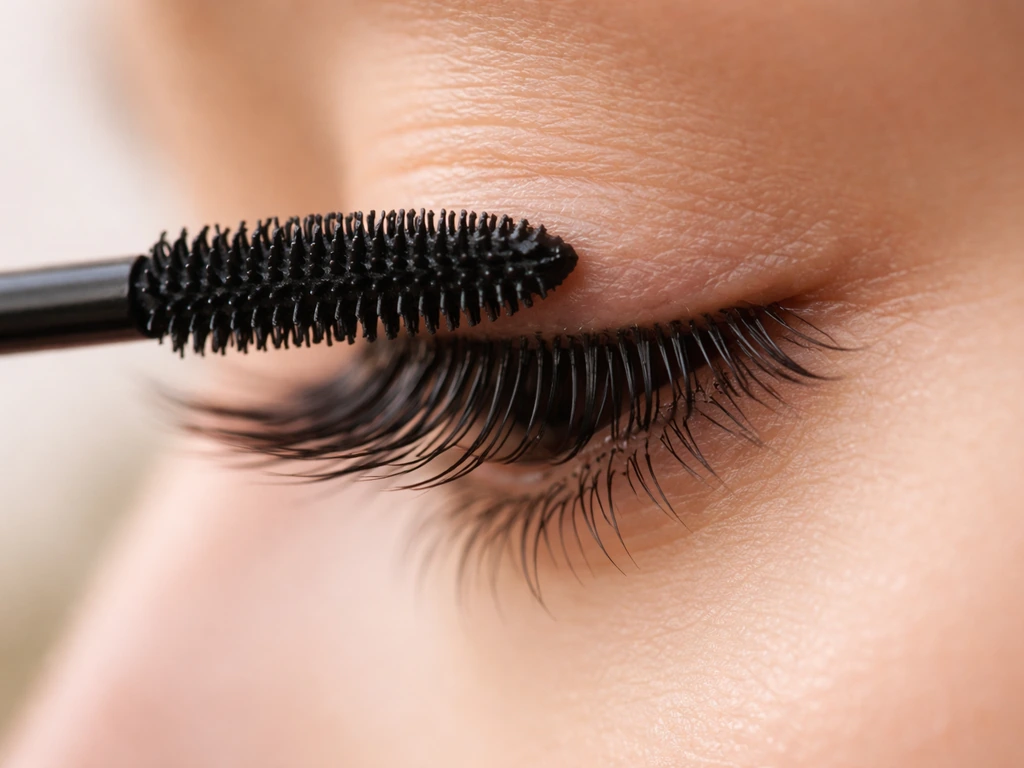
Does mascara actually grow lashes or just make them look longer?
The honest answer is: almost always just look longer. Standard mascara works by coating the lash shaft with pigmented polymers that add thickness, curl, and length to the visible fiber. Even 'growth mascaras' typically work the same way, with the added benefit of conditioning agents that reduce brittleness and breakage so existing lashes survive longer on the lash line. If you are wondering specifically whether Viviscal makes eyelashes grow, the answer depends on whether the product actually includes follicle-stimulating ingredients or mainly works by conditioning and reducing breakage does Viviscal make eyelashes grow. When reviewers say a mascara 'helped their lashes grow,' they usually mean one of three things: their lashes broke off less, their lashes appeared longer in photographs, or they used a conditioning formula consistently enough that retained lashes reached their natural full length before shedding.
True follicle-level growth, meaning your lash follicle actually produces a longer or thicker fiber than it would have otherwise, requires ingredients that interact with the hair follicle biology itself. If you are specifically asking about whether a serum can eyelash serum grow eyebrows, the same idea of follicle-level growth versus cosmetic conditioning applies. The only ingredient class with solid clinical evidence for this is prostaglandin analogs, led by bimatoprost 0.03% (Latisse), which received FDA approval in 2008 specifically for eyelash hypotrichosis. A 2011 multicenter randomized, double-masked, vehicle-controlled trial confirmed bimatoprost's effectiveness for enhancing eyelash length, thickness, and darkness. No standard mascara ingredient gets anywhere close to that mechanism.
How lash growth actually works: length, thickness, and the breakage problem
Your eyelashes cycle through three phases: anagen (active growth), catagen (degradation, roughly 15 days), and telogen (resting, before shedding). The anagen phase for eyelashes lasts only about 1 to 2 months, which is dramatically shorter than scalp hair. That short growth window is why eyelashes have a natural length ceiling, and it's why about 40% of upper lashes are in telogen at any given time. When a lash sheds at the end of telogen, a new anagen cycle begins. Prostaglandin analogs work by prolonging the anagen phase and shortening the telogen-to-anagen restart time, which is why they can produce measurably longer and thicker lashes over weeks.
Thickness is a separate issue from length. The cross-sectional diameter of a lash fiber is determined by follicle size and health, not by how long the anagen phase runs. Conditioning agents like panthenol, biotin coatings, and peptides can improve the surface integrity of the lash shaft and reduce mechanical damage, which preserves thickness. But they are not enlarging the follicle. When you see a mascara claim 'visibly thicker lashes,' that is almost always referring to the coating effect, not follicle-level change.
Breakage is where conditioning mascaras and growth serums worn alongside mascara genuinely help. If your lashes are brittle from extension damage, aggressive makeup removal, or chronic rubbing, they will snap before they reach their natural full anagen length. A moisturizing, flexible-formula mascara reduces the mechanical stress on the fiber. Fewer broken lashes means the lash line looks fuller and longer, even though the follicle biology has not changed at all. This is the single most legitimate way that a 'growth mascara' can deliver on its promises.
How to read 'lash growth mascara' reviews without getting misled
Most positive reviews for growth mascaras are describing one of two things: the cosmetic effect while wearing the product, or reduced lash fall-out over weeks of use. Neither of those is the same as accelerated follicle growth. Here is what to look for and what to ignore when reading reviews.
Review signals worth trusting
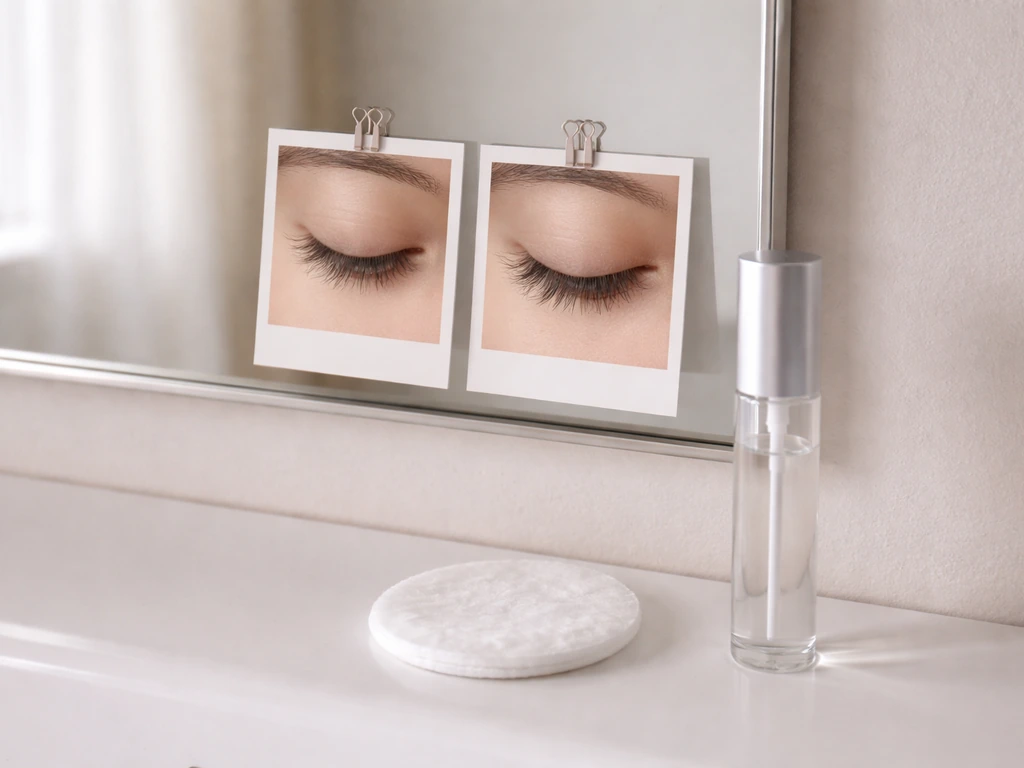
- Reviewers who measured or photographed lashes before and after at least 6 to 8 weeks of consistent use
- Reports of reduced shedding or fewer lashes on the pillow or makeup remover pad
- Comments from people recovering from extensions or a lash-loss period who noticed re-fill in the lash line
- Mentions of improved lash flexibility and less breakage during removal
- Reviews that distinguish between 'wearing the mascara' results and 'bare lash' results after discontinuing use
Red flags to ignore or discount
- Claims of visible new growth in under 2 weeks (biologically implausible given the anagen cycle)
- Before/after photos taken with the mascara on vs. the before shot taken bare-faced
- Reviews that only mention cosmetic appearance and not bare-lash changes
- Claims of 'doubled length in one month' without any measurement methodology
- Reviews of products containing isopropyl cloprostenate or DDDE that don't mention any side effects (suggests the reviewer didn't use it long enough to see them)
Pay particular attention to whether a reviewer is using the mascara alone or pairing it with a separate lash serum. Many 'growth mascara' success stories in forums and on retail sites come from people who were simultaneously using a growth serum and attribute the serum's results to the mascara.
Ingredient deep-dive: what's actually in 'growth' formulas
Conditioning agents: real but limited
Ingredients like panthenol (provitamin B5), biotin, peptides, castor oil, and argan oil show up constantly in growth mascara marketing. The 2024 comprehensive review published in the Journal of Cosmetic Dermatology rates panthenol as having low-grade or limited evidence for promoting actual eyelash growth. Castor oil has no clinical evidence supporting it as a follicle growth stimulant; its value is purely conditioning and appearance-related. Biotin applied topically has minimal penetration to the follicle compared to oral supplementation, and even oral biotin's effect on lash growth is primarily relevant for people with a deficiency. These ingredients are not useless, but calling them 'growth' ingredients misrepresents what they do. They condition the shaft, reduce brittleness, and improve lash appearance. That is genuinely useful if breakage is your problem.
Peptides: promising but not proven for lashes
Signal peptides like myristoyl pentapeptide-17 appear in both serums and some mascaras with claims of stimulating keratin production. Some open-label studies on polypeptide serums show improvements in lash length, luster, and volume at study endpoints. But these studies often lack a vehicle control, meaning we cannot rule out that the conditioning base, not the peptide, drove the result. Peptides are lower-risk than prostaglandin analogs and worth including in a formula, but they should not be marketed or selected as equivalents to bimatoprost.
Prostaglandin analogs: the ones that actually work, with real trade-offs

Prostaglandin analogs are the only ingredient class with multiple randomized controlled trial data behind them for eyelash growth. Bimatoprost (Latisse, FDA-approved) prolongs the anagen phase and shortens the restart time to the next anagen cycle by binding to prostaglandin F2α receptors found predominantly in the inner root sheath of the eyelash bulb during anagen. Over-the-counter serums like GrandeLASH-MD and RevitaLash Advanced contain related analogs: isopropyl cloprostenate and DDDE (dechloro dihydroxy difluoro ethylcloprostenolamide), respectively. If you want the best chance of seeing true lash-length change, look for prostaglandin-analog lash serums, since conditioning alone mainly reduces breakage Over-the-counter serums. These are not FDA-approved drugs, but they share the same mechanism and a closely related side-effect profile.
The side-effect profile for prostaglandin analogs is worth understanding in detail. The 2024 Journal of Cosmetic Dermatology review lists: ocular irritation, dry eye, eyelid pigmentation (darkening of the skin around the eye), iris pigmentation (potentially permanent darkening of the iris color), excessive or misdirected lash growth, blepharitis, and discharge. blank" rel="noopener noreferrer">The 2024 Journal of Cosmetic Dermatology review lists ocular irritation, dry eye, eyelid pigmentation, iris pigmentation, excessive or misdirected lash growth, blepharitis, and discharge. Prostaglandin-associated periorbitopathy (PAP) is a recognized clinical constellation that includes periorbital fat atrophy, mild ptosis, and deepening of the upper lid sulcus. blank" rel="noopener noreferrer">Prostaglandin-associated periorbitopathy (PAP) is a constellation of eyelid and orbital changes reported with topical prostaglandin-analog therapy and regarded as a common side effect of this treatment. The Latisse prescribing label specifically notes that increased brown iris pigmentation is not expected to reverse and is likely permanent. These are not rare edge cases; they are listed as known effects, and they are the reason eyecare professionals and ophthalmology bodies like RANZCO have issued explicit warnings about OTC prostaglandin-containing lash serums.
Realistic timelines: when you'll see what
| What you're hoping for | Product type | Realistic timeline | What's actually happening |
|---|---|---|---|
| Longer-looking lashes immediately | Any mascara | Same day | Coating and curl effect on existing fibers |
| Less breakage / fuller lash line | Conditioning mascara or serum | 2 to 4 weeks | Shaft integrity improves, fewer snap-offs |
| Bare-lash improvement after damage | Conditioning routine, oil, serum | 4 to 8 weeks | Retained lashes reach natural full length |
| True anagen prolongation / new length | Prostaglandin analog (Latisse or OTC analog) | 8 to 16 weeks of consistent use | Follicle cycle changes; measurable length/thickness difference |
| Regrowth after cut or minor damage | No active needed if follicle intact | About 6 weeks | Normal anagen cycle resumes |
The Bimatoprost SmPC notes that changes can begin appearing as early as about one month, but the full length and thickness benefit builds over 3 to 4 months of nightly use. If you stop using a prostaglandin analog, the lashes gradually return to their pre-treatment state over a similar timeframe, because the follicle cycle reverts. This is not the case for simple conditioning, where improvements in breakage can persist as long as the conditioning routine continues. Managing expectations around this difference is the single most important thing when reading reviews.
Safety, side effects, and who should be cautious
For most people, a conditioning mascara or even a peptide-based serum used alongside mascara is low-risk. The safety concerns escalate when prostaglandin analogs enter the picture, whether in a serum or in a mascara formula. Here is how to think about the risk landscape.
Contact lens wearers
The American Academy of Optometry flags fiber-extending mascaras specifically as irritation risks for contact lens wearers, because loose fibers can deposit on the lens and irritate the ocular surface. More broadly, any mascara or serum that contacts the ocular surface can interact poorly with contact lenses. The practical rule: insert lenses before applying any lash product and remove them before removing mascara. If you are using a prostaglandin-containing serum, apply it after lens removal at night and give it at least 15 minutes to absorb before you touch the eye area.
Extension wearers
Oil-based conditioning mascaras and oil-based serums (castor oil, argan oil) can break down lash extension adhesive. If you are wearing extensions and want to condition the natural lash underneath, use oil-free formulas and apply only at the base of the natural lash, not along the bonded extension. Prostaglandin serums applied to an extension-covered lash line can also cause excessive or misdirected lash growth, which affects how extensions sit and adhere.
People with sensitive eyes, blepharitis, or existing eyelid conditions
Blepharitis is actually listed as both a potential trigger and a potential side effect of prostaglandin analog use. If you already have chronic lid inflammation, starting a prostaglandin-containing product is higher risk for you. Stick to fragrance-free, ophthalmologist-tested conditioning formulas and patch-test on the inner arm before applying near the eye. Allergic conjunctivitis is also listed as a known adverse event in the Bimatoprost SmPC, so if you notice any new redness, itching, or discharge after starting a new lash product, stop using it and see an eye care provider.
People recovering from extension or chemical damage
After extension removal, lashes are often mechanically weakened at the fiber level. The follicle itself is usually intact, which means normal anagen cycling will restore length in about 6 to 8 weeks. The priority here is reducing further trauma: gentle oil-free makeup remover, no waterproof mascara, no lash curler until lashes are visibly recovered. Adding a conditioning serum or peptide serum at this stage makes sense. Adding a prostaglandin analog is optional and higher-risk; the biology will recover on its own if you stop the mechanical damage.
Comparing your main options side by side

| Option | Evidence for growth | Evidence for appearance | Key risks | Best for |
|---|---|---|---|---|
| Conditioning/growth mascara (peptides, biotin, panthenol) | Low to none | Strong (cosmetic) | Minimal; possible irritation | Everyday use, breakage reduction |
| Castor oil or natural oils | None (clinical) | Moderate (conditioning) | Adhesive breakdown on extensions | DIY conditioning routine |
| OTC lash serum (prostaglandin analog: isopropyl cloprostenate, DDDE) | Moderate (mechanism matches bimatoprost, but OTC not FDA-approved) | Strong with consistent use | Iris pigmentation, PAP, skin darkening, irritation | Those wanting real growth with manageable risk tolerance |
| Bimatoprost 0.03% (Latisse, prescription) | Strongest (multiple RCTs, FDA-approved) | Strong | Same as above, plus requires prescription; permanent iris color change risk | Clinically confirmed lash hypotrichosis or maximum growth goal |
| Oral biotin supplementation | Only if deficient | Indirect (if deficiency resolved) | Minimal at standard doses | People with confirmed biotin deficiency |
The 2024 Journal of Cosmetic Dermatology review is direct on this: prostaglandin analogs are the best-evidenced pathway for actual eyelash growth, while other ingredient classes primarily rely on conditioning effects with less robust evidence. If true growth is your goal and you are willing to accept the risk profile, a prostaglandin-containing product is the only realistic route outside of prescription bimatoprost. If your goal is healthier, better-looking lashes with minimal risk, a well-formulated conditioning mascara paired with a peptide or oil-free serum is the smarter daily choice.
A practical routine and checklist for right now
Here is a concrete routine built around what the evidence actually supports, organized by goal.
If your goal is less breakage and a fuller-looking lash line (most people)
- Switch to a mascara formula that is flexible, not brittle or waterproof. Waterproof formulas require more aggressive removal and increase breakage.
- Remove mascara every night with a gentle, oil-free micellar water or a dedicated eye makeup remover. Do not rub. Press the pad against the lash for 10 seconds, then wipe downward.
- Apply a conditioning lash serum (peptide-based, oil-free if you wear extensions) at the lash base nightly after makeup removal. Give it 4 to 6 weeks to show results.
- Avoid mechanical curlers on already-brittle lashes. If you want curl, look for mascaras with a built-in lifting formula.
- Check your mascara ingredient list for fragrance and formaldehyde-releasing preservatives; both are common irritants that can cause chronic low-grade inflammation at the lid margin.
If your goal is actual growth and you are comfortable with prostaglandin analog risks
- Talk to a dermatologist or ophthalmologist first if you have any existing eye conditions, wear contact lenses long-term, or have light-colored irises (higher visible risk for pigmentation change).
- Apply the serum to the upper lash line only, using the applicator or a fine brush. Do not apply to the lower lash line or inner corners.
- Use once nightly, not more. Healthline specifically notes that applying more frequently than recommended does not speed growth but increases side effects.
- Photograph your lashes bare (no mascara) in consistent lighting at baseline and every 4 weeks. This is the only reliable way to know if the product is working beyond the cosmetic application.
- Watch for eyelid skin darkening, increased redness, or any change in eye color. If you notice any of these, stop use and consult an eye care provider.
Quick product-picking checklist
- Flexible, non-waterproof formula for daily wear
- Contains a conditioning agent (panthenol, peptides, or a non-oil humectant)
- Free from fragrance and formaldehyde-releasing preservatives
- Ophthalmologist-tested claim on packaging (not a guarantee, but better than nothing)
- If it contains isopropyl cloprostenate, DDDE, or bimatoprost: treat it as a drug, not a cosmetic, and read the full side-effect profile before starting
- Avoid fiber mascaras if you wear contacts
- Avoid oil-based formulas if you wear lash extensions
The bottom line on 'grow your lashes' mascara reviews
The overwhelming majority of positive 'lash growth mascara' reviews are documenting cosmetic results, reduced breakage, or the combined effect of using a serum alongside the mascara. That is not nothing; healthier, better-retained lashes are a real improvement. But if you are expecting a tube of mascara to accelerate your follicle's anagen phase, the biology does not support it. The ingredients that do change follicle biology are prostaglandin analogs, and they come with a side-effect profile that deserves serious attention, especially around permanent iris pigmentation and periorbital fat changes. For most people, the most practical path is a conditioning mascara, a fragrance-free peptide serum, and patient consistency over 6 to 8 weeks. That approach is lower-risk, broadly applicable, and will deliver the fuller-looking lash line that most reviewers are actually describing when they say a product 'grew their lashes. For the best grow eyelashes results, focus on conditioning that reduces breakage and pair it with a peptide serum if that fits your risk profile conditioning mascara. '
FAQ
Can a “mascara grow lashes” product actually make lashes grow longer, or is it only making them look longer?
If it contains only conditioning ingredients (panthenol, biotin, peptides without prostaglandin-analog activity), it will not reliably increase lash length beyond what reduced breakage allows. Look for a prostaglandin-analog listed in the ingredient/actives area if you specifically want follicle-level length change.
How should I interpret “mascara grow lashes reviews” that say their lashes got longer?
Treat “helped me grow” reviews as separate signals: (1) less shedding, (2) less breakage (more retained lashes), or (3) a visible length change that persists when you stop. Conditioning usually improves only while you keep using it, while prostaglandin-analog related changes tend to build over weeks and fade after stopping.
What’s the biggest mistake people make when they rely on grow lashes mascara reviews?
Don’t assume the mascara is responsible if the reviewer also used a separate lash serum. The fastest way to tell is whether the review mentions nightly serum use, and how results changed after stopping one product. A good test is using the mascara alone for 6 to 8 weeks before adding anything else.
Is grow-lashes mascara safer if I wear contact lenses?
If you wear contact lenses, irritation risk increases because mascara fibers and deposits can contact the lens or ocular surface. Apply lash products after inserting lenses, wait for the product to settle/absorb, and remove lenses before cleansing and before removing mascara.
Can I use a grow lashes mascara or serum if I have lash extensions?
Oil-based ingredients (like castor oil or argan oil) can interfere with lash extension adhesive and can worsen extension-related breakage. If you have extensions, choose oil-free formulas and apply only to the natural lash base, not onto the extension bond area.
How long should I wait before judging results from a lash growth mascara or serum?
With prostaglandin-analog products, expect a realistic timeline: early visible change may show around a month, while the fuller length and thickness effect typically builds over 3 to 4 months of consistent use. If a review expects major results in 2 weeks, it’s likely describing cosmetic effects, not true growth.
Do “grow lashes” mascaras actually make lashes thicker, or only longer and darker?
Mascara can make lashes look thicker through coating, but it generally cannot increase follicle diameter. If a product truly improves thickness, it is usually via retention (fewer broken lashes) or conditioning of the lash fiber rather than changing the follicle’s capacity.
What should I do if my eyes feel irritated after using a prostaglandin-containing lash product?
If you get new redness, itching, burning, unusual discharge, or marked light sensitivity after starting a prostaglandin-analog product, stop immediately and seek eye care. These symptoms can be adverse reactions, including ocular surface irritation.
Are there people who should avoid prostaglandin-analog lash products or be extra cautious?
You can reduce risk by patch testing on the inner arm first (especially if you have a history of allergies), using fragrance-free formulas when possible, and avoiding starting prostaglandin-analog products if you already have chronic blepharitis or frequent lid inflammation.
What happens to lash results if I stop using the product?
If you stop a prostaglandin-analog, lashes typically gradually return toward their pre-treatment state over a similar timeframe, roughly months. With conditioning-only approaches, improvements tend to persist only while you keep the conditioning routine and stop when the mechanical protection and reduced breakage stop.
How should I restart after removing lash extensions?
For a lash reset after extensions, give your lashes mechanical recovery time, typically 6 to 8 weeks, by avoiding waterproof mascara, minimizing rubbing, and using gentle oil-free removal. Adding conditioning or peptide products can help reduce further breakage, while prostaglandin-analog use is optional and higher risk during a recovery phase.
Next Article
Does Viviscal Make Eyelashes Grow? Evidence, Timeline, Safety
Does Viviscal grow eyelashes? Evidence, realistic timeline, ingredient rationale, safety tips, and Viviscal vs lash seru