Most eyelashes take somewhere between 4 and 16 weeks to visibly regrow after shedding or breaking, but the full cycle from follicle reset to a mature lash can stretch anywhere from 4 to 11 months. The 4-week mark is roughly when you might first notice a short new lash poking through. The 3-to-4-month mark is when most people reach something close to their original length. Where you land in that range depends on why your lashes fell out, what phase they were in when they shed, and what you're doing (or not doing) to support growth.
How Many Days to Grow Eyelashes and See Results

Rachel Nguyen
5 Jun 2026
Eyelash growth timeline basics
Every eyelash goes through three distinct phases: anagen (active growth), catagen (transition), and telogen (resting and shedding). Understanding these phases is the key to understanding why lash regrowth feels maddeningly slow compared to scalp hair.
During anagen, the follicle is actively building the hair shaft and the lash is getting longer. For eyelashes, this phase is relatively short compared to scalp hair, which is why lashes only reach a few millimeters rather than growing to your waist. After anagen, the follicle enters catagen, a transition phase that lasts about 15 days, during which the blood supply to the follicle cuts off and growth stops. Then comes telogen, the resting phase, where the old lash sits in the follicle until it's pushed out by a new one starting its own anagen phase.
One important detail: eyelash follicles have a lower anagen-to-telogen ratio than scalp follicles. In plain terms, a meaningful proportion of your lashes are in the resting phase at any given moment. This is normal biology, not a sign of a problem. It also means that when you lose a lash, the follicle it came from might still be in telogen for weeks before it even begins growing a replacement.
How long until you see new lash growth
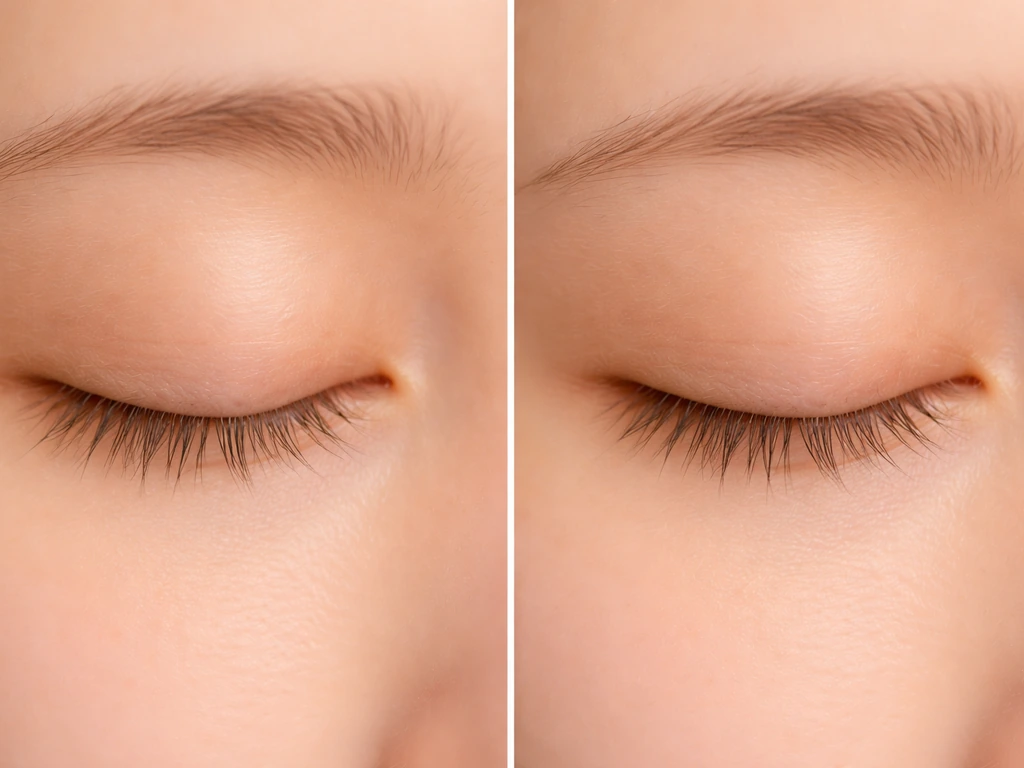
Here's a realistic before-and-after timeline for what most people experience:
| Timeframe | What's happening | What you'll notice |
|---|---|---|
| Days 1-14 | Follicle may still be in telogen; catagen transition if recently active | Nothing visible yet |
| Weeks 2-4 | Anagen phase begins; shaft starts forming beneath the skin | Possibly a tiny stub appearing at the lash line |
| Weeks 4-8 | Lash continues growing at 0.12-0.14 mm per day | Short but clearly visible new lash |
| Weeks 8-16 | Growth continues toward full length | Lash at roughly half to full original length |
| Months 4-11 | Full cycle completes; mature lash established | Full-length lash, though it may take several cycles to feel dense again |
The frustrating reality is that you won't see anything for the first week or two after a lash falls out. The follicle needs to cycle back into its growth phase first, and that timeline varies by follicle. Once growth starts, you're looking at small daily increments that are invisible day-to-day but noticeable week-to-week. Because lash growth is incremental, you should not expect new lashes to appear at the same pace every day. Most people describe seeing a real difference between week 6 and week 10, with something resembling their pre-loss lash line emerging around month 3.
Average daily eyelash growth and what 'growth' really means
According to published anatomy research, eyelashes grow at approximately 0.12 to 0.14 mm per day. That works out to roughly 0.8 to 1.0 mm per week. To put that in context, a typical full-grown upper lash is around 8 to 11 mm long, so growing a lash from scratch takes close to two to three months of consistent daily growth, assuming the follicle stays in anagen the entire time.
When people ask how many eyelashes grow in a day, they're sometimes conflating two different things: the growth rate of individual lashes (that 0.12-0.14 mm per day figure) and the number of lashes cycling into new growth on any given day. Both are happening simultaneously across your lash line. You've got roughly 90 to 160 upper lashes at various stages of their cycle, so on any given day, some are actively growing, some are in transition, and some are about to shed. This is why your lash line looks relatively consistent even though individual lashes are always coming and going.
It's also worth being specific about what 'growth' means in different contexts. Length growth is the slow, measurable process described above. Thickness or density is about how many follicles are active at once, which is influenced by factors like nutrition, hormones, and damage history. If your lashes look thin rather than short, the issue isn't growth rate, it's follicle activity. Those are two different problems with different solutions.
Factors that speed up or slow down growth
Growth rate is largely set by your biology, but several factors push the timeline in one direction or the other.
Damage from extensions and improper removal
Lash extensions are one of the most common reasons people end up researching regrowth timelines. The adhesive and removal process, especially when lashes are pulled rather than dissolved properly, can damage the follicle itself. A damaged follicle doesn't just skip one cycle; it can take multiple cycles to recover full productivity, which is why some people feel like their lashes 'never came back' after years of extensions. The lashes do come back, but they may start out finer and shorter for a cycle or two while the follicle repairs.
Rubbing, trauma, and traction
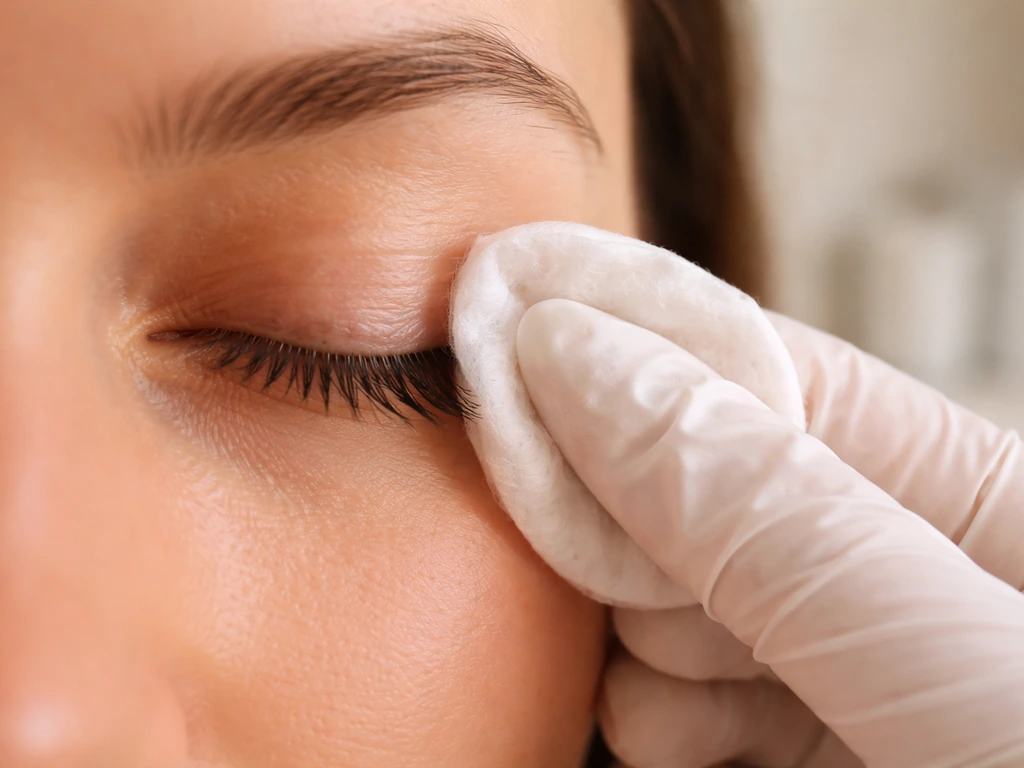
Chronic rubbing, whether from allergies, habit, or aggressive makeup removal, causes traction and friction that shortens the anagen phase. If you're rubbing hard enough to pull lashes out at the root, you're also inflaming the follicle, which delays the next growth cycle. The same applies to eyelash curlers used too aggressively, especially heated ones.
Hormones and systemic health
Thyroid disorders, particularly hypothyroidism, are a well-known cause of thinning lashes and slow regrowth. Anemia (specifically iron deficiency), significant caloric restriction, and major hormonal shifts like postpartum changes or menopause can all push more follicles into telogen prematurely. If your lash loss is diffuse and gradual rather than patchy or trauma-related, that's often a sign something systemic is going on.
Aging
As with scalp hair, follicle activity naturally slows with age. The anagen phase shortens, meaning lashes don't grow as long, and follicle cycling takes longer. This is a slow process, not a sudden cliff, but it's worth factoring into expectations if you're in your 50s or older.
Realistic expectations by situation
Your starting point matters a lot when setting a timeline. Here's what to expect based on your specific situation:
- Natural shedding (normal cycle): If a lash fell out on its own as part of the normal cycle, the follicle is already primed to enter anagen relatively soon. Expect visible growth in 3 to 6 weeks and something close to full length in 2 to 3 months.
- After lash extensions: Timeline depends on the condition of the follicle. If extensions were removed gently and lashes are intact, expect a normal 2 to 3 month recovery. If there was damage or significant thinning, add another 1 to 2 months, and be patient with density especially.
- After breakage or trauma (curlers, burns, rubbing): Broken lashes have the shaft damaged but the follicle may be intact, which speeds things up somewhat. Expect visible regrowth in 4 to 8 weeks. If the follicle was also traumatized, treat it like the extension scenario above.
- After a medical procedure (surgery near the eye, chemotherapy): Chemo-related lash loss typically sees regrowth begin 1 to 3 months after treatment ends, with a fuller lash line around 6 months. Surgical trauma varies widely depending on the area affected.
- Alopecia areata affecting lashes: This is an autoimmune situation where the timeline is much less predictable. Regrowth can happen spontaneously but isn't guaranteed without treatment. This is a 'see a clinician' scenario.
How to support growth at home
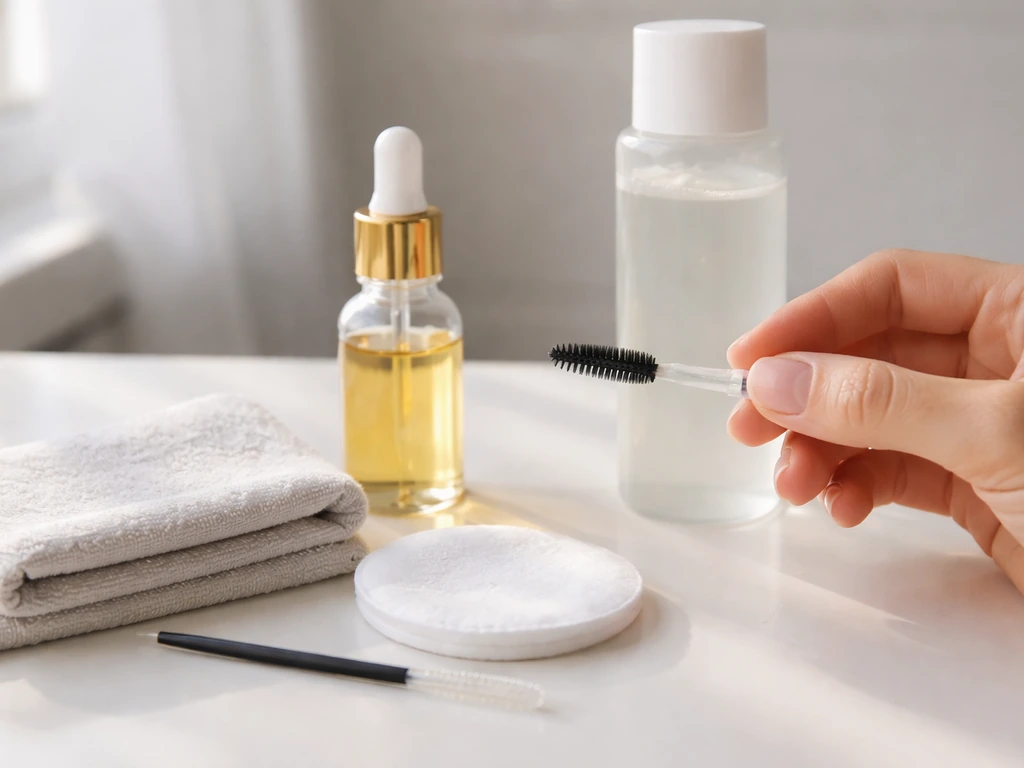
None of the at-home options are going to dramatically accelerate the biological growth rate of 0.12 to 0.14 mm per day, that's pretty much fixed. What they can do is support follicle health, reduce breakage, and help ensure more follicles stay in their active growth phase rather than cycling into telogen prematurely.
Castor oil
Castor oil is the most popular natural option, and the evidence is mostly mechanistic rather than clinical. It's rich in ricinoleic acid, which has anti-inflammatory properties that may support a healthier follicle environment. It also coats the lash shaft, reducing breakage and making existing lashes look thicker. Apply a tiny amount to clean lashes at night with a clean mascara wand or cotton swab. The biggest risk is getting it in your eyes, which causes temporary blurring, so a light touch matters. Don't expect castor oil to speed up growth on its own, but it's a reasonable low-risk addition to your routine.
Other nourishing oils
Argan oil, vitamin E oil, and coconut oil are sometimes recommended in the same breath as castor oil. They share conditioning benefits that reduce lash breakage and brittleness, which matters because a lash that breaks early never reaches its full growth potential. None of them have strong clinical evidence for follicle stimulation specifically, but they're also very low risk and support lash integrity, which is part of the equation.
Lash serums (peptide-based, OTC)
Over-the-counter lash serums typically use peptide complexes, biotin, and panthenol to condition the follicle environment and strengthen the lash shaft. They won't replicate prescription-level results, but higher-quality formulas can support lash retention and reduce shedding. Look for serums with clinical testing behind them rather than just ingredient claims. Apply nightly to the upper lash line, give them at least 8 to 12 weeks before evaluating, and stop if you notice any irritation or pigmentation changes around the eye.
Biotin and nutrition
Biotin supplements are heavily marketed for hair and lash growth, but the evidence specifically supports them mainly in cases of biotin deficiency, which is relatively uncommon. If your diet is well-rounded, adding biotin supplements probably won't move the needle much. Where nutrition matters more broadly is in getting adequate protein, iron, zinc, and omega-3 fatty acids, all of which feed follicle function. If your diet has been restricted or your iron is low, addressing that will do more for your lashes than any serum.
Prescription options (for context)
For the record, the only FDA-approved treatment for lash growth is bimatoprost 0.03% (Latisse), a prostaglandin analog originally developed for glaucoma. Clinical trial data shows statistically significant improvements in lash length, thickness, and darkness at weeks 8, 12, and 16, with the primary endpoint measured at 16 weeks of nightly use. It works by extending the anagen phase, which is exactly where natural options fall short. It requires a prescription, costs more, and comes with potential side effects including eye redness and, with long-term use, possible iris pigmentation changes. It's worth knowing this option exists if at-home approaches plateau.
Gentle daily habits
- Remove eye makeup gently using a dedicated micellar water or oil-based remover; press and hold rather than rubbing
- Avoid waterproof mascara daily, as the removal process is harder on lashes
- Take breaks from lash extensions, at least 4 to 8 weeks between sets, to let follicles recover
- Sleep on a silk pillowcase to reduce overnight friction if you tend to rub your eyes in your sleep
- Avoid curling lashes when they're wet or coated in product, as this increases breakage risk
When to get help
Most lash loss resolves with time and patience. But there are situations where getting a clinician's eyes on the problem is genuinely the right call, not just a precaution.
- No visible regrowth after 4 to 6 months: If nothing has appeared at the lash line after this long, the follicle may have been damaged more deeply or an underlying condition may be interfering with cycling.
- Patchy or asymmetric loss: Lash loss that's happening in distinct patches rather than diffusely can point to alopecia areata, an autoimmune condition that responds to specific treatments.
- Associated symptoms: If lash thinning is accompanied by eyebrow loss, scalp hair loss, fatigue, weight changes, or cold sensitivity, thyroid function should be evaluated.
- Eyelid changes: Redness, scaling, crusting at the lash line, or a change in eyelid texture alongside lash loss can indicate blepharitis or another inflammatory condition that needs direct treatment.
- Lash loss in a child: Pediatric lash loss warrants a medical evaluation to rule out systemic causes.
- Repeated cycles of loss without recovery: If your lashes shed, partially regrow, then shed again in an unusual pattern, that's worth discussing with a dermatologist who can assess follicle health directly.
A dermatologist or ophthalmologist can assess the lash follicles directly, check for signs of folliculitis or scarring, and run bloodwork to rule out systemic causes. If you're dealing with something beyond cosmetic slow growth, earlier evaluation tends to lead to better outcomes than waiting another few months to see if things improve on their own.
FAQ
If I lost a few lashes, when should I realistically see regrowth start?
Expect no visible change for the first 1 to 2 weeks because the follicle has to cycle back into its growth phase first. After that, look for subtle changes that become more obvious around week 6 to week 10, since day-to-day length increases are too small to notice.
Why do my lashes look “thinner” instead of “shorter,” and does that change the timeline?
Thinner usually points to reduced follicle activity or density rather than slow length growth. In that case, you may not catch up on length quickly, because fewer lashes are actively growing at once, even if existing lashes grow at the normal rate.
How long should I try an over-the-counter lash serum before judging results?
Give it at least 8 to 12 weeks before evaluating, because lash changes are incremental and follicles do not switch phases on a daily schedule. If you get irritation (redness, burning, or pigment changes), stop sooner and switch strategies.
Will lash extensions or strip lash glue stop regrowth, even if I remove them now?
They can. Damage from adhesive or overly aggressive removal can impair follicle cycling for multiple cycles, so regrowth may restart but initially come in finer or shorter for weeks to months while the follicle recovers.
Can I speed up regrowth by using multiple oils or serums at the same time?
Usually no, because you cannot materially change the biological length growth rate. Layering products can increase the chance of irritation and eye-area inflammation, which can delay the next growth cycle, so pick one routine and keep it gentle.
Is the growth rate the same for upper and lower lashes?
Lower lashes often appear slower to change because there are fewer visible “reference points” and the lash line makeup routine tends to concentrate on the upper lid. Biologically, the per-day length growth concept still applies, but the visible difference you notice can lag.
I’m seeing lashes fall out again, does that mean the treatment is failing?
Not necessarily. It can be normal shedding as follicles transition into the resting phase at different times across the lash line. What matters is whether you see shorter new lashes that gradually lengthen over weeks, rather than only loss with no return of growth.
When should I suspect a medical cause instead of waiting for the full regrowth cycle?
If lash loss is diffuse and progressive rather than linked to a clear trigger (like extensions or irritation), or if you also have symptoms such as fatigue, significant hair loss, or skin changes, it is worth seeing a dermatologist or ophthalmologist sooner. Early evaluation can include follicle assessment and bloodwork.
Are there signs I should stop using a lash product immediately?
Stop if you notice persistent redness, swelling, itching, watery eyes, burning, or any darkening of skin around the eyes. Since the eye area is sensitive, irritation can worsen follicle cycling, so continuing through symptoms often slows results.
Does age change how many days it takes to see eyelashes grow?
Yes, the timeline can stretch. With age, the anagen phase tends to shorten and follicle cycling takes longer, so you may see less length gain early and a slower approach to your pre-loss lash line compared with younger people.
If I want the fastest noticeable improvement, should I consider prescription bimatoprost?
It can be faster for length and thickness because it works by extending the anagen phase, which matches what natural options cannot reliably do. However, it requires a prescription and has potential side effects, including eye redness and possible long-term iris pigmentation changes, so discuss suitability with an eye clinician.
Next Article
Do Lashes Grow Everyday? Growth Cycle, Timeline, Tips
Do lashes grow every day? Learn the lash cycle, normal shedding, realistic timelines, and safe tips to reduce breakage.