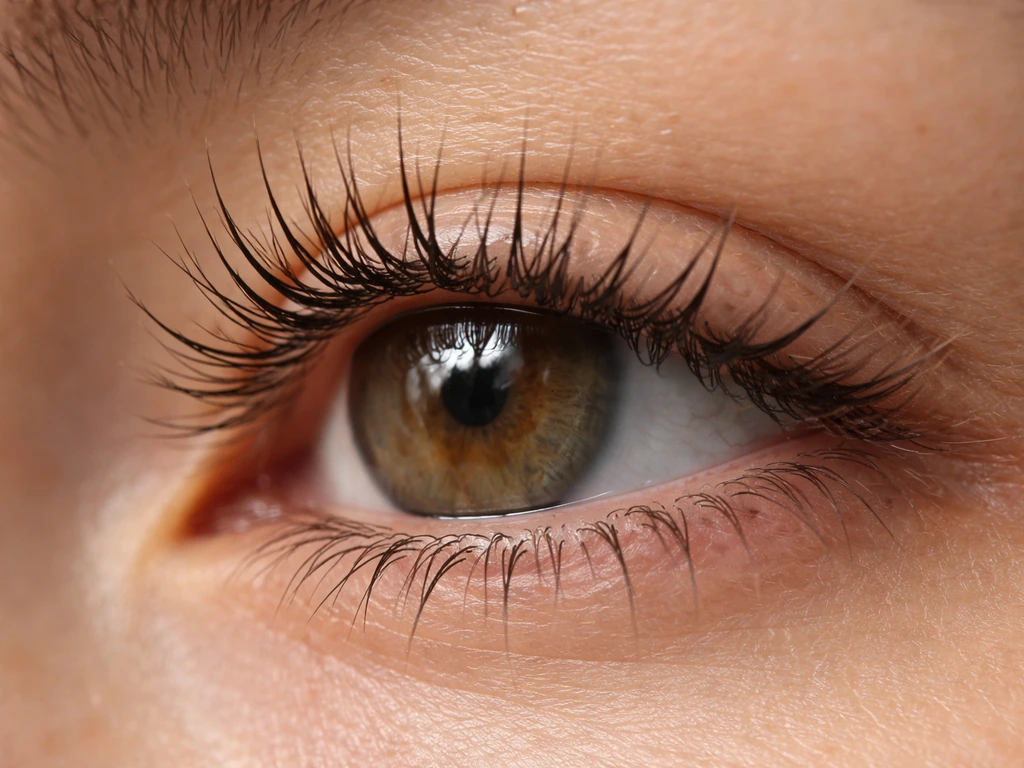
Asian eyelashes commonly grow downward because the follicles sit at an angle that points lashes toward the cheek rather than out or up. This is driven by eyelid anatomy, specifically the shape of the eyelid margin, the absence or low position of a visible eyelid crease, and the angle at which follicles are embedded in the lid tissue. It is not a flaw or damage. It is just how those follicles are oriented, and no serum or supplement will change that angle. What you can do is style smarter, support lash health, and know when something else is going on.
Why Asian Eyelashes Grow Down and How to Fix It Safely

Rachel Nguyen
16 May 2026
Why lashes grow down: eyelid shape and follicle angle
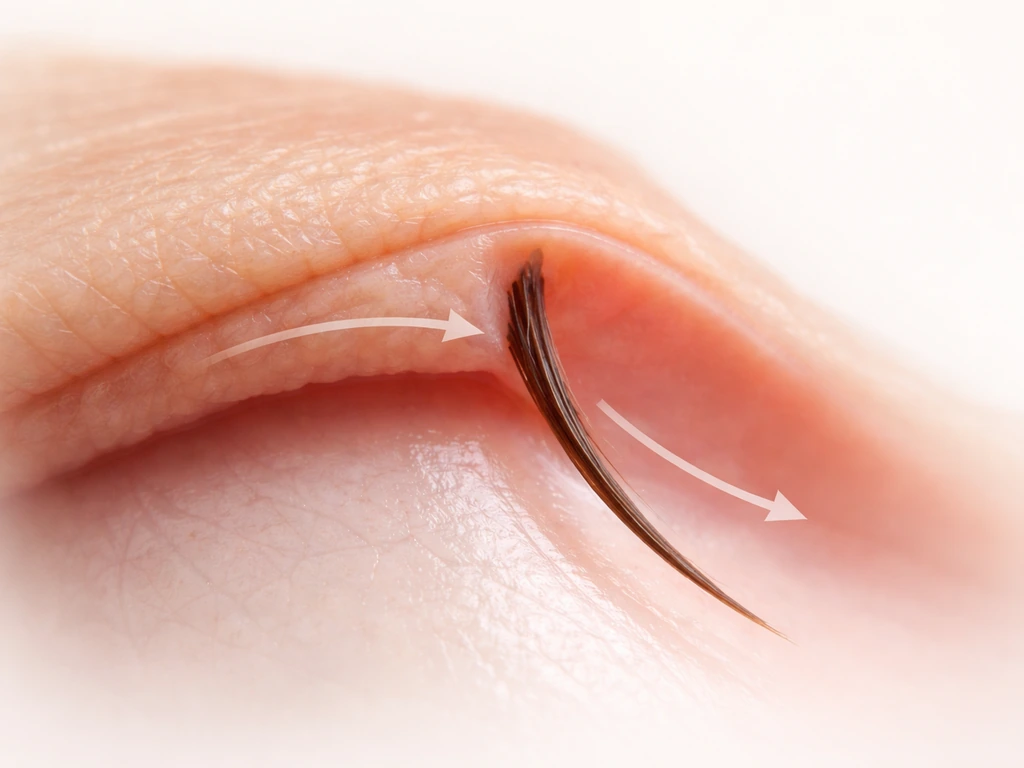
Eyelash follicles sit at the lid margin, right at the edge where skin meets the inner conjunctival surface. The direction a lash grows is determined by the angle of the follicle within that margin, and that angle is shaped by the surrounding tissue: the tarsal plate (the stiff inner structure of the eyelid), the orbicularis oculi muscle that controls blinking and eyelid closure, and the elastin in the skin overlying the lid. When the lid has a lower or absent crease, more soft tissue sits above the lash line, which can press lashes downward rather than letting them fan outward.
In ophthalmology, there is a related condition called epiblepharon, which is more common in East Asian children. It involves an extra fold of skin and muscle near the eyelid margin that physically redirects lashes toward the eye. EyeWiki (AAO) notes that congenital epiblepharon, an eyelid fold with abnormal insertion, can redirect lashes into a more vertical position toward the ocular surface, changing lash direction [congenital epiblepharon can redirect lashes into a more vertical position toward the ocular surface](https://eyewiki. aao.
org/CongenitalandAcquired_Epiblepharon). Most cases resolve on their own as the face matures and loses baby fat, but the anatomy underlying it is the same anatomy that gives many Asian adults their characteristic downward lash angle: a fuller, lower eyelid margin with less upward tension on the lash line. This is not epiblepharon in an adult with cosmetically downward lashes, but the biomechanical principle is identical.
Research in ophthalmology on East Asian eyelid techniques specifically notes that lash direction can shift from downward to upward when the eyelid crease is altered surgically, which is another way of saying the crease position and eyelid fold anatomy are directly controlling lash angle. You are not imagining the connection between lid shape and lash direction. It is anatomically real.
Genetics and the 'Asian lash' pattern vs normal variation
The downward angle is a genetic trait, but it is not universal across all people of Asian descent, and it is not a single "Asian lash type." What most people are describing when they search this is a pattern common in individuals with monolid or low-crease eyelids: lashes that point down or even slightly inward rather than curving up and out. This occurs because the eyelid fold anatomy and follicle positioning are inherited, just like nose shape or ear size. There is genuine population-level variation in follicle angle, and some studies on eyelid anatomy in East Asian populations support that lash direction correlates with crease presence and lid margin fullness.
That said, within any single person, lash direction is not completely uniform. That pattern of different directions is often the clue that the follicle-level angles vary, even though the overall cause is still typically lid anatomy or irritation within any single person. Lashes at the inner and outer corners often grow in slightly different directions than those in the middle third of the lid.
Some people with double eyelids also have downward-growing lashes due to the specific angle of their follicles. So while lid anatomy is the dominant driver, individual follicle-level variation is also real. If your lashes grow downward on one lid but not the other, or if one section is very different from the rest, that warrants a closer look, because that asymmetry is less likely to be pure genetics.
When downward growth is caused by damage or irritation
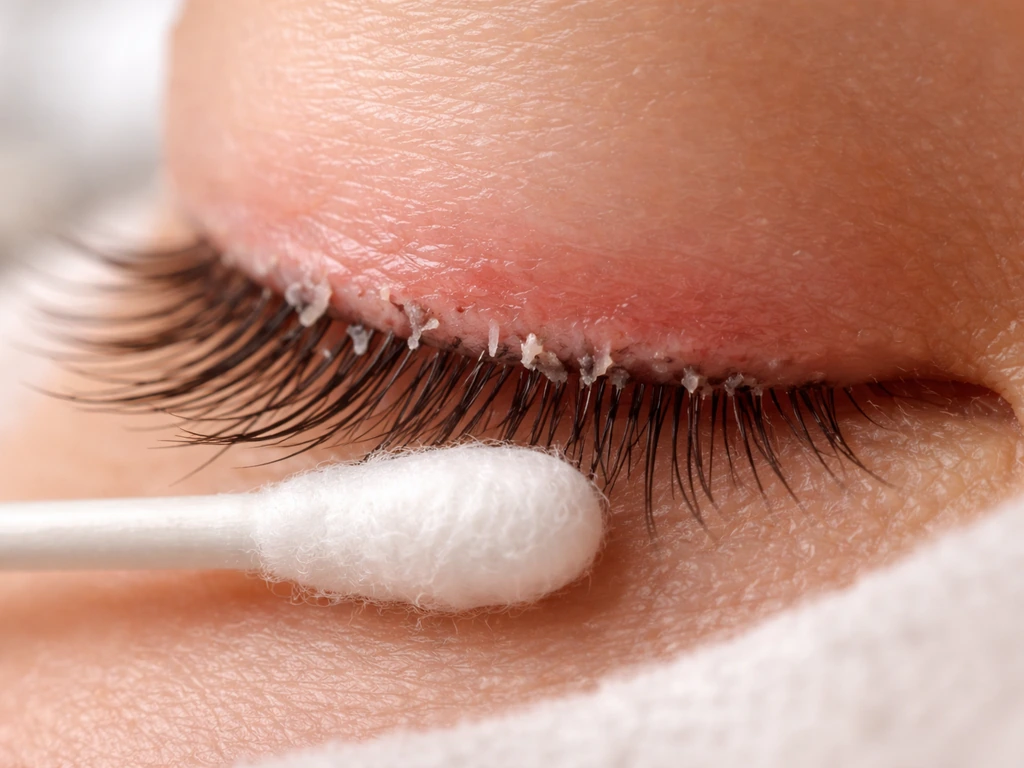
Not every downward-growing lash is doing so because of genetics. Inflammation, repeated trauma, and certain eyelid conditions can change the direction a lash grows by distorting the follicle or the tissue around it. Blepharitis, which is chronic inflammation of the eyelid margin, is one of the most common culprits. It can be bacterial, related to Demodex mites, or seborrheic, and it causes thickening, crusting, and scarring around the lash root over time. That scarring can redirect follicles, causing lashes to grow toward the eye surface (a condition called trichiasis) rather than outward.
Eyelash extensions are another trigger people often underestimate. The AAO notes that extension procedures can damage eyelash follicles and lead to stunted regrowth. The adhesives and mechanical tension involved can cause follicle-level trauma, and the inflammation that follows (sometimes presenting as allergic blepharitis or keratoconjunctivitis) can alter how new lashes emerge. If your lashes started pointing downward or inward after a round of extensions, that is a meaningful signal, not just a coincidence.
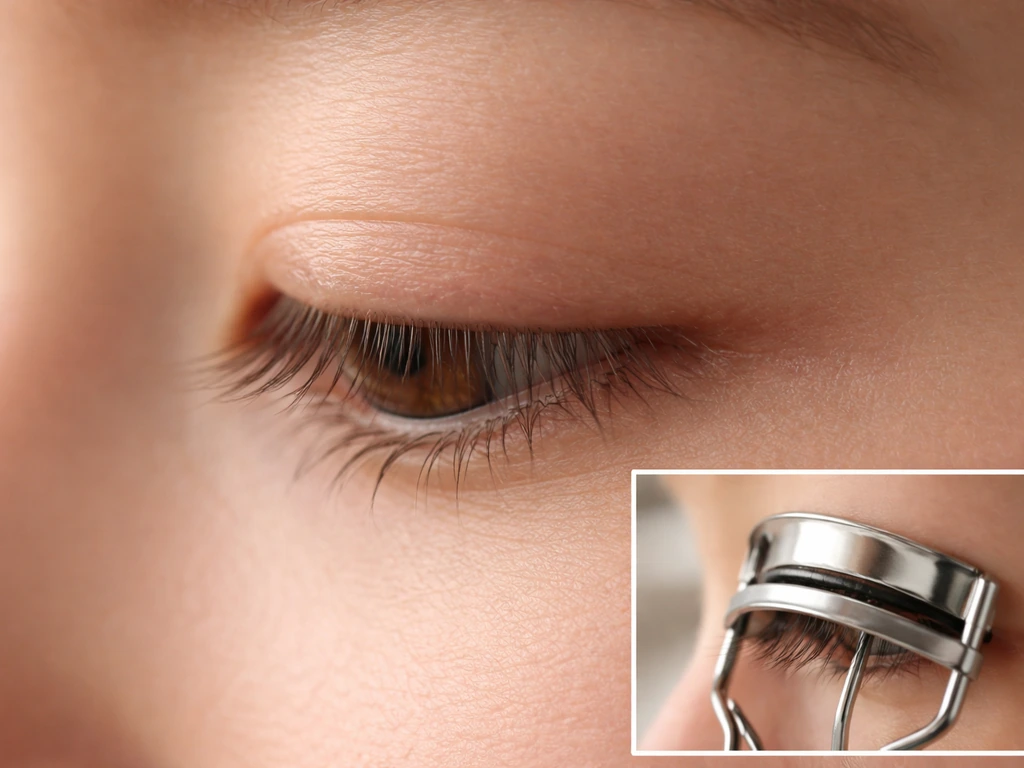
Eyelash curlers, particularly rubber-pad curlers used aggressively or daily, can cause contact dermatitis on the eyelid, which has been documented in dermatology literature. That chronic low-grade irritation at the lash line can mimic or worsen inflammation-related direction changes. Over-plucking repeatedly, rubbing eyes frequently, or any trauma that repeatedly irritates the follicle root can also contribute.
The key clinical distinction is this: naturally angled lashes do not cause irritation to the eye surface. Misdirected lashes (trichiasis) typically rub against the cornea or conjunctiva and cause persistent discomfort, redness, tearing, or foreign-body sensation. If your downward lashes are also scratching your eye, that is not a cosmetic concern anymore, and it needs professional evaluation.
How to check what's going on
You can do a reasonable self-assessment at home before deciding on next steps. Start by looking closely at your lash line in a well-lit mirror, ideally with a magnifying mirror if you have one.
- Are both eyes equally affected, or is one lid noticeably different from the other? Symmetric downward growth across both lids strongly suggests anatomy/genetics. Asymmetric changes suggest something else.
- Did this change recently, or have your lashes always grown this way? Recent change points toward damage or inflammation.
- Is there any crusting, flaking, redness, or swelling at the lash base? Those are blepharitis signs, not normal anatomy.
- Do the lashes actually touch or scratch your eyeball when you look straight ahead? If yes, that is a clinical red flag.
- Have you had eyelash extensions, been using an aggressive curler, or had any eye inflammation in the past several months?
If all your answers point to "they have always been this way, both sides, no irritation, no recent change," you are almost certainly dealing with natural follicle angle. If you have multiple red flags from the list above, particularly active symptoms like rubbing, tearing, crusting, or recent onset of asymmetric change, it is worth seeing an eye doctor rather than trying to manage it yourself with styling or serums.
How to retrain and style lashes safely without wrecking them
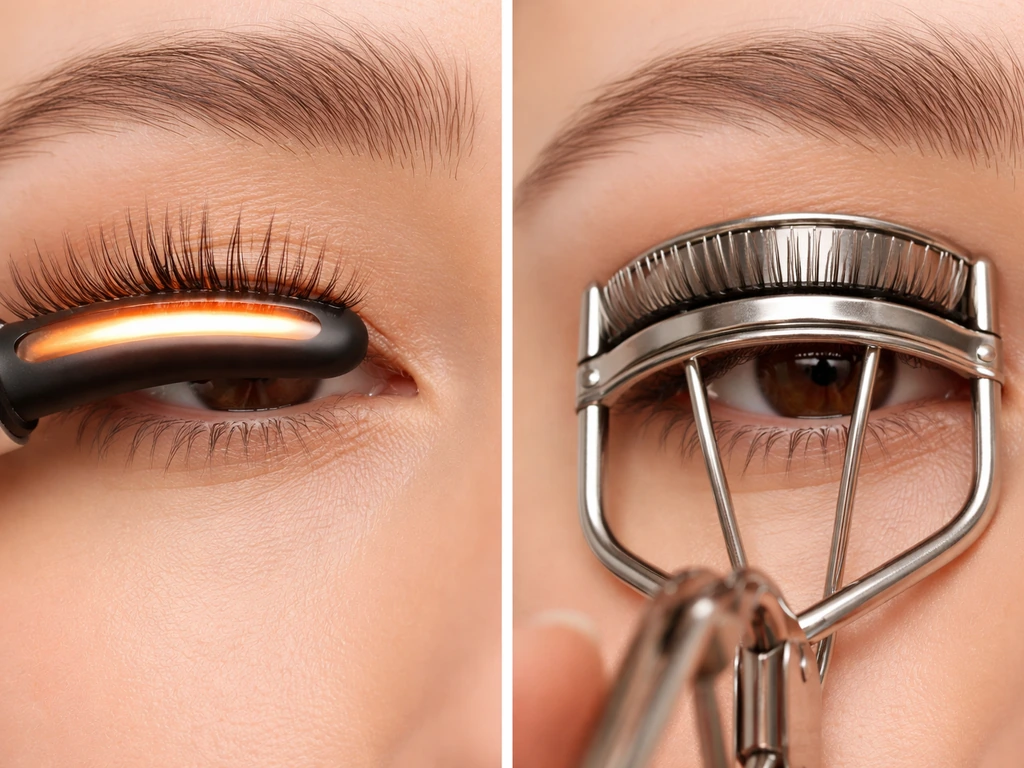
You cannot permanently change the follicle angle with styling tools, but you can absolutely change how your lashes look day to day and do it without causing the breakage and thinning that aggressive curling typically causes. For many people, targeted eyelashes grow tips can help you get safer lift and better-looking lashes while protecting the lash root. The goal is to lift the lash temporarily while preserving the hair shaft and root.
Heated curlers over mechanical clamp curlers
Heated eyelash curlers (the wand-style or comb-style tools that use gentle warmth) are significantly less damaging than mechanical clamp curlers, which apply point pressure to the lash shaft and are a common cause of breakage, especially if used on lashes that naturally resist curling. Heat helps reshape the lash temporarily without the kinking stress. Use them on completely dry, mascara-free lashes, keep the heat setting low to medium, and hold for 10 to 15 seconds per section rather than cranking the temperature or repeating passes.
Tubing mascara and upward-lifting primers
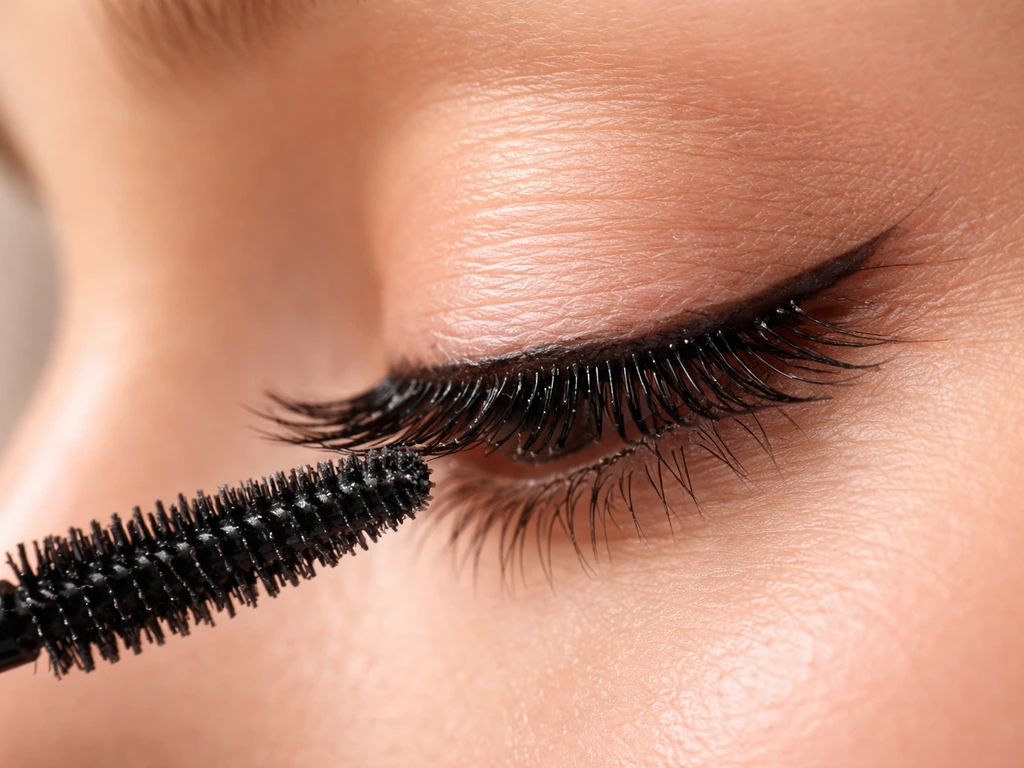
Tubing mascaras wrap each lash in a polymer tube rather than depositing a film. They tend to hold a lifted angle far better on stubborn downward lashes, and they remove cleanly with warm water without rubbing, which reduces mechanical stress at the lash root. A lash primer applied from root to tip in an upward arc before mascara also helps train the lash to sit higher during wear.
Lash lift treatments
A professional lash lift (also called a lash perm) uses a mild chemical process to set the lash in a curved position that lasts 6 to 8 weeks. For people with naturally downward lashes, this is one of the most effective non-permanent options. The key is finding a technician experienced with Asian lash texture and downward-growing lashes, because the rod size and processing time need to be calibrated properly. Over-processed lashes from a bad lash lift can become brittle and break, so this is a case where experience matters more than price.
Minimizing breakage in your daily routine
- Remove eye makeup gently with an oil-based or micellar remover and a soft cotton pad, pressing rather than rubbing
- Avoid waterproof mascara on a daily basis if you are already prone to breakage; it requires harder removal
- Never clamp a mechanical curler on lashes after applying mascara, as the dried product weakens the shaft at the crimp point
- Sleep on a silk or satin pillowcase if you notice lashes looking bent or flattened in the morning
Growth and thickness options: serums vs castor oil vs biotin
None of these will change the direction your lashes grow. What they can do is improve lash density, length, and thickness so the lashes you have look fuller and are less prone to breakage. Here is an honest breakdown of each.
| Option | What it does | Evidence level | Timeline | Main cautions |
|---|---|---|---|---|
| Bimatoprost serum (Rx, e.g., LATISSE) | Extends the growth phase; increases length, thickness, and darkness | Strong: Phase 3 trial (n=278) showed significant improvement at 16 weeks; fullness gains visible from week 8 | 4 weeks to notice change; full effect at 16 weeks; results reverse when stopped | Iris color change in light eyes, periorbital darkening, eyelid skin darkening, dry skin, possible trichiasis; prescription required |
| OTC growth serums (peptide/prostaglandin-analog) | Vary widely; peptide serums support lash health; prostaglandin analogs mimic bimatoprost weakly | Moderate to low depending on formula; prostaglandin analogs carry some of the same risks as Rx version | 8 to 12 weeks typical for modest results | Patch test required; periorbital irritation possible; prostaglandin analogs still carry pigmentation risk |
| Castor oil | Emollient; may reduce breakage and support lash appearance; some evidence for eyelid use in blepharitis | Limited for lash growth specifically; one RCT used it for blepharitis (4 weeks, twice daily) with positive ocular surface outcomes | 4 to 8 weeks for any visible improvement in lash appearance | Can cause contact dermatitis; not recommended near eyes if skin is sensitive or you have active eye issues; patch test first |
| Biotin (oral supplement) | Corrects deficiency-related hair loss only; no strong evidence for growth in non-deficient people | Weak: NIH states evidence is limited to deficiency contexts; no robust trials in non-deficient individuals | Unpredictable; likely no benefit without deficiency | Interferes with thyroid and troponin lab tests; do not self-diagnose deficiency |
If you want the most clinically supported option, bimatoprost (LATISSE) is the only FDA-approved treatment and the one with actual phase 3 trial data behind it. The catch is cost (typically not covered by insurance for cosmetic use) and the side effect profile, which is real and worth discussing with a dermatologist or ophthalmologist before starting. OTC serums with peptide blends are a reasonable lower-risk starting point if you are not ready for a prescription. Castor oil is the gentlest option and has the most to offer for people with concurrent blepharitis rather than purely cosmetic concerns. Biotin is honestly the last thing I would reach for unless you have a documented deficiency or a diet severely lacking in it.
Recovery timelines and what to realistically expect
If your downward growth started after damage rather than always being present, here are the timelines to anchor your expectations to.
| Cause of damage | Typical regrowth timeline | What to watch for |
|---|---|---|
| Lash extensions with follicle stress/shedding | 6 to 12 weeks for most lashes to cycle back; up to 6 months for full density if follicles were repeatedly traumatized | Uneven regrowth, stubby or misdirected new lashes in first cycle; if no regrowth at 3 months, see a clinician |
| Over-plucking (follicles intact) | 4 to 6 weeks per lash if follicle is not scarred; full density recovery 3 to 6 months | Lashes may return thinner or in a slightly different direction for 1 to 2 cycles before normalizing |
| Blepharitis-related shedding | Dependent on controlling the inflammation first; lash regrowth 4 to 8 weeks after inflammation resolves | Persistent shedding or misdirection despite treatment means the follicle may be scarred; needs clinical assessment |
| Chemical/heat damage from curler or extensions | 4 to 6 weeks for shed lashes if follicle is undamaged; direction may still be abnormal for 1 to 2 cycles | If new lashes emerge pointing toward the eye surface, see an eye doctor |
A useful benchmark is that a single eyelash, if cut or singed but with an undamaged follicle, takes roughly 4 to 6 weeks to regrow. The full lash line, cycling through at different phases, takes several months for a complete refresh. Do not judge recovery at week two. The first lashes to come back often look shorter and grow in a different direction temporarily before settling.
When to see a clinician and how to use products safely
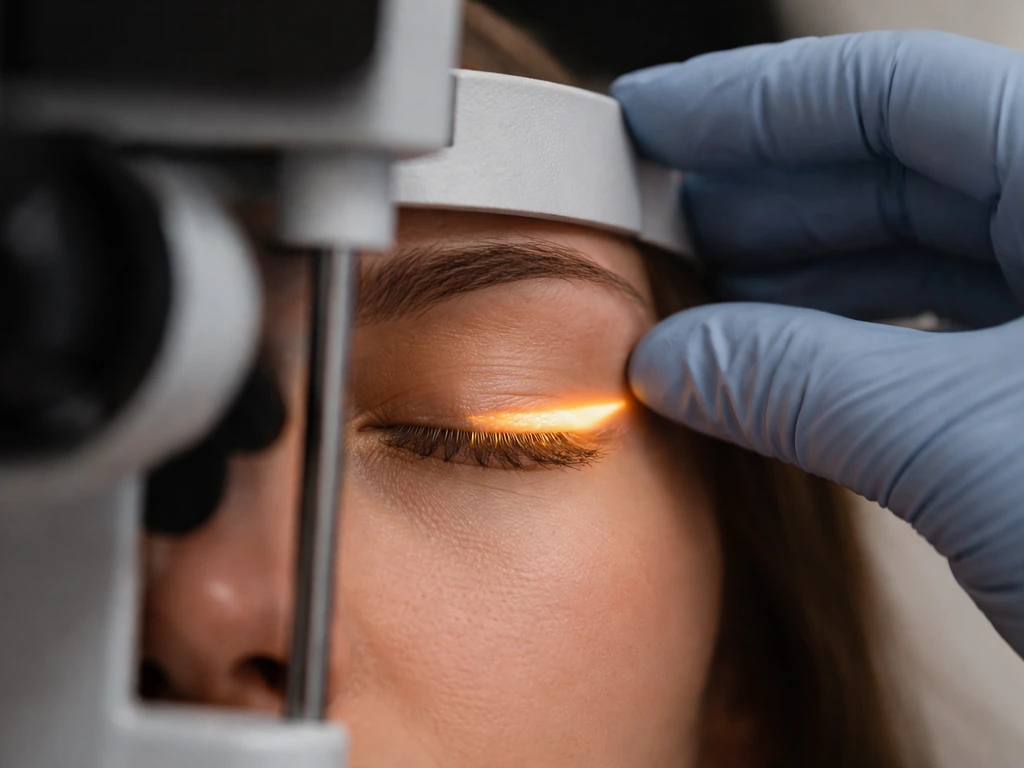
See an eye doctor (ophthalmologist or optometrist) rather than continuing to self-manage if any of the following apply.
- Lashes are rubbing your eyeball and causing persistent redness, tearing, or a foreign-body sensation
- You have crusting, flaking, or swelling at the lash base that does not improve with gentle warm compresses after 2 to 3 weeks
- Lash loss is patchy or asymmetric in a way that appeared suddenly
- New lashes are growing in a clearly inward direction (toward the eye) rather than just downward
- You have had multiple rounds of extensions and are experiencing ongoing irritation or delayed regrowth beyond 3 months
- You are considering a prescription serum like bimatoprost (this requires a clinical evaluation anyway)
For any topical product, including castor oil and OTC serums, patch-test on the inner wrist 48 hours before applying near your eyes. The periocular skin is some of the thinnest on the body and reacts quickly to irritants and allergens. Apply growth serums to the upper lash line only, on clean, dry skin, using the applicator or a clean eyeliner brush, and avoid getting product directly in the eye. If you experience redness, swelling, or itching after starting any new product, stop immediately and wait for symptoms to resolve before trying again or switching to something gentler.
The big picture here: if your lashes have always grown downward, that is anatomy, and the goal is working with it rather than against it. Heated styling, tubing mascara, and lash lifts can dramatically change your daily look without damaging what you have. If you want to support growth and thickness alongside that, a well-formulated OTC serum or castor oil (with realistic expectations of modest improvement over 8 to 12 weeks) is a reasonable starting point.
For meaningful clinical change in density, bimatoprost is the option with the strongest data, but it requires a prescription and patience: full results at 16 weeks, and maintenance ongoing. If symptoms or asymmetric changes are part of the picture, the most useful thing you can do today is rule out an underlying condition before spending time and money on styling tools and serums.
FAQ
If I use lash serum, can it permanently change the direction my lashes grow?
No, serums cannot reliably reorient the follicle angle because that direction is determined by eyelid margin anatomy. At most, a serum may improve lash thickness or help existing lashes regrow with a fuller look, so your “lift” will still be temporary or stylistic.
How can I tell whether my downward lashes are just natural versus trichiasis (misdirected lashes)?
Natural downward growth usually does not irritate the eye surface. If you have persistent redness, tearing, burning, foreign-body sensation, or you notice lashes rubbing the white of the eye or inner lid, that suggests misdirection and needs an eye exam, especially if symptoms are one-sided or worsening.
Why are my inner-corner lashes more problematic than the outer-corner lashes?
Lash direction often varies by region because follicle angles differ across the lid. If the inner third points more inward or down, it can be more noticeable and more likely to touch the ocular surface, so you may need different styling technique by section or medical evaluation if irritation appears.
What should I do if my lashes started growing downward only after eyelash extensions?
Treat it as a warning sign for follicle irritation or scarring. Stop extensions, avoid further traction, and see an eye doctor if you develop crusting, eyelid redness, or any symptoms like tearing or gritty discomfort. Regrowth can take months, but persistent misdirection should not be ignored.
Can frequent eyelid rubbing or contact lens use cause lashes to change direction?
Yes, repeated mechanical trauma can inflame the lash line and distort follicles over time. If you rub your eyes or insert lenses with lashes touching the cornea, the lash direction may appear to worsen. Consider replacing rubbing with gentle cleaning and improve lens handling habits; if irritation persists, get checked.
Is a heated eyelash curler safe for downward-growing lashes?
It can be safer than clamp-style curling when used correctly, but you still need to avoid heating wet lashes (or re-curling the same section repeatedly). Use low to medium heat, only on completely dry, mascara-free lashes, and stop if you notice redness or eyelid itch.
How long should I wait before deciding an OTC lash growth product is not working?
Give it at least 8 to 12 weeks before judging results, because lash cycling is slow and early regrowth may look shorter or temporarily different. Also assess whether you are experiencing irritation, since inflammation can undermine results or worsen misdirection.
What is the safest way to apply lash serum so it does not irritate my eye?
Apply to the upper lash line only on clean, dry skin, using the applicator or a clean tool, and keep product off the eyelid margin where it can enter the eye. Patch-test on the inner wrist 48 hours before starting, and stop immediately if you get itching, swelling, or redness.
When should I consider a professional lash lift (lash perm) for downward lashes?
A lash lift can be effective for naturally downward lashes, but it should be done by someone experienced with your lash texture and downward growth. If your lashes have recently changed direction, are causing symptoms, or you have active blepharitis, address that first because over-processing can increase breakage.
Do castor oil or peptide serums work differently for people who have eyelid inflammation?
Castor oil is often the gentler starting option when there is coexisting eyelid inflammation, but it will not cure the underlying cause of blepharitis. If you have crusting, thickened lash roots, or persistent irritation, prioritize treating the inflammation with a clinician rather than relying on cosmetic products.
Why do my lashes look thinner even though I have not changed anything?
Thinning can happen from breakage due to aggressive curling, frequent rubbing, or repeated exposure to extensions and adhesives. If thinning is paired with redness, flaking, or irregular lash direction, consider eyelid conditions like blepharitis rather than assuming it is purely cosmetic.
Next Article
How to Fix Eyelashes Growing in Different Directions
Step-by-step fixes for lashes growing different directions, plus conditioning and safe regrowth tips for balanced, align