
Maracuja oil can make your lashes look and feel better, but it has not been shown to directly stimulate new lash growth. Fish oil supplements are different from lash oils, and there is not strong evidence that they directly help eyelashes grow. What it does well is condition the lash fiber, reduce brittleness, and cut down on the mechanical breakage that makes lashes look short and sparse in the first place. If your lashes are damaged from extensions, over-rubbing, or general neglect, that conditioning effect can translate to visibly fuller-looking lashes over a couple of months. If you're expecting the oil to wake up dormant follicles the way a prescription serum does, that's a different story.
Does Maracuja Oil Help Eyelashes Grow? What to Expect

Rachel Nguyen
10 Jun 2026
What maracuja oil actually is (and why people put it on lashes)
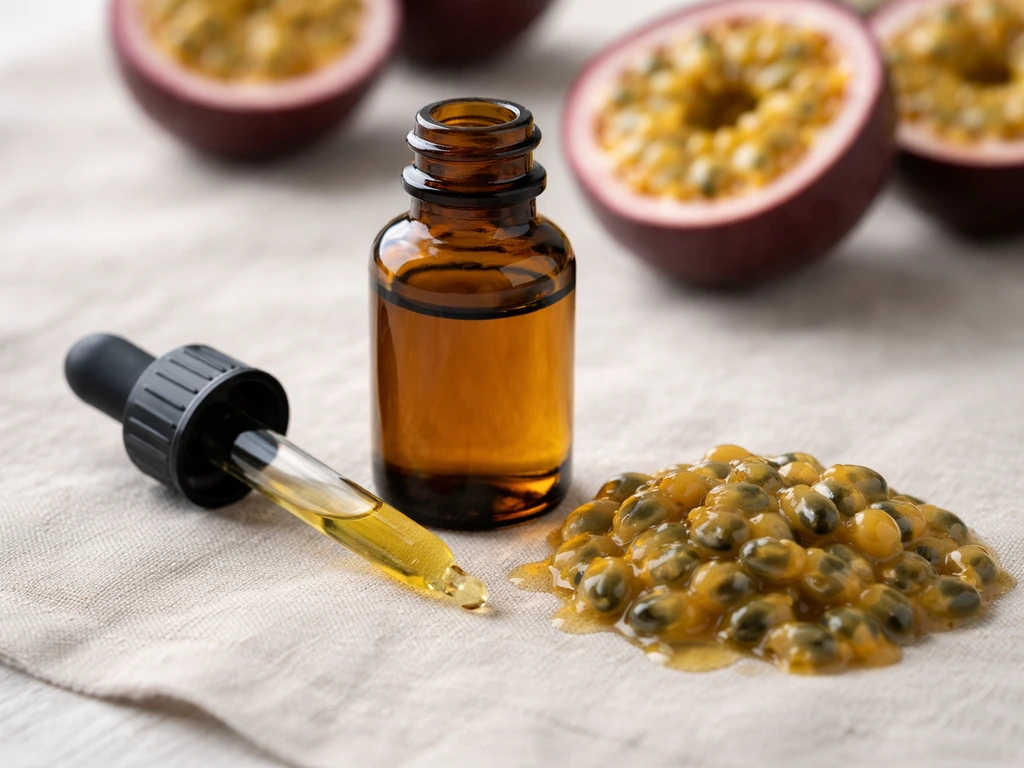
Maracuja oil is cold-pressed from the seeds of Passiflora edulis, the yellow or purple passion fruit. The seed oil is unusually rich in linoleic acid, an omega-6 polyunsaturated fatty acid that makes up roughly 55 to 80 percent of its composition, with some analyses putting it closer to 70 percent. It also contains oleic acid in the range of 10 to 22 percent. That fatty acid profile is what gives maracuja oil its appeal in skincare and hair care: linoleic acid is lightweight, absorbs quickly, and helps reinforce the lipid barrier of both skin and hair.
For lashes specifically, the appeal is the same reason people reach for other light plant oils. The lash hair fiber can become dry, porous, and prone to snapping, especially after repeated mascara use, lash curling, or extension removal. A linoleic-acid-rich oil can penetrate the hair shaft more readily than heavier oils, coating and partially filling gaps in the cuticle layer. The result is a lash that bends rather than breaks, holds moisture better, and appears glossier and more substantial. That's a real benefit, even if it isn't the same as growing new lashes.
Does maracuja oil actually grow lashes, or just condition them?
This is the most important distinction to make clearly: there are no published clinical studies showing that maracuja oil, or passion fruit seed oil of any kind, directly stimulates eyelash follicle activity or extends the anagen (growth) phase of the lash cycle. None. The evidence for it as a lash-growth agent simply does not exist yet.
For context, even castor oil, which is probably the most hyped natural lash oil out there, has no scientific studies proving it promotes eyelash growth. The same goes for most plant-oil home remedies marketed for lashes. Witch hazel is also often discussed as a possible lash-growth remedy, but it does not have strong evidence showing it helps eyelashes grow does witch hazel help eyelashes grow. The honest framing, backed by medical sources, is that plant oils may help lashes appear better primarily by protecting and conditioning existing lashes, not by triggering new growth from the follicle.
That said, reduced breakage is a legitimate pathway to longer-looking lashes over time. Your lashes grow continuously during their anagen phase, which lasts roughly 30 to 45 days for lashes. If breakage is cutting your lash length down before it reaches its natural maximum, consistently conditioning with an oil like maracuja can let that growth fully express itself. So the lash isn't technically growing faster, but it's surviving longer on the lash line, which looks like growth from the outside.
How to use maracuja oil on lashes safely
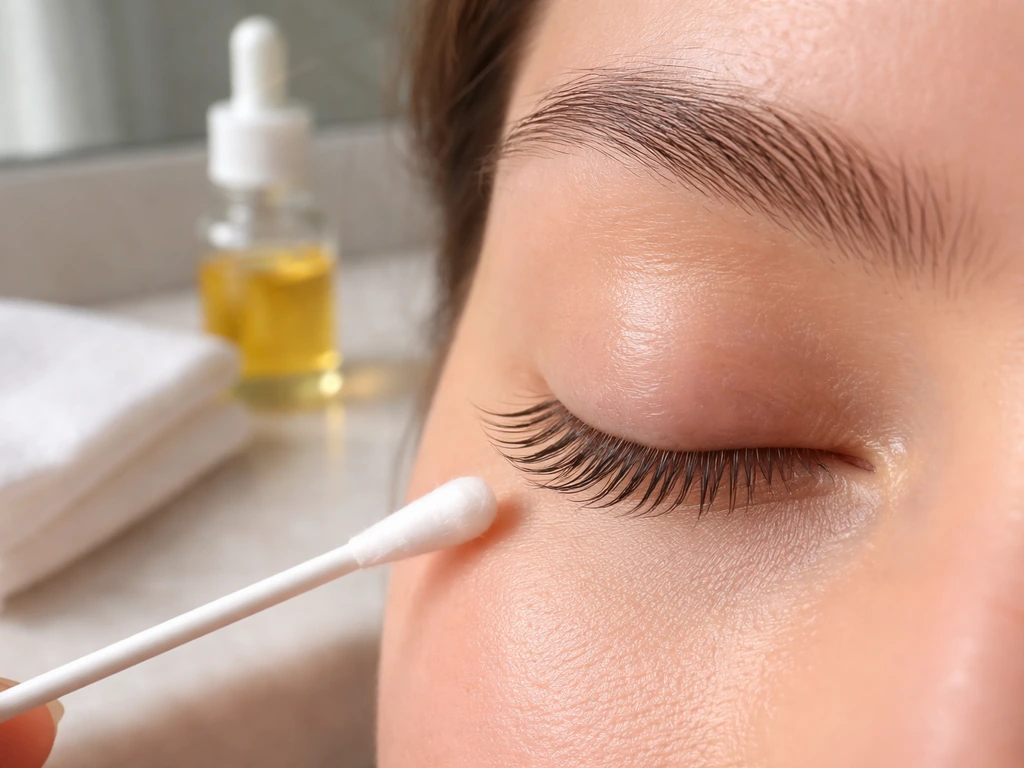
The eyelid area is genuinely delicate. The FDA specifically calls out the eye area as a place where allergic reactions and irritation can be particularly troublesome, and that's not boilerplate caution. A small inflammatory response around a follicle can actually disrupt lash growth rather than help it. So the how-to here matters.
Patch test first
Before putting any new oil near your eyes, apply a small amount to the inside of your wrist or inner elbow and leave it for 24 to 48 hours. Check at 72 to 96 hours for any redness, itching, or irritation. If nothing shows up, you're likely fine to use it around the eye area. If you see a reaction, skip the oil entirely.
Step-by-step application
- Remove all eye makeup thoroughly before applying. Oil on top of mascara or liner residue can push debris into the follicle.
- Use a clean, dedicated applicator, such as a disposable mascara wand, a clean cotton swab, or a small eyeliner brush. Never dip a used applicator back into your oil bottle.
- Pick up a tiny amount of oil. For lashes, you need barely a drop total for both eyes. More is not better.
- Apply to the base of the upper lash line using gentle, small strokes, working outward along the lashes. Think of it as coating the lash fiber from root to tip, not saturating the lid.
- Keep your eyes closed for a minute to let it settle. Avoid pressing or rubbing.
- If any oil gets into the eye itself, rinse immediately with clean water.
- Apply at night before sleep, not in the morning before putting on makeup. Daytime application can trap particles, increase the chance of oil migrating into the eye, and interfere with makeup.
Frequency-wise, once nightly is sufficient. Applying twice a day does not double your results and does increase the risk of oil buildup at the follicle opening, which you want to avoid.
How long before you see any difference
The eyelash growth cycle runs in three phases: anagen (active growth, about 30 to 45 days), catagen (degradation, 2 to 3 weeks), and telogen (resting, up to 100 days before the lash sheds and a new one starts). Because of this cycle, any change in how your lashes look takes weeks to show up, no matter what you're using.
For a conditioning oil like maracuja, a realistic minimum evaluation period is 8 to 12 weeks of consistent nightly application. At the 4-week mark, some people notice lashes feel less brittle and mascara applies more smoothly. At 8 weeks, if breakage was a significant issue before, you may start to see lashes reaching a longer terminal length. At 12 weeks, you have enough new lash cycle turnover to assess whether the routine is doing anything meaningful for you.
If your lashes are recovering from extension damage or a significant shedding event, expect the timeline to stretch. Telogen effluvium (stress-related shedding) can push a large number of follicles into a resting phase simultaneously, and it can take 3 to 6 months before you see full density return even with ideal care. In that scenario, maracuja oil can support the lashes that are there and protect new growth from breaking, but the recovery clock is set by your follicle cycle, not by the oil.
How maracuja oil compares to other lash-growth options
Before committing to any single approach, it helps to know what you're actually choosing between. There's a real spectrum here from pure conditioning all the way to prescription-grade follicle stimulation.
| Option | Mechanism | Evidence level | Timeline | Cost/Access | Risk |
|---|---|---|---|---|---|
| Maracuja oil | Conditions lash fiber, reduces breakage | No lash-growth studies; good fatty acid profile | 8–12 weeks to assess | Low, widely available | Low if patch-tested; mild irritation possible |
| Castor oil | Conditioning, some ricinoleic acid activity claimed | No clinical studies for lash growth | 8–12 weeks to assess | Very low | Low to moderate; heavier oil, more occlusive |
| OTC lash serums (peptide/biotin-based) | Peptides, panthenol, biotin may support lash health | Limited; mixed; no FDA-cleared growth data | 8–16 weeks | Moderate | Low to moderate; check ingredients for prostaglandins |
| Bimatoprost (Latisse, prescription) | Prostaglandin analog extends anagen phase directly | Strong: 78.1% achieved measurable improvement vs 18.4% placebo at 16 weeks in RCT | 16 weeks for full effect | Higher; requires prescription | Moderate to high: iris color change, periorbital darkening, potential vision effects |
If your lashes are basically healthy and you want a low-commitment conditioning routine, maracuja oil is a reasonable starting point, similar in profile to other plant oils like rosehip oil or grape seed oil that readers sometimes compare it to. Rosehip oil is often compared to other plant oils for the same reason: it may help support lashes by conditioning them and reducing the look of breakage rather than directly growing them.
If your lashes are noticeably short, sparse, or have been that way for years rather than following damage, skip straight to a conversation with a dermatologist or ophthalmologist about prescription options. Bimatoprost (the active ingredient in Latisse) is the only FDA-approved treatment specifically for inadequate eyelashes and has actual clinical data behind it, including significantly fuller and longer lashes at 16 weeks compared to placebo in a randomized controlled trial.
The trade-off is real risk of side effects, including permanent iris color change and periorbital skin darkening, which is why it requires a prescription and careful follow-up.
One thing worth noting: applying bimatoprost requires the same kind of careful, minimal application at the lash line as an oil routine does, and Mayo Clinic specifically warns to wipe off any excess that contacts surrounding skin. The discipline you build doing an oil routine is actually good practice if you ever move to a prescription serum.
Risks, red flags, and when to see a doctor
Most people tolerate maracuja oil well, but there are a few things to watch for and a few situations where you should stop and get professional input.
- Redness, swelling, or itching at the lash line: stop using the oil immediately and rinse the area thoroughly. This is a sign of irritation or early allergic reaction. If it doesn't resolve within 24 to 48 hours, see your doctor.
- Oil in the eye: rinse immediately with clean water. If you experience blurred vision, persistent stinging, or any visual disturbance that doesn't clear within 30 minutes, contact an eye doctor.
- Folliculitis or small bumps at the lash base: clogged or inflamed follicles can happen if oil builds up over time. Back off on frequency, and if bumps persist, a dermatologist or ophthalmologist should look at them.
- Lash loss that is worsening rather than improving: if you're losing more lashes than usual during your oil routine, stop and get assessed. Conditions like blepharitis, thyroid dysfunction, or alopecia areata cause lash loss from the inside out, and no topical oil addresses them.
- Signs of eye infection (discharge, crusting, significant pain): these are red-flag symptoms that need medical evaluation, not more oil.
One caution that applies broadly to any oil-near-eyes routine: never use essential oils undiluted around the eye area. Maracuja oil is a carrier oil, not an essential oil, so this doesn't apply to it directly, but some people mix it with essential oils thinking they'll boost the effect. That is genuinely risky. Essential oils near the ocular surface can cause serious irritation and damage.
The bottom line: maracuja oil is a safe, low-risk option for conditioning your lashes and potentially reducing the breakage that keeps them looking short. Use it consistently for at least 8 to 12 weeks, apply it carefully and sparingly at night, patch-test first, and watch for any irritation. If you're dealing with significant lash loss or have tried conditioning approaches without results after a couple of months, that's the signal to move the conversation to a medical provider who can assess whether something more targeted is the right next step.
FAQ
How do I know if my lashes are too damaged for maracuja oil to make a visible difference?
If your lashes are breaking at the mid-shaft, feel rough, or shed in clumps after removing mascara or extensions, maracuja can help more with “less snap, better look” than with actual new length. If you have sudden, heavy shedding, bald spots, or patchy regrowth, that points to a growth-cycle issue where you should get an eye or skin evaluation rather than relying on conditioning alone.
Can maracuja oil make my lashes thicker over time?
It may make lashes look fuller because less breakage means more of your existing lashes stay at their natural length. It does not change the number of follicles, so it will not reliably increase true lash density the way follicle-targeting treatments can.
Is it safe to use maracuja oil if I wear contact lenses or use lash extensions?
For extensions, the conditioning benefit can help reduce post-removal brittleness, but avoid getting oil under the extension bond area, which can increase residue buildup. For contacts, be extra cautious about transfer to the eye area, apply at night, and let it set fully before bed. If you notice stinging or blurred vision, stop and rinse with sterile saline.
What’s the correct way to apply maracuja oil to avoid irritation or clogged follicles?
Use a very small amount, apply along the lash line from root to mid-lash, and avoid the waterline and inner corner. If you accidentally get it on surrounding skin, wipe off excess right away. Over-application is a common cause of redness and a feeling of “gunk” around the lash line.
Should I use maracuja oil twice a day instead of once nightly for faster results?
Once nightly is usually enough. Using it twice daily often leads to more buildup at the follicle opening without improving growth. If your lashes feel greasy or your eyelids get irritated, scale back to every other night or stop.
How long should I wait before deciding maracuja oil isn’t working for me?
For a conditioning routine, judge results after 8 to 12 weeks of consistent use. You may feel improved softness at 2 to 4 weeks, but visible length from reduced breakage generally needs multiple lash-cycle changes.
Can I combine maracuja oil with other lash products like serums or castor oil?
You can combine conditioning oils, but layering multiple products increases the chance of irritation. If you are using a follicle-stimulating serum or prescription option, follow that product’s directions and do not mix in other oils unless a clinician has okayed it.
What should I do if I get redness, itching, or stinging after using maracuja oil?
Stop immediately, rinse the eye area with lukewarm water or sterile saline, and do not “test again” the next day. If symptoms persist beyond 24 to 48 hours, worsen, or you develop pain or light sensitivity, seek prompt medical advice.
Is maracuja oil different from passion fruit oil products labeled as “growth” or “serum”?
Many products marketed for lash growth are still essentially conditioning oils. Look for whether it is a true follicle-active ingredient, not just a plant oil blend. If it is only seed oil or fatty-acid oils, the expectation should be reduced breakage, not new lash formation.
Does patch-testing once guarantee I will not react later?
Not necessarily. Patch-testing helps catch common immediate or delayed allergy, but reactions can still occur with repeated eye-area exposure or with added fragrance or mixed-in ingredients. If you notice irritation after a few weeks, treat that as a new signal to discontinue.
Could my eyelash shedding be something other than breakage?
Yes. Telogen effluvium from stress, illness, hormonal changes, or nutritional issues can shift many follicles into a resting phase, causing significant shedding. In that case, conditioning can protect what remains, but you usually need time for the cycle to recover and may benefit from medical evaluation.
Are there people who should avoid maracuja oil near the eyes?
If you have a history of eyelid dermatitis, chronic blepharitis, frequent eye irritation, or prior allergic reactions to oils or cosmetic ingredients, you should be more cautious and consider speaking with an eye care professional first. Also avoid any product containing added essential oils or strong fragrances, since those are more likely to irritate the eye area.
Next Article
Does Fish Oil Help Eyelashes Grow? Evidence and How to Try
Evidence on whether fish oil helps eyelashes grow, how to try safely, realistic timelines, and better nutrition options