
Eyelashes grow about 0.12 to 0.14 mm per day, which works out to roughly 3.5 to 4.2 mm in a month and around 42 to 50 mm (about 1.6 to 2 inches) over a full year. In practical terms, that means if you lost a lash today, you could expect somewhere between 3 and 4 mm of new growth after 30 days, assuming the follicle is healthy and the lash is actually in its active growth phase, which is a bigger caveat than most people realize.
How Much Do Eyelashes Grow in a Month and a Year

Rachel Nguyen
17 May 2026

The actual numbers: daily, monthly, and yearly growth

The 0.12–0.14 mm per day figure comes from StatPearls, which is about as close to a gold-standard anatomy reference as you get. It's a narrow range, and it doesn't change dramatically from person to person under normal circumstances. What does change is whether a given lash is even in its growth phase on any particular day, but more on that in a moment.
| Time period | Low estimate | High estimate |
|---|---|---|
| Per day | 0.12 mm | 0.14 mm |
| Per week | 0.84 mm | 0.98 mm |
| Per month (30 days) | 3.6 mm | 4.2 mm |
| Per year (365 days) | 43.8 mm (~1.7 in) | 51.1 mm (~2.0 in) |
Keep in mind these numbers reflect continuous growth during the active (anagen) phase. Because lashes cycle in and out of growth, rest, and shedding phases constantly, you won't see exactly 3.6–4.2 mm of new length added to every lash every month. Some lashes will be growing fast, others resting, others about to fall out. The monthly number is still the most useful benchmark for setting realistic expectations after damage or loss.
Why growth feels slower than the math suggests
The three stages of the lash cycle
Lash growth isn't a straight line from follicle to full length. Every single lash goes through three distinct phases, and where a lash sits in that cycle determines whether it's actively getting longer, sitting still, or about to shed.
- Anagen (growth phase): The follicle is actively producing new hair. For lashes, this phase lasts about 4 to 10 weeks — much shorter than scalp hair, which can stay in anagen for years. During this window, the lash grows at the 0.12–0.14 mm/day rate.
- Catagen (transition phase): Growth stops. The follicle shrinks and detaches from its blood supply. This phase lasts roughly 2 to 3 weeks and nothing visibly happens.
- Telogen (resting and shedding phase): The lash sits in place until it naturally falls out, then the follicle rests briefly before restarting anagen. This phase can last 4 to 9 months for lashes.
This is why growth comes in bursts rather than a steady, measurable daily increase. At any given moment, roughly 40% of your upper lashes are in the telogen phase, resting or about to shed. So even though the per-day growth rate is consistent during anagen, you're only seeing that rate on a fraction of your lashes at any one time.
When a lash does shed and the follicle re-enters anagen, you'll suddenly notice a short lash where there wasn't one before, and it'll grow to full length over the next 4 to 10 weeks. Healthline summarizes that the eyelash anagen (growth) phase typically lasts about 4, 10 weeks and that lashes grow at roughly 0. 12, 0. 14 mm per day during that period [4 to 10 weeks](https://www.
healthline. com/health/how-long-does-it-take-for-eyelashes-to-grow-back).
Healthline notes that if a lash is cut or singed but the follicle is undamaged, you can expect it to grow back to roughly its original length in about 6 weeks. That tracks with the anagen timeline: 6 weeks at 0.12–0.14 mm/day gives you 5–6 mm, which is close to the average adult upper lash length of 7–8 mm. If it's taking significantly longer, something is slowing the cycle down.
What makes your lashes grow faster or slower
The biology is consistent, but the inputs vary a lot from person to person. Here are the main factors that determine whether you're at the high or low end of the growth range.
Age
Lash growth slows as you get older, mostly because follicle activity declines with age. Hormonal shifts during perimenopause and menopause are a major driver of this, particularly the drop in estrogen, which plays a supportive role in maintaining hair follicle cycling. If you're over 40 and notice your lashes looking thinner or shorter over time, this is a very common and largely physiological cause, not necessarily damage or deficiency.
Genetics
The length lashes grow to, how dense your lash line is, and how quickly your follicles cycle are all significantly genetic. If your mother or father had short, sparse lashes, you're likely working with a similar baseline. This doesn't mean you can't improve your lash appearance, but it does mean your ceiling is partly inherited.
Hormones
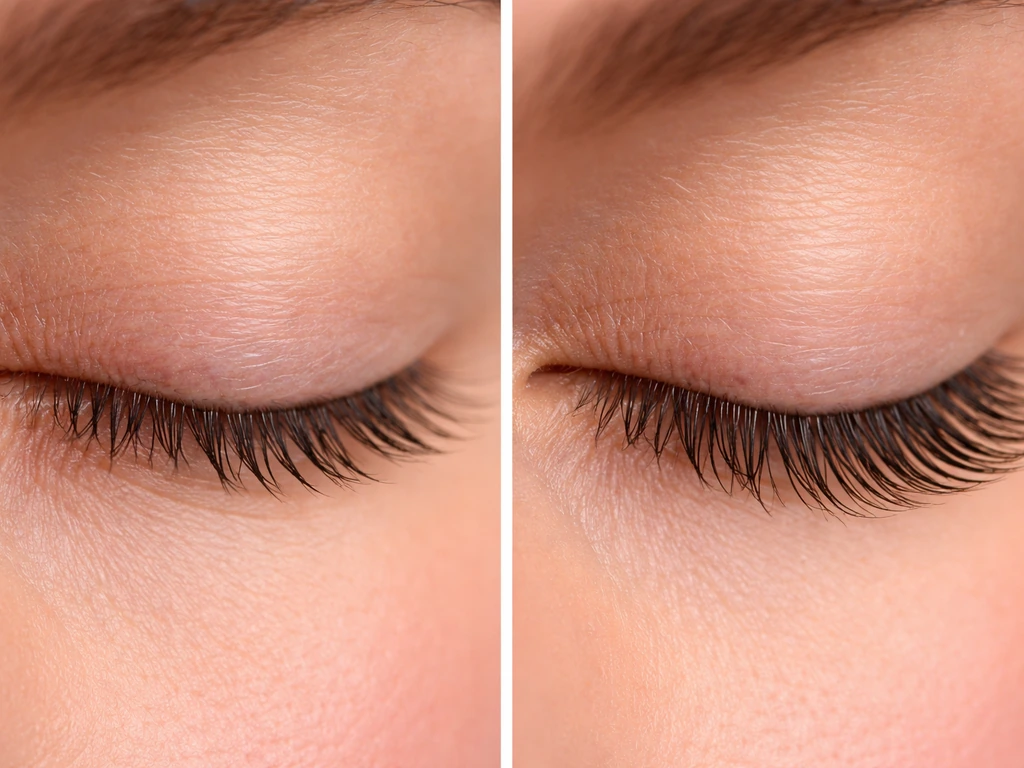
Thyroid dysfunction is one of the most common medical causes of lash thinning and slow regrowth. Both hypothyroidism and hyperthyroidism can disrupt the hair cycle and push follicles into a prolonged resting phase. Pregnancy and postpartum hormonal swings can also affect lash cycling, similar to the scalp hair shedding many people notice a few months after delivery.
Physical damage and traction
This is the big one for most people searching this topic. Repeated friction from rubbing your eyes, mechanical stress from lash curlers, and the weight and adhesive removal process of eyelash extensions can all damage follicles over time. Traction alopecia of the lash line is real: if a follicle is repeatedly traumatized, it can become permanently less productive or stop cycling altogether. The critical distinction is whether damage is reversible (the follicle is stressed but intact) or permanent (the follicle is scarred). Reversible damage usually means slower regrowth over 2 to 4 months; permanent follicle damage means that lash may not grow back at all.
Medications and nutritional status
Certain medications, including some chemotherapy drugs, blood thinners, retinoids, and beta-blockers, are documented to cause lash loss or slow regrowth. Nutritional deficiencies in biotin, iron, zinc, and vitamin D have also been linked to impaired hair growth, though frank deficiency is less common than supplement marketing implies. If you're on long-term medication and noticing lash changes, that's worth raising with your prescribing doctor.
Normal shedding vs. something worth checking out
Losing 1 to 5 lashes per day is completely normal, that's just the telogen phase doing its job. You might notice a few on your cheek in the morning or on your pillow. That's not a problem. What's worth paying attention to is a pattern of unusual loss or regrowth failure.
- Normal: occasional lashes on your pillow, lashes that look shorter for a few weeks then return to full length, minor asymmetry between eyes.
- Worth monitoring: noticeable thinning over 4 to 6 weeks that doesn't reverse, patchy bald spots in the lash line, lashes that feel brittle and break before shedding naturally.
- See a clinician: significant or rapid lash loss with no clear mechanical cause, lash loss accompanied by brow thinning or scalp hair loss, persistent patchy loss that could indicate alopecia areata, symptoms suggesting thyroid dysfunction (fatigue, weight changes, temperature sensitivity), or lash loss that started after beginning a new medication.
A dermatologist can evaluate whether the follicles are intact using dermoscopy and can rule out conditions like blepharitis (eyelid inflammation that can impair follicle function), trichotillomania, or systemic causes. Getting clarity on this matters before spending money on growth products, because no serum helps a follicle that's genuinely damaged or shut down by an underlying condition.
What you can actually do to support lash growth
Protective habits first
Before reaching for any product, the single highest-leverage thing you can do is reduce mechanical damage. Stop rubbing your eyes. Use a gentle, oil-based makeup remover that dissolves mascara without requiring scrubbing. If you wear lash extensions, take breaks between sets and be methodical about professional removal, pulling at lashes or removing extensions at home is a fast way to damage follicles. Sleep on a silk or satin pillowcase to reduce friction. These habits sound boring, but they directly extend how long your lashes stay in the anagen phase and prevent the follicle disruption that slows regrowth.
Castor oil
Castor oil is probably the most popular at-home lash remedy, and the evidence for it is limited but not nonexistent. It's rich in ricinoleic acid, which has documented anti-inflammatory properties that may support a healthier follicle environment. There are no large clinical trials specifically on castor oil and lash growth, but there's also minimal risk: apply a small amount to a clean spoolie and coat the lash line before bed, then rinse off in the morning.
If you're going to try it, commit to at least 2 to 3 months, because you're working on a cycle that takes weeks to show results. The main practical risk is that it's heavy and can cause milia or irritation if it gets into the eye, use a tiny amount.
Lash growth serums
This is where you need to distinguish between two very different categories. Prescription bimatoprost (sold as Latisse) is an FDA-approved prostaglandin analogue with robust clinical evidence showing it extends the anagen phase and increases lash length, thickness, and darkness. In trials, users saw measurable improvements in 4 to 8 weeks, with full results at 16 weeks. It requires a prescription and has documented side effects, including potential iris and eyelid skin darkening and eye irritation.
Over-the-counter serums marketed as lash growth products almost never contain prostaglandin analogues in effective concentrations. Many contain peptides, panthenol, and biotin, which may condition lashes and reduce breakage but don't extend the growth phase the way Latisse does. They're not useless, but they work through a different (and weaker) mechanism. If you want clinical-grade results, talk to a dermatologist about Latisse.
Biotin and supplements
Biotin supplementation is everywhere in the lash and hair space, and the honest answer is: it helps if you're deficient, and it probably doesn't do much if you're not. True biotin deficiency is uncommon in people eating a varied diet, but it does occur with certain gut conditions, prolonged antibiotic use, or very restrictive diets. If you suspect deficiency, a blood test is more useful than just supplementing.
For everyone else, taking a high-dose biotin supplement is unlikely to meaningfully accelerate lash growth beyond your genetic baseline. Iron, zinc, and vitamin D deficiencies are more commonly implicated in hair loss than biotin deficiency, so if you're going to investigate nutritional causes, a full panel is more informative than just checking biotin.
Other oils worth knowing
Rosemary oil has received attention lately because a small 2015 study found it comparable to minoxidil for scalp hair growth, likely through improved scalp circulation. Whether that translates to lash follicles is genuinely unknown, but some people apply diluted rosemary oil (mixed with a carrier like jojoba) to the lash line. Vitamin E oil is another popular option, primarily as a conditioning agent that reduces brittleness and breakage rather than a true growth stimulant. Neither has the clinical evidence base of bimatoprost, but both are low-risk additions to a routine if you're patient.
What to realistically expect month by month
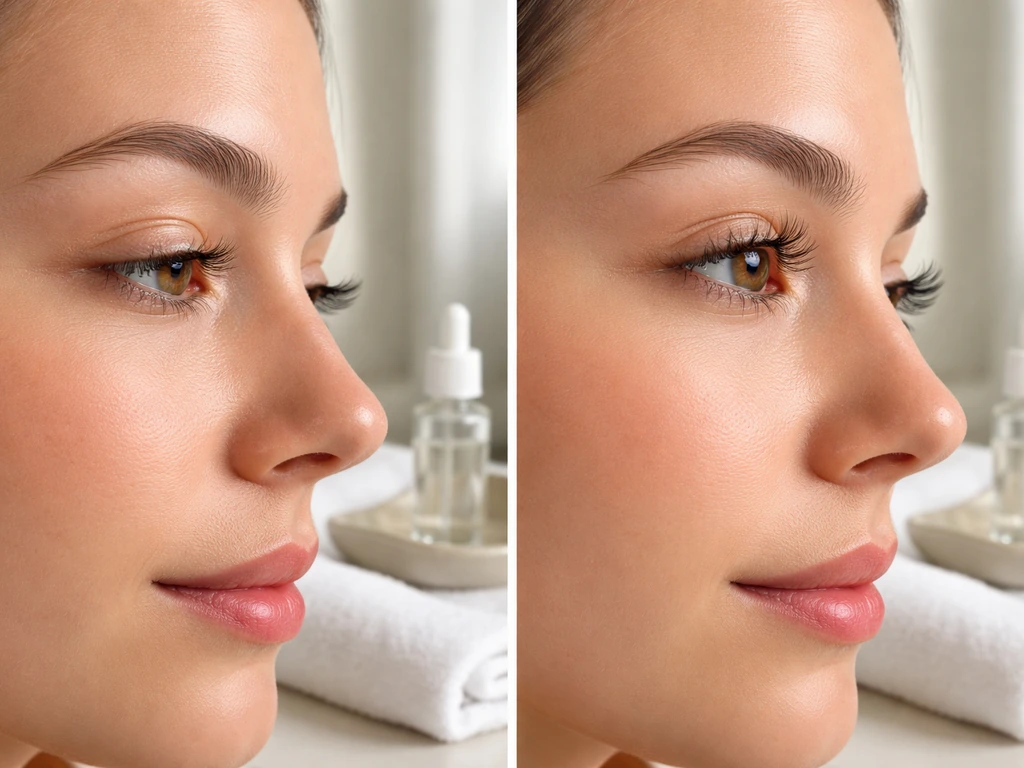
If you've lost lashes due to damage and you've addressed the cause (stopped extensions, stopped rubbing, started gentle care), here's a practical timeline. If you want the practical answer to how often eyelashes grow in real life, think in terms of their cycle and the month-by-month recovery timeline how often does your eyelashes grow. If you're wondering how fast lashes grow after a loss, the key is whether the follicle is still in the active growth phase.
In the first month, you may see short new lashes appearing where there were none, this is the anagen phase restarting, and it's a good sign. Newborn eyelashes typically start to appear early in infancy and then continue building toward their longer, fuller length over the first months of life when do newborn eyelashes grow. By month two, those lashes should be more visible and approaching a more natural length.
By month three, most people with reversible follicle damage see significant improvement in density and length. Full recovery, particularly after heavy extension use or a prolonged period of damage, can take 4 to 6 months. If you're using a prescription serum, clinical data suggests you'll see the most noticeable changes between weeks 8 and 16.
The biology of how fast eyelashes grow is tightly constrained, 0.12 to 0.14 mm per day isn't going to change dramatically no matter what you apply. What products and habits actually influence is how many of your follicles are actively cycling, how long they stay in anagen, and how much breakage or mechanical loss you're experiencing. Focus there and the monthly math starts working in your favor.
FAQ
Why do my eyelashes not grow back after a month if the growth rate is steady?
If you start with a healthy follicle, the monthly regrowth expectation is usually “a few millimeters,” roughly 3.5 to 4 mm over 30 days on average. But if you notice little to no change by 4 to 6 weeks, it often means the follicles are still cycling back into anagen, the lash loss was deeper traction damage, or an underlying issue like blepharitis or a medication side effect is prolonging the resting phase.
Do eyelashes add the same amount of length every month, like a steady 4 mm?
No. Eyelashes do not lengthen uniformly every month because only a portion of lashes are actively growing at any time. That means you may see a noticeable new “short lash” first, then density and length improve over subsequent weeks, especially once more follicles re-enter anagen.
How long does it typically take to recover lash density after extensions or rubbing? (Is 30 days enough?)
If the follicles are intact, many people see visible improvement within 1 to 2 months, with more meaningful catch-up by about 3 months. True full recovery after heavy or prolonged damage is commonly measured in 4 to 6 months, because you are rebuilding through multiple lash cycles rather than waiting for one growth event.
When is lash shedding normal versus a sign of a problem?
A “shedding” phase is normal. Losing 1 to 5 lashes a day is expected, and the bigger red flag is persistent thinning, widening gaps along the lash line, or lashes that repeatedly fail to regrow to prior length. If gaps are expanding over time, that points more toward traction damage, inflammation, or a systemic driver than normal cycling.
If a lash was cut or singed, will it grow back normally, and how fast?
Cut or singed lashes can appear shorter right away, and they will grow out if the follicle is healthy. A key clue is whether regrowth begins within weeks. If new growth is starting but the process seems much slower than expected, that suggests altered lash cycling rather than a follicle that is completely shut down.
Do lash serums work the same way as prescription treatments?
You generally should not expect significant results from cosmetic conditioning products alone in terms of lengthening, because most OTC options do not extend the growth phase the way prescription prostaglandins can. If you try an OTC serum, use a realistic timeline (often 8 to 12 weeks) and track both breakage and visible density, since conditioning may help with “less shedding and fewer snapped lashes” even if true growth is unchanged.
Can lash extensions permanently reduce how much my eyelashes grow?
Yes, the pattern of trauma matters. Repeated extension removal, eyelid rubbing, or aggressive cleansing can damage follicles at the lash line over time, and traction alopecia can become partially or fully permanent. If the lash line looks patchy or the skin there seems chronically irritated, you may need an evaluation before continuing products.
What are the main risks to know before using prescription lash growth (like Latisse)?
Bimatoprost, because it is a prostaglandin analogue, can cause eye irritation and changes to the eye area, like eyelid skin darkening or iris pigmentation. If you use it, apply carefully as directed to minimize migration toward the eye, and stop and seek guidance if you get redness, burning, or light sensitivity.
How should I measure progress if growth comes in bursts rather than linear length gain?
Your “monthly growth” math can still be a useful benchmark, but it needs context. For example, if you recently stopped extensions or stopped rubbing, initial improvement may appear as shorter new lashes first, then gradually more length and thickness over the next 2 to 4 months.
When should I see a dermatologist instead of trying oils or serums?
Consider medical causes if you have thinning plus other clues like persistent eyelid inflammation, patchy eyebrow or scalp hair loss, thyroid symptoms, new postpartum timing, or you started a medication known to affect hair cycling. A dermatologist can use dermoscopy to check follicle integrity and rule out treatable eyelid conditions that cosmetics cannot fix.
Is castor oil likely to help, and what’s the safest way to try it?
Castor oil can be a reasonable low-risk conditioning experiment, but it is not a guaranteed growth treatment, and results typically require patience over a full cycle. Use a very small amount to avoid getting product into the eye, and discontinue if you get redness, stinging, or irritation around the lash line.
If I want to check nutrition, should I start with biotin or request blood tests first?
If you suspect a nutrition-related issue, a “full panel” is more informative than repeatedly supplementing biotin. Biotin deficiency is relatively uncommon, and high-dose biotin can interfere with some lab tests, so it is helpful to discuss with your clinician before starting supplements if you plan to get bloodwork.
Next Article
When Do Newborn Eyelashes Grow? Timeline and What’s Normal
Learn when newborn eyelashes grow, normal timelines, patchy lash causes, and when to seek eye care guidance.