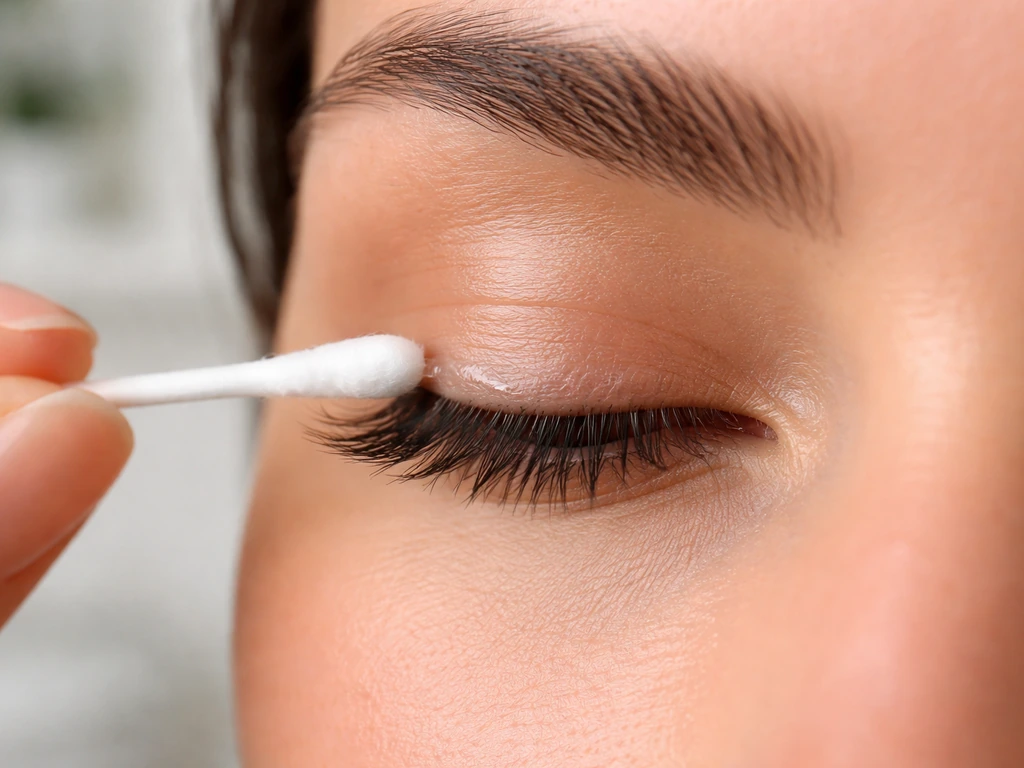
Vicks VapoRub will not make your eyelashes grow. There is no scientific evidence that camphor, menthol, or eucalyptus oil (the active ingredients in Vicks) stimulate lash follicles, and applying the product near your eyes carries real risks including corneal injury and chemical burns. If your lashes are short, sparse, or recovering from damage, you have much safer and more effective options available.
Does Vicks Help Eyelashes Grow? Safety and Better Options
Rachel Nguyen
11 Jun 2026
What lash growth actually depends on
Before you can evaluate any remedy, it helps to understand what you're trying to change. Eyelash growth is controlled by the hair cycle: a follicle goes through an active growth phase (anagen), a short transition phase (catagen), and a resting phase (telogen) before the lash sheds and the cycle starts again. The lash anagen phase lasts roughly 4 to 10 weeks, which is much shorter than scalp hair's anagen phase of several years. That short window is one reason lashes stay shorter than head hair even when everything is working perfectly.
Eyelashes grow at about 0.12 to 0.14 mm per day. To put that in perspective, a full millimeter of new lash takes about a week to emerge. The telogen (resting and shedding) phase of the eyelash cycle can last anywhere from 4 to 9 months, which is why it can feel like a very long wait after you lose a lash. A single cycle from start to visible replacement takes months, not days.
Here's the distinction that matters most: there's a difference between true follicle growth (whether a follicle is producing a lash at all, how long the anagen phase runs, and how thick the lash shaft is) and lash breakage/conditioning (whether existing lashes are snapping off, drying out, or falling early due to mechanical damage). Most home remedies, including Vicks, castor oil, and petroleum jelly, address the second category at best. Only a handful of clinically proven actives actually change follicle behavior.
What's in Vicks and why it won't grow your lashes
Vicks VapoRub is an ointment built on a petrolatum base with three active ingredients: camphor, menthol, and eucalyptus oil. The product was formulated to deliver a topical cooling sensation and help relieve congestion symptoms, not to interact with hair follicles. Nothing in that ingredient list has a demonstrated mechanism for extending the anagen phase, increasing follicle size, or stimulating dormant follicles.
The petrolatum base is occlusive, meaning it sits on top of skin and locks in moisture. That property is actually useful for conditioning dry or brittle lashes in theory, but it's the same function you'd get from plain petroleum jelly or similar occlusive products. The camphor and menthol add nothing useful for lash growth and introduce the chemical irritants that make Vicks genuinely risky near the eye.
The trend of using Vicks on lashes appears to be rooted in the same logic as the hair-growth claims made for castor oil and Vaseline: if something is thick and greasy and sits on the lash, it must be conditioning it. But coating a lash shaft doesn't make the follicle produce more lash. Anecdotal before-and-after photos typically show lashes that look darker and clumped together because of the ointment coating them, not because they've actually grown. You'd see the same visual effect with any occlusive product.
The real safety issue: Vicks near your eyes is genuinely dangerous
This isn't just a precautionary disclaimer. Poison Control has documented cases where at least two people developed permanent eye damage after accidentally applying Vicks VapoRub into their eyes. The product's own labeling advises against applying it to the face near the eyes, and medical sources consistently warn that if VapoRub contacts the cornea it can injure it.
Applying Vicks to your lash line puts it directly at the margin between the eyelid and the eye itself. Blinking, rubbing, or sleep can transfer it onto the cornea or conjunctiva. Camphor and menthol are both strong chemical irritants; on mucous membranes or delicate eye tissue they can cause burning, tearing, redness, and in serious cases, chemical burns or lasting corneal damage.
- Corneal injury from direct contact with camphor or menthol
- Chemical burns on the conjunctiva or eyelid skin
- Contact dermatitis on the thin, sensitive eyelid skin
- Severe irritation in anyone wearing contact lenses
- Worsened inflammation if you already have blepharitis or a compromised lash line
If you already have lash loss from blepharitis, extensions damage, or rubbing, your eyelid skin is likely already compromised. Vicks should not go on broken or damaged skin either, so the two risk factors stack on top of each other. This is one home remedy that's not worth experimenting with.
What actually works for lash regrowth

There's a clear hierarchy of options based on the strength of evidence. Here's how the main approaches compare:
| Option | Mechanism | Evidence Level | Notable Limits |
|---|---|---|---|
| Bimatoprost (Latisse, 0.03%) | Prostaglandin analog; extends anagen phase and increases follicle size | Strong: statistically significant improvements at weeks 8, 12, and 16 vs vehicle in multiple RCTs | Prescription only; potential pigmentation changes; must be used ongoing |
| Castor oil | Occlusive conditioning; no proven follicle-stimulating mechanism | No clinical evidence for true growth; may reduce breakage | Results anecdotal; works mainly as a conditioner |
| Petroleum jelly / Vaseline | Occlusive emollient; protects lash shaft from mechanical damage | No clinical evidence for follicle growth | Conditioning effect only; similar to castor oil in practice |
| Peptide and vitamin-based OTC serums | Ingredients like biotin, panthenol, and certain peptides condition the follicle environment | Limited clinical data; some formulations show modest improvements | Results vary significantly by formulation |
| Vicks VapoRub | No lash-growth mechanism; contains camphor, menthol, eucalyptus on petrolatum base | No evidence; active ingredients are potential irritants | Dangerous near eyes; risk of corneal injury |
Prescription prostaglandin serums (bimatoprost)
blank" rel="noopener noreferrer">Bimatoprost 0.03% (Latisse) is the only FDA-approved treatment for eyelash hypotrichosis and the only option with robust clinical data. In pivotal trials, users saw a roughly 25% increase in lash length and a 106% increase in lash fullness/thickness by week 16 compared to a vehicle control. Meaningful improvements were measurable as early as week 8. Long-term data from 12-month randomized trials shows those gains can be maintained and even enhanced with continued use. The trade-off is that it requires a prescription, costs more than over-the-counter options, and can cause side effects including eyelid darkening and increased iris pigmentation in some people with lighter eyes.
Conditioning oils as a supportive step
Castor oil and similar occlusives like petroleum jelly don't have clinical evidence behind claims that they stimulate follicle growth. Neither castor oil nor Vaseline has been shown in controlled studies to lengthen lashes or increase thickness at the follicle level.
If you're asking, “Can Vaseline make your eyelashes grow? ”, the best answer is no, because it mainly acts as an occlusive conditioner rather than changing follicle growth. That said, they can reduce mechanical breakage by coating the lash shaft and making lashes more flexible and resistant to snapping, which matters a lot if your lashes are short because they're breaking rather than because they're not growing.
If you're wondering, “does cocoa butter Vaseline help eyelashes grow,” the short answer is that cocoa butter and Vaseline are mainly conditioners, not follicle stimulants. If you want to explore these options, there are more detailed comparisons available for both petroleum jelly and Vaseline for lash conditioning.
Your at-home routine starting today
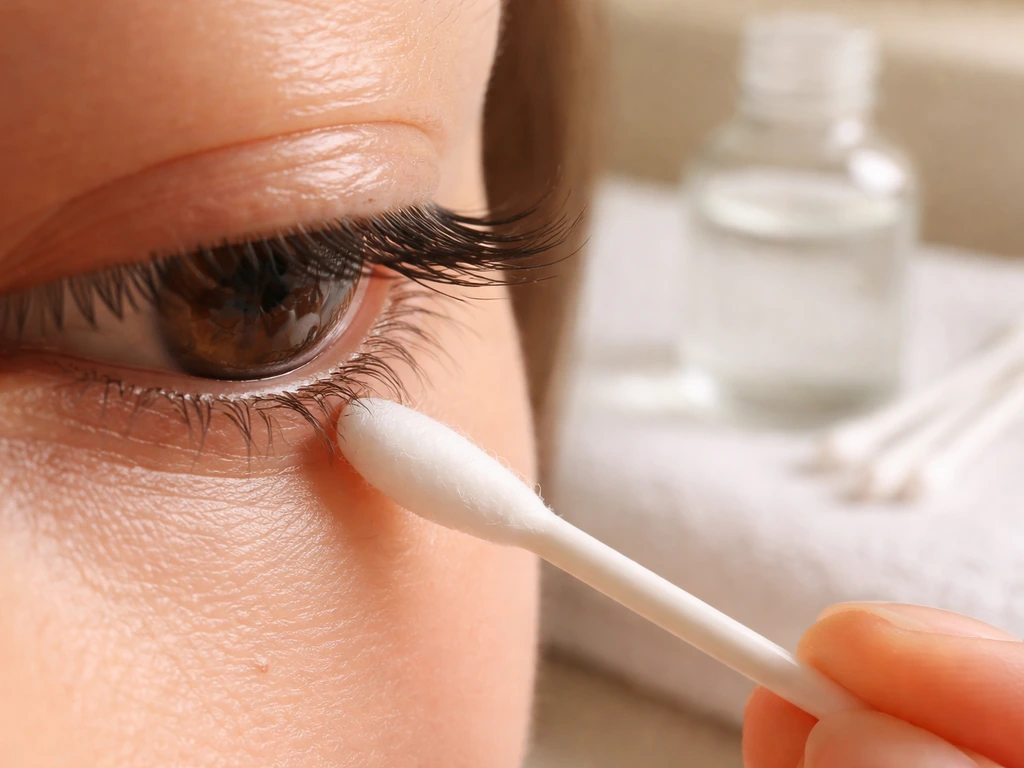
If your lashes are damaged, sparse, or recovering from extensions or over-rubbing, the single most important thing you can do is stop the ongoing damage and create a clean, healthy environment for regrowth. Here's a practical routine:
- Remove all eye makeup gently every night using a gentle, oil-based micellar water or a dedicated eye makeup remover. Avoid rubbing or pulling. Pat, don't drag.
- Warm compress first: press a clean warm (not hot) damp cloth over closed eyes for 5 to 10 minutes. This softens debris at the lash line and helps if you have any follicle inflammation.
- Clean the lash line: using a cotton swab or soft cloth moistened with warm water and a small amount of diluted baby shampoo or a dedicated lid cleanser, gently sweep along the base of your lashes to remove oil, crusts, and debris. This is especially important if you have blepharitis or extension residue.
- Apply your chosen conditioner or serum: if using a prescription bimatoprost serum, apply it at the base of the upper lash line once daily at night. If using castor oil or a peptide serum, apply a very small amount to the lash line with a clean spoolie or cotton swab. Avoid getting any product into the eye itself.
- Leave lashes alone: resist rubbing, curling aggressively, or sleeping on your face in ways that compress your lashes. Mechanical friction is one of the main causes of breakage.
- Take a break from extensions if you've been wearing them continuously. Traction on follicles from adhesive and weight causes cumulative damage, and regrowth requires removing that stressor.
Consistency matters more than any single product. The routine above takes about 5 minutes and is the foundation regardless of which growth-supporting product you choose to add on top of it.
Realistic timelines: what to expect and when
Because lashes grow at roughly 0.12 to 0.14 mm per day, a single lash growing from the follicle to a noticeable length of around 8 to 10 mm takes approximately 2 to 3 months. If you're recovering from lash loss and starting from zero, expect the following:
| Timeframe | What You Can Realistically Expect |
|---|---|
| Weeks 1 to 4 | Tiny new lash stubs may be visible if follicles were in telogen and are now entering anagen. No dramatic change in appearance yet. |
| Weeks 4 to 8 | Noticeable new growth if follicles are active. Lashes look less sparse. With bimatoprost, clinical studies show measurable improvement starting around week 8. |
| Weeks 8 to 16 | Meaningful length and thickness improvements, especially with an active treatment. Conditioning-only approaches may show lashes that look healthier and less broken. |
| Months 4 to 6+ | Most of the regrowth visible after damage from extensions or physical trauma. Full recovery can take up to 6 months for a complete cycle to finish. |
| Up to 9 to 12 months | If you had significant damage or were in a prolonged telogen phase, some lashes may take the full cycle length. Long-term bimatoprost data shows continued improvement through 12 months. |
Thickness changes tend to take longer to see than length changes because fullness is a function of how many lashes are actively growing simultaneously, not just how long individual lashes are. If you're tracking progress, take a photo in consistent lighting every four weeks rather than checking daily.
When sparse lashes are a sign of something medical
Sometimes lash loss or poor regrowth isn't about products at all. There are several underlying conditions that prevent normal regrowth no matter what you apply topically, and they're worth knowing about.
- Blepharitis: chronic eyelid inflammation that affects the follicles directly. Regrowth stalls while active inflammation persists. Treatment is lid hygiene (warm compresses and daily lash-line cleaning) and sometimes antibiotic drops or ointment from a doctor.
- Traction alopecia from extensions: repeated pulling on follicles from extension weight and adhesive removal can cause follicle damage. Early traction alopecia often reverses completely once the cause is removed, but prolonged traction can cause permanent follicle scarring.
- Alopecia areata: an autoimmune condition that attacks hair follicles. It can affect lashes specifically and typically requires a dermatologist's evaluation and treatment, not topical serums.
- Hypothyroidism and other hormonal issues: thyroid disorders are a known cause of hair and lash thinning. If you're losing lashes alongside other symptoms like fatigue, cold sensitivity, or eyebrow thinning (especially the outer third), a thyroid panel from your primary care doctor is a reasonable first step.
- Nutritional deficiencies: iron, biotin, and protein deficiencies can affect hair growth including lashes. These are usually accompanied by broader hair changes, not just lash loss.
See an eye doctor or dermatologist if: your lashes haven't started regrowing after 3 to 4 months of consistent care, you have redness, flaking, or persistent crusting at the lash line (signs of blepharitis), your lash loss is patchy or sudden rather than gradual, or you're also losing eyebrow hair. A dermatologist can also prescribe bimatoprost if OTC options aren't moving the needle. Getting the right diagnosis is almost always faster than cycling through home remedies.
FAQ
What should I do if I accidentally put Vicks near my eye?
If Vicks got into your eye, rinse immediately with clean water or saline for several minutes, avoid rubbing, and remove any residue from the eyelid surface. If you feel persistent burning, light sensitivity, worsening redness, blurry vision, or tearing that does not settle quickly, seek urgent eye care. Don’t try to “neutralize” it with oils or home mixtures, and don’t reapply Vicks to the lash line.
Is it safer to use Vicks only on the lash shaft and not the lash line?
No. Even if you only apply a tiny amount and it never touches the eyeball, camphor and menthol can irritate the delicate eyelid margin and can transfer to the cornea with blinking or sleep. A safer approach is to use an eye-area friendly occlusive conditioner like plain petroleum jelly in a very thin layer only on the lash shaft, keeping it away from the waterline and stopping if you get redness.
How can I tell whether my lashes are actually growing or just getting coated/darker?
Most people who notice “thicker” looking lashes after ointments are seeing coating effects, clumping, or reduced snagging that makes lashes appear fuller temporarily. A practical check is to look for new length beyond the previous tip, not just darkness, and to track with the same lighting and camera distance every four weeks.
If my lashes look shorter, is it better to treat growth or breakage first?
If your lash loss is due to breakage, conditioning can help, but growth-support products will not override a hair cycle problem. Focus on eliminating causes like rubbing, harsh removers, lash extensions, and friction from lash curlers, then give regrowth time for at least 8 to 12 weeks before changing products.
When should I stop trying home remedies and see a doctor?
Start by checking for patterns that suggest a condition rather than a product issue, such as greasy crusting at the lash line, itching, recurrent styes, patchy loss, or eyebrow loss. If you have redness, flaking, or persistent crusting, or there is no visible improvement after 3 to 4 months of consistent care, a clinician should evaluate for blepharitis or other causes.
What are key safety considerations if I consider Latisse (bimatoprost)?
Do not use bimatoprost if you are pregnant, trying to conceive, or breastfeeding unless your prescriber says it is appropriate, and avoid it if you have active eye disease or significant irritation. Also follow application instructions closely to minimize spread to the surrounding skin, because side effects can include eyelid skin darkening or increased pigment around the eye.
Can my skincare routine or makeup remover interfere with lash regrowth?
Yes, and it’s one of the biggest reasons results stall. Using an occlusive or cleanser that migrates onto the waterline can cause irritation, which can worsen eyelid inflammation and lash shedding. Keep products on the lash shaft only, apply with a clean tool, and avoid getting them into the eye.
What is the best next step after deciding Vicks is not a good option?
If you want a practical “starting point” without prescription options, choose gentle lash conditioning and damage reduction first for several weeks, then only add a clinically supported treatment if you have clear goals and timelines. For example, if you need noticeable length and fullness changes, discuss prescription options early rather than spending months on high-risk products like Vicks.
Next Article
Does VapoRub Help Eyelashes Grow? What to Know and Safer Options
No proof VapoRub grows lashes. Learn real growth cycle, risks, and safer lash conditioners to try instead.