Growing your eyelashes back takes roughly 6 weeks to see early regrowth and 8 to 12 weeks for meaningful length and thickness, provided you stop the behaviors that are stunting growth, support the follicles with the right routine, and (if you want faster results) add a clinically supported lash serum. The single most important thing you can do starting today is stop rubbing your eyes, switch to an oil-based or micellar makeup remover, and be genuinely gentle with your lash line every night.
How to Grow Eyelashes Reddit Guide: Routine, Timeline

Rachel Nguyen
11 May 2026
How eyelash growth actually works (and what counts as damaged)
Every lash follicle cycles through three phases: anagen (active growth), catagen (a short ~15-day transition where the blood supply cuts off and a club hair forms), and telogen (resting), after which the lash sheds and the whole thing starts over. The full cycle from one growth phase to the next takes anywhere from 5 to 11 months, which is why lashes grow more slowly than scalp hair and why serious damage takes so long to recover from.
Normal daily shedding of 1 to 5 lashes is completely fine. What isn't fine: clumps falling out, persistent sparse patches, lashes that are shorter than they used to be across the whole lid, or zero regrowth after 8 weeks. The important distinction is between lashes that have been cut, broken, or pulled (the follicle is intact and will regrow) versus follicle damage from chronic inflammation, scarring, or medical conditions (where growth is actually blocked). Most people dealing with thin or short lashes fall into the first category, which is the fixable one.
Why your lashes stopped growing (common causes and honest mistakes)
The biggest culprit I hear about consistently, and experienced myself, is mechanical damage from daily habits. Rubbing your eyes aggressively, using a waterproof mascara every single day without proper removal, pulling off strip lashes without solvent, and sleeping with mascara on all stress or break lashes at the root. Over time this adds up to a lash line that looks perpetually sparse, not because the follicles are dead but because they are constantly being set back to square one.
- Rubbing or pulling at the eye area, especially when removing makeup
- Using waterproof mascara daily without an oil-based remover (the tugging to remove it is the real problem)
- Sleeping in mascara, which causes lashes to clump, dry out, and break overnight
- Lash extensions applied too heavily or removed improperly, stressing the natural follicle
- Heat from lash curlers, especially heated curlers used daily
- Waxing or threading too close to the lash line, disturbing follicles
- Nutritional deficiencies (biotin, iron, zinc) that slow the anagen phase
- Thyroid disorders, alopecia areata, or other medical conditions affecting follicle cycling
- Chronic eye irritation or blepharitis inflaming the follicle margin
One thing that trips people up: because catagen is so short (around 15 days), you may not notice the impact of a bad habit for weeks after you start it. The lashes that are currently in telogen haven't fallen out yet, so thinning seems to come out of nowhere. This is why it's easy to wrongly blame a new product rather than the rubbing habit you picked up a month ago.
The daily and weekly routine that actually supports regrowth
This is the foundation before any product you buy matters. Get these habits locked in and you will see a difference in 4 to 8 weeks even without adding anything fancy.
Every night
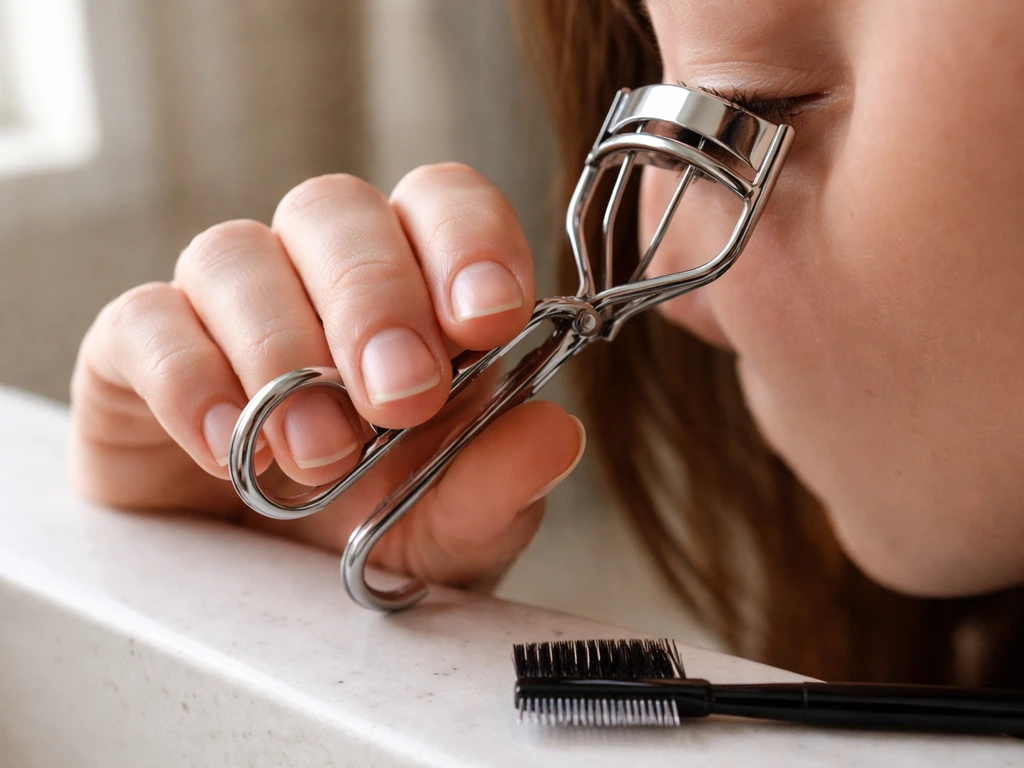
- Remove eye makeup with a dedicated oil-based or micellar remover. Saturate a cotton pad and hold it gently against the lid for 10 to 15 seconds before wiping. Do not drag.
- Do a second pass with a gentle, fragrance-free cleanser (a baby shampoo or dedicated lid cleanser works well) to clear any residue from the lash line and follicle openings.
- Pat dry with a soft cloth. Never rub.
- Apply any lash serum or oil to the lash base (not the tips) using an applicator or a clean mascara wand. Less is more.
- Do not sleep face-down on a cotton pillow. A silk or satin pillowcase reduces friction significantly.
Every morning
- Rinse the eye area with cool water and pat dry.
- If you use an eyelash curler, do it before mascara, use light pressure, and limit it to 3 to 4 times per week maximum.
- Apply mascara to the upper lashes only if possible, and skip waterproof formula on days you don't need it.
- Take any supplements (biotin, vitamin D, iron) with food in the morning.
Weekly habits
- Give yourself one or two mascara-free days per week to let lashes breathe
- Wash your eye makeup brushes and applicators to avoid lid irritation
- Check your lash line in good light for any redness, flaking, or inflammation at the base (early sign of blepharitis)
- Replace mascara every 3 months to avoid bacterial buildup
Serums vs castor oil vs biotin: what actually helps
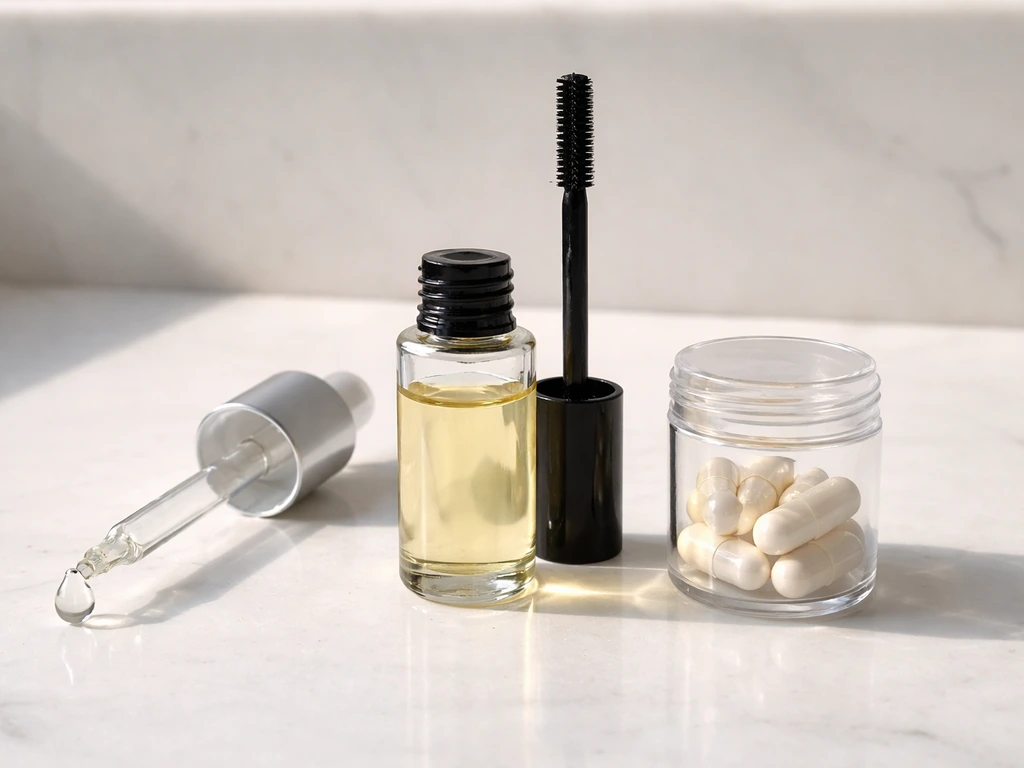
This is the question everyone asks, and the honest answer is that these three options are not equally effective. They work through different mechanisms, at different speeds, and with different evidence behind them.
| Option | How it works | Evidence level | Time to see results | Main caveats |
|---|---|---|---|---|
| Prescription bimatoprost (Latisse) | Prostaglandin analog that extends the anagen growth phase | Strongest: FDA-approved | 8 to 16 weeks | Requires prescription; possible iris pigmentation risk; results reverse when stopped |
| OTC peptide/growth factor serums | Signal proteins that may stimulate follicle activity and reduce shedding | Moderate: clinical studies exist for some brands | 6 to 12 weeks | Results vary by formulation; check ingredient list for peptides like myristoyl pentapeptide-17 |
| Castor oil (ricinoleic acid) | May improve circulation around follicle and coat the shaft to reduce breakage | Weak: mostly anecdotal and in vitro | 8 to 16 weeks minimum | Does not extend growth phase; mostly a conditioning and breakage-reduction tool |
| Biotin supplements | Supports keratin infrastructure; relevant only if you are deficient | Weak for healthy individuals; stronger if deficient | 3 to 6 months | Most people get enough biotin from food; excess is excreted; won't turbocharge healthy lashes |
My practical recommendation: if you want the most reliable results and can access a prescription, bimatoprost is the gold standard. If you want an OTC option, look for a serum with published clinical data and a peptide complex rather than just a pretty bottle. Castor oil is fine as a nightly conditioning step but should not be your main strategy if you are trying to recover significant loss. Biotin is worth adding only if your diet is restricted or you have reason to suspect a deficiency.
One thing to watch: avoid serums with prostaglandin analogs (look for ingredients ending in '-prost' or listed as isopropyl cloprostenate) in OTC products. These are not approved for over-the-counter eyelash use in many regions, and they carry the same risks as the prescription version, including possible iris darkening and periorbital fat loss with prolonged use.
What to expect on a realistic timeline
If a lash was cut or broken but the follicle is intact, expect visible regrowth in about 6 weeks. That matches what the biology predicts: the follicle re-enters anagen, the new lash pushes through, and you start to see a short stub. Full length and thickness takes longer because the full lash cycle spans 5 to 11 months and not all follicles are in the same phase at once.
| Timeframe | What you might notice |
|---|---|
| Weeks 1 to 2 | Little to no visible change; follicles transitioning; breakage reducing if you've improved habits |
| Weeks 3 to 4 | Fine, short new lashes appearing (especially at inner and outer corners where follicles may have been in early anagen) |
| Weeks 6 to 8 | Noticeable improvement in density; existing lashes look healthier if using a conditioning oil |
| Weeks 8 to 12 | Significant length and thickness gains if using a peptide serum or bimatoprost; full lash line filling in |
| 3 to 6 months | Maximum visible improvement; this is the realistic window for recovering from extension damage or chronic breakage |
To track progress properly, take a close-up photo of each eye in the same lighting on day 1, then again at weeks 4, 8, and 12. Comparing photos side by side is far more reliable than relying on memory. Look for new short lashes at the base (not just length at the tips), increased density across the full lid, and fewer lashes on your makeup remover pad each night.
Extensions, irritation, and medical causes: what to do differently
After lash extensions
Extension damage is one of the most common scenarios on this site. If your lashes thinned during or after wearing extensions, give your lash line a full break of at least 8 weeks before considering reapplication. Use a gentle lid scrub nightly to clear adhesive residue from follicle openings, apply a peptide serum or castor oil to condition the recovering lashes, and avoid any tinting, lifting, or heat during this period. The natural lashes underneath are often weaker than they look after extensions are removed, so handle them accordingly.
Irritation and blepharitis
If your lash line is red, flaky, or itchy, you have inflammation at the follicle margin, and no serum or oil will work well until that's resolved. American Optometric Association explains that blank" rel="noopener noreferrer">blepharitis is inflammation of the eyelids and discusses evaluation of lid structure and eyelash appearance, as well as treatment when bacterial infection is present. If symptoms suggest blepharitis, Harvard Health notes it involves inflammation of the eyelid edges and eyelash follicle areas, and it highlights good eyelid hygiene as the key treatment approach blank" rel="noopener noreferrer">blepharitis involves inflammation of the eyelid edges and eyelash follicle areas and good eyelid hygiene is key. Warm compresses for 5 to 10 minutes twice a day, a dedicated lid hygiene cleanser (look for hypochlorous acid or diluted baby shampoo), and temporarily stopping all eye makeup can calm blepharitis in 2 to 3 weeks. Only then should you reintroduce a growth product.
Medical and hormonal causes
Thyroid dysfunction (both hypo and hyperthyroidism), alopecia areata, trichotillomania, and certain medications (including chemotherapy, retinoids, and some blood pressure drugs) can all disrupt the anagen phase and cause real follicle-level shedding. If you are losing lashes from multiple areas of the face, if the loss is sudden and widespread, or if you see smooth bald patches rather than diffuse thinning, this is a medical issue and no amount of castor oil is going to fix it. Get bloodwork done.
Safety tips and when to stop DIYing
A few practical safety rules before you start applying anything to your lash line. The eye area is thin, absorptive, and close to your actual eyeball. Patch test any new serum or oil on your inner wrist for 24 hours before applying near the eye. Never apply oils or products directly to the eye or inner corner where they can migrate into the tear film. Use a clean applicator every time, and if a product causes redness, swelling, or a burning sensation, stop immediately and wash the area with cool water.
- See a doctor or ophthalmologist if lash loss is sudden, widespread, or accompanied by eye pain or vision changes
- See a dermatologist if you have patchy bald spots on the lash line that don't respond to 8 to 12 weeks of consistent care
- See your GP for bloodwork if you suspect thyroid issues, anemia, or another systemic cause
- Stop any OTC prostaglandin-containing serum immediately if you notice iris color change, eyelid drooping, or skin darkening around the eye
- If you have a history of contact dermatitis or sensitive skin, stick to single-ingredient options like pure castor oil rather than complex serums while you assess tolerance
Most people asking how to grow their lashes don't have a medical problem blocking growth. If you can stop the common habit issues and stick with a consistent routine, you can often grow your eyelashes back over the following weeks can you grow your eyelashes. If you are still wondering what grow eyelashes, start with stopping the habits that damage follicles and then use a consistent routine grow their lashes. They have a habit problem and a patience problem. Fix the habits first, give it a full 8 to 12 weeks with a consistent routine, and track with photos. If you want the most effective results, combine those habits with a peptide-based lash serum or careful conditioning and give it the full timeline how do you grow eyelashes. You'll almost certainly be surprised by how much of the thinning was self-inflicted and fully reversible. If you're specifically trying to grow eyelashes men, the same injury-preventing routine and realistic timeline apply how to grow eyelashes men.
FAQ
How long should I wait before judging whether a lash growth routine is working, like the answers I see on Reddit?
Reddit advice often treats castor oil, petroleum jelly, and “natural” mixes as equal, but the key difference is delivery and consistency. If you use castor oil, apply a very thin amount once nightly to the lash line area, not the waterline, and expect conditioning benefits rather than rapid length gains. For a product-driven approach, prioritize a lash serum designed for eyelash growth and use it daily for at least 8 to 12 weeks, since noticeable change depends on the lash cycle, not the first few days.
What if my lashes are growing but they still look thin on the lid?
If you see improved length at the tips but the lid still looks sparse, it usually means you are witnessing breakage recovery rather than full follicle rebuilding. Use your day-1 and week-4, 8, and 12 photos to check for new short lashes emerging from the base. Also review your mascara removal method, because tip-only change commonly comes from damaged lashes growing back in shorter segments.
I wore lash extensions, when can I start trying to regrow my lashes, and when is it safe to get extensions again?
With extensions, the “break” matters more than what you apply during it. If your lashes thinned during extensions, wait at least 8 weeks before reapplication so follicles can re-enter active growth without new mechanical pulling and adhesive stress. During the break, avoid tinting, lifting, or heat, and use gentle lid hygiene to remove adhesive residue so you are not inflaming follicle openings.
Can I speed up results by switching products every week, as some Reddit threads suggest?
Yes, but only to a point. The most common safe change is switching off daily waterproof mascara, or at least ensuring truly solvent-based removal and avoiding scrubbing. If your loss is truly due to inflammation, like red or itchy lash margins, growth products can underperform until blepharitis improves. If shedding is sudden, widespread, or you see smooth bald patches, skip DIY and get medical evaluation.
Do I really need to patch test lash serums and oils before using them near my eyes?
A patch test is especially important if you use a lash serum with peptides or if you have sensitive eyelids. Test on inner wrist for 24 hours, then watch for delayed irritation and continue to monitor redness or itching at the lash line. Also do not combine multiple active products at once, if you react, you want to know which one caused it.
What are the signs that I should stop guessing and get help instead of continuing the same routine?
New bald-looking areas can be normal after a short period of damage, but “zero regrowth after 8 weeks” is a useful cutoff to reassess. If you have no new short lashes from the base by then, double-check habit triggers (rubbing, improper removal, strip lash pulling, sleeping with mascara). If the issue persists, consider medical causes and ask a clinician about bloodwork, especially when loss is sudden or involves eyebrows or other body areas.
Is biotin or a supplement stack likely to work for eyelash regrowth?
Sometimes diet or supplements help indirectly, but they are not a substitute for stopping mechanical and inflammatory damage. Biotin is most reasonable when you have dietary restriction or suspected deficiency, otherwise extra biotin may not change eyelash growth. If you have rapid, unexplained shedding or scalp hair symptoms, prioritize evaluation over supplement stacking.
How do I apply products safely if I wear contacts or I’m prone to watery eyes?
Be careful with any product that migrates into the tear film. Do not apply oils directly to the inner corner or waterline, use only a thin amount along the lash line, and stop if you notice burning, swelling, or persistent redness. If you wear contact lenses, remove lenses before application and avoid using heavy oils that can blur vision or irritate the eye surface.
Why does it feel like my lashes are getting worse before they get better?
If you started a routine recently, timing can confuse you because telogen can hide progress for a bit. A bad habit started last month might not look worse yet, since those lashes have not shed. That is why consistent tracking photos at fixed intervals is more informative than daily subjective assessment, and why changing one variable at a time helps you learn what actually works.
Next Article
Can You Grow Your Eyelashes Back or Make Them Longer
Can you grow your eyelashes back or longer? Regrowth timeline, biology, safe at-home steps, and when to see a specialist