Prenatal vitamins can help eyelashes grow, but only if a nutrient deficiency is part of the reason your lashes are thinning. They are not a lash-growth treatment in the way a bimatoprost serum is. If your diet and baseline nutrition are already solid, adding a prenatal vitamin is unlikely to produce noticeably longer or thicker lashes. But if you are running low on iron, biotin, zinc, folate, or vitamin D, correcting that gap through a prenatal multivitamin may help your follicles cycle back into healthy growth over the course of several months.
Do Prenatal Vitamins Help Eyelashes Grow Longer?

Rachel Nguyen
14 Jun 2026
What prenatal vitamins can (and can't) do for lash growth
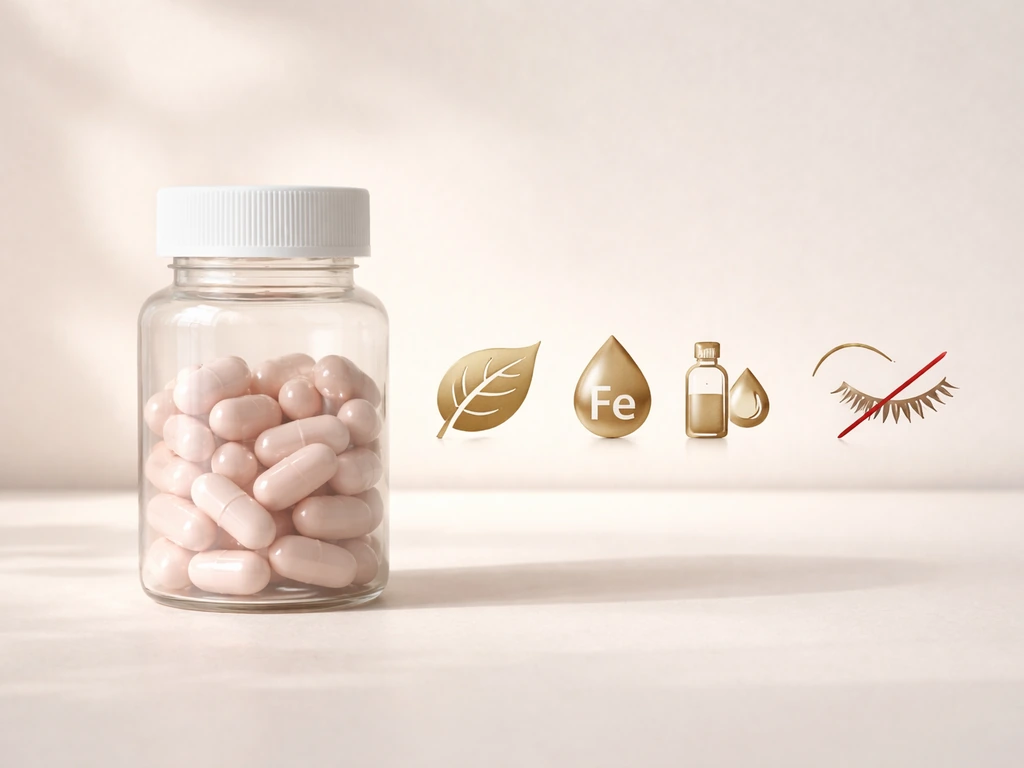
Prenatal vitamins are formulated to cover the blank" rel="noopener noreferrer">elevated micronutrient demands of pregnancy and postpartum recovery. They pack higher amounts of folate, iron, iodine, and choline than a standard adult multivitamin, along with decent amounts of biotin, zinc, and vitamins A, C, D, and B12. Vitamin C is one of the micronutrients in many prenatals, but evidence that it specifically helps eyelashes grow is mostly indirect through correcting deficiencies. That nutrient density is why the idea of using them for hair and lash growth has stuck around, and why so many postpartum women swear by them.
What they can do: if one or more of those nutrients is genuinely low in your body, bringing levels back to normal can remove a nutritional bottleneck that was slowing down follicle cycling. Hair follicles are among the most metabolically active structures in the body, and they respond quickly to both deficiency and repletion. Eyelash follicles are no exception.
What they can't do: they will not stimulate lash follicles beyond their genetically programmed growth potential. There is no clinical trial showing that oral prenatal vitamins grow lashes in people who are already nutritionally sufficient. The famous post-pregnancy hair surge is driven by estrogen shifts, not the vitamins themselves. And no oral supplement comes close to the measurable length gains documented with prescription prostaglandin-analog treatments like bimatoprost, which produced a mean lash-length increase of about 2.0 mm versus 1.1 mm with placebo in a controlled study.
Key nutrients in prenatals that may affect lash follicles
Not every ingredient in a prenatal vitamin is relevant to lash growth. The ones worth paying attention to are the ones with documented roles in hair-follicle biology or whose deficiency is known to cause hair loss.
| Nutrient | Role in follicle health | Deficiency sign relevant to lashes | Typical prenatal dose |
|---|---|---|---|
| Biotin (B7) | Cofactor for keratin synthesis; deficiency causes hair thinning and loss | Thinning hair, brittle nails, rash around eyes and nose | 30–300 mcg |
| Iron | Supports oxygen delivery to follicles; low ferritin is linked to telogen effluvium | Shedding, fatigue, pale skin | 27 mg (pregnancy RDA) |
| Folate (B9) | Required for rapid cell division in growing hair matrix | General hair thinning in deficiency | 600–800 mcg DFE |
| Zinc | Regulates follicle cycling and protein synthesis; deficiency causes hair loss | Hair loss, skin rashes, slow wound healing | 11–13 mg |
| Vitamin D | Vitamin D receptors are expressed in follicle tissue; deficiency associated with hair loss | Diffuse shedding, fatigue, mood changes | 400–1,000 IU |
| Vitamin B12 | Supports red blood cell formation and DNA synthesis in follicle cells | Hair thinning, fatigue, neurological symptoms | 2.6–6 mcg |
| Vitamin A | Regulates follicle differentiation; too little or too much can impair growth | Dry skin and hair in deficiency; toxicity risk with excess | 770–1,300 mcg RAE |
Biotin gets the most attention, but it is worth being honest: StatPearls notes there are no clinical trials supporting biotin supplementation for improving hair quantity or quality in people who are not deficient. True biotin deficiency is rare in most healthy adults eating a varied diet. The NIH Office of Dietary Supplements confirms that deficiency signs include hair thinning and rashes around facial openings, so if those fit your situation, biotin repletion makes sense. If they do not, the biotin in a prenatal is not going to unlock new lash growth.
Iron and zinc are arguably the nutrients most worth checking. Iron-deficiency anemia and low ferritin are among the most common nutritional causes of diffuse hair shedding (telogen effluvium), and low zinc levels similarly disrupt follicle cycling. Both are well-represented in prenatal formulas at meaningful doses.
When prenatal vitamins might work: deficiency vs normal nutrition
The honest answer is that the potential benefit of prenatals for lash growth is almost entirely tied to deficiency correction. Think of it as a dial: the more nutritionally depleted you are, the more room there is for a supplement to help. If your dial is already at full, turning it further does nothing for lash follicles.
Groups most likely to see a real difference from prenatal vitamins include people who are postpartum (nutrient stores often depleted after pregnancy and breastfeeding), those with restrictive diets (vegans and vegetarians who may be low in B12, iron, and zinc), people who have had significant stress, illness, or rapid weight loss recently, and anyone with a diagnosed or suspected deficiency confirmed by bloodwork.
Groups unlikely to see lash changes from prenatal vitamins include people eating a balanced, varied diet with no documented deficiencies, those whose lash loss is driven by mechanical damage (extensions, rubbing, heat), people with medical causes like hypothyroidism or blepharitis, and those on medications known to affect hair growth. A case report in the literature illustrates this well: a patient with severe hypothyroidism experienced significant lash loss, but their nutritional labs including ferritin, iron, folate, and B12 all came back normal. Their lashes only partially recovered after treating the thyroid condition itself, not after adding supplements.
Lash growth timeline: how long it takes to notice changes
Eyelashes have a relatively short growth cycle compared to scalp hair, but that does not mean changes happen fast. The anagen (active growth) phase for lashes lasts roughly 4 to 10 weeks, and the full lash life cycle from growth through shedding spans approximately 4 to 11 months. After anagen ends, follicles transition through catagen (a roughly 2-week resting transition) before a new lash begins.
What this means practically: if you start correcting a deficiency today, you are not going to see fuller-looking lashes in two weeks. The follicles that are already in catagen or telogen will still shed. New, healthier growth driven by improved nutrition will not be visible for at least 6 to 8 weeks, and a meaningful difference in overall lash density or length can take 3 to 6 months of consistent supplementation. Even clinical treatments like bimatoprost show significant results at 2 to 4 months in controlled studies, and those are delivering a direct pharmacological signal to follicles. An oral vitamin working indirectly is going to be at the slower end.
The practical takeaway: commit to at least 3 months before evaluating whether the prenatal vitamins are doing anything for your lashes. Take a close-up photo in the same lighting at the start and again every 4 weeks. Subtle changes are easy to miss day-to-day.
How to use prenatals safely (and when to avoid them or talk to a doctor)

Prenatal vitamins are generally well-tolerated, but the elevated doses of certain nutrients mean there are real upper limits to respect. The NIH tolerable upper intake level (UL) for iron is 45 mg per day for adults, and many prenatals contain 27 mg just in the supplement itself. Add dietary iron on top and you can approach that ceiling, especially if you are not pregnant and genuinely iron-replete. [High-dose iron commonly causes nausea and constipation.
](https://ods. od. nih. gov/factsheets/Iron%20%20-HealthProfessional/) Zinc's UL is 40 mg per day, selenium's is 400 mcg per day, and vitamin D's UL ranges from 1,000 to 4,000 IU per day depending on age.
Vitamin A is the one to watch most carefully: excess retinol can be toxic, and prenatal formulas that use preformed vitamin A (retinol) rather than beta-carotene can push you close to the upper limit if you are also eating liver or taking other supplements.
Vitamin B12, by contrast, has no established UL because excess is excreted, and folate at standard prenatal doses (400 to 800 mcg) is well within the safe range that the CDC recommends for anyone who could become pregnant.
A few specific safety notes:
- Not pregnant and not trying to conceive: a regular high-quality multivitamin may serve you just as well without the elevated iron that can cause GI issues in people who do not need it.
- Postpartum and breastfeeding: prenatal vitamins are typically recommended to continue throughout breastfeeding, so lash support during this phase is a genuine secondary benefit.
- On thyroid medication, blood thinners, or antibiotics: iron and calcium in prenatals can interfere with absorption of levothyroxine and some antibiotics; take them at least 2 to 4 hours apart.
- Already taking a separate biotin supplement: check your combined dose; while biotin toxicity is extremely rare, very high biotin supplementation can interfere with certain lab tests, particularly thyroid and cardiac biomarkers.
- No improvement after 4 to 6 months: stop assuming it is a vitamin issue and get bloodwork done, or consult a dermatologist.
Comparing prenatals with proven lash-growth methods
Prenatal vitamins occupy a specific and limited lane in the lash-growth toolkit. Here is how they stack up against the other main approaches.
| Method | How it works | Evidence strength | Time to results | Best for |
|---|---|---|---|---|
| Prenatal vitamins (oral) | Corrects nutritional deficiencies that limit follicle cycling | Indirect; strong only when deficiency is confirmed | 3–6 months | Deficiency-related thinning, postpartum, restrictive diets |
| Targeted lash supplements (biotin/B-complex focused) | Similar to prenatals but without pregnancy-level iron; may include specific hair-support ingredients | Indirect; no RCT evidence for non-deficient users | 3–6 months | Non-pregnant users who want nutrient support without high iron |
| Bimatoprost (prescription serum) | Prostaglandin analog extends anagen phase directly | Strong RCT evidence; ~2 mm length gain vs 1.1 mm placebo | 2–4 months | Diagnosed hypotrichosis; clinically meaningful growth needed |
| OTC lash serums (peptides, biotin topical) | Condition follicle environment; some peptides may modestly extend anagen | Limited; mostly manufacturer studies | 2–3 months | Mild thinning; extension/damage recovery |
| Castor oil and nourishing oils | Coat and condition lash shafts; reduce breakage; moisturize the follicle margin | No clinical evidence for growth; good evidence for barrier support | Ongoing maintenance | Brittle, dry, or damaged lashes prone to breakage |
| Diet improvement (whole food) | Provides bioavailable nutrients across all deficiency types simultaneously | Strong foundational evidence | 3–6 months | Anyone with poor dietary variety or recent nutritional stress |
The honest recommendation: if you want measurable lash length and fullness and you are willing to see a doctor, a prescription prostaglandin serum is the only option with robust clinical evidence for length gains. If you want a safer, lower-intervention starting point, check your diet first, address documented deficiencies with a supplement (prenatal or targeted), and use a conditioning oil like castor oil at the lash line to reduce mechanical breakage while your follicles recover. Those two approaches complement each other well. What they cannot do is replace a targeted clinical treatment if your lash loss is significant.
It is also worth knowing that vitamins like vitamin C and collagen-supporting nutrients play roles in the broader hair and follicle structure conversation, and keratin is the primary structural protein in lash strands. Addressing overall nutrition holistically tends to perform better than chasing a single ingredient.
Troubleshooting thinning lashes from damage or medical causes, and your next steps
Thinning lashes are not always a nutrition problem, and that distinction matters before you commit months to a supplement routine. A broad clinical review of eyelash loss (madarosis) identifies causes including skin diseases, endocrine disorders (especially thyroid), metabolic conditions, drug side effects, inflammatory conditions like blepharitis, trauma from extensions or rubbing, and psychiatric disorders. Vitamins address none of these root causes on their own.
Here are the red flags that suggest you need a clinician rather than a vitamin:
- Lash loss is patchy or asymmetric rather than diffuse thinning across both eyes
- You have eyelid redness, flaking, crusting, or itching (signs of blepharitis or a skin condition)
- Lash loss began or worsened after starting a new medication
- You have other symptoms of thyroid dysfunction: fatigue, weight changes, hair loss on scalp and outer eyebrows, cold intolerance, or periorbital puffiness
- Lashes are not recovering after 3 to 4 months of improved nutrition and topical care
- You are pulling or rubbing lashes compulsively (a clinician can help distinguish trichotillomania from other causes)
- You are on chemotherapy or another systemic treatment known to cause lash loss
If none of those apply and your lash thinning is mild and diffuse, here is a practical action plan to start today:
- Get baseline bloodwork if you can: ask your doctor to check ferritin (not just hemoglobin), serum 25(OH)D for vitamin D status, zinc, and B12. This tells you whether a supplement will actually move the needle.
- Choose your supplement strategy: if you are postpartum or breastfeeding, continue a prenatal vitamin. If you are not pregnant, a high-quality multivitamin or targeted hair supplement with iron appropriate to your needs may be a better fit and easier on your GI system.
- Improve dietary variety: prioritize iron-rich foods (leafy greens, legumes, lean meat), zinc-rich foods (pumpkin seeds, shellfish, eggs), and protein at every meal. Amino acids are the raw material for keratin, the protein your lashes are made of.
- Apply a conditioning oil to your lash line nightly: castor oil, argan oil, or a similar nourishing oil helps reduce breakage at the base, which is especially important if your thinning is partly mechanical from extensions or rubbing.
- Consider a topical OTC lash serum as a complement: peptide-based serums can support the follicle environment while nutrition catches up, without the prescription requirement of bimatoprost.
- Track progress with photos: same lighting, same distance, every 4 weeks for 3 to 6 months.
- Reassess at month 4: if you see no meaningful change in density or growth, book an appointment with a dermatologist. Lash hypotrichosis with a medical root cause needs more than a multivitamin.
Prenatal vitamins are a reasonable, low-risk starting point for lash thinning that might be nutritional in origin. They are not magic, and they are not the right answer for everyone. But if your body is short on the building blocks hair follicles need, giving it those building blocks through a well-formulated supplement is one of the most foundational things you can do while you sort out the rest of your strategy.
Keratin products are often marketed as a way to strengthen and support lash growth, but they are not the same as correcting a true nutritional deficiency. Some people also ask whether red light therapy can help, but the evidence for eyelash growth is still limited compared with correcting deficiencies and using proven treatments red light therapy help eyelashes grow.
If you are wondering what helps eyebrows and eyelashes grow, it usually starts with fixing any nutrient deficiencies that could be slowing follicle cycling.
FAQ
How long should I take prenatal vitamins before I expect to see any lash changes?
Plan on at least 3 months. New lash growth takes time to cycle through growth and shedding, so you typically will not see noticeable fullness or length for 6 to 8 weeks, and the clearest difference often takes 3 to 6 months.
Should I take prenatal vitamins even if I am not pregnant or postpartum?
You can, but the benefit is most likely only if you are actually low in key nutrients. If your diet is varied and you have no deficiency risk, a prenatal may not change lash growth, and you still need to watch for upper limits, especially iron and vitamin A.
Can prenatal vitamins help if my lashes are thinning from extensions, rubbing, or heat?
Prenatals may help only indirectly (for example, if you are also nutritionally deficient). If the main cause is mechanical breakage or irritation, you usually need behavior changes and gentler lash care, sometimes plus a clinician evaluation for inflammation.
Is biotin in prenatal vitamins enough on its own to regrow lashes?
Only if you are truly deficient. Biotin deficiency is uncommon in people with a varied diet, and most people will not respond to extra biotin alone. If you suspect deficiency, confirm with your clinician instead of assuming biotin is the key.
What labs are most useful to check if I suspect nutritional lash thinning?
Ask about iron status (ferritin, iron, and sometimes CBC), zinc, vitamin D, folate, and vitamin B12. If you have symptoms beyond lashes or a history of endocrine issues, also consider thyroid testing because non-nutritional causes are common.
What if my prenatal vitamin contains iron, but I have normal iron levels?
If you are already iron-replete, extra iron may only increase side effects like nausea or constipation without helping lashes. Many people benefit more from targeted supplementation based on labs rather than automatically choosing the highest-iron prenatal.
Is it safe to take multiple supplements along with prenatals for lash growth?
Be cautious. Doubling up can push you over tolerable upper limits, particularly for iron, zinc, and vitamin A (retinol). A common mistake is adding a separate hair supplement that contains iron or vitamin A on top of a prenatal.
Can prenatal vitamins change the color of my lashes or just length?
Nutrient repletion is more likely to affect density and overall follicle cycling than to significantly change lash pigment. Any noticeable changes are usually gradual and reflect healthier regrowth rather than an immediate color shift.
Will prenatal vitamins interfere with blood tests or medical screening?
They can. Biotin can affect certain lab assays, so tell your clinician and request guidance on whether to stop biotin-containing supplements before specific blood work. Also share your full supplement list if you are on medications.
What red flags mean I should not try prenatal vitamins first?
Seek medical advice promptly if you have patchy or rapidly progressive lash loss, eyelid burning or crusting, significant itching, new vision symptoms, known thyroid disease, or hair loss elsewhere. These patterns often point to causes beyond nutrition, like blepharitis or endocrine conditions.
If I start prenatals, should I also use castor oil or lash conditioners?
They can be complementary. Conditions like castor oil may reduce breakage and make lashes look fuller sooner, while prenatals target possible internal deficiencies over months. Avoid harsh rubbing and be gentle with removal to prevent further trauma.
How do I choose a prenatal if my goal is lash support?
Look for a formula that is not excessive and covers likely deficiency areas (iron, zinc, vitamin D, folate, B12). Avoid stacking additional high-dose vitamin A or zinc supplements. If you have specific deficiencies, targeted supplementation may outperform a generic prenatal.
Next Article
Does Keratin Help Eyelashes Grow? What It Can and Can’t Do
Evidence on keratin serums for lash growth, what improves breakage and what won’t regrow follicles, plus safe use tips.