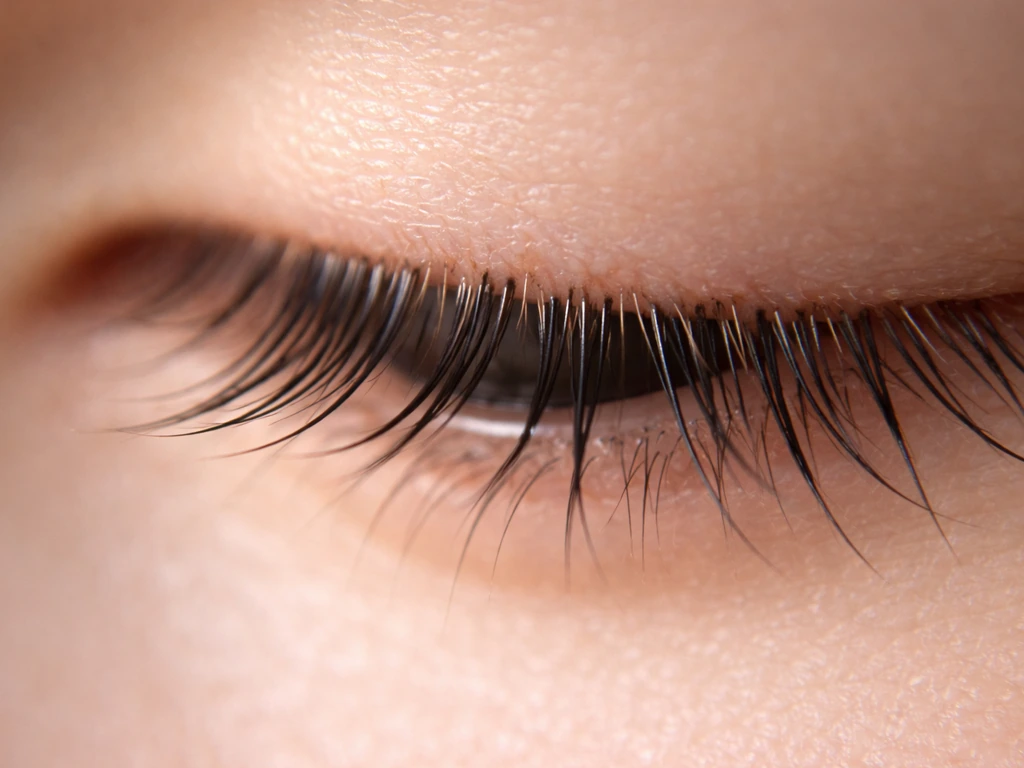
Eyelashes grow in the corners of your eye because follicles are naturally distributed along most of the eyelid margin, but anatomy puts a hard stop at the inner corner: there are no lash follicles medial to the lacrimal papilla (the tiny bump where your tear duct opens). That means the inner canthus has a natural sparse zone, not a growth problem. The outer corner lashes exist but tend to be fewer, shorter, and finer than the lashes across the middle of the lid. If your corner lashes look even sparser, more bent, or slower-growing than usual, the cause is almost always one of a short list: mechanical damage, chronic inflammation, or a follicle-level condition that needs to be identified before you can fix it.
Why Do Eyelashes Grow in the Corners of Your Eye?

Rachel Nguyen
6 Jun 2026
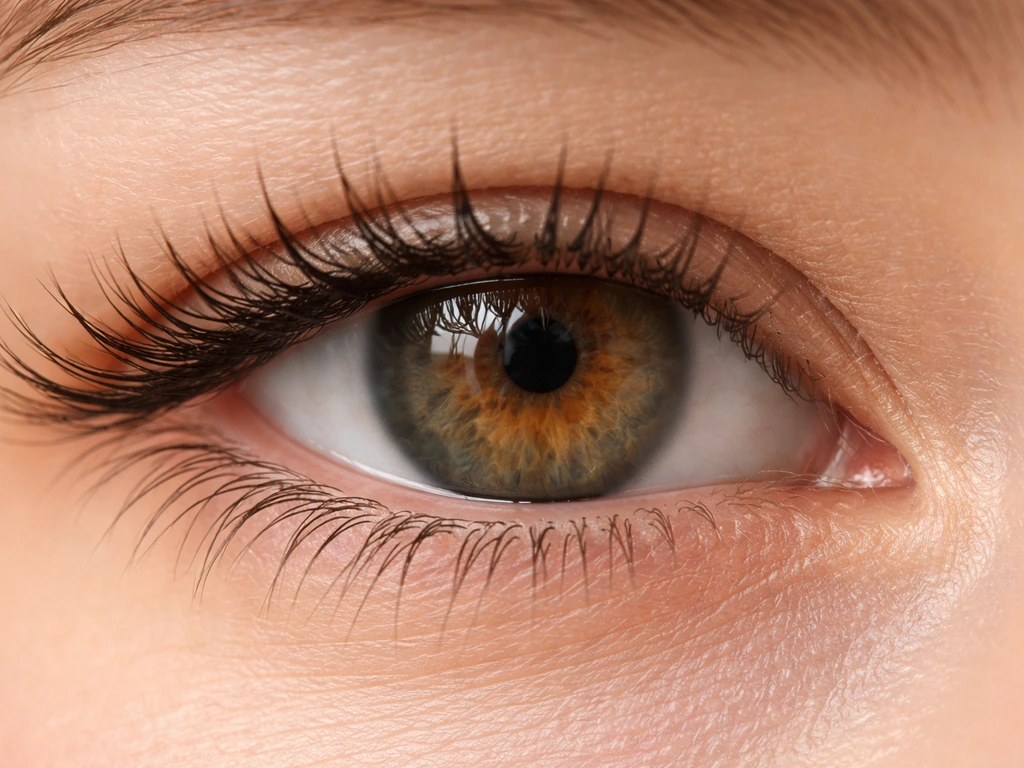
Why corner lashes look different in the first place
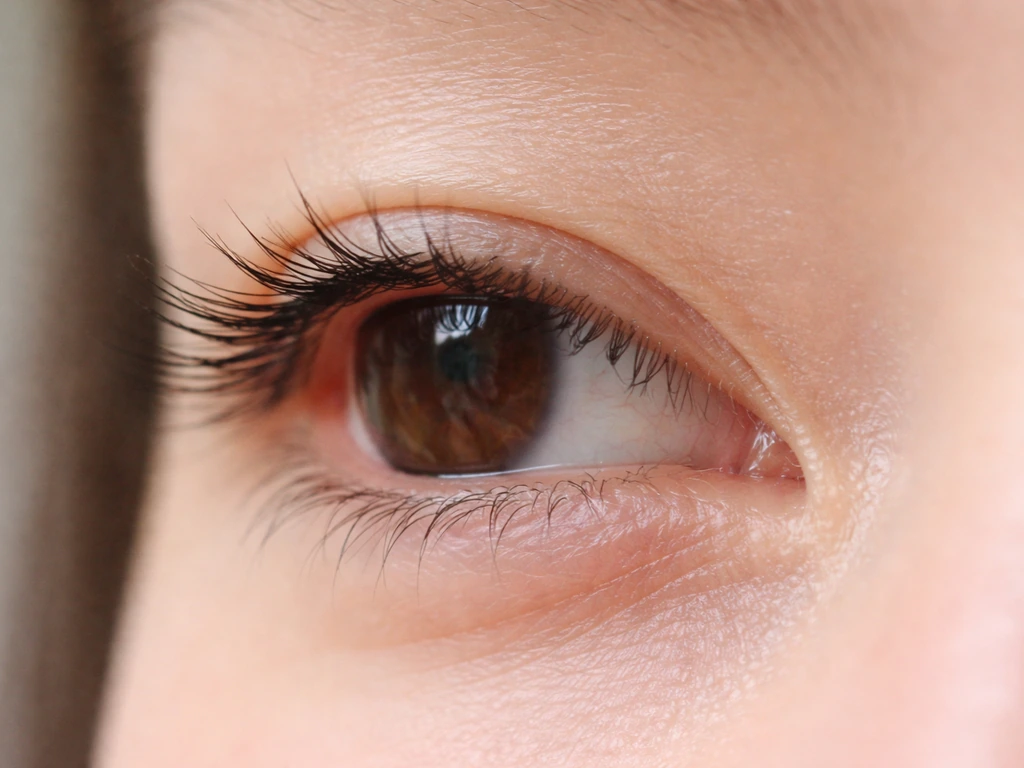
The lash line is not a uniform strip of identical follicles. The upper lid carries roughly 90 to 160 lashes arranged in five or six rows, and the lower lid has only about 75 to 80 lashes in three or four rows. Density is highest across the center of each lid, and it naturally tapers toward both the inner and outer corners. On top of that, follicle depth differs between lids: upper-lid follicles sit about 2.4 mm deep, while lower-lid follicles sit at only about 1.4 mm, which partly explains why lower-lid corner lashes are more vulnerable to surface-level trauma like rubbing or adhesive irritation.
The inner corner has its own distinct anatomy. Because no follicles exist medial to the lacrimal papilla, the lash line genuinely ends before the inner corner of the eye. What many people interpret as missing or failed-to-grow inner-corner lashes is simply the natural endpoint of the follicle distribution. The outer corner does carry follicles, but the lashes there tend to curl more laterally, grow at slightly different angles, and can be finer than mid-lid lashes, which makes sparse outer-corner lashes more obvious against the baseline density of the rest of the lid.
Common reasons corner lashes look sparse, bent, or slow
Outside of pure anatomy, the most frequent reasons corner lashes look thinner or slower to grow come down to a few patterns. Corner zones take the most friction during everyday habits, follicles there can be disrupted by chronic low-grade inflammation, and because the baseline count is already lower, any thinning is immediately visible. Here are the main culprits worth going through mentally before you try to treat anything.
- Natural taper: the follicle count legitimately decreases toward both corners, so corner lashes are always somewhat finer than center lashes
- Follicle angle: corner follicles point at slightly different angles and produce lashes that lie flatter or curl differently, making them look shorter even at normal length
- Slower subjective regrowth: because corner lashes are fewer to begin with, losing even two or three in a shed cycle makes the area look noticeably patchy compared with the center
- Chronic friction: the inner corner rubs against the nose bridge during sleep; the outer corner catches glasses frames and pillow edges
- Habitual touching: most people unconsciously rub their eyes at the inner and outer corners first, not the center
How corner lashes get damaged (extensions, rubbing, makeup, and more)
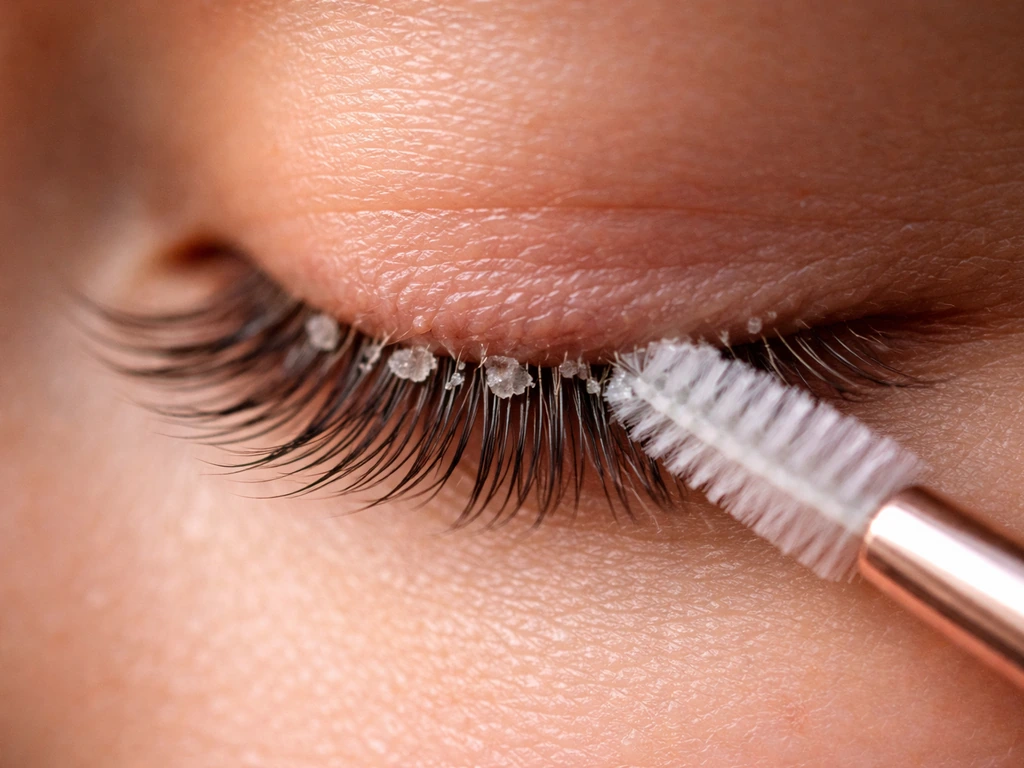
Mechanical damage is the number-one cause of corner lash thinning that people bring on themselves without realizing it. Eyelash extensions are a major driver: the adhesives used typically contain ethyl cyanoacrylate, which can trigger allergic contact dermatitis along the lash line, and documented case reports link extension glues directly to eyelid dermatitis and subsequent patchy lash loss. The corners are especially vulnerable because extension placement at the inner and outer edges tends to involve more tape contact with skin and more mechanical tension when lashes are fanned outward.
Makeup removal is another underestimated problem. Pulling a cotton pad or wipe from the outer corner inward, or pressing hard on the inner corner to get mascara out of the crevice, applies exactly the kind of repeated traction that slowly empties follicles. Lash curlers used aggressively at the corners can physically shear lashes at the root, and tweezers used to catch stray lashes near the corners can damage follicles if the angle is wrong. Even sleeping on your side puts consistent pressure on whichever outer corner is against the pillow.
- Extension adhesives and tape: repeated use causes dermatitis and mechanical traction that preferentially affects corner follicles
- Rough makeup removal: friction at the inner and outer corners during cleansing is a leading cause of gradual thinning
- Lash curlers: aggressive curling at the corner can shear lashes at the root
- Tweezers and manual epilation: pulling out stray corner lashes over time damages follicles
- Contact lens insertion/removal: daily finger contact near the inner corner creates repeated low-grade friction
- Glasses frames: the outer corner rests directly against frames, adding constant pressure that can compress follicles over months
- Pillow friction: side sleepers lose outer-corner lashes on the down side faster than the other
Medical causes worth ruling out
If gentle care for a couple of months does not noticeably improve corner lash density, a medical cause may be driving the loss. The conditions below are worth knowing about because the treatment approach is completely different from the conditioning-and-patience route.
Blepharitis and Demodex
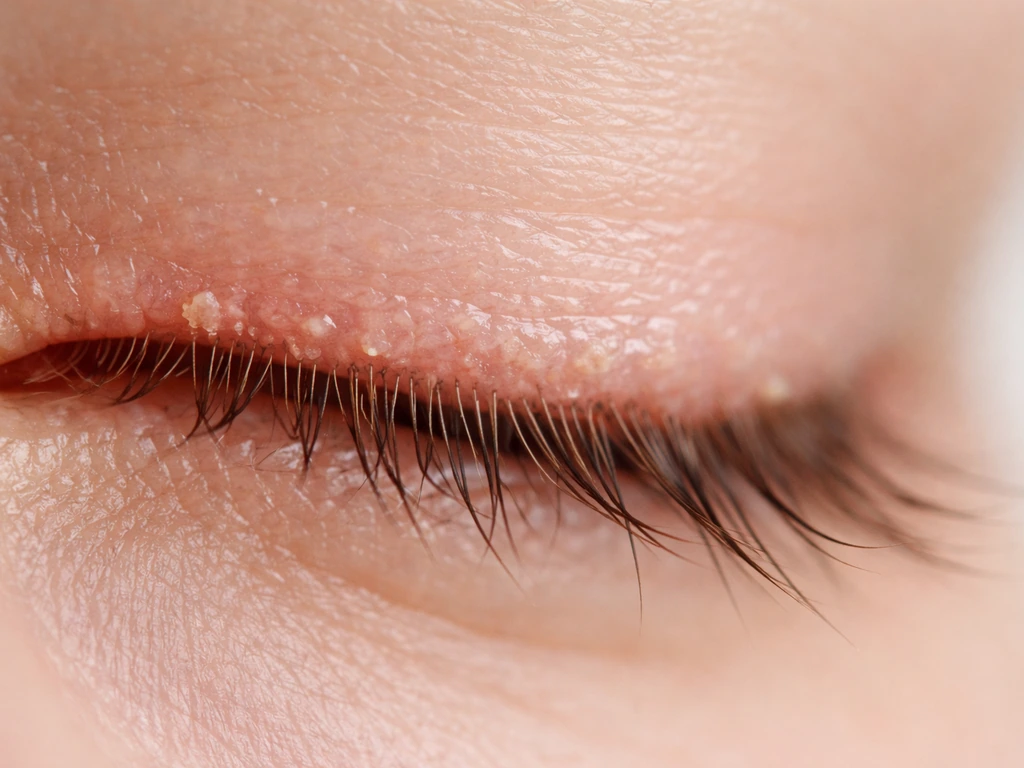
Blepharitis, chronic inflammation of the eyelid margin, is probably the most common underlying cause of diffuse lash thinning including in the corners. Demodex blepharitis, specifically caused by Demodex mites that live in and around eyelash follicles, can lead to eyelash loss alongside symptoms like lid crusting, itching, and redness. If you notice a cylindrical sleeve of debris around the base of corner lashes, that is a classic Demodex sign. Warm compresses for 5 to 10 minutes followed by gentle lid scrubs are the foundational treatment. A microscopic exam of epilated lashes can confirm mite infestation if an eye doctor suspects it.
Trichiasis (inward-growing lashes)
Trichiasis means normal lashes growing in an abnormal direction, often inward toward the eye surface. In many cases this question comes down to inward-growing lashes, a pattern called trichiasis can an eyelash grow inside eyelid. Medial canthal trichiasis, specifically at the inner corner, is a recognized presentation. Medial canthal trichiasis, specifically at the inner corner, is a recognized presentation.
Can eyelashes grow into your eye is a related concern when misdirected corner lashes scrape the cornea or conjunctiva. When misdirected corner lashes repeatedly scrape the cornea or conjunctiva, they cause a foreign-body sensation, tearing, and redness, and people often epilate them repeatedly, which over time can thin the corner lash line. Cleveland Clinic advises contacting a clinician for eye irritation, pain, or redness when misdirected lashes are involved, and notes that treatment focuses on [protecting the cornea](https://www. clevelandclinic.
org/health/diseases/24542-trichiasis). Trauma and inflammation distort the tissue around the follicle root and drive this misdirection cycle. If you notice corner lashes pointing toward your eye rather than outward, that is a clinical issue, not something to manage at home with oil.
Eyelid eczema and allergic contact dermatitis
The eyelid skin is some of the thinnest on the body and reacts easily to allergens. Extension glues, eye drops, preservatives in makeup, and even some lash serums can trigger eyelid dermatitis. Chronic dermatitis at the lash line interrupts the follicle environment and leads to patchy thinning. If you have persistent redness, flaking, or swelling at the corners, suspect a contact allergy and stop any new products immediately.
Alopecia areata
Alopecia areata affecting the eyelashes typically presents as bilateral patchy lash loss across both the upper and lower lids, which distinguishes it from the asymmetric mechanical thinning most people experience. The patchy, often rapid pattern of loss is a key differentiator. This is an autoimmune condition and will not respond to oils or serums.
Madarosis and scarring
Madarosis is the medical term for eyelash loss. It can be non-scarring (meaning follicles are intact and regrowth is possible once the cause is controlled) or scarring (where deeper inflammation and fibrosis have destroyed follicles, making regrowth unlikely or impossible). Scarring madarosis is rare but permanent, which is exactly why conditions driving chronic corner inflammation should be treated early.
| Condition | Key Sign | Corner-Specific? | Regrowth Possible? |
|---|---|---|---|
| Blepharitis / Demodex | Lid crusting, itching, debris at lash base | Affects full lash line, worse at margins | Yes, with treatment |
| Trichiasis | Lashes pointing inward, eye irritation, tearing | Inner corner common (medial canthal) | Requires clinical correction |
| Allergic contact dermatitis | Redness, swelling, flaking around lash line | Often follows extension/glue use at corners | Yes, once allergen removed |
| Alopecia areata | Patchy bilateral loss, rapid onset | Affects any zone, not corner-specific | Often yes, unpredictable |
| Scarring madarosis | No regrowth after months, scarred lid margin | Can be focal | Unlikely |
How to support corner lash regrowth right now
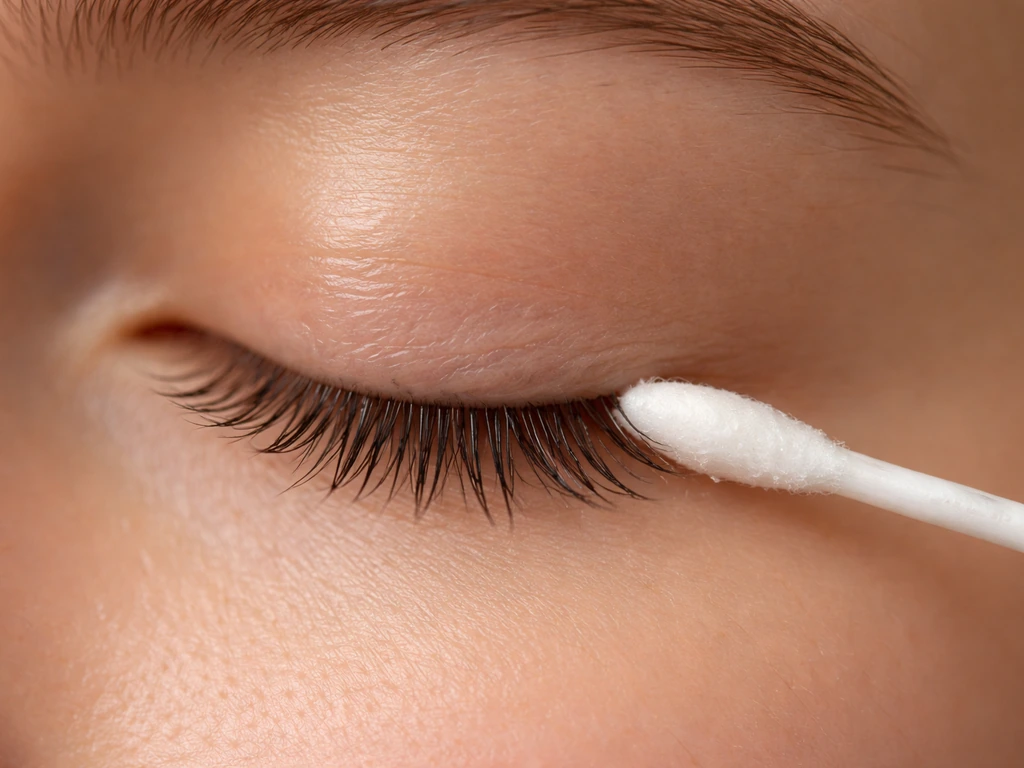
The most important first step is stopping whatever is causing the damage. That sounds obvious but it is harder than it sounds: people often start adding a new serum or oil to a corner they are still aggressively rubbing every night, and then wonder why nothing improves. Start by auditing the friction sources above and eliminating them for at least eight weeks, which is roughly one full lash growth cycle.
- Switch to oil-based makeup remover and apply it by pressing gently, not swiping, then let it dissolve mascara before wiping downward and away from the lash line
- Wash the lash margin daily with a gentle, fragrance-free cleanser or dedicated lid-hygiene product; use a clean fingertip or a soft brush, not a rough pad
- Apply a warm compress (not hot) for 5 to 10 minutes two or three times per week to soften debris, improve oil-gland function, and reduce low-grade lid inflammation
- Sleep on your back or use a silk pillowcase to eliminate outer-corner friction overnight
- Take a minimum 4-week break from extensions, lash tape, and strip lashes to let corners decompress
- Stop using tweezers on corner lashes; even one poorly angled pull can damage a follicle
- Give the process at least 12 to 16 weeks before evaluating results, because lash follicles cycle slowly
What to use to thicken and lengthen corner lashes
Once you have addressed mechanical damage and ruled out active inflammation, you can support regrowth with the right topical approach. The corner zones require careful application technique because you are working close to the tear duct medially and close to the lateral canthus laterally, both areas where excess product can migrate onto the eye.
Conditioning oils
Castor oil is the most popular home option and can genuinely help as a conditioner: it coats the lash shaft, reduces brittleness and breakage, and creates a better environment for follicles at the surface level. It does not stimulate follicles in any clinically measurable way, but reducing mechanical breakage alone makes lashes appear thicker and longer over time. Apply a tiny amount with a clean spoolie only to the upper lash line base at night, then let it migrate naturally. Avoid heavy application near the inner corner, where it can pool and irritate the tear duct. Argan oil and jojoba oil work similarly as lightweight conditioning alternatives.
Lash serums and prostaglandin analogs
Bimatoprost 0. 03% (sold as Latisse) is the only FDA-approved topical treatment for eyelash hypotrichosis, meaning insufficient lash growth. It works by extending the anagen (active growth) phase of the lash cycle and has good evidence for increasing length, thickness, and darkness. In the pivotal trials, patients applied it once nightly for 16 weeks before meaningful results were visible, so this is a months-long commitment, not a quick fix.
Important application note: the FDA label specifies application to the upper eyelid margin at the base of the lashes only. It is not recommended for the lower lash line, where the risk of unintended contact with the eye is higher. This means direct application to inner or outer corner zones needs to be conservative, using the thin applicator brush and just touching the lash base, not flooding the corner.
Prostaglandin-analog-class ingredients (including isopropyl cloprostenate, found in some over-the-counter serums) show similar mechanisms but are not FDA-approved for this use; a 2024 comprehensive review in the Journal of Cosmetic Dermatology confirms evidence support for this ingredient class while noting side effects including irritation and periorbital pigmentation changes.
Biotin and supplements
Biotin is widely marketed for lash growth, but the evidence only supports it when you have a confirmed biotin deficiency, which is actually uncommon in people eating a reasonably varied diet. Taking extra biotin when your levels are already normal does not accelerate lash growth. If you want to try a supplement approach, focus on adequate protein intake and zinc, both of which play more directly documented roles in hair follicle function. Biotin will not hurt you, but set your expectations accordingly.
| Product Type | Evidence Level | Best Use Case | Corner Application Tip |
|---|---|---|---|
| Castor / argan / jojoba oil | Conditioning only, not follicle-stimulating | Reducing breakage, early recovery phase | Use a clean spoolie, avoid pooling near tear duct |
| Bimatoprost 0.03% (Latisse) | FDA-approved, strong clinical evidence | Confirmed hypotrichosis, persistent thin lashes | Upper lid only per label; use thin applicator, touch base not canthus |
| OTC prostaglandin-analog serums | Moderate evidence, not FDA-approved | Want OTC option with active ingredient | Same caution as Latisse; watch for pigment changes |
| Peptide-based OTC serums | Limited, mixed evidence | General conditioning adjunct | Low irritation risk; suitable as gentle daily use |
| Biotin supplements | Only effective with confirmed deficiency | Deficiency-related hair loss | No specific application; oral supplement |
A note on application technique near the corners: always use the minimum effective amount and apply from the center of the lash line outward, then separately touch the inner corner base if needed. Never squeeze a dropper or press a wand directly into the corner angle. Excess product that reaches the eye can cause redness, irritation, or in the case of prostaglandin analogs, a change in iris pigmentation over time.
When to see an eye doctor or dermatologist
At-home care covers most mechanical causes of corner lash thinning, but some situations need a clinician. Do not wait out symptoms that suggest an active medical problem.
- Pain, persistent redness, or a gritty foreign-body sensation at the inner or outer corner: could be trichiasis with corneal contact, which requires clinical evaluation and potentially fluorescein staining to check for corneal abrasion
- Crusting, scaling, or cylindrical debris at the corner lash bases that does not clear with gentle hygiene: may indicate Demodex blepharitis requiring specific treatment
- Rapid or patchy bilateral lash loss across both lids: the pattern suggests alopecia areata rather than mechanical damage; see a dermatologist
- Swollen, itchy, or flaking eyelid skin at the corners that started when you introduced a new product: allergic contact dermatitis that may need patch testing to identify the allergen
- Corner lashes visibly pointing inward toward the eye surface: trichiasis that can cause corneal ulceration if not managed
- No regrowth after four to six months of consistent gentle care: the follicle may be scarred or the underlying cause may still be active
- Asymmetric loss or lash changes accompanied by lid thickening, texture change, or skin lesion: needs dermatologic evaluation to rule out rarer causes
When you see a clinician, it helps to arrive with specifics: how long the thinning has been happening, what products you use and have recently stopped, whether you have had extensions or prior eyelid procedures, and whether you have any symptoms in the eye itself (tearing, irritation, vision changes). An eye doctor may epilate a lash for microscopic exam to check for Demodex, use a slit lamp to assess the lash direction and corneal surface, and refer to a dermatologist if an immune or skin condition is suspected. A dermatologist can patch test for contact allergens and evaluate systemic causes of hair loss.
Corner lashes are structurally more vulnerable, naturally less dense, and exposed to more daily friction than center lashes, which is why they are the first to show thinning and the last to seem to recover. The good news is that for most people the cause is mechanical and entirely reversible once the triggers are addressed and the follicles are given time. The lash growth cycle takes 12 to 16 weeks to complete, so give any honest regimen at least that long before deciding it is not working. If something is clearly medical, get it identified early: non-scarring causes respond well to treatment, but the window for full recovery narrows if inflammation is left to continue unchecked.
FAQ
If the inner corners naturally have fewer lashes, when should I worry that something is wrong?
Worry if the corner zone looks noticeably different from your usual baseline, especially if you also have redness, crusting, itching, flaking, or new tenderness. A key sign of a true problem is patchiness or a rapid change rather than the lifelong “taper” most people have toward the inner canthus.
Can I make the corner lashes grow back faster by using oils or lash serums more often?
Usually no, higher frequency mainly increases friction and irritation risk. Instead, use the minimum effective amount and give changes 12 to 16 weeks, the typical lash cycle. If you are still rubbing, applying more product can worsen inflammation at the follicle base.
Is it normal for corner lashes to curl inward sometimes?
Some mild curl or irregular direction can happen, but if lashes point toward the eye and cause tearing, burning, or persistent redness, that suggests misdirection (such as trichiasis) rather than normal variation. In that case, avoid repeated at-home epilating and get a slit-lamp evaluation.
Do eyelash extensions always cause corner lash loss, or is it avoidable?
Loss is not guaranteed, but corners are more exposed to tape tension and adhesive contact. The most avoidable risk is frequent reapplications with residue and removal practices that involve pulling at the lash line. If you develop itching, swelling, or patchy thinning, stop extensions and remove lash products that contain common irritants or allergens.
What makeup removal technique is safest for the outer and inner corners?
Use a light touch with soaked pads, hold briefly to dissolve mascara, then wipe minimally (avoid dragging from outer corner inward or pressing hard into the inner crevice). If you need to remove product near the tear duct, use gentle blotting rather than pressure.
Can a lash curler damage only the corners?
Yes, if you over-crimp at the ends of the lash line, you can shear or bend lashes near the corners where lashes are finer and less protected. If you see bent, shortened, or broken lashes repeatedly at the edges, reduce curling force or pause curling while you troubleshoot the cause.
If I use bimatoprost (Latisse), do I need to apply it exactly at the corner angles?
The safer approach is to apply to the upper lash base with a minimal amount, staying on the lash line rather than flooding the corner. The label guidance is for the upper lid margin at the base only, and corners are higher risk for product migration into the eye or toward the inner tear-duct area.
Why did my lashes darken or my skin around the eye change after using a growth serum?
Some lash-growth active ingredients (including prostaglandin-analog class products) can cause periorbital skin pigmentation changes and irritation in susceptible people. If you notice darkening, redness, or swelling, stop the product and consult an eye doctor or dermatologist rather than continuing through the reaction.
Does Demodex always cause crusting, and how do I know it is more than irritation?
Demodex often comes with lid margin symptoms, such as itching, redness, or debris around lash bases, but not everyone has dramatic crusting. A classic clue is a cylindrical sleeve of material wrapping near the base of lashes, and persistent symptoms despite gentle mechanical changes should be checked for infestation.
What’s the difference between scarring and non-scarring eyelash loss, and why does it matter?
Non-scarring causes typically allow regrowth once inflammation is controlled, so consistency with treatment and eliminating triggers is often enough. Scarring madarosis is rare but more permanent, usually tied to long-standing or severe inflammation, which is why early evaluation matters if thinning is progressive or worsening despite 8 weeks of trigger removal.
How should I prepare for an eye doctor visit if corner lashes are thinning?
Bring a timeline (when thinning started, whether it is stable or accelerating), list all products used on the lash line (serums, cleansers, makeup, extensions), and note any recent changes you stopped. Also describe eye symptoms (tearing, redness, foreign-body sensation, vision changes), since misdirected lashes and inflammation can have different treatment paths.
Next Article
Where Do Eyelashes Grow From? Lash Follicle Origin & Fixes
Learn where lashes grow from at the lash line, why shedding happens, and safe fixes to regrow and thicken uneven lashes.