Rogaine (minoxidil) can cause some eyelash growth as an off-label side effect, but there are no clinical trials specifically testing it for lashes, the results are inconsistent, and applying it near your eyes carries real irritation and safety risks. Restasis is not an eyelash growth medication, so there is no solid clinical evidence that it will make your eyelashes grow off-label side effect. If you want longer, thicker lashes, there are better-studied options worth trying first. That said, if you understand the trade-offs, here is what you actually need to know before reaching for the bottle.
Can Rogaine Make My Eyelashes Grow? Safety, Results, Risks

Rachel Nguyen
22 Jun 2026
Does Rogaine actually work for eyelashes?
The honest answer is: maybe, but not reliably, and not in a way that has been formally studied. However, if you are wondering about other eyelash growth products like brimonidine, the evidence and expected results may be just as limited and needs to be reviewed carefully does brimonidine make eyelashes grow. No clinical trials have tested topical minoxidil specifically for eyelash length or thickness. What we do have is anecdotal reports, scattered user accounts (including Reddit threads where people describe noticing eyelash changes after minoxidil accidentally transferred to the lash area), and a general understanding of how minoxidil stimulates hair follicles. Some people report thicker or longer lashes as a side effect of using minoxidil on nearby areas like the scalp or brows. Others notice nothing. A few report irritation that made them stop immediately.
Compare that to bimatoprost 0.03% (sold as LATISSE), which has FDA-approved clinical data showing statistically significant improvements in eyelash length, fullness, and darkness measured at weeks 8, 12, and 16 in controlled trials. Dorzolamide is sometimes discussed for lash growth too, but the evidence for actually making eyelashes grow is not well established. That is the gold standard for clinical lash growth. Minoxidil does not come close to that level of evidence for lashes specifically, even if it works well on scalp hair. So if someone tells you Rogaine is a proven lash treatment, that is overstating things considerably.
How eyelashes actually grow (and where minoxidil might fit in)
Eyelash follicles cycle through three phases: anagen (active growth), catagen (transition), and telogen (rest and shedding). The key difference between eyelashes and scalp hair is that eyelash anagen phases are much shorter, roughly 4 to 10 weeks, compared to years on the scalp. That is why lashes never grow as long as head hair no matter what you do. The average eyelash grows at about 0.12 mm per day, give or take 0.05 mm. Small numbers, slow process.
Minoxidil's primary mechanism on scalp hair is vasodilation: it widens blood vessels around the follicle, increasing blood flow and potentially extending the anagen phase. It may also open potassium channels in follicle cells, promoting growth signals. In theory, those same mechanisms could apply to eyelash follicles. In practice, eyelash follicles are structurally different from scalp follicles, they are more sensitive, located in delicate periocular tissue, and their shorter anagen ceiling limits how much you can extend the growth window. Whether minoxidil meaningfully changes eyelash anagen in humans has simply not been studied.
What kind of results should you realistically expect, and how long will it take?

If minoxidil does anything for your lashes, you would not expect to see it for at least 8 to 12 weeks of consistent use, because that is roughly how long a new lash anagen cycle takes to produce visible length. Even then, the effect could be subtle: slightly denser-looking lashes, perhaps a bit longer than your baseline. A dramatic transformation is unlikely based on what we know about both the biology and the anecdotal reports. Some people see nothing after 3 to 4 months. Others notice mild thickening. Very few describe a dramatic change.
For reference, blank" rel="noopener noreferrer">LATISSE users in clinical studies saw measurable improvement by week 8, with the most significant gains by weeks 12 to 16. LATISSE is one of the few prescription options specifically studied for eyelash growth. If you are evaluating any lash treatment, that 8 to 16 week window is a reasonable benchmark. Anything promising overnight results is exaggerating.
The safety concerns you need to take seriously
This is the part most people skip, and it matters a lot here. Rogaine's own labeling explicitly instructs users to avoid contact with the eyes. If accidental eye contact occurs, the label says to rinse with large amounts of cool water immediately. The reason is straightforward: the topical solution contains alcohol, which causes burning and irritation to the eyes and sensitive skin. Applying it deliberately near the lash line puts that irritant inches from your eye surface with every blink.
Beyond irritation, contact dermatitis is a documented risk with topical minoxidil. There are confirmed case reports of allergic contact dermatitis causing facial swelling after minoxidil foam use, verified by patch testing. Around the eyes, an allergic reaction can be more serious and harder to manage than on the scalp. Eyelid skin is among the thinnest on the body, meaning absorption rates and irritation potential are both higher there.
There is also the question of what happens if minoxidil migrates onto the eye surface. Systemic absorption from periocular skin is a real consideration. While the amounts involved from topical application are generally small, people with certain eye conditions, those using other eye medications, or those with compromised skin barriers around the eyes should be especially cautious.
Who should not try this
- Pregnant or breastfeeding individuals: minoxidil is not recommended during pregnancy or breastfeeding according to standard medical references.
- Children and teenagers: minoxidil is not recommended for use under 18 years of age.
- Anyone with active eye disease, inflammation, blepharitis, or a compromised skin barrier around the eyes.
- Anyone with a known sensitivity or allergy to minoxidil or propylene glycol (a common carrier in the solutions).
- Anyone currently using prescription eye drops or other periocular medications without first consulting their doctor.
- Anyone with a history of contact dermatitis to cosmetic or topical products near the eyes.
How to try it as safely as possible if you decide to go ahead
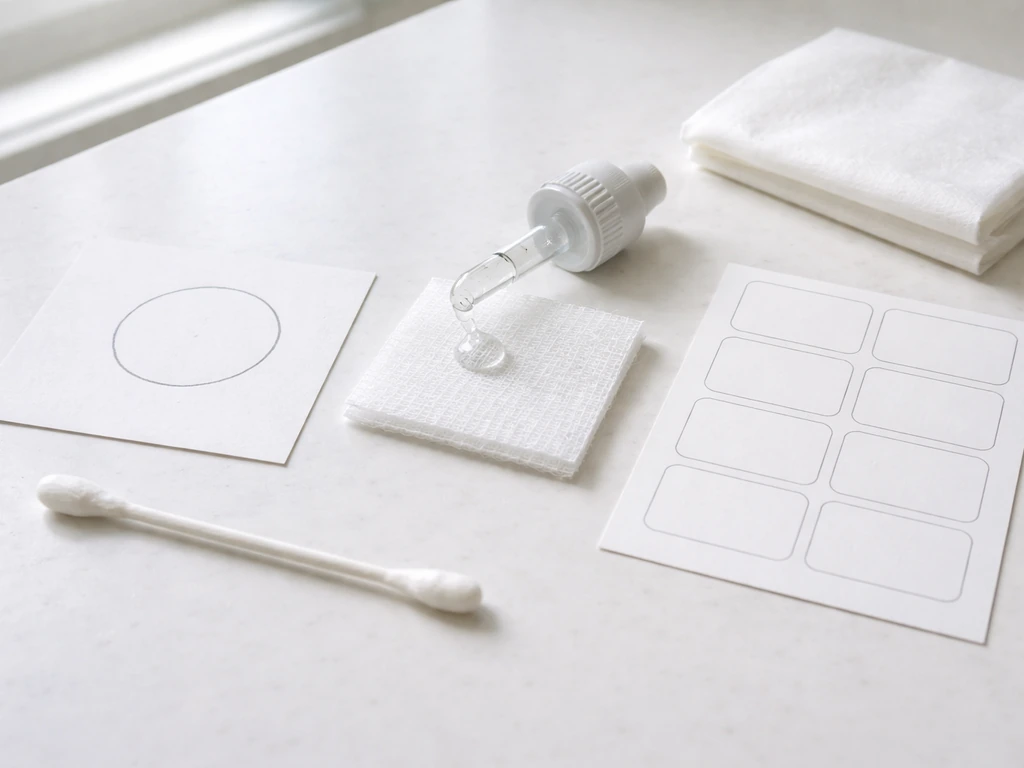
If you have weighed the risks and still want to experiment, reducing harm is the goal. The foam formulation of minoxidil is generally considered less irritating than the alcohol-based solution because it does not contain the same solvent base. That makes it the safer choice if you insist on trying it near the lash area. Even so, keep application minimal and controlled.
- Patch test first: apply a small amount to the inner arm for 48 to 72 hours before touching it anywhere near your eyes. If you get redness, swelling, or itching, stop entirely.
- Use a cotton swab, not your fingers, to apply a tiny amount to the base of the upper lash line only. Avoid the lower lashes entirely since the risk of product migrating onto the eye surface is higher there.
- Apply at night before bed so any residue has time to absorb and dry before you open your eyes. Wash your hands thoroughly after.
- Never apply to broken, irritated, or sunburned eyelid skin.
- Keep the product away from the actual eye surface. If you feel burning, stinging, or significant dryness in your eyes, rinse immediately with cool water.
- Stop immediately and see a doctor if you develop eyelid swelling, skin peeling, persistent redness, changes in eye pressure sensations, or vision changes of any kind.
- Do not use this approach without at least mentioning it to a dermatologist or ophthalmologist, especially if you have any underlying eye or skin conditions.
Better-studied alternatives worth trying first
Before going the Rogaine route, it is worth knowing what actually has clinical backing for eyelash growth, because there are real options here.
| Option | Evidence Level | Typical Timeline | Key Consideration |
|---|---|---|---|
| Bimatoprost 0.03% (LATISSE) | Strongest: FDA-approved for eyelash hypotrichosis with controlled trial data | Measurable results by week 8, best results weeks 12-16 | Requires prescription; ocular side effects like conjunctival hyperemia and dry eye are documented; possible iris pigmentation change |
| Minoxidil (Rogaine) | No lash-specific clinical trials; anecdotal only | 8-12 weeks minimum if it works at all | Not formulated for eye use; alcohol-based solution is irritating; risk of contact dermatitis |
| Castor oil | No strong clinical evidence; widely used | Weeks to months; highly variable | Low risk; may condition lashes and reduce breakage; not a proven growth stimulator |
| Biotin (oral) | Little direct evidence for lash growth specifically; some hair/nail data | 3-6 months minimum | Safe at standard doses; most useful if you have a biotin deficiency; excess biotin can interfere with lab tests |
| Peptide-based lash serums | Some in vitro and manufacturer-funded studies; limited independent data | 6-12 weeks per most products | Generally low-risk; quality varies widely by brand and formulation |
LATISSE is the only treatment with robust, independently verified clinical evidence for lash growth. The prostaglandin analog class (which includes bimatoprost and others like travoprost and latanoprost, originally developed as glaucoma eye drops) is worth discussing with a doctor if your lash loss is significant. These medications do carry their own ocular side effects, including potential changes to iris pigment with long-term use, so they are not risk-free either. In clinical trials of LATISSE, adverse events frequently included ocular and periocular effects such as eye pruritus and conjunctival hyperemia, along with dry eye or ocular irritation blank" rel="noopener noreferrer">ocular side effects. But at least the risk-benefit profile has been formally studied, unlike applying Rogaine to your lash line.
Castor oil is a different story: low risk, low evidence. It will not dramatically grow your lashes, but it is a reasonable conditioning option that may reduce breakage and make existing lashes look fuller. Biotin is worth considering if you suspect nutritional deficiency, but taking high doses without a deficiency is unlikely to produce visible lash changes. Many people ask whether Travatan Z can make eyelashes grow, since it is a glaucoma medication that may affect eyelash length over time navigating expected results. Peptide serums occupy a middle ground: some are well-formulated and genuinely improve lash appearance over time, though the mechanism is more about supporting follicle health than stimulating new growth the way prostaglandins do.
When to stop experimenting and see a doctor
Most of the time, sparse or short lashes are a cosmetic concern with cosmetic solutions. But sometimes lash loss is a symptom of something that needs medical attention. If your lash thinning is sudden, patchy, accompanied by itching, redness, or eyelid scaling, or if it appeared alongside other symptoms like hair loss elsewhere, fatigue, skin changes, or eye inflammation, that is a doctor conversation, not a serum conversation.
Conditions that can cause eyelash loss include thyroid disorders (both hypo and hyperthyroidism), alopecia areata, blepharitis, trichotillomania, scarring conditions like lichen planopilaris, and side effects from medications. A dermatologist can examine the lash follicles and surrounding skin, and an ophthalmologist should be involved if there is any concurrent eye irritation, dryness, or inflammation. Getting the right diagnosis first means you will not waste months trying the wrong treatment.
A practical monitoring plan if you are self-treating
- Take a baseline photo in consistent lighting before starting anything. Close-up shots of each eye under the same conditions are ideal.
- Photograph again at weeks 4, 8, and 12 to track real changes rather than relying on day-to-day perception.
- Note any side effects in a simple log: date, what you applied, and any reactions (redness, dryness, itching, swelling).
- At the 12-week mark, honestly assess: have you seen any improvement? Have side effects appeared? If no improvement and no adverse effects, consider trying a different approach. If side effects appeared at any point, stop the offending product.
- If lash loss is worsening rather than improving during self-treatment, do not delay a dermatology appointment.
The bottom line: Rogaine is not a lash treatment, it is a scalp hair treatment with possible off-label spillover effects and a label that explicitly says keep it away from your eyes. If longer, thicker lashes are your goal today, starting with a low-risk peptide serum or castor oil while consulting a doctor about LATISSE is a much more logical first move. Save Rogaine for the scalp, where the evidence actually lives.
FAQ
What should I do if Rogaine accidentally gets into my eye or on my eyelid?
If your eyes feel burning, gritty, unusually dry, or you notice redness or swelling within minutes to hours, stop immediately and rinse again with cool water. If symptoms linger beyond 24 to 48 hours, get medical advice, since eyelid irritation and allergic contact dermatitis can worsen after continued exposure.
Is it safe to patch test Rogaine before trying it near my lash line?
For eyelash use, “spot testing” is best done away from the lash line first, like on the skin behind the ear or on the inner forearm, because eyelid skin is thinner and reacts faster. Even if a patch test is fine elsewhere, periocular reactions are still possible.
How long would it take to notice eyelash growth from Rogaine, and when should I stop if nothing happens?
Do not expect a clear before-and-after in less than 8 to 12 weeks, and even then changes, if they happen, are usually mild. If you do not see any thickening by around 3 months of consistent, careful use, it is more likely you are in the “no noticeable effect” group.
Are there certain eye conditions or routines that make Rogaine riskier for eyelashes?
The risk is higher if you wear contact lenses, have blepharitis, dry eye, eczema around the eyes, or use other eye-area medications. If you have any of these, it is safer to skip minoxidil on the lash line and discuss an eyelash-targeted option with a clinician.
If someone still wants to try it, what’s the lowest-risk way to apply Rogaine near the eye?
Avoid applying minoxidil directly to the lash roots or the lash margin. If you insist on experimenting, the safest harm-reduction approach is to keep it off the eyelid skin and lashes entirely, use the smallest amount possible, and never apply it right before sleep when product can migrate.
Is Rogaine foam safer than Rogaine solution for off-label eyelash spillover?
Yes. Foam is generally less irritating than solution because it lacks the same alcohol-based solvent system. That said, “less irritating” is not “risk-free,” and eyelid skin can still develop contact dermatitis or swelling.
If Rogaine helps my lashes, will the growth last after I stop?
If you stop minoxidil, any lash changes that occurred due to off-label stimulation can fade over time because the lash growth cycle continues its normal pattern. Plan for the possibility that results are not permanent.
When should eyelash thinning be treated as a medical issue instead of a cosmetics problem?
Sudden or patchy lash loss, itching, scaling eyelids, or lash loss with symptoms elsewhere (skin changes, fatigue, scalp hair thinning) can point to an underlying condition. In those cases, treat the cause first, because cosmetic approaches often do not address the real problem.
What questions should I ask a doctor before starting LATISSE as a safer alternative to Rogaine?
Because LATISSE is prescription and prostaglandin-analog related, discuss it if you have eye disease, glaucoma history, prior eye inflammation, or you are concerned about pigment changes. A clinician can also help decide whether your eyelash loss is true shedding versus breakage from irritation.
Next Article
Does Xalatan Make Eyelashes Grow? Safety, Results, Risks
Find out if Xalatan (latanoprost) can grow lashes, typical timeline, off-label risks, side effects, and safer alternativ