Travatan Z (travoprost 0.004%) does cause eyelash growth, but not because it was designed to. It's a prescription glaucoma eye drop, and longer, thicker, darker lashes are a well-documented side effect of its prostaglandin mechanism. Because of this, you may see people ask whether dorzolamide makes eyelashes grow, but it is a different kind of eye drop from Travatan Z longer, thicker, darker lashes. The FDA label for Travatan Z explicitly lists "eyelash changes" including increased length, thickness, and number of lashes. So yes, it works on lashes, but using it specifically for that purpose means taking on risks that come with a prescription-strength drug, without the formal indication that something like Latisse (bimatoprost) carries.
Does Travatan Z Make Eyelashes Grow? Results, Timeline, Safety

Rachel Nguyen
23 Jun 2026
What Travatan Z is and why it affects lashes at all

Travatan Z is a prostaglandin F2α (PGF2α) analog prescribed to lower intraocular pressure in patients with open-angle glaucoma or ocular hypertension. It works by increasing aqueous humor outflow through the uveoscleral pathway. That mechanism is completely unrelated to lashes, but the drug's interaction with prostaglandin receptors in periocular tissue is what triggers the hair changes.
Prostaglandin analogs, as a class, appear to stimulate melanogenesis in eyelash follicles and extend the anagen (active growth) phase of the eyelash cycle. The exact cellular mechanism isn't completely understood, but it's consistent across the prostaglandin class: travoprost, latanoprost, and bimatoprost all produce it. The result is lashes that are longer, thicker, more numerous, and sometimes darker than they were before starting the drug. If you are specifically wondering what medication makes eyelashes grow, Travatan Z is one option discussed for its prostaglandin effects on eyelash follicles. This is why glaucoma patients started noticing the change in their lashes, which eventually led researchers and pharmaceutical companies to explore prostaglandin-based lash serums more deliberately.
Does Travatan Z actually grow eyelashes? What the evidence shows
The honest answer is: yes, with meaningful caveats. The FDA label for Travatan Z acknowledges eyelash changes directly in the prescribing information and patient counseling sections. These aren't rare anecdotal reports; they're expected enough that the label explicitly warns patients to anticipate asymmetry between eyes in lash length, thickness, pigmentation, number, and even direction of growth if only one eye is treated.
The closest hard data we have comes from the broader prostaglandin analog class. Bimatoprost 0.03% (Latisse) is the FDA-approved lash treatment in this drug family, and its controlled studies showed 78.1% of subjects achieved at least a one-grade improvement in global eyelash assessment by week 16, compared to 18.4% in the vehicle group. In a gel-suspension study measuring actual millimeter changes, mean lash length increased by approximately 2.0 mm versus 1.1 mm with placebo at 6 weeks. Travatan Z operates through a similar prostaglandin pathway, so the directional findings are relevant, though it's not identical to bimatoprost and lacks its own controlled lash-growth trial data.
Importantly, eyelash growth is listed as a known cosmetic side effect of Travatan Z, not an FDA-approved indication. Using it specifically to grow lashes is off-label use, which means your prescriber would be recommending it outside its glaucoma indication. That's legal and not uncommon in medicine, but it does mean you're working without the specific safety and efficacy data that exists for something like Latisse.
Timeline: when you'll see results and how long they last

Prostaglandin-related lash growth is not fast. The follicle cycle biology means you're waiting for the drug to shift follicles into an extended anagen phase, and that takes time. Based on the clinical literature for this drug class, here's what a realistic timeline looks like:
- Weeks 1 to 4: No visible change for most people. The drug is working at the follicle level, but you won't see it yet.
- Weeks 4 to 8: Some people begin noticing slightly longer or fuller lashes. Most reviews of prostaglandin lash therapy note that appreciable improvements typically become visible around week 8.
- Weeks 8 to 16: This is the window where results are most noticeable. Length, thickness, and darkness are all progressing during this period.
- Months 4 to 6: Near-maximum effect for most users. This is when the asymmetry between eyes (if you're only treating one for glaucoma) becomes most visible.
- After stopping: Eyelash changes are listed as usually reversible upon discontinuation, but it takes time. Lash length decreases gradually over weeks to months, not overnight. One bimatoprost study found lash length dropped only about 0.1 mm in the three months after stopping, suggesting partial durability of the effect.
The key word in the FDA labeling is "usually" reversible. Lash and periorbital changes tend to reverse. Iris pigmentation changes, on the other hand, are described as likely permanent after discontinuation. More on that in the risks section below.
Who actually sees results and why it varies
Not everyone gets the same lash response, and your starting point matters a lot. Here's how different situations affect what you can realistically expect from a prostaglandin analog like Travatan Z.
Lash loss from extensions or damage
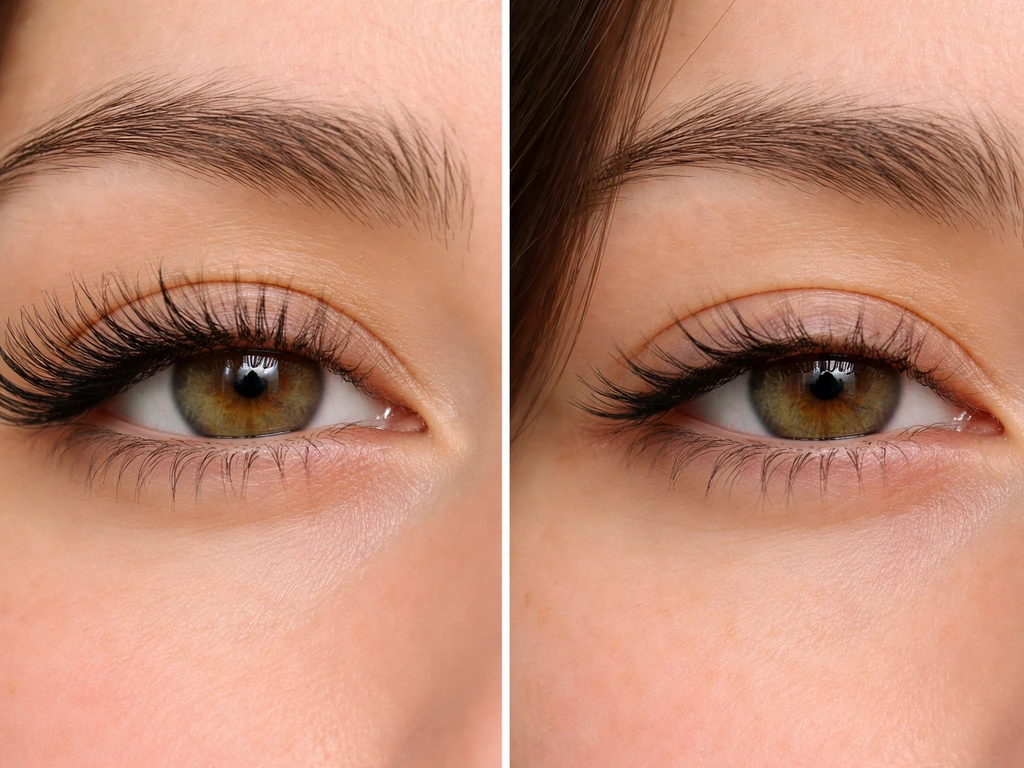
If your lashes are thinned from extensions, rubbing, or mechanical damage, you're dealing with trauma to the follicle rather than a drug-responsive deficiency in the growth cycle. Prostaglandin analogs work by extending anagen, which helps most when the follicles are functional but underperforming. If the follicle itself has been physically damaged, the ceiling for any growth treatment is lower. You should allow 3 to 6 months of recovery before assessing whether a lash-growth treatment is actually working, since the natural regrowth cycle takes that long on its own.
Naturally sparse or hypotrichotic lashes
This is the population that prostaglandin-class lash therapy was formally studied in. People with hypotrichosis (inadequate or thin lashes) showed the clearest, most consistent results in bimatoprost trials. If you've always had sparse lashes and no underlying damage, you're likely in the best position to benefit.
Genetics and baseline lash characteristics
People with naturally shorter or lighter lashes may see a more dramatic visual change simply because the before-and-after contrast is greater. The darkening effect (increased melanogenesis) is also more visible in people with lighter lashes. Asymmetry between eyes is a real and documented risk, particularly relevant if you're using Travatan Z in only one eye for glaucoma.
Medical conditions affecting lash loss
Lash loss tied to alopecia areata, thyroid conditions, or chemotherapy involves different biology, and prostaglandin analogs are not studied or approved for these causes. You might still see some response since the growth cycle mechanism is partially pathway-independent, but it's less predictable and definitely a conversation to have with your doctor before trying any lash treatment.
How to use it safely: what to ask your doctor and key precautions
Travatan Z is a prescription drug. You cannot and should not use it for lash growth without a prescriber involved. If you're already prescribed it for glaucoma and curious about the lash effect, that's a different situation than actively seeking it out for cosmetic use. Here's how to navigate both.
If you're already using Travatan Z for glaucoma
Talk to your ophthalmologist about the expected lash changes so you know what's coming and can report any asymmetry or concerning pigment changes early. Don't modify your application to try to enhance lash growth. The drug is meant to go in your eye for IOP reduction, not on your lash line.
If you want it specifically for lash growth
Ask your eye doctor directly whether a prostaglandin-class treatment is appropriate for you. In most cases, they'll point you toward Latisse (bimatoprost 0.03%) instead, which has the FDA indication for eyelash hypotrichosis and comes with a sterile applicator system designed for upper-lid lash-base application. Travatan Z is formulated as an eye drop for intraocular use, not a lash serum, and the application method matters for both safety and results.
Application precautions (class-wide guidance)
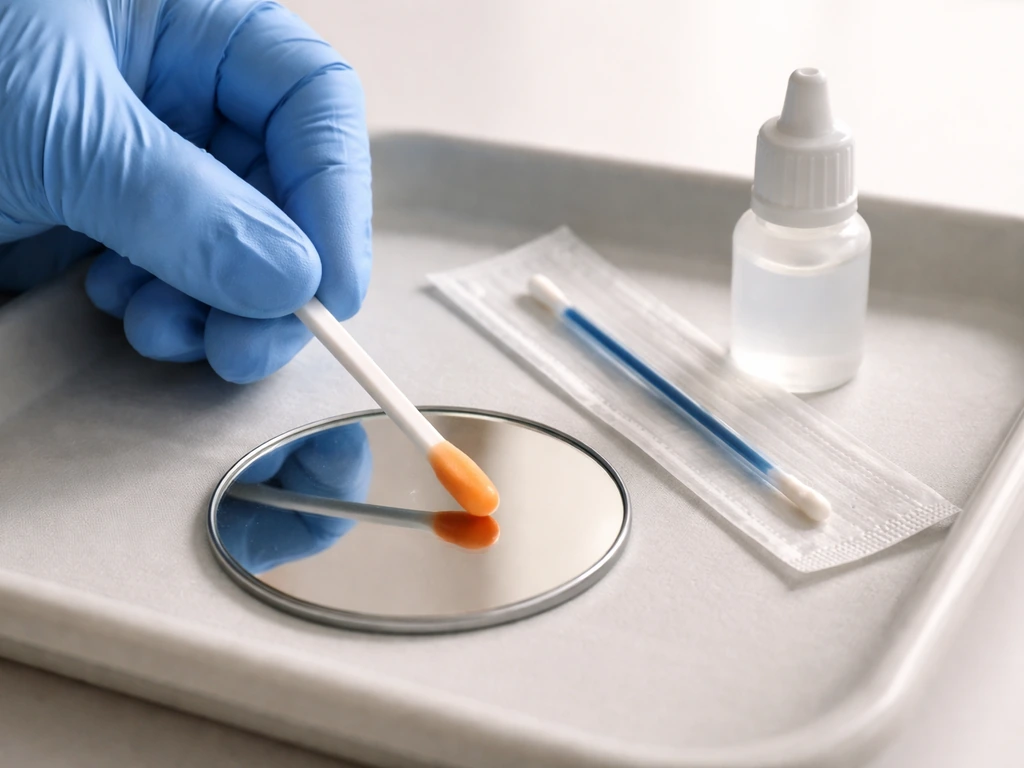
- Apply only at the base of the upper eyelid lashes, not the lower lid. Lower-lid application increases the risk of excess solution migrating to periorbital skin, which drives hyperpigmentation.
- Blot any excess solution immediately after application to prevent it from running onto the cheek or surrounding skin.
- Remove contact lenses before application and wait at least 15 minutes before reinserting them.
- Never let the bottle tip contact your eye, skin, or fingers. Contamination risks infection.
- Wash hands before and after application.
- Ask your prescriber: what's the right applicator method for me, what should I watch for, and when should I call you?
Risks and side effects you need to take seriously
This is where Travatan Z off-label use gets complicated. The side effect profile is not trivial, and some changes can be permanent. Here's a clear breakdown of what the clinical data and FDA labeling document. In clinical trials, the Travatan Z DailyMed label reports ocular adverse reactions at an incidence of 1, 4% and non-ocular adverse reactions at an incidence of 1, 5% ocular adverse reactions at an incidence of 1–4%.
| Side Effect | Frequency / Notes | Reversibility |
|---|---|---|
| Ocular hyperemia (eye redness) | Most common adverse reaction: 30–50% of users | Usually resolves after stopping |
| Eyelash changes (length, thickness, darkness, number) | Expected class effect, documented in FDA label | Usually reversible over weeks to months |
| Eyelid skin darkening (periorbital hyperpigmentation) | Documented in prescribing information | May reverse over weeks to months after stopping |
| Iris color change (increased brown pigmentation) | 74% of affected eyes show change within first 8 months; 94% within 24 months | Likely permanent after discontinuation |
| Lash/vellus hair asymmetry between eyes | Occurs if only one eye treated; documented in FDA labeling | Gradually reverses after stopping |
| Dry eye, keratitis, corneal staining, conjunctivitis | Incidence 1–4% in clinical trials | Typically resolves after stopping |
| Periorbital fat atrophy (prostaglandin-associated periorbitopathy) | Associated with bilateral long-term PGA use; includes deepened upper eyelid sulcus, loss of lower-lid fat fullness | May not fully reverse |
| Iritis / macular edema | Less common but clinically significant; reported with prostaglandin class | Requires medical management |
| Blepharitis, ocular irritation, itching | Incidence 1–4% in clinical trials | Usually resolves |
The iris color change deserves special attention. If travoprost increases brown pigmentation in your iris, the FDA labeling for Travatan Z states this change is likely permanent, even after you stop the drug. This is not a cosmetic concern you can reverse by discontinuing use. Patients with mixed-color or hazel irises appear to be at highest risk of visible change. If you value the current color of your eyes, this risk needs to be part of your decision.
Stop using and contact your prescriber immediately if you experience severe eye pain, sudden vision changes, significant eye redness, or signs of inflammation. If you have an eye infection or inflamed skin around your eyes, the FDA advises against using eye cosmetics eye infection or inflamed skin around the eye. These can signal serious complications including iritis or corneal damage that need prompt evaluation.
Alternatives if Travatan Z isn't the right fit
For most people who want longer lashes without glaucoma, Travatan Z is not the right starting point. Revitalash’s FAQ also frames its approach as blank" rel="noopener noreferrer">not being the same drug class as FDA prostaglandin analogs, which can help with comparison when discussing prostaglandin-related lash risks. Here's how the main options compare and where each one makes sense. If you are mainly looking for eyelash growth results without prescription prostaglandin risks, does restasis make your eyelashes grow is another question people often compare before choosing a treatment.
Bimatoprost (Latisse): the closest prostaglandin-class comparison
Latisse (bimatoprost 0.03%) is the only FDA-approved treatment specifically for eyelash hypotrichosis. It shares the same prostaglandin-analog mechanism as Travatan Z, comes with a purpose-built applicator for lash-base use, and has the most robust clinical trial data in this space. If you're considering a prescription prostaglandin treatment for lash growth, Latisse is almost always the better-targeted choice. The side effect profile overlaps heavily with Travatan Z, including the risk of iris pigmentation changes, so the same caution applies. It's worth comparing Travatan Z to other prostaglandin-class drops like Xalatan (latanoprost), which shares many of these same lash and pigmentation effects through a nearly identical mechanism.
Over-the-counter peptide and growth-factor serums
Peptide-based serums (look for ingredients like myristoyl pentapeptide-17 or similar lash-conditioning peptides) and growth-factor serums work through different pathways than prostaglandins and don't carry the same risks of iris pigmentation or periorbital fat changes. The trade-off is that the evidence base is thinner and the magnitude of effect is generally more modest. They're a reasonable starting point if you want to avoid prescription drugs entirely, especially for people with lash loss from extensions or mechanical damage rather than hypotrichosis.
Biotin
Biotin (vitamin B7) is often marketed for lash and hair growth. The honest assessment: the evidence for biotin improving lash density in people who aren't biotin-deficient is weak. If you have a confirmed deficiency (which is actually rare), supplementation can help. Otherwise, it's unlikely to produce the kind of visible change you'd see from a prostaglandin-class treatment.
Castor oil
Castor oil is the most popular natural option and has a real (if modest) rationale. Its ricinoleic acid content may have anti-inflammatory properties that support a healthier follicle environment, and the oil itself acts as a conditioning agent that reduces lash brittleness and breakage. It won't stimulate the prostaglandin pathway or extend anagen the way Travatan Z does, but it's low-risk, inexpensive, and worth trying if you want to start with something non-prescription. Apply a small amount to the upper lash line nightly with a clean brush. Expect subtle improvement over 6 to 8 weeks rather than dramatic growth.
| Option | Mechanism | Evidence Level | Main Risks | Best For |
|---|---|---|---|---|
| Travatan Z (travoprost) | PGF2α analog, extends anagen, increases melanogenesis | Strong (class evidence; off-label for lashes) | Iris pigmentation (possibly permanent), periorbital fat changes, ocular irritation | Glaucoma patients already on the drug; not ideal as a standalone cosmetic choice |
| Latisse (bimatoprost) | Prostamide analog, same class mechanism | Strongest (FDA-approved for lash hypotrichosis) | Same class risks as Travatan Z | People with hypotrichosis seeking prescription lash treatment |
| Peptide serums (OTC) | Stimulate keratinocyte/follicle signaling | Moderate (limited RCT data) | Minimal; occasional irritation | People wanting results without prescription drugs or prostaglandin risks |
| Castor oil | Anti-inflammatory conditioning; reduces breakage | Weak (mostly observational/traditional) | Very low; possible eye irritation if it gets in the eye | Maintenance, conditioning, very mild enhancement |
| Biotin supplements | Supports keratin synthesis if deficient | Weak (only meaningful in deficiency) | Minimal | Confirmed biotin deficiency; unlikely to help otherwise |
It's also worth knowing that some other eye medications sometimes associated with lash changes, like brimonidine or dorzolamide, work through entirely different mechanisms and don't share the same prostaglandin-driven lash effect. And while medications like Rogaine (minoxidil) promote scalp hair growth, the evidence for meaningful eyelash growth from minoxidil is far less established than it is for prostaglandin analogs.
What to actually do next
If you're already on Travatan Z for glaucoma, enjoy the lash benefit as a bonus, keep an eye out for asymmetry or any pigment changes, and mention anything unusual at your next ophthalmology visit. If you're searching for Travatan Z purely for lash growth, the better conversation to have with your eye doctor is about Latisse, which is designed and dosed for that purpose. Can rogaine make my eyelashes grow? Rogaine is not a prostaglandin-based eyelash treatment, and evidence for lash-length changes is limited. If you want to avoid prostaglandin-class risks entirely, a peptide-based OTC serum is the most evidence-adjacent non-prescription option, and castor oil is worth layering in as a low-risk conditioner while you wait for anything to work. Whatever route you take, build in a realistic 8 to 16-week assessment window before deciding whether it's working.
FAQ
Can I apply Travatan Z directly to my lash line like a lash serum to make lashes grow faster?
If you use Travatan Z on a lash line, you can get little to no lash benefit and increase the chance of eye irritation or inflammation. The usual “expected” response assumes medication reaches periocular lash follicles in a controlled way, which is why purpose-built lash products (like the FDA-approved option) use different delivery and dosing than an intraocular glaucoma drop.
How long should I try Travatan Z before deciding it is not working for lash growth?
Treatments that extend the anagen phase typically show gradual change, with noticeable effects often starting after a few months. A common mistake is judging results too early and restarting or stopping repeatedly, which can mask whether the follicle cycle actually responded.
Will my eyelash growth be the same in both eyes if I only use Travatan Z in one eye?
Yes, it can happen, especially if only one eye is treated for glaucoma. The label warnings include the possibility of uneven eyelash changes between eyes, so you should watch length, thickness, direction, and pigmentation on both sides.
What side effects should make me stop using Travatan Z and call my eye doctor right away?
Possible signals include increasing brown pigmentation in the iris, darkening around the eyelids, and periorbital skin or eyelash changes. If you notice new or worsening redness, pain, light sensitivity, discharge, or any sudden change in vision, stop and contact your prescriber promptly.
How risky is iris color change if I have hazel or light eyes?
In people with light-colored eyes, any increase in iris brown pigment can be more noticeable. The labeling also notes that this kind of iris pigmentation change is likely not reversible after stopping, so your baseline eye color matters when weighing off-label lash use.
What if my lashes are thin because of lash extensions or rubbing, will Travatan Z still help?
If you have significant lash trauma from extensions, chronic rubbing, or follicle scarring, prostaglandin-type growth may be limited because the follicle is mechanically damaged rather than just underperforming. In those cases, a longer “recovery” period is usually needed before expecting a meaningful change.
Why do some people see dramatic lash growth from prostaglandin analogs while others see almost nothing?
Even with correct use, some people get limited visible change because starting lash density, baseline follicle responsiveness, and individual variation in prostaglandin receptor sensitivity differ. Comparing photos at consistent lighting and time intervals can help avoid false impressions from daily fluctuation.
Is it safe to experiment with stopping and restarting Travatan Z to control lash side effects?
Travoprost and other prostaglandin analogs can alter pigmentation and eyelash characteristics, so it is not a good idea to “test” with frequent dose changes or intermittent use to control side effects. If you are using it off-label for cosmetic goals, the risk tolerance should be discussed with an ophthalmologist first.
What is the biggest difference between using Travatan Z and using an eyelash hypotrichosis product?
Using the wrong product or dosing method can be a problem. Travatan Z is designed for intraocular pressure control, while lash treatments are specifically formulated and applied to the lash base, which affects both safety and effectiveness.
If I am prescribed Travatan Z for glaucoma, should I ask my doctor about the lash effects or just monitor them at home?
If you are already prescribed Travatan Z for glaucoma, you do not have to treat the lash changes as a separate “condition,” but you should still report unusual asymmetry or pigment changes at follow-ups. If you are seeking it purely for cosmetics, ask about the FDA-approved lash option first, because it is purpose-directed with a dosing system for the lash line.
Next Article
Can Rogaine Make My Eyelashes Grow? Safety, Results, Risks
Can minoxidil Rogaine grow longer eyelashes? Safety risks near eyes, realistic results, and safer alternatives to consid