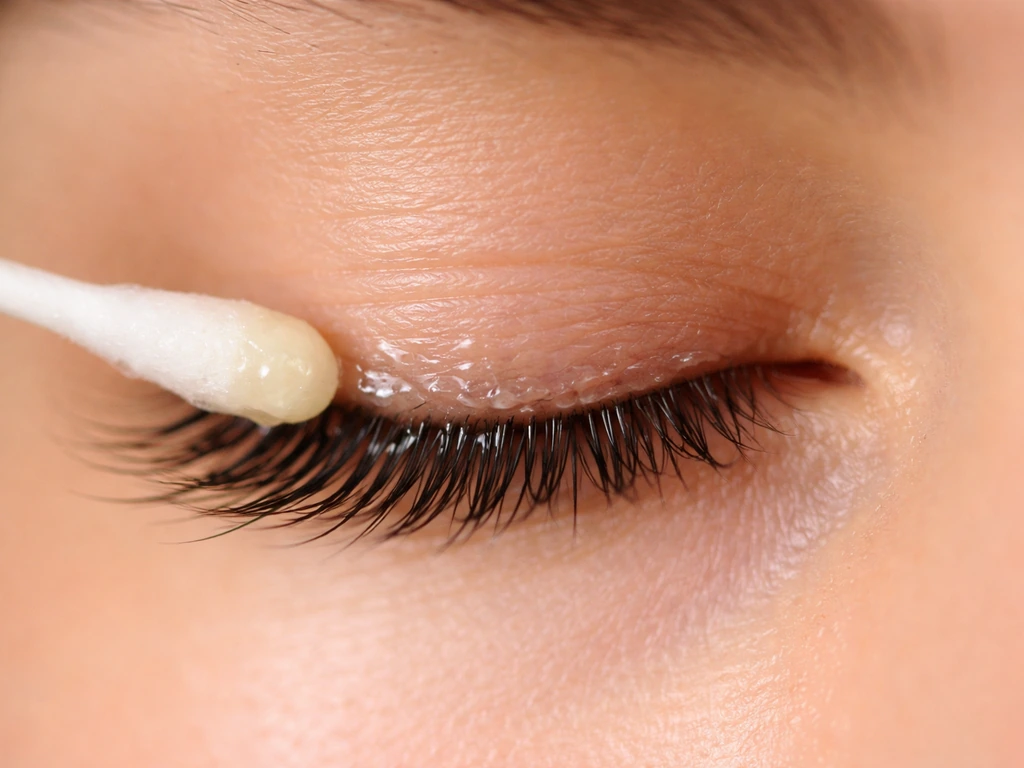
Carmex does not make your eyelashes grow. If you're wondering the same thing about paw paw cream, the short answer is that lip products are usually not designed to stimulate eyelash follicles does paw paw cream make your eyelashes grow. It's a lip balm formulated to soothe and protect chapped lips, and none of its active or inactive ingredients are known to stimulate eyelash follicles or extend the lash growth cycle. You might get a mild conditioning effect on the lash hairs themselves from the occlusive waxes and petrolatum in the base, but that's surface-level softening, not follicle-level growth. If your goal is longer, thicker, or fuller lashes, Carmex isn't the tool for that job.
Does Carmex Make Your Eyelashes Grow? What to Know

Rachel Nguyen
20 Jun 2026

What Carmex is (and what it's actually made to do)

Carmex Classic Lip Balm is an over-the-counter lip care product. According to its DailyMed listing, the medicated version has four active ingredients: camphor, menthol, salicylic acid, and phenol. Camphor and menthol create that familiar cooling, tingling sensation. Salicylic acid acts as a keratolytic, meaning it helps break down rough, flaky skin. Phenol is a mild antiseptic and analgesic used in OTC contexts. None of these are eyelash-growth actives.
The inactive ingredient list is where things get more interesting from a lash-adjacent perspective. It includes white petrolatum, lanolin, beeswax, cetyl esters, paraffin, and theobroma cacao (cocoa) seed butter. These are occlusive and emollient ingredients that lock in moisture and soften the surface they're applied to. They're the same category of ingredient that makes castor oil feel conditioning on lashes. But occlusion and conditioning are not the same as growth stimulation, and Carmex itself makes no claims about eyelashes anywhere on its branding. Carmex itself positions its products as lip care to help soothe, moisturize, and protect dry, chapped lips, rather than to treat eyelash growth Carmex itself makes no claims about eyelashes anywhere on its branding. The product is squarely positioned as lip care.
Can lip balm ingredients actually trigger lash growth?
This is the right question to ask, because it gets to the actual biology. Eyelash growth is driven at the follicle level, deep in the dermis of the eyelid. For an ingredient to meaningfully increase lash length or density, it needs to interact with the follicle itself, either by extending the anagen (active growth) phase, increasing blood flow to the follicle, or signaling growth pathways. Occlusive waxes and petrolatum don't do any of that. They sit on top of the skin and hair shaft, which is useful for chapped lips but irrelevant to follicle activity. Massaging your lips is unlikely to increase lash growth because lash growth is driven deep at the follicle level, not at the surface where lip balm ingredients sit.
Lanolin, one of Carmex's base ingredients, is a decent emollient and may reduce moisture loss from lash hairs, making them look a little smoother and less prone to breakage. Breakage prevention can make lashes appear longer over time, which is probably where some of the anecdotal 'it works' claims originate. But that's cosmetic maintenance, not growth. The same logic applies to other lip balm products. If you've seen the related question about whether ChapStick or other lip balms help lashes grow, the answer is the same: the conditioning base may reduce brittleness, but it won't trigger new growth.
There's also an additional concern specific to Carmex: the active ingredients camphor, menthol, salicylic acid, and phenol are not ingredients you want near your eyes. Menthol and camphor are counter-irritants that cause a chemical tingle on lips but can cause real irritation on eyelid skin, which is far thinner and more sensitive. Salicylic acid is a chemical exfoliant that can disrupt the delicate skin barrier around the eye. Phenol is an antiseptic that dermatologists avoid near mucous membranes for a reason. This matters when we get to the 'should I even try it' part. If you’re wondering whether does kajal make eyelashes grow, the evidence and ingredient logic are similar to what we’ve discussed for lip balms near the eye lash growth.
How Carmex compares to proven lash-growth options

The gold standard for eyelash growth is bimatoprost (sold as Latisse), an FDA-approved prostaglandin analog that clinically extends the anagen phase and increases follicle size. Studies show measurable increases in lash length, thickness, and darkness over 16 weeks of consistent use. Nothing in Carmex's ingredient list comes close to that mechanism. While kohl is sometimes marketed as a lash enhancer, there is no good evidence that it can meaningfully grow eyelashes at the follicle level Nothing in Carmex's ingredient list comes close to that mechanism. Bimatoprost works at the follicle level; petrolatum works at the surface level. They're not even competing in the same category.
On the natural side, castor oil gets the most attention for lashes, and while clinical evidence is limited, it contains ricinoleic acid, which has some anti-inflammatory and circulation-supporting properties. It also has a thick, occlusive texture that coats lash hairs and may reduce mechanical damage. Peptide-based serums (look for ingredients like myristoyl pentapeptide-17) have more emerging evidence behind them for stimulating keratin production in follicles. Biotin is often mentioned too, though it only helps if you have a genuine biotin deficiency, which is less common than supplement marketing implies.
| Option | Mechanism | Evidence Level | Risk Near Eyes |
|---|---|---|---|
| Bimatoprost (Latisse) | Extends anagen phase, enlarges follicle | FDA-approved, clinical trials | Low with proper use, requires prescription |
| Peptide serums | Stimulates keratin production in follicles | Growing, some clinical support | Low, formulated for eye area |
| Castor oil | Occlusive conditioning, possible mild circulation support | Anecdotal, limited clinical data | Low, natural but can blur vision if it enters eye |
| Carmex (lip balm) | Surface occlusion only, no follicle action | No evidence for lash growth | Moderate to high (actives: menthol, camphor, salicylic acid, phenol) |
| Aquaphor / plain petrolatum | Surface occlusion, breakage reduction | No growth evidence, safer than Carmex near eyes | Low, no irritating actives |
If you're comparing Carmex to something like Aquaphor or plain petrolatum near the lashes, Aquaphor is a meaningfully safer choice because it lacks those potentially irritating actives. But neither one will grow your lashes. The comparison between Carmex and Aquaphor for lash use is really just about risk reduction, not effectiveness.
If you still want to try Carmex near your lashes, here's how to do it safely
Honestly, the better recommendation is to use a plain occlusive (like pure petrolatum or an eye-safe serum) instead. But if you're set on trying Carmex, at minimum you need to be aware of the real risks and apply it with care.
The risks you need to know first
- Eye irritation: camphor and menthol are counter-irritants that can sting, water, and redden eyes on contact. The eyelid skin is thinner than lip skin and far more reactive.
- Chemical burn risk: salicylic acid is a chemical exfoliant. Using it near the eye margin repeatedly can disrupt the skin barrier and cause contact dermatitis.
- Phenol sensitivity: phenol can cause contact allergic reactions. A reaction near the eye is uncomfortable at best and can cause significant inflammation.
- Product migration: waxy lip balms can migrate into the eye during sleep or with eye rubbing, blurring vision and causing chemical conjunctivitis.
- Follicle clogging: heavy waxes (beeswax, paraffin, cetyl esters) near the lash follicle opening could theoretically contribute to clogged follicles or styes in people prone to them.
Best practices if you proceed
- Patch test first: apply a tiny amount to the inner arm or behind the ear for 24 to 48 hours to check for allergic contact dermatitis before it goes anywhere near your eyes.
- Apply only to mid-shaft lash hairs, not the lash line or eyelid skin. Use a clean, dry mascara wand or cotton swab and use the absolute minimum amount.
- Do not apply before sleep if you're a side or stomach sleeper. Product migration onto the cornea during sleep is a real risk.
- Stop immediately if you notice redness, swelling, itching, or a burning sensation around the eye area.
- Wash hands thoroughly before any application near the eyes.
What actually works: faster and more effective options

If your lashes are sparse from damage (over-curling, extensions, rubbing), the first step is protective: stop the source of damage and let the follicles recover. Gentle handling and a nightly conditioning treatment with castor oil or a dedicated peptide serum will support that recovery period without the risk profile of a medicated lip balm.
For people who want more than recovery and are targeting actual growth, a bimatoprost-based prescription serum is the most evidence-backed route. Talk to a dermatologist or ophthalmologist. Over-the-counter alternatives worth trying include serums with peptides like myristoyl pentapeptide-17, biotin-enriched formulas (if your diet is genuinely low in biotin), and products containing pumpkin seed extract or keratin-building amino acids. These work incrementally over a full lash cycle, which takes time.
One practical note: there's a growing category of over-the-counter lash serums that use isopropyl cloprostenate, a prostaglandin analog similar to bimatoprost but available without a prescription. They carry some of the same risks (including potential iris pigmentation changes with long-term use) but are accessible without a doctor visit. If you go this route, research the brand carefully and follow the directions.
Realistic timelines and when to see a professional
Eyelash growth cycles run roughly 4 to 11 weeks per phase, and most people complete a full cycle in about 6 to 8 weeks. That means if you start a consistent treatment today, you're looking at a minimum of 6 to 8 weeks before you can accurately evaluate whether anything is working. At the 12-week mark you'll have a much clearer picture. Clinical trials for Latisse use 16 weeks as the benchmark for full results. Any product promising dramatic results in two weeks is overstating things.
If you've been consistent with a quality serum or castor oil for 12 weeks and see no improvement at all, that's worth paying attention to. Persistent sparse lashes can be a sign of an underlying issue: thyroid dysfunction, alopecia areata affecting the lashes (called madarosis), nutritional deficiencies, or chronic blepharitis. A dermatologist or your GP can run basic bloodwork to rule these out. This is especially relevant if your lash loss is sudden, patchy, or accompanied by other symptoms like fatigue or hair loss elsewhere.
Lash loss after extensions is its own category. Extension-related damage can temporarily affect follicle health if the weight and adhesive caused traction. Most follicles recover fully within one to two full growth cycles (so 8 to 16 weeks) with gentle care and no further insult to the lash line. If recovery feels stalled past that window, it's worth getting a professional opinion.
The bottom line: Carmex is a lip product with active ingredients that carry real irritation risk near the eyes, and it has no mechanism for growing lashes. Save it for your lips. If you want to condition lashes without risk, a plain occlusive or a formulated lash serum is a better choice, and if you want actual growth, a peptide serum or a conversation with a dermatologist about bimatoprost will take you considerably further.
FAQ
Can I put Carmex on my eyelashes or right along the lash line to make them grow?
You should not apply Carmex to your lash line. Its medicated actives (camphor, menthol, salicylic acid, phenol) are designed for lips, and eyelid skin is thinner and more sensitive, increasing the odds of burning, redness, or watery eyes.
If Carmex does not grow lashes, why do people say it “works”?
Even if Carmex makes lashes look slightly softer, it is still surface conditioning, not follicle activation. Look for changes in breakage and shedding first, then evaluate growth only after a full cycle (about 6 to 8 weeks to notice trends, 12 weeks for clearer results).
What should I do if Carmex irritates my eyelids or eyes?
Yes, it can be a problem if you get irritation. If you notice stinging, swelling, itching, or persistent redness within minutes to hours, wash it off right away and avoid reapplying. If symptoms last more than 24 to 48 hours or your eyes feel painful, get medical advice.
What is a safer alternative to Carmex if I want lashes to look healthier?
If you want the conditioning benefit with less risk, choose an eye-safe occlusive such as plain petrolatum or an ophthalmologist-tested lash conditioner, and keep it off the waterline. Apply a tiny amount to the lash hair itself (not the inner eyelid) at night.
Is it safer to patch test Carmex first?
Do not test it by rubbing on the entire lash area. If you are determined to try any non-eye product, the safer approach is patch testing on nearby skin away from the lash line (like the upper cheek), wait 24 hours, and stop if you react. But note, a negative patch test does not guarantee safety near the eye.
Will Carmex help if my lashes are just brittle or breaking?
No. Lash adhesives, oils, and waxy conditioners generally do not change follicle biology. They may reduce breakage or make lashes feel more flexible, which can improve appearance without increasing actual length from new growth.
When should I stop experimenting and see a doctor for lash thinning?
If you have sudden, patchy, or progressive lash loss, or you also have scalp hair loss, new fatigue, or other skin changes, self-treating can delay diagnosis. A dermatologist or GP can check for causes like thyroid issues, alopecia areata (madarosis), chronic blepharitis, or nutritional problems.
How long should it take for lash thickness to return after eyelash extensions?
Extensions usually cause traction and damage that can temporarily worsen shed. Many people recover within one to two full lash cycles (roughly 8 to 16 weeks) after stopping extensions and being gentle. If recovery is not improving by then, ask a professional to assess the lash line and follicle health.
If I want real growth, what are the main safety considerations with prescription lash treatments?
Use growth-focused options only as directed. For example, bimatoprost-related products require careful dosing and can cause side effects such as eye irritation and color changes around the eye. Discuss with a dermatologist or ophthalmologist if you have glaucoma, eye inflammation, or contact lens issues.
How can I tell at what point a lash product is not working?
If you are trying a serum, give it time and measure consistently. Use photos in the same lighting from the same distance, and track shedding and breakage too. If there is no improvement by 12 weeks with a quality product, switch strategies rather than continuing indefinitely.
Next Article
Does Paw Paw Cream Make Your Eyelashes Grow? Facts and Tips
Does paw paw cream grow eyelashes? Evidence-based look at conditioning vs true lash growth, plus safe use tips and alter