Green tea applied topically is unlikely to meaningfully grow your eyelashes. There's some biological logic behind why it could help at the follicle level, but there are no clinical trials specifically testing green tea on eyelashes that show a clear, measurable growth effect. It's not harmful to try in most cases, but if your goal is noticeably longer or fuller lashes, there are options with far more evidence behind them that are worth prioritizing.
Does Green Tea Make Your Eyelashes Grow? Science, Evidence, and Safe Use

Rachel Nguyen
31 May 2026
What's actually in green tea and could it plausibly reach an eyelash follicle?

Green tea contains a handful of compounds that are genuinely interesting from a hair biology standpoint. The big ones are polyphenols (particularly epigallocatechin gallate, or EGCG), caffeine, and various antioxidants. Here's why each of these gets talked about in a hair growth context:
- EGCG: In scalp hair studies, EGCG has shown the ability to stimulate dermal papilla cells, which are the cells at the base of a hair follicle that control growth. One published study found that EGCG promoted human hair growth in vitro and prolonged the anagen (active growth) phase.
- Caffeine: Topical caffeine has been studied for scalp hair loss, particularly androgenetic alopecia. It appears to counteract the inhibitory effect of DHT on hair follicles and has been shown to penetrate the follicle when applied directly to skin.
- Antioxidants: Oxidative stress can impair follicle function. Antioxidants theoretically protect follicle cells from damage, which could support a healthier growth environment.
The biology is at least plausible. Eyelash follicles go through the same anagen-catagen-telogen growth cycle that scalp follicles do, just on a much shorter timeline (roughly 4 to 11 months for a full cycle). So if a compound can support follicle health or extend the anagen phase, the logic of applying it to lash follicles isn't crazy. The problem is the jump from 'plausible' to 'proven' requires actual studies, and those are almost entirely missing for eyelashes specifically.
What the research does and doesn't say
This is where I have to be straight with you: there are no published human clinical trials that specifically tested green tea, green tea water, or green tea extract applied to eyelashes and measured lash growth, thickness, or shedding reduction. Searches across the medical literature turn up studies on scalp hair, skin antioxidant effects, and general follicle biology, but not eyelashes.
There is at least one recorded formulation study titled something along the lines of 'Green Tea Extract in an Eyelash Growth Enhancer Gel Formulation' that included an eye irritation test and some measure of eyelash growth activity. That's genuinely interesting and suggests researchers are exploring this, but the full results of that study aren't widely available in indexed literature, so it can't be treated as solid evidence of a real growth effect yet.
The broader scalp hair research on EGCG and caffeine is legitimate, but extrapolating it directly to eyelashes is a stretch. Eyelash follicles differ from scalp follicles in size, sensitivity, hormonal responsiveness, and growth cycle duration. A compound that works on one doesn't automatically work on the other. Anyone telling you green tea 'definitely grows lashes' is going further than the science currently supports.
How to use green tea around your eyes safely (and what not to do)
If you want to try green tea on your lash line, the main risks to manage are eye irritation, allergic reactions, and getting liquid directly into the eye. The eye area is one of the most sensitive on your face, so approach this carefully.
The safest approach: cooled tea or diluted extract on a cotton swab
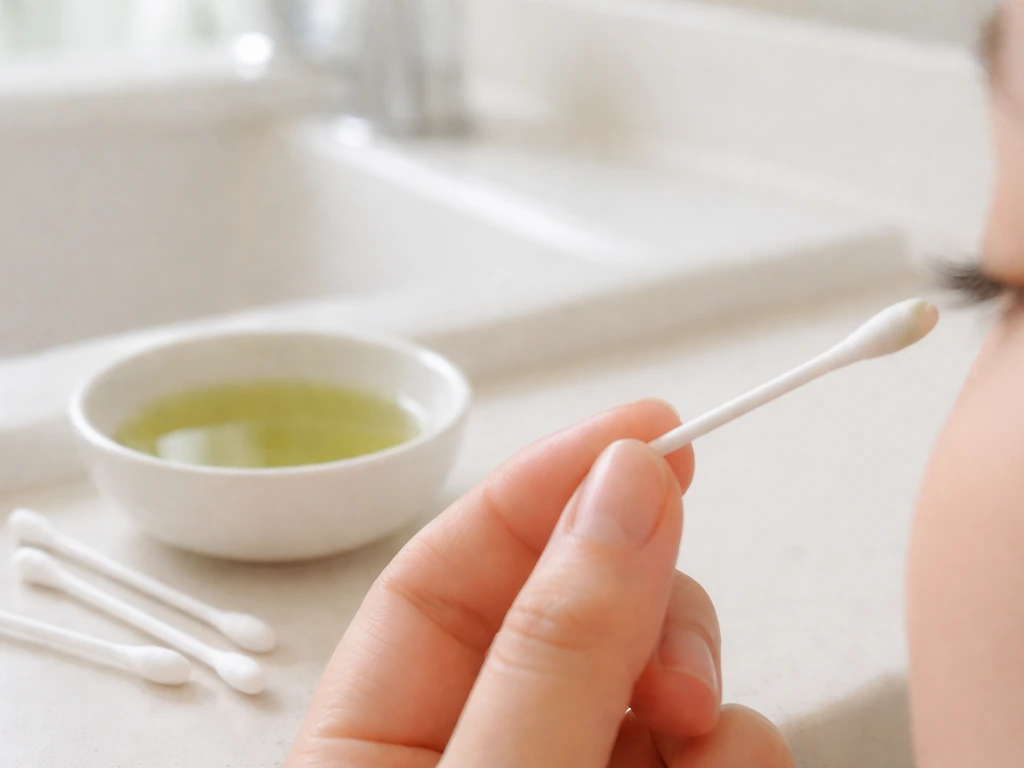
- Brew plain, unflavored green tea and let it cool completely to room temperature. Do not use it hot or even warm.
- Do a patch test first: dab a small amount on the inner arm and wait 24 hours. If you get redness, itching, or swelling, stop there.
- Dip a clean cotton swab or a fine eyeliner brush into the cooled tea and apply it carefully along the lash line, the same way you'd apply liquid eyeliner. Stay on the skin, not on the lash hairs themselves.
- Keep your eyes closed during application. Blink gently after and if any stinging occurs, rinse immediately with clean water.
- Do this once daily, ideally at night before bed.
What to avoid
- Don't use green tea extract products formulated for skin (face serums, toners) near the eyes unless they're specifically labeled eye-safe. The concentrations and additional ingredients may irritate.
- Don't use tea bags directly pressed against closed eyes as a lash treatment method. The pressure and contact time introduce more risk of getting liquid into the eye.
- Avoid green tea if you have a known sensitivity to tannins or any tea family plants.
- If you're wearing lash extensions, skip this entirely. Oils, water, and botanical liquids can weaken the adhesive bond and cause premature shedding.
- Stop immediately if you experience burning, redness, swollen eyelids, or persistent irritation.
What to realistically expect and over what timeline
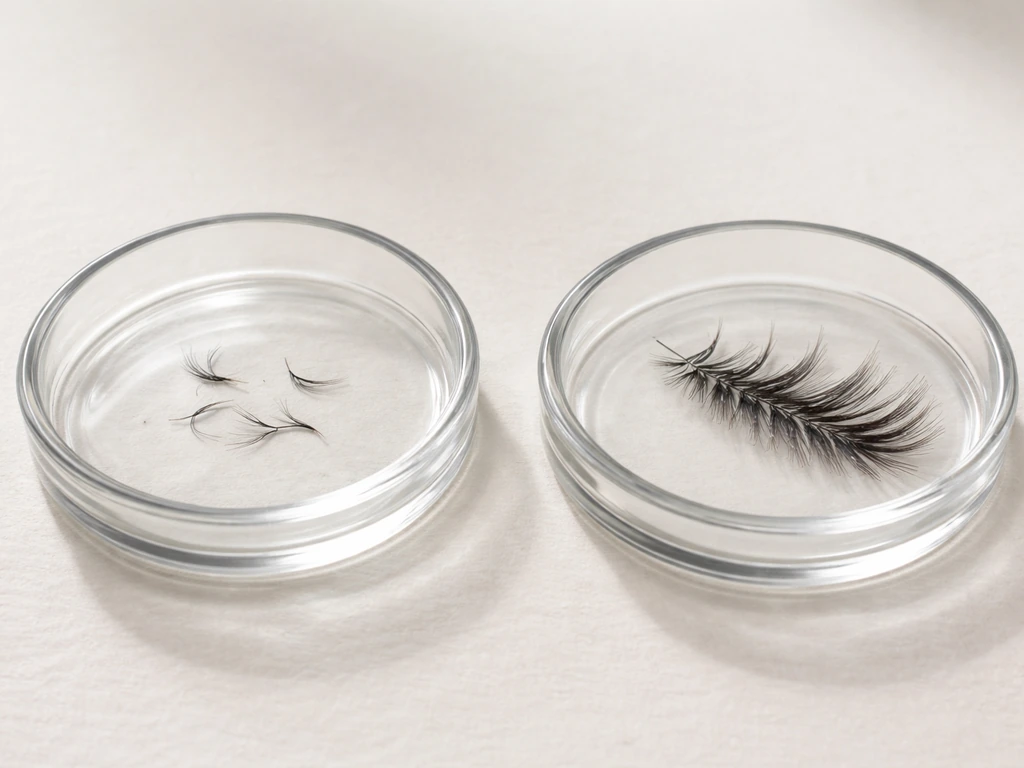
Even if green tea has some minor positive effect at the follicle level, you need to understand eyelash biology to set fair expectations. A single eyelash grows about 0.12 to 0.14 mm per day. The full anagen (active growth) phase for lashes lasts roughly 30 to 45 days. A complete lash cycle, from growth through shedding and regrowth, takes around 4 to 11 months. That means even an effective treatment takes weeks to show visible improvement, and subtle changes are hard to attribute to any one thing.
What green tea might realistically do, if it does anything, is reduce oxidative stress around the follicle or mildly support the anagen phase. A PMC review discusses how hair-follicle penetration pathways can influence percutaneous absorption of caffeine follicular penetration pathways. You might notice slightly less shedding or marginally healthier-looking lashes over several weeks of consistent use. You are almost certainly not going to see dramatic length or density gains from tea alone. If your lashes are thin or sparse because of underlying damage, a growth cycle disruption, or a medical condition, green tea is not going to be enough to reverse that.
For context: even well-studied topical treatments like minoxidil and prostaglandin-based serums (bimatoprost) take 8 to 16 weeks of consistent use before measurable lash improvements appear. A review on PMC focusing on bimatoprost 0.03% for eyelash hypotrichosis reported improvements starting around week 8 and continuing through week 16 in pivotal trial follow-up. A remedy with a fraction of the evidence isn't going to work faster.
Higher-evidence options worth comparing
If you're serious about improving lash growth, it helps to see green tea in context against options that have actual clinical backing. Here's an honest comparison:
| Method | Evidence Level | What It Does | Realistic Timeline | Main Drawback |
|---|---|---|---|---|
| Bimatoprost (Latisse) | FDA-approved clinical data | Extends anagen phase, increases follicle size | 12 to 16 weeks | Prescription required, potential side effects including iris pigmentation |
| Peptide-based lash serums | Moderate (ingredient-level studies) | Stimulate follicle keratin production, condition lashes | 8 to 12 weeks | Variable quality across brands, no FDA approval |
| Castor oil | Low (mostly anecdotal) | Coats and conditions lashes, may reduce breakage | Weeks for appearance, unclear on growth | No strong controlled trials; messy application |
| Topical caffeine products | Low to moderate (scalp data) | May counteract DHT at follicle, improve circulation | Unknown for lashes specifically | No eyelash-specific trials |
| Green tea (topical) | Very low (no eyelash-specific trials) | Antioxidant support, possible follicle stimulation | Unknown | No clinical proof for lashes |
| Biotin (oral) | Low for topical hair growth | Supports keratin infrastructure if deficient | Months | Only helpful if you're actually deficient in biotin |
If you're comparing green tea to castor oil, which is another popular at-home remedy with limited research, they're in roughly the same category: biologically plausible, anecdotally popular, but not clinically proven for lashes. Castor oil has the edge in the sense that it physically coats and conditions lash hairs, which gives a visible appearance improvement quickly, even if it isn't truly growing new lashes. Green tea doesn't offer that kind of cosmetic shortcut. Other DIY approaches like asking whether salt water or various common household liquids help lashes follow similar logic: the mechanism is theoretically possible, but the evidence is thin. Salt water is another common idea, but it has similarly limited evidence for actually growing eyelashes does salt water grow your eyelashes. Water is another popular home remedy claim, but there isn’t good evidence that it directly makes your eyelashes grow water makes your eyelashes grow.
If you want the highest-probability outcome for real lash growth, a peptide-based lash serum or a conversation with a dermatologist about prescription options is the more direct path. If you want something truly natural and low-risk as a supporting habit, green tea applied carefully is a reasonable add-on, just not a standalone solution. Hyaluronic acid, for example, is mainly known for hydrating skin and may help lash appearance, but it isn't proven to make eyelashes grow longer.
When green tea isn't going to cut it: damage, recovery, and seeing a doctor
There are situations where no home remedy will be sufficient because the underlying problem isn't something a polyphenol-rich tea can fix. Knowing the difference matters.
Lash loss from extensions or damage
If your lashes have thinned out after years of extensions, aggressive mascara removal, or rubbing, the follicles themselves may be in a prolonged telogen phase or mildly traumatized. Recovery is possible but it takes time, typically 3 to 6 months for noticeable regrowth after you stop the damaging behavior. Green tea isn't going to speed that up in any meaningful way. What actually helps is removing the source of damage, being gentle with the lash line during cleansing, and giving follicles time to cycle back into anagen.
Medical causes of lash loss
Patchy or sudden lash loss, shedding that seems excessive (losing clumps rather than the occasional single lash), or lashes that aren't growing back after several months are signs you need a dermatologist or ophthalmologist, not a tea remedy. Conditions like alopecia areata, thyroid dysfunction, blepharitis, trichotillomania, or medication side effects all cause lash loss that requires diagnosis and medical treatment. No amount of green tea applied to the lash line will address those root causes.
Signs you should stop and get a professional opinion
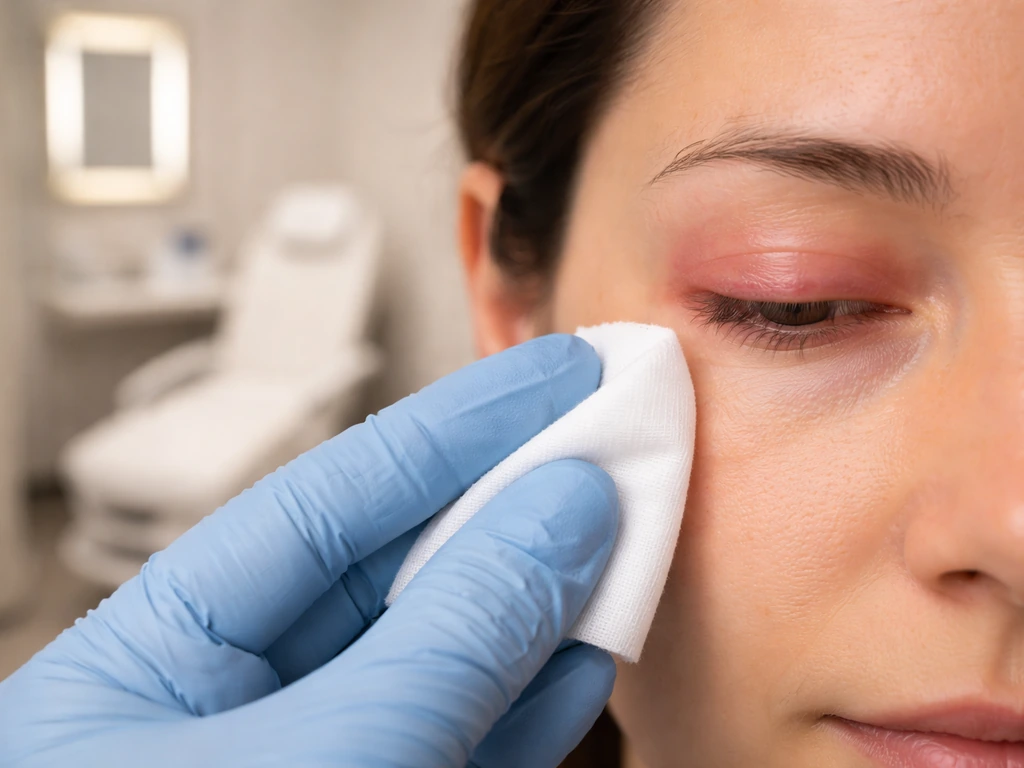
- Burning, stinging, or persistent redness after trying any topical treatment on the eye area
- Eyelid swelling or puffiness that doesn't resolve within a day
- Patchy lash loss where certain sections are bare and others aren't
- Lashes that haven't returned after 3 to 4 months of gentle care and no damage
- Lash loss accompanied by eyebrow thinning, scalp shedding, or fatigue (possible systemic issue)
The bottom line: green tea is a low-risk experiment worth trying if you're curious and patient, and there's just enough biological logic to make it not unreasonable. You might also be wondering if sun exposure affects your eyelashes, but the evidence for noticeable lash growth from the sun is limited does the sun make your eyelashes grow. If you are wondering what food makes your eyelashes grow, the evidence is even more limited than it is for topical home remedies. But go in with realistic expectations, apply it safely, give it at least 6 to 8 weeks of consistent use before drawing any conclusions, and don't let it delay you from pursuing higher-evidence options or medical advice if something more serious is going on with your lashes.
FAQ
How can I try green tea on my lash line without irritating my eyes?
Yes, green tea can be irritating even if it is “natural.” Use a diluted formulation, avoid putting it directly into the eye, and stop immediately if you get burning, redness, or watering that lasts more than a few minutes. If you wear contact lenses, take them out first and do not do the treatment right before putting them back in.
If green tea is going to work, how long until I should see results?
If you do not see any change after about 8 weeks, it is unlikely you will suddenly get dramatic results later. Eyelash growth happens on a cycle measured in months, so at most you might notice mild improvements in shedding or appearance over 6 to 11 months, not rapid length gains.
What lash problems should not be treated with green tea?
Green tea alone is not a reliable fix for sudden or patchy lash loss. If lashes are falling out in clumps, you have new bald spots, intense itching or scaling at the lash line, or no regrowth after several months, get evaluated by a dermatologist or ophthalmologist since conditions like blepharitis or alopecia can be involved.
Is homemade green tea safer or riskier than a packaged product for lash use?
Do not use it if you have a known allergy to ingredients in the product you plan to apply. Also be cautious with homemade brews if you cannot filter them well, because particles and contaminants raise the risk of irritation. Using fragrance-free, preservative-controlled products is safer than DIY mixtures.
How often should I apply green tea, and can overdoing it backfire?
Using too much is a common mistake. More is not better for eyelid safety, and frequent application can increase irritation that worsens lash shedding. Start with a low-frequency routine (for example, a few times per week), then only increase if you stay irritation-free.
Can green tea make lashes look longer even if it is not truly growing them?
Green tea may change the look of lashes by reducing breakage or shedding, but it does not reliably “create” new lashes quickly. If your lashes look longer in photos, it can be from improved conditioning or reduced fall rather than true new growth.
How do I know if I will have an allergic reaction to green tea near my eyes?
Yes, some people react to caffeine or plant polyphenols, especially in the eye area. Consider a patch-test on the skin behind your ear or along the upper cheek for 24 to 48 hours before using it near the lash line, and discontinue if you notice localized swelling or hives.
What should I do if green tea does not help, but I still want real lash growth?
If you want the highest-probability options, look for treatments with evidence from clinical studies such as prescription products or peptide-based lash serums, and discuss them with a dermatologist. Green tea can be used only as an optional add-on if you tolerate it, it should not replace medical evaluation when there is abnormal shedding.
Next Article
Does the Sun Make Your Eyelashes Grow? Myth vs Facts
Know if sun makes eyelashes grow, what UV really does, and how to safely boost growth with proven options.