No, the sun does not make your eyelashes grow. There is no clinical evidence that UV light, visible sunlight, or any form of sun exposure directly stimulates lash follicles, increases lash length, or speeds up the growth cycle. If anything, regular unprotected sun exposure can work against your lashes by causing dryness, inflammation, and oxidative stress around the follicle area. If you want longer, thicker lashes, sun exposure is not a tool worth counting on. There are far more effective options, and this article walks you through what actually works.
Does the Sun Make Your Eyelashes Grow? Myth vs Facts
Rachel Nguyen
29 May 2026
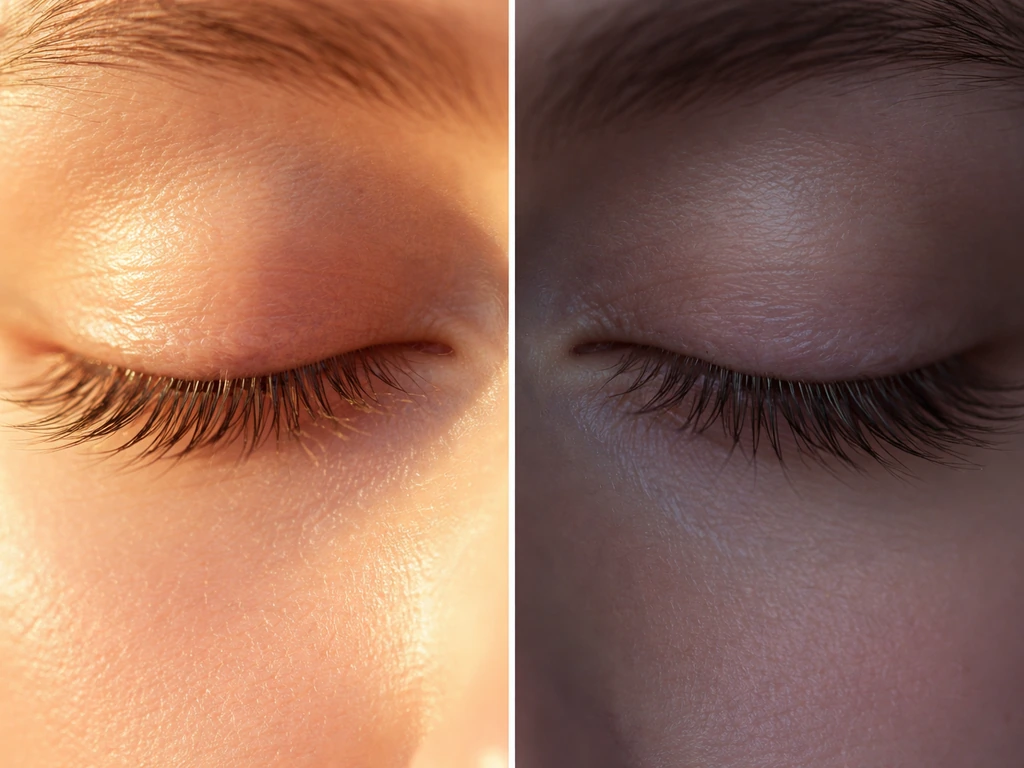
Does sunlight or UV directly affect eyelash growth?
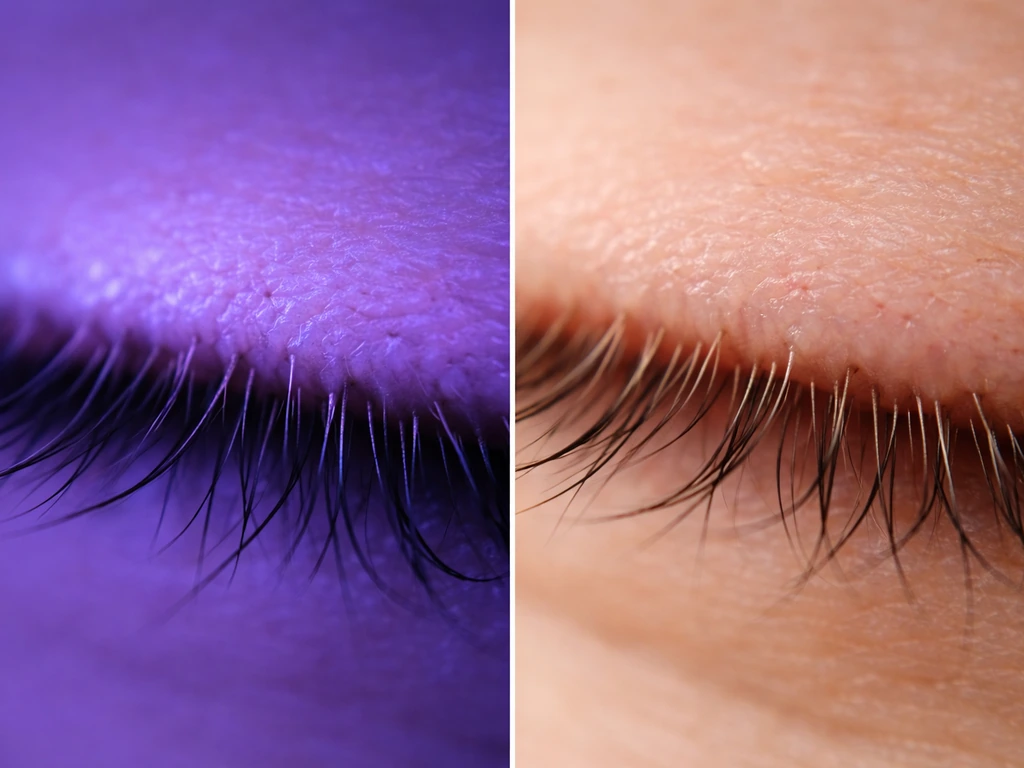
The short biology lesson here is useful. Eyelash follicles sit in the eyelid margin and go through their own growth cycle independently of hormones like those that govern scalp hair. The primary drivers of lash growth are follicle health, local blood supply, adequate nutrition, and specific growth-promoting signals (more on that below). Sunlight simply does not feature in that list. If you are wondering whether water makes your eyelashes grow, the answer is similar: water exposure is not a proven trigger of lash growth Sunlight simply does not feature in that list.. UV radiation does penetrate skin tissue, and UVA in particular reaches deeper layers, but its effect on follicle cells in the eyelid is not stimulatory. There is no known receptor or signaling pathway through which UV triggers the anagen (active growth) phase in lash follicles.
Where the sun does have a measurable biological effect on the eye area is in damage, not growth. A 2026 systematic review documented that UV radiation can elevate ocular inflammatory mediators including IL-1β, IL-6, TNF-α, IL-17, and IFN-γ, and that high-intensity daily exposure without eye protection contributes to ocular surface photodamage and photoaging. Earlier epidemiological and experimental reviews have also drawn consistent links between solar UV and ocular disease. None of this is the environment in which a healthy follicle thrives.
What the lash growth cycle actually looks like
Understanding the growth cycle matters here because it explains why any external factor, including sun, produces slow and sometimes invisible results. Eyelashes cycle through three phases: anagen (active growth, lasting roughly 30 to 45 days), catagen (transition, about 2 to 3 weeks), and telogen (resting, up to 3 months before the lash sheds). The full cycle from new growth to natural shed is typically around 4 to 6 months. At any given moment, your lashes are at different stages of this cycle, which is why you do not lose all your lashes at once.
What this means practically: even if something did nudge the growth cycle, you would not see results overnight. If you are wondering whether contact solution can make your eyelashes grow, the short answer is that lash growth depends more on follicle health and evidence-based actives than on anything you use for eye lubrication. Products that genuinely work, like prostaglandin analogs (discussed below), are measurably effective at 8 weeks with peak results around 12 to 16 weeks. Anyone promising visible lash improvement in days is either selling something or describing a mascara. Sun exposure absolutely does not compress that timeline.
How sun exposure can actually make your lashes worse
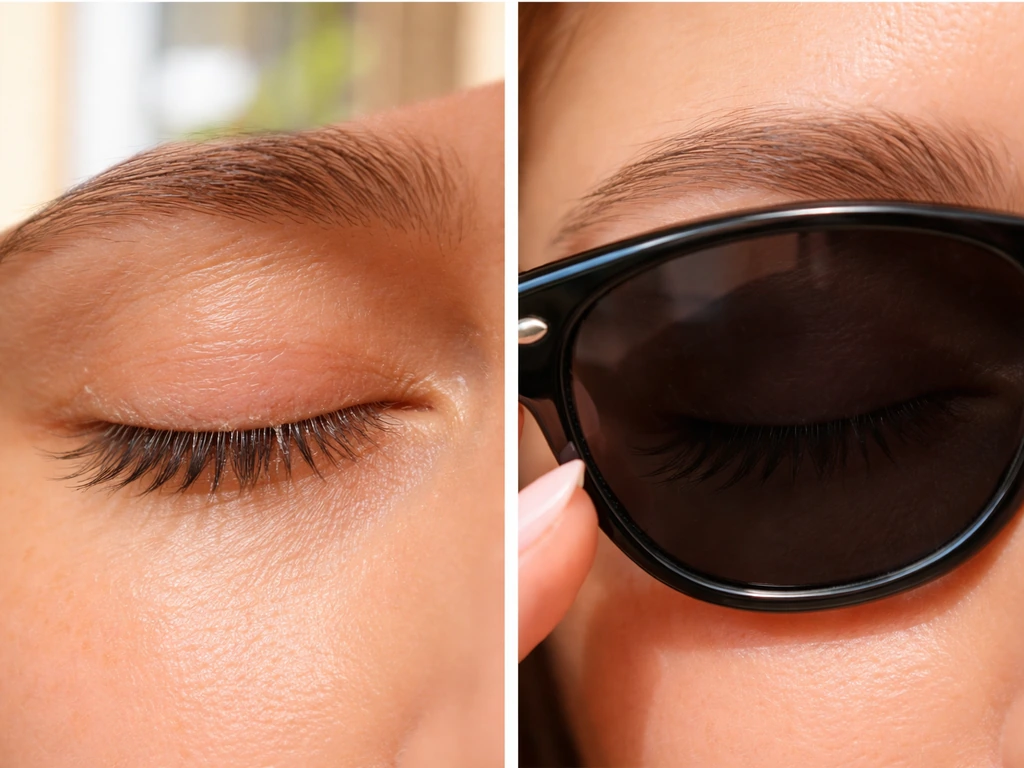
This is the more important part of the sun-and-lashes conversation. While UV will not grow your lashes, it can create conditions that slow regrowth or worsen existing damage in a few specific ways.
- Dryness and brittleness: UV exposure dries out the delicate skin of the eyelid margin and can strip moisture from the lash shaft itself, making lashes more prone to breakage before they reach their full length.
- Inflammation around the follicle: The elevated inflammatory cytokines triggered by UV exposure (IL-1β, TNF-α, and others) are not just a surface issue. Chronic low-grade inflammation around follicle tissue is associated with premature shedding and disrupted growth cycles.
- Photoaging of the eyelid skin: Repeated UV exposure accelerates collagen breakdown in the periorbital area, which affects the structural support around follicles and can subtly impair their environment over time.
- Worsened recovery after damage: If your lashes are already compromised from extensions, rubbing, or irritant cosmetics, adding UV stress to the eyelid area slows the healing environment. It is essentially two stressors competing against recovery.
If you are dealing with lash loss or thinning right now, sun exposure is not neutral. It is worth actively managing, especially during peak UV hours.
What actually works: evidence-based ways to grow lashes faster
The most clinically validated option available without a dermatologist visit is a lash serum containing a prostaglandin analog or a peptide-based formula with supporting actives. If you are wondering whether hyaluronic acid makes eyelashes grow, it is better thought of as a hydration ingredient rather than a proven lash-growth driver lash serum containing a prostaglandin analog. Bimatoprost 0.03% (sold as LATISSE) is the only FDA-approved eyelash growth treatment, and the clinical data behind it is hard to argue with. In pivotal randomized, double-masked trials, bimatoprost users showed statistically significant improvements in lash length, thickness, and darkness compared to the vehicle control at weeks 8, 12, and 16. Week 16 was the primary efficacy endpoint, meaning this is not a quick fix, but it is a proven one. LATISSE requires a prescription in the US.
Over-the-counter lash serums use prostaglandin analogs in lower concentrations (isopropyl cloprostenate is common) or rely on peptide complexes, biotin, and conditioning agents. These carry less risk of the side effects associated with prescription bimatoprost (iris pigmentation changes, periorbital fat loss at higher concentrations) but also tend to produce more modest results. For many people they are still a worthwhile starting point before going the prescription route.
Beyond serums, the foundation of any lash recovery routine comes down to three practical habits: removing eye makeup gently every night (rubbing causes mechanical breakage), keeping the eyelid margin clean to prevent follicle-clogging buildup, and avoiding waterproof formulas daily since they require harder removal. These are not glamorous but they make a real difference when you are trying to regrow damaged lashes.
Castor oil, biotin, and popular remedies: what holds up and what does not
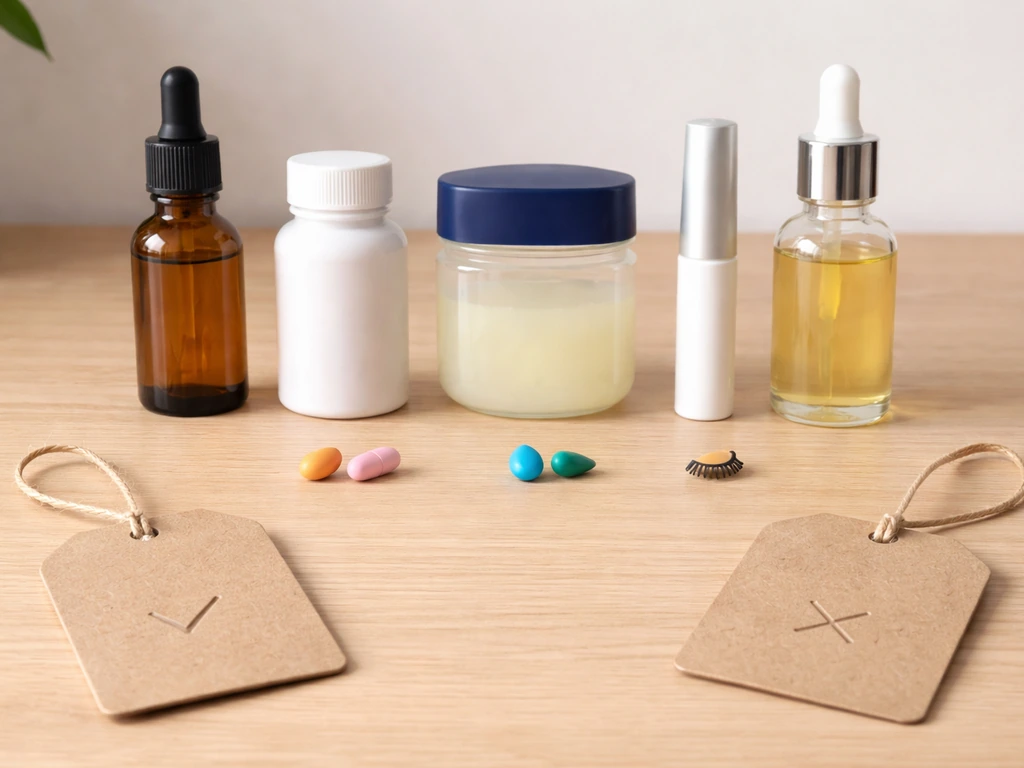
This is where the honest trade-off conversation has to happen. A lot of widely shared lash growth remedies are either unproven, mildly effective through a conditioning mechanism rather than true growth stimulation, or just myths that have spread because they are harmless and easy to try.
| Remedy | What the evidence says | Realistic verdict |
|---|---|---|
| Castor oil | No clinical trials on lash growth; ricinoleic acid has some anti-inflammatory properties; mainly works as a conditioning agent that reduces breakage | Probably helps lashes retain length by reducing brittleness, not by stimulating growth |
| Biotin (oral) | Only genuinely effective for growth in people with a documented biotin deficiency, which is rare; supplements will not add growth in healthy individuals | Largely a myth for most people; useful only if you are actually deficient |
| Vitamin E oil | Antioxidant properties may support follicle health; no direct lash growth trials | Mild supportive benefit at best; not a standalone solution |
| Green tea (topical/oral) | EGCG in green tea has some evidence for hair follicle stimulation in lab settings; not confirmed for lashes specifically | Interesting but unconfirmed for eyelashes; safe to try topically if diluted |
| Peptide serums (OTC) | Some peptides show promise in small studies for hair growth signaling; formulations vary widely | Moderate confidence; quality of the formulation matters a lot |
| Bimatoprost 0.03% (Rx) | Multiple randomized controlled trials; FDA-approved; statistically significant results at 8-16 weeks | Strongest evidence available; requires prescription and carries side effect awareness |
Castor oil is probably the most defensible natural option because conditioning benefits are real even if direct growth stimulation is not. If you are applying it nightly to the lash line and being consistent, you are likely reducing the mechanical loss that is holding your lashes back from reaching their full length. Just do not expect it to perform like a serum. The same goes for green tea: it is unlikely to make eyelashes grow in the way proven lash treatments can Just do not expect it to perform like a serum.. Similarly, what you eat matters more than most topical home remedies. Protein, iron, zinc, and essential fatty acids all support the keratin production your lashes are made of, which is why diet-focused approaches (eggs, leafy greens, omega-3 rich fish) show up consistently in this conversation.
How long regrowth actually takes depending on what caused the loss
One of the most common frustrations in lash recovery is expecting results too quickly. Here is a realistic breakdown based on the typical growth cycle and common causes of lash loss or thinning.
| Cause of lash loss or damage | Expected regrowth timeline | Notes |
|---|---|---|
| Natural shedding (normal cycle) | 4 to 6 weeks for visible regrowth; full length at 3 to 4 months | No intervention needed; just avoid damage during regrowth |
| Extension damage (glue, weight, mechanical pull) | 6 to 8 weeks to see new growth; 3 to 5 months for full recovery | Remove extensions gently; serum can accelerate recovery |
| Rubbing or chronic mechanical damage | 4 to 8 weeks once rubbing stops | Must address the cause first; antihistamines can help if allergy-driven rubbing |
| Trichotillomania or compulsive pulling | 3 to 6 months with cessation; may be incomplete with repeated cycles | Behavioral support is part of the treatment plan |
| Chemotherapy-related lash loss | 2 to 3 months post-treatment for initial regrowth; texture may differ | Gentle handling is critical; avoid extensions until fully recovered |
| Thyroid-related lash thinning | 3 to 6 months after thyroid levels are controlled | Topical treatments alone will not work if the systemic cause is unaddressed |
The honest takeaway from these timelines is that patience is non-negotiable. Even with the most effective prescription serum, you are looking at 8 weeks before meaningful change and closer to 4 months for peak results. If you are not seeing any new growth at all after 6 to 8 weeks of a clean, damage-free routine, that is the point to consider a serum or consult a clinician.
Protecting your lashes from the sun and knowing when to see a doctor
Sun protection for the eye area is genuinely underutilized. Wearing UV-blocking sunglasses year-round, not just in summer, is the most practical step you can take. Look for lenses that block 99 to 100 percent of UVA and UVB, which most quality sunglasses do. A broad-brimmed hat adds another layer during peak UV hours (10am to 4pm). If you use a facial SPF, apply it carefully around the orbital area, stopping at the lash margin to avoid getting product into the eye.
Avoid anything that brings prolonged UV exposure directly to the open eye, including tanning beds without proper eye protection and extended time in reflective environments like snow or water without sunglasses. If you are wondering whether salt water can grow your eyelashes, the evidence does not support that claim. These scenarios accelerate the photoaging and inflammatory effects described above, and they put you at risk for corneal damage that goes well beyond lash concerns.
You should see a doctor if you notice sudden, patchy lash loss with no obvious mechanical cause; if lash loss is accompanied by scaling, redness, or itching at the lid margin (possible blepharitis or alopecia areata); if regrowth has stalled completely for more than 3 months despite a clean routine; or if you are losing lashes while also experiencing scalp hair loss, fatigue, or other systemic symptoms. A dermatologist or ophthalmologist can rule out alopecia areata, thyroid issues, nutritional deficiencies, or medication side effects that require targeted treatment rather than topical remedies.
The sun is not your lash growth ally. Consistent follicle care, the right ingredients, protecting the eye area from UV damage, and honest timelines will get you further than any amount of sun exposure. Focus there, and you will have a much clearer path to the lashes you are after.
FAQ
If I’m in the sun every day, will my lashes get shorter over time even if I use lash serum?
They can, because UV exposure can worsen dryness and inflammation at the lid margin, which may increase shedding or slow regrowth. Lash serums can support growth signals, but they do not block photoaging or oxidative stress, so you still need UV protection (sunglasses and limiting unprotected eye-area exposure).
Does sunscreen applied near the lash line help, or will it irritate my eyes?
Using SPF around the orbital area can help reduce UV-related damage, but you should stop at the lash margin so product does not migrate into the eye during blinking. Choose a formula designed for sensitive areas, apply a small amount, and recheck for irritation over several days rather than layering heavy amounts.
Can tanning beds or sunlamps affect eyelash growth or cause other eye problems?
They do not stimulate lash growth, and they increase photo-damage risk to the ocular surface. If you use any high-UV device, strict eye protection is essential, and you should avoid prolonged exposure because the risk to corneal health is far more serious than any lash-growth benefit.
How long after improving my routine should I expect to see new lash growth if sun was the problem?
Expect meaningful changes on the order of weeks to months, not days. A practical rule is that you may notice less shedding first, then visible length and thickness improvements around the 8-week mark, with peak results closer to 12 to 16 weeks for effective treatments, assuming the lid margin is kept clean and UV exposure is reduced.
What should I do if my lashes are falling out because of irritation from makeup or removal, not UV?
Treat it as a damage and mechanical-loss issue rather than a “growth” problem. Stop rubbing, remove makeup gently, clean the lid margin regularly to reduce buildup, and consider switching away from waterproof formulas for daily wear, because aggressive removal can break lashes faster than they can regrow.
Are lash serums safe to use if I still spend a lot of time outdoors?
They are generally intended for daily cosmetic use, but safety depends on the specific ingredient and your tolerance. Even with serums, you should protect your eyes from UV since the main downside of sun exposure is inflammation and ocular surface damage, not just reduced cosmetic results.
If I see irritation or redness after starting a prostaglandin-analog lash serum, should I stop immediately?
If symptoms are mild, you can pause and reassess, but persistent redness, itching, or discomfort is a sign to stop and seek clinician advice before continuing. This matters because irritation can also worsen lid margin inflammation, which may sabotage regrowth.
Can diet reverse sun-related lash damage, or is topical treatment still required?
Diet can support follicle building blocks, like protein and key micronutrients, but it will not neutralize UV-driven inflammation quickly. If sun exposure contributed to damage, pair nutrition with UV protection and a targeted eyelash routine rather than relying on diet alone.
What’s a reliable way to tell whether my lash loss is abnormal versus normal shedding?
Normal shedding is usually gradual and even across lashes because follicles cycle through growth phases. Sudden, patchy loss, scaling or itching at the lid margin, or a complete stall in regrowth for months suggests an underlying condition that should be assessed by a dermatologist or ophthalmologist.
Next Article
Does Water Make Your Eyelashes Grow? Evidence and Tips
Learn if water grows eyelashes, what really controls lash cycles, and practical tips to improve length and reduce breaka