Yes, Lumigan 0.01% will grow eyelashes. It contains bimatoprost, the same active ingredient in FDA-approved Latisse, and clinical trials consistently show measurable increases in eyelash length, thickness, and darkness with regular use. The catch: Lumigan 0.01% is a lower concentration than the 0.03% used in approved eyelash-growth studies, it is officially indicated for glaucoma not lash growth, and using it off-label for cosmetic purposes means you need to go in with clear eyes about both the evidence and the risks.
Will Lumigan 0.01 Grow Eyelashes? Timeline, Safety, How to Use

Rachel Nguyen
21 Jun 2026
What Lumigan 0.01% actually is and why it affects lashes
Lumigan 0. 01% is bimatoprost ophthalmic solution 0. 1 mg/mL. It is an FDA-approved prescription drug indicated for reducing elevated intraocular pressure in open-angle glaucoma and ocular hypertension.
The FDA prescribing information for Lumigan (bimatoprost ophthalmic solution) 0. 01% states that it contains bimatoprost 0. 01% (0. 1 mg/mL) and is indicated for reduction of elevated intraocular pressure in patients with [open-angle glaucoma or ocular hypertension](https://www.
accessdata. fda. gov/drugsatfda_docs/label/2017/022184s006lbl. pdf).
Eyelash growth is not its approved purpose. However, bimatoprost at the 0. 03% concentration was separately FDA-approved as Latisse in December 2008 specifically for eyelash hypotrichosis (inadequate lashes). Because both Lumigan and Latisse share the same molecule, clinicians noticed early on that glaucoma patients using bimatoprost eye drops were growing noticeably longer, fuller lashes in the treated eye.
That observation became a clinical program.
Lumigan 0.01% is a newer, lower-concentration formulation introduced partly to reduce side effects compared to the original 0.03% strength. The manufacturer reports that Lumigan 0.01% had 25% fewer overall treatment-related adverse events than bimatoprost 0.03%. The trade-off is that the bulk of eyelash-growth clinical evidence is built on the 0.03% concentration. The lash-growing effect at 0.01% is real and acknowledged in Lumigan's own labeling, but the effect magnitude may be somewhat smaller than what you see quoted from Latisse trials.
How bimatoprost actually grows lashes: the biology
Eyelash follicles, like scalp hair follicles, cycle through growth phases: anagen (active growth), catagen (transition), and telogen (resting/shedding). The length and density of your lashes at any given moment reflects how many follicles are in anagen and how long that phase lasts. Bimatoprost is a prostamide analog that appears to work primarily by prolonging the anagen phase and shifting a higher proportion of follicles into active growth simultaneously. Researchers are honest that the precise molecular mechanism is not fully elucidated, but the result in randomized trials is consistent: more lashes growing at once, for longer, producing greater length, thickness, and pigmentation.
It is worth emphasizing that this is a biologically active drug effect on hair follicle cycling, not a cosmetic coating or conditioning effect. That is why the results are real and measurable, and also why the side effects are real and worth taking seriously.
What results to actually expect

The pivotal trials for bimatoprost 0. 03% applied to the eyelid margin showed a mean eyelash length increase of 1. 4 mm (about 25%) after 16 weeks, compared to just 0. 1 mm (2%) with a placebo.
A separate gel-suspension RCT found an average increase of 2. 0 mm after just 6 weeks of nightly application to the lash base. Statistically significant improvements over vehicle began appearing at week 8 in the pivotal trial and continued through week 16. A long-term randomized trial using bimatoprost 0.
03% applied to the eyelid margin reported statistically significant, measurable improvements versus vehicle at months 4 and 6 [week 8 in the pivotal trial and continued through week 16](https://pmc. ncbi. nlm. nih.
gov/articles/PMC4832276/). Length is one part of it: trials also documented measurable increases in eyelash thickness (fullness) and darkness, meaning the lashes you grow are visibly richer, not just marginally longer.
For Lumigan 0.01% specifically, the labeling openly acknowledges that eyelash growth is a known effect of the drug. At the lower concentration you should realistically expect a somewhat more modest result than the 0.03% trials show, though individual responses vary depending on your baseline lash health, genetics, consistency of use, and whether any inflammation or irritation interferes with the follicle environment.
Timeline: when changes show up and when they level off
Here is a practical timeline based on the clinical data. Weeks 1 to 4 are mostly setup: the drug is shifting your follicle cycles, but you will likely not see visible lash changes yet. Some people report noticing something around week 2, but researchers caution that very early perceived changes often reflect observation bias or mild irritation rather than true growth.
Weeks 6 to 8 are when early measurable growth tends to appear, consistent with both the gel-suspension trial results at 6 weeks and the pivotal trial's first statistically significant timepoint at week 8. For typical bimatoprost formulations used on the lash line, you can start to see measurable changes somewhere between week 6 and week 16 with regular nightly use.
Weeks 12 to 16 represent the full-effect window: this is where the clinical trials show peak length, thickness, and darkness changes. Expecting full results in 4 weeks is unrealistic. Expecting meaningful change by week 8 to 10 with nightly consistency is reasonable.
Growth stabilizes around the 4-month mark in long-term trials, with benefits maintained as long as you continue using it. When you stop, the eyelash changes are generally reversible because they depend on the drug continuing to alter the follicle cycle. Your lashes will gradually return to their baseline state after discontinuation, which is actually reassuring if you ever want to stop.
How to apply it safely
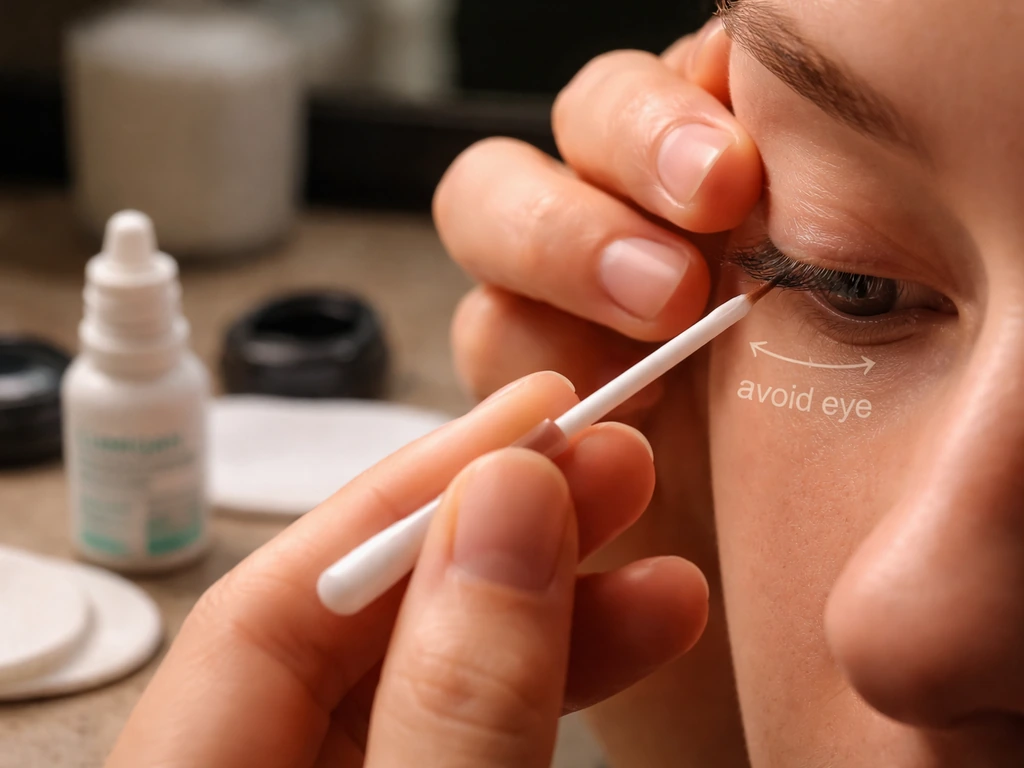
This is where precision matters. The following steps reflect the application protocol used in clinical trials and consistent with guidance from the Latisse prescribing information, the Cleveland Clinic's bimatoprost application guide, and the Mayo Clinic's usage instructions:
- Do this at night, after removing makeup and contacts. Contacts should be out before application and can go back in 15 minutes afterward.
- Use a clean, sterile applicator (the type included with Latisse kits, or a fresh disposable eyeliner brush). Do not reuse applicators between applications.
- Place one drop of Lumigan 0.01% onto the applicator. One drop is enough. More is not better and increases risk.
- Apply the solution in a single stroke along the skin of the upper eyelid margin, at the base of the upper lashes, from the inner corner to the outer corner. Think of it like applying a thin line of eyeliner.
- Do not apply to the lower lash line. Lower-lid application dramatically increases the risk of the solution running into your eye and can cause hair growth in unintended areas.
- Blot any excess solution immediately with a tissue or cotton round. You want the solution at the lash base, not running down your cheek or onto surrounding skin.
- Wash your hands before and after.
The reason precision matters: bimatoprost can stimulate hair growth anywhere it contacts skin. If the solution tracks down your cheek or onto your lower lid skin, you may see hair growth in those areas. Careful blotting eliminates most of that risk.
Side effects, real risks, and who should think twice
The side effect profile for bimatoprost is well-documented across pooled trials and Lumigan's own labeling. In a year-long study of 185 patients using Lumigan 0.01%, the most commonly reported side effects were eye redness (31%), eyelash growth (3.8%, reported as an adverse event in the glaucoma context), and itchy eyes (3.8%). Across broader bimatoprost trial data, common adverse events include conjunctival hyperemia, eyelid itching, dry eye symptoms, punctate keratitis, eye irritation, and periorbital skin hyperpigmentation.
The most discussed long-term risk is pigment change. Lumigan's labeling is explicit: iris pigmentation from bimatoprost is likely permanent, meaning if the drug migrates into the eye and contacts the iris, it can permanently darken light-colored irises. Periorbital skin darkening (around the eyes) and eyelash darkening are also possible but are reported as reversible in some patients after stopping. There is also a class-level concern about periorbital fat changes, sometimes described as a subtle hollowing or volume change around the eye socket with long-term prostamide analog use.
You should have a direct conversation with an eye care clinician or prescribing doctor before starting if any of the following apply to you:
- You have light-colored eyes (blue, green, hazel) and are concerned about permanent iris darkening
- You have a history of macular edema, uveitis, or other inflammatory eye conditions
- You are pregnant or breastfeeding
- You wear contact lenses (manageable with proper timing, but worth discussing)
- You have active eye infections or significant dry eye disease
- You are already using another prostaglandin analog eye drop for glaucoma
Stop using it and contact a clinician if you notice significant eye swelling, sudden vision changes, severe redness or pain, or unusual darkening of your iris. Mild redness and occasional itching at the application site are common and often improve with time, but anything involving your vision warrants prompt evaluation.
Lumigan vs lash serums, castor oil, and biotin: which actually works
This is an honest comparison. If you are wondering about using bimatoprost to grow hair on your head, talk with a clinician first because the main evidence and approved use are for lashes. Bimatoprost (whether Lumigan or Latisse) is the only eyelash growth option backed by large randomized controlled trials showing measurable, clinically significant results. Everything else in the lash-growth space operates on a different evidence tier.
| Option | Evidence Level | Typical Result | Key Risk or Limitation |
|---|---|---|---|
| Lumigan 0.01% (bimatoprost) | Off-label use; same active as FDA-approved Latisse; strong clinical data at 0.03% | Measurable length and thickness increase by weeks 8-16; modest at 0.01% | Prescription required; pigment changes; eye irritation; cost |
| Latisse 0.03% (bimatoprost) | FDA-approved for lash hypotrichosis; multiple RCTs | Mean +1.4 mm length and increased thickness at 16 weeks | Prescription required; same side effect profile; higher concentration |
| Over-the-counter lash serums (prostaglandin analogues) | Limited independent trials; some use prostaglandin analogs not approved for eye use | Variable; some real but unregulated effect; no FDA approval for lash growth | Unregulated ingredient concentrations; same pigment risks without the clinical oversight |
| Castor oil | Anecdotal; no rigorous RCTs for eyelash growth specifically | Possible conditioning benefit; no proven follicle-level growth mechanism | Low risk; low irritation; low but real cosmetic benefit for brittleness |
| Biotin supplements | No clinical evidence specifically for eyelash growth in people without deficiency | May help if you have a documented biotin deficiency; otherwise minimal effect | Very safe; ineffective for most people without underlying deficiency |
The honest recommendation: if your goal is real, measurable lash growth from thinning, damage, extension overuse, aging, or a medical cause, bimatoprost is what the evidence supports. Castor oil is a reasonable complementary habit for conditioning and is very low risk, but do not expect it to regrow lashes the way bimatoprost does. Biotin is worth taking only if your diet is genuinely deficient. Other prostaglandin-based OTC serums sit in a gray zone: they may produce real effects using similar mechanisms, but without clinical oversight you have less certainty about concentration, purity, and side effect monitoring. Latanoprost is another prescription prostaglandin analog worth knowing about if bimatoprost is not accessible to you, and the timeline and mechanism are comparable.
What to do right now: a practical starting plan
Lumigan is a prescription medication. You cannot just order it and start. The right first step is scheduling a conversation with an eye care specialist, a dermatologist, or your general practitioner and specifically asking about off-label bimatoprost for lash growth. Many dermatologists and ophthalmologists are familiar with this use and can walk through whether it is appropriate for you. Mention any eye conditions, medications, or concerns about iris color change up front.
Once you have access and a green light, run a minimum 16-week trial before judging results. Apply it every night without skipping: consistency is the main driver of outcome because the drug depends on continuously altering your follicle cycle. Take a well-lit close-up photo of your lashes before you start and again at weeks 4, 8, and 16. Side-by-side photos are genuinely the best way to notice changes that happen gradually enough to be invisible day to day.
Monitor for side effects weekly. Mild redness or itching at the lash line in the first two weeks is common and often settles. If it persists beyond week 3 or gets worse, take a break and check in with your prescriber. If you notice darkening of the skin around your eye that bothers you, talk to your clinician about whether to continue. If you see any change in your iris color or any visual disturbance, stop immediately and get an eye exam.
If Lumigan 0. 01% causes persistent irritation that you cannot tolerate, you have real alternatives worth discussing with a clinician: Latisse 0. Latisse is bimatoprost 0.03% formulated specifically for eyelash hypotrichosis, which is why it is often the go-to off-label option discussed for lash growth Latisse 0.03%. 03% is the approved option with the strongest evidence, and some clinicians may prescribe it with a contact lens or eyeliner brush application protocol to minimize ocular exposure.
If access to prescription bimatoprost is a barrier, exploring what other prescription eye drops might grow lashes is a reasonable conversation to have, as several prostaglandin analogs used for glaucoma share this follicle-stimulating side effect. If you are comparing options, the key question is what eye drops make your eyelashes grow, and the best-supported answer is bimatoprost formulations like Lumigan or Latisse eye drops might grow lashes.
The bottom line is that bimatoprost works, the evidence is solid, and the path to using it safely runs through a clinician who can weigh your individual risk profile.
FAQ
Will Lumigan 0.01 grow lashes if I only use it a few nights per week?
Results depend on continuous follicle-cycle changes, so inconsistent use usually leads to smaller, slower, or incomplete growth. If you miss a night, restart the next day rather than doubling up, and plan for a full 16-week trial with nightly consistency before judging.
How long after I stop Lumigan 0.01 do my lashes start to look different again?
Because the effect relies on ongoing follicle cycling, lash changes generally reverse gradually after discontinuation rather than disappearing overnight. Many people notice the biggest return toward baseline over the next few months, so treat stopping as a “maintenance” decision.
Can Lumigan 0.01 make my lower lashes grow too?
It can, if the drop or applicator tip contacts the lower lid or solution migrates downward toward the lower lash line. That is why precise, targeted application and careful blotting of any spill onto adjacent skin matter.
Will it change my iris color, even if I only use it for the upper lash line?
Iris darkening happens if enough bimatoprost reaches the eye and contacts the iris, which can occur with overflow, poor technique, or excessive application. You can reduce the risk with small amounts, avoiding excess product, and monitoring closely, but there is no technique that makes it “zero risk.”
What should I do if I get irritation or redness that does not improve?
If mild redness or itching persists beyond about the first 2 to 3 weeks or worsens, stop and contact the prescriber. Do not keep pushing through significant irritation, since ongoing inflammation can both reduce comfort and potentially interfere with safe, effective use.
Can I wear contact lenses while using Lumigan 0.01 on my lashes?
You should confirm with the prescribing clinician, because glaucoma-drop protocols often include guidance about contact lenses and when to insert them relative to drops. In practice, many people are advised to remove contacts before application and wait afterward to reduce corneal irritation risk.
Is it safe to apply Lumigan 0.01 over lash extensions or right after lash removal?
Extensions can increase the chance that product spreads along the lash line, and lash adhesive or removers may change how your eyelids tolerate the medication. If you want the most predictable effect, ask your clinician, but many people do best starting when lashes and eyelids are not actively inflamed.
Will Lumigan 0.01 cause eyelid skin darkening or changes around the eyes?
Periorbital skin hyperpigmentation and eyelash darkening are possible class effects, especially if product reaches the skin and accumulates there. If you notice unwanted darkening or worsening discoloration, discuss continuing versus stopping promptly rather than waiting through the full 16 weeks.
How can I tell early whether I am seeing true growth versus irritation or observation bias?
True growth typically shows up gradually and is easier to confirm with side-by-side photos taken at consistent angles and lighting. If you see sudden, dramatic changes in the first week or two, that can be irritation or swelling, so rely on scheduled photo checkpoints rather than day-to-day impressions.
Can I use Lumigan 0.01 to grow hair on my eyebrows or head?
Off-label use for other body areas is possible in theory but increases risk because bimatoprost will stimulate follicles wherever it contacts skin. For the head, the evidence is not the same as for lashes, and accidental spread can affect unintended areas, so this should only be considered with clinician guidance.
What is the best way to apply without getting product in my eyes?
Use a controlled, lash-targeted application with the smallest amount needed, keep the applicator off the eyeball surface, and blot any spill onto the lash line rather than letting it run. If you repeatedly get overflow, your technique may need adjustment with your prescriber.
If Lumigan 0.01 is lower concentration, should I switch to Latisse 0.03% for faster or stronger results?
Some people choose the stronger, approved eyelash option if they want the most robust expected effect, but the trade-off is not just “more growth,” it is also a different risk balance. The right choice depends on your tolerance, eye history, and access, so discuss with your clinician rather than switching on your own.
Next Article
What Glaucoma Drops Make Eyelashes Grow and What to Do Next
Prostaglandin glaucoma drops can darken and lengthen lashes. Learn which drugs, timelines, risks, and safer next steps.